Uk politics

Team Brown playing the same old tunes

From our UK edition

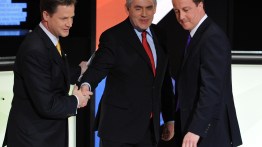
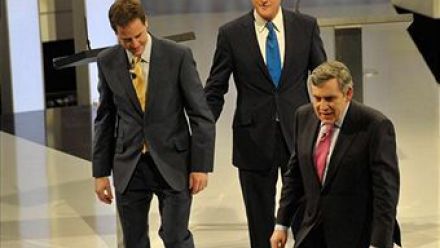
The strange thing about last week's TV debate is that, for all its transformative power, it doesn't seem to have changed Labour's campaign strategy in any fundamental way.  Team Brown were hoping for a hung Parliament, and courting the Lib Dems, before last week.  And, as Peter Mandelson demonstrated earlier, they're still doing the same now.  The only difference is that it's more likely their wishes will come true. But this creates problems for Brown so far as tonight's TV debate and the rest of the election are concerned.  His instinct may well be to repeat the "I agree with Nick" positioning of last week.  But this has already been heavily lampooned - and was batted away quite comprehensively by Clegg the last time he tried it.

People loathe politicians – but do they loathe the political media too?

From our UK edition

One thing's for certain: the Lib Dems are coming in for greater scrutiny and attention from the media.  The covers of the Telegraph, Sun, Mail, Express and, yes, The Spectator are testament to that - even if some are less substantial than others.  But the question is: will this derail the Clegg bandwagon?  And, like Iain Dale, I'm not so sure. Iain's point is that some of the coverage is so spiteful that it will "serve to increase his popularity and position in the polls".  He adds that this would be a "sure sign that the power of the press to influence an election is on the wane".  He's right, and the theme he identifies is one of the major currents that's swirling about underneath the surface of this election campaign.

Paul Rowen and the anatomy of a Lib Dem expenses scam

From our UK edition

Now the Lib Dems are riding high in the polls, they attract greater scrutiny – which, to put it mildly, they do not always stand up to. In this week’s Spectator, we look at what can be seen as the Lib Dem vice. They may not charge for duck houses, or mortgages. But they do specialise in taking money intended for MPs expenses, and finding “innovative” ways of putting it into their war chest. Here is a hard example that may interest CoffeeHousers and it stars Paul Rowen, whom Mr Clegg visited last week – and declared “has done a great job”. He certainly has: for filling the Lib Dem political machine with cash.

Is Europe a Con-Lib deal-breaker?

From our UK edition

Europe is likely to play a big role in tonight’s debate. It is probably the one issue that divides the Liberal Democrats and the Tories as much as electoral reform. Nick Clegg, a former MEP and adviser to then-EU Commissioner Leon Brittan, is a euro-enthusiast who would like Britain to join the Euro, even if it takes time. David Cameron is a euro-skeptic (though not, to the chagrin of many CoffeHouse readers, obsessed about the issue).   But neither wants a confrontation with the EU and other European governments over the next four years - and the Liberal Democrats have become quieter over time about their pro-EU tendencies.

Osborne comes out fighting

From our UK edition

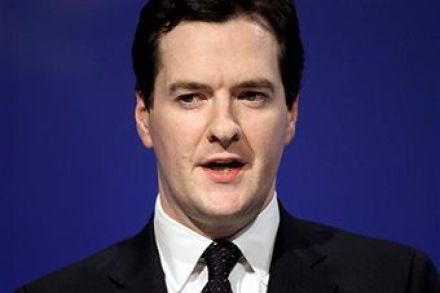
George Osborne put in a fiery and impressive performance in the Chancellor’s debate today, firing off some memorable one-liners as well as unveiling a letter from the former head of the anti-avoidance group at the Treasury questioning the sums on which the Lib Dems’ tax plans depend. Indeed, since the Lib Dems surged, Osborne has found another level to his public performances. Today’s debate win followed a good spot by Osborne on the Politics Show on Sunday.   One striking thing about the debate was how it was Darling who signaled the assault on Cable when he started querying Vince’s numbers. It’ll be fascinating to see if Brown takes any similar swipe at Clegg tomorrow; his interview in the Indyhttp://www.independent.co.

Cable catches a broadside

From our UK edition

What is the difference between 'an alternative’ and 'an addition’? It is on this question that the Liberal Democrat manifesto turns. If there is a difference, then there is a substantial black hole in their deficit reduction plans. There is a difference. The manifesto presents a £3.4bn public sector payroll measure as an addition to existing government measures, when in fact the small-print discloses that it’s an alternative. Caught double counting, at best the Lib Dems would cut £36.6bn of the £40bn or so pledged. Under further scrutiny from Andrew Neil and Stephanie Flanders, Cable could not define where a further £10bn of cuts was coming from. £20bn of the remaining £26.

Taking the attack to Vince

From our UK edition

With Cable's and Clegg’s personal ratings being so high, the trick is to play the ball not the man. Ken Clarke and George Osborne achieved that at this morning’s press conference. Clarke said: “(Nick Clegg’s father was) a very nice, very wise guy, he was a very successful City guy, but he wasn’t a flashy guy... he was a Tory. It would have been better if Nick had stuck to the political principles of his father. (Nick Clegg) must regret going into the strange wastelands of Liberal Democrat politics.” He added that whilst he agreed with “70 percent” of Vince Cable’s analysis on the financial collapse, Cable’s solutions left him “bewildered”.

The Tories need to get economical

From our UK edition

Nick Clegg handed Gordon Brown a lifeline in one respect: the economy’s old hat compared to the Clegg frenzy. Not any more. The news that unemployment rose by 43,000 between December and February, together with yesterday’s dramatic inflation rise, has dumped the economy back onto the front pages. The Tories must keep it there; this election should be about the economy and nothing else. Obviously, these figures, which are worse than expected, lend weight to the argument that Brown’s policies impair recovery. Also, they demolish Brown’s claim that he ran up a deficit in the boom years to protect employment: unemployment is now higher than it was 16 years ago.

Nick Clegg and the 3 am phone call

From our UK edition

Compared to many CoffeeHousers, I don’t find the Liberal Democrat’s foreign policy positions as problematic. Nick Clegg is smart, internationalist and has – unlike David Cameron and Gordon Brown (and Tony Blair) – plenty of foreign policy pre-leadership experience. But looking through the Lib Dem manifesto, I came across its pledge on Iran, which is quite problematic for a party that is keen to shed its beardie-wierdie, peacenik image and whose leader may even end up running the Foreign Office. The manifesto says that, on the one hand, the Lib Dems support “action by the international community to stop Iran obtaining nuclear weapons.” But the party also makes clear that they “oppose military action against Iran.

What happens if this is the result?

From our UK edition

Tonight’s YouGov poll has the Lib Dems three point ahead. They are on 34, the Tories on 31 and Labour on 26. In terms of working out what this would mean in seats, I doubt that uniform national swing is that useful. But for the sake of argument, let’s imagine that did occur. These poll numbers would leave Labour as the largest party in the Commons and the Lib Dems as the third party. One wonders what on earth happens then.   The Palace would pretty much have to summon Brown, he’s the sitting Prime Minister and would be the leader of the party with the most seats. But I can hardly imagine the Lib Dems, if they had the most votes, agreeing to serve as junior partners in anyone’s coalition let alone Brown’s.

Numbers which show why the TV debates are priceless for Nick Clegg

From our UK edition

How valuable was the TV debate to the Lib Dems?  Well, we've seen the poll numbers, of course.  But the Electoral Commission has just released some figures which shine a different light on proceedings.  They show that the Tories received party donations totalling £1.46m in the first week of the campaign.  Labour, nearly £800k.  And the Lib Dems were way, way behind on £20,000.  So, Clegg & Co. are heavily outgunned financially - but they've still had the biggest upsurge in publicity and popularity. True, donations to the Lib Dems have risen dramatically since the TV debate - but it's still unlikely that they'll reach Tory, or even Labour, levels of income.

A poster that cuts to the chase

From our UK edition

This feels like a first for this election campaign: a poster which gets quite specific on policy - and not another party's policy either.  It comes courtesy of the Conservatives, and, as you can see above, carries the message: "Let's cut benefits for those who refuse work". You can expect plenty of handwringing about whether this message is too tough, or whether it represents the Tories shifting rightwards in the aftermath of the Lib Dem surge.  But I imagine it will play well with the many voters who are frustrated at the unfairnesses and inconsistencies of the welfare system.  And it does, at the very least, present one reason to vote (or not to vote) Conservative.

Grayling wins the perceptions battle

From our UK edition

Another day, another TV debate – only this time it was Alan Johnson, Chris Grayling and Chris Huhne behind the lecterns, talking crime on the Daily Politics.  Just like yesterday's debate, the questions were incisive and insistent.  But the politicians conspired to turn proceedings into a mush.  There was very little clarity, a sizeable dollop of bickering, and proof, were it needed, that Huhne really can go on a bit. To my mind, it all boiled down to likely audience perceptions.

The killer poster

From our UK edition

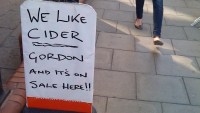
So, as Daniel Korski wrote earlier, a vote for Nick Clegg keeps Labour in office - surely fertile territory for a killer poster? Here's a selection of CoffeeHousers'  'Vote Nick Get Gordon' posters. Remember him?

A bumpy ride for Brown on Radio One

From our UK edition

Gordon, meet disillusionment.  Disillusionment, the Prime Minister.  Ask him questions on whatever you want: the economy, jobs, immigration, expenses - the ball is in your court.  Make him squirm, if you like.  Confront him.  He is, after all, here at your pleasure. For that was the set-up of Radio One Newsbeat's interview with Gordon Brown earlier this afternoon.  It was one of those impossible situations for the PM.  He could hardly decline to be quizzed by a group of first time voters, aged between 18 and 28.  But it put him at the mercy of some pretty disgruntled members of the public.  And they took full advantage. The questions were direct and drew blood.  On the economy: "Where are the cuts going to come from?

Just another politician

From our UK edition

Nick Clegg’s response to Andrew Neil’s question about his expenses at the Lib Dem press conference this morning, highlighted Clegg’s greatest vulnerability: he’s just another politician. As the question pointed out, Clegg’s own expenses were by no means perfect. The danger for Clegg is that many of his new supporters see him as totally different from Brown and Cameron. When they find out that he’s a lobbyist turned Eurocrat turned MEP turned MP who has had problems with his expenses they might not be so keen on him.

Not so squeaky clean

From our UK edition

“All my life, I’ve opposed the old politics,” says Nick Clegg ad nauseam. Not so it seems. Peter Oborne’s Mail column reports that one youthful indiscretion has been omitted from Clegg’s CV: ‘In fact, he has a background as a Westminster lobbyist with the firm GJW, where he worked as an account executive for 18 months. (Something he has omitted from his curriculum vitae on the Lib Dem website).’ So, Clegg glosses over his stint of political kerb-crawling. Hypocrisy always makes a good story but the Tories should, and probably will, shun this story. They have lost the media narrative and the last thing Cameron needs is for the campaign to focus on the leaders’ backgrounds.