Uk politics

The Tories must sell their most radical policy: the Gove schools plan

From our UK edition

The Spectator’s endorsement of David Cameron started with his ‘free schools’ policy – and we could have ended there. We said that this is, in itself, enough reason to vote Conservative. This week’s Economist has produced one of the best explanations of this policy, and its potential.  This is important because this election campaign shows that, while the public are indeed minded to oust Gordon Brown, they’re not terribly excited by the Tory offering. The Gove schools plan is something which, if properly expressed, cannot fail to capture the imagination. In my limited experience of persuading people why they should vote, I find the schools policy always works.

Tories growing used to a hung parliament in public and in private

From our UK edition

Planting seeds, that's what the Tories are doing – they're planting the seeds of a Lib-Con alliance.  Yes, it's a subtle process, and is couched in terms of denial and defiance.  But it's still going on.  I mean, look at Cameron's interview with Jeremy Paxman past night (video on Spectator Live), where he declined to rule out having Nick Clegg in his Cabinet – although, happily, he was more unequivocal on the subject of Vince Cable.  And then there's Ken Clarke's interview with the Daily Telegraph this morning, in which he says that the Conservative "starting point" for any coalition would be a refusal to compromise on their economic plans.

No, Gordon, this recession hasn’t been milder than others

From our UK edition

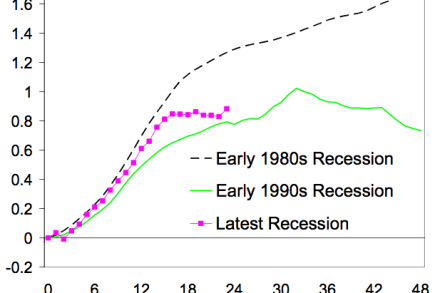
Today’s new economic data gives a handy piece of ammo to the Conservatives.  It is untrue that, as Gordon Brown says, this recession was somehow milder than others. The economy contracted by 6.3 percent this time – it was 3.8 percent in the 1980s recession and just 2.4 percent in the early 1990s recession. I feel confident that the Conservatives will get this point across clearly, next time that Brown boasts that this recession has been somehow milder, thanks to his decision to “intervene” (ie, double our national debt).

A culture of intimidation and a conspiracy to silence

From our UK edition

On the afternoon of 4 June 2009, John Hutton, then Secretary of State for Defence, told the House of Commons: ‘Every one of our servicemen and women has the right to know that we are doing everything possible to ensure that every pound of investment in our equipment programme goes towards the front line and is not wasted in inefficient or weak processes of acquisition. That is why I asked Bernard Gray in December last year to conduct a detailed examination of progress in implementing the MOD’s acquisition change programme, as I hope right hon. and hon. Members will recall. I have to be satisfied that the current programme of change is sufficient to meet the challenges of the new combat environment that we now face. To date, I am not.

Cameron’s low reward interview with Paxo

From our UK edition

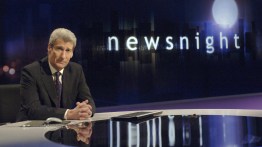
David Cameron is recording his interview with Jeremy Paxman at 5.15 today, it’ll air at 8.30. Cameron didn’t want to do this interview. Originally, Clegg was the only leader to agree to be interviewed by Paxman. But after the first debate, Brown said yes and the Tories decided that Cameron couldn’t be the only party leader not to do it. There is, of course, history between Paxman and Cameron. When Paxo interviewed Cameron during the 2005 leadership contest, Cameron turned the tables on Paxman spectacularly, attacking the whole Paxman school of interviewing. Cameron’s approach in 2005 was previewed by a very funny piece by Michael Gove in The Times which imagined Paxman interviewing Jesus.

The nation’s Cabinet

From our UK edition

Just to flag up an eyecatching poll from PoliticsHome, asking the public to pick the members of their ideal coalition government. Methodology and details here, and the results pasted below.  Two things strike me: i) Alistair Darling once again proves he's popular, which you wouldn't necessarily expect of a Chancellor who has presided over a recession, and ii) Hilary Benn's presence may well show that, so far as Brown's government is concerned, keeping a low profile is a good way to get noticed.

Next time, do a Bill

From our UK edition

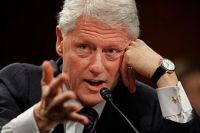
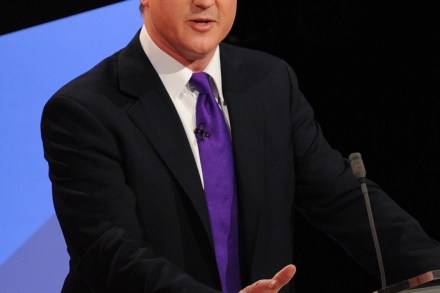
So it’s all down to the next debate. The election will probably be decided in 90 minutes, each segment of 20 seconds for every day of a new five-year mandate. In which case, what is the one thing David Cameron will need to take away from last night’s debate, his “take-home”, as a US analyst might call it, to win decisively and get into the 37, 38, 39 percent range that he needs for the Tories to win a majority? He needs to do a Bill. Clinton, that is. Last night, the Tory leader did far better than in the previous debate. He started a bit slowly, and improved as the debate went one (as opposed to Nick Clegg, who began well and deteriorated as the evening wore on). In the end, I think he won the debate.

GDP grows by 0.2 percent in first quarter of 2010

From our UK edition

Now we know: the official preliminary estimate says that GDP grew by 0.2 percent in the first quarter of the year. So the double dip looks to have been averted (for now) – but not by much. The figure is at the low end of economists' estimates and lower than the growth experienced in the final quarter of 2009. Labour, of course, will spin this as further proof that we can't risk the recovery by voting for those dastardly Tories.  And the Tories will say that it shows just how damaging Gordon Brown has been for our economy.  But I wonder whether voters will choose between the two messages, or come to see a hung parliament as a decent compromise between them.  If it's the latter, then fasten your seatbelts, etc.

The morning after the debate before

From our UK edition

So, like last week: what's changed?  And, like last week, it's probably too early to judge.  The insta-polls may have Cameron and Clegg on level footing, but, really, we need to wait for voting intention polls before coming to any firm conclusions.  As we saw the day after the first debate, they can work in quite surprising ways. My instinct, though, is that things will remain relatively steady.  The Clegg surge of last week was, at root, a cry for change from the electorate – any change.  So it will probably take more than a solid Cameron victory in one TV debate to have voters flooding back to the Tories.  And it will probably take worse than a decent enough performance from Nick Clegg to shoot down the yellow bird of liberty.

Cameron starts to pull the Tory campaign out of the fire

From our UK edition

The headlines will be "score draw", but I’d say Cameron won – and comfortably. I write this as someone who could have happily have sunk a few pins into a voodoo doll of David Cameron earlier on this evening – for taking the Conservatives (and Britain) to this appalling point where he may yet lose the election. But he raised his game, substantially. At best, he spoke with passion and authenticity. This time, he looked like he was fighting for his political life, which (of course) he is. Things are looking up. Here’s my participant-by-participant verdict: Brown Brown was his normal automaton self. He does tend to mangle his words, and his attempts at simplification backfire.

Cameron is much improved – but the Lib Dem bubble hasn’t burst

From our UK edition

It seems that the general election of 2010 will turn on 90 minutes next Thursday. David Cameron was far better tonight than he was last week. This time he managed to bracket Brown and Clegg together and had the moment of the debate when he called Brown out on Labour’s leaflets claiming the Tories would scrap various things that pensioners currently get free. If there was a YouTube moment in the debate, it was that exchange when Brown said he didn’t authorise the leaflets making these claims. The Tory press team then delighted in pointing to a Labour party political broadcast where they had suggested the Tories would take away these things. Nick Clegg came under far more fire than he did in Manchester.

Has Brown blown it?

From our UK edition

Gordon just can't help himself, can he?  There can't be a simple dividing line – oh no.  It has to be one built on exaggerations, half-truths and plain lies.  So it has always been with his brand of government, and for much of the time – think cuts vs investment – it has worked in his favour.  But tonight, despite a surprisingly punchy performance from the PM, it seems to have backfired dreadfully. The Tories are going big on those misleading Labour leaflets – and rightly so.  Brown denied that he authorised them.  But the fact that a Labour party political broadcast made similar claims about the Tories and old-age benefits makes it impossible for the PM to distance himself from this.

Cameron’s evening – as he and Brown fight back against the Clegg surge

From our UK edition

Well, one thing was clear: Brown and Cameron have both been at the textbooks, staying behind for extra classes, and learning the lessons of last week.  They came into this TV debate prepared.  Not just for the very fact of Nick Clegg, but with strategies and soundbites to slow his advance.  The result was a more passionate and confrontational show than I expected. Brown was the biggest surprise on the night.  Sure, you have to apply the usual caveats and parameters: he is Gordon Brown, and being disingenuous and deluded is what he does.  But, all that considered, he was uncharacteristically sprightly, I thought.

Does Clegg go for a Love Actually moment?

From our UK edition

The foreign policy portion of tonight’s debate offers Nick Clegg several opportunities to bracket Labour and the Tories together. Both of them supported the war in Iraq, both won’t take the military option off the table when it comes to Iran and both believe in the centrality of the alliance with the US to UK foreign policy.   On this final point, it’ll be fascinating to see if Clegg launches a full-on assault on the view that the America alliance is the cornerstone of UK foreign policy.  He sketched out the arguments against thinking about the special relationship in a speech the other day and there’s no doubt he could score some populist points by accusing the other two parties of being overly deferential to Washington.

Britain’s brain drain

From our UK edition

Voting with one’s feet is always the most sincere sign of faith – or despair – in a country and its government. And for many the departure lounge, rather than the ballot box, is the surest route to better schools, lower tax and safer streets. The phrase “brain drain” was used in the 1970s and isn’t now – strange, because the emigration rate has doubled to 1,080 a day (ONS data here).  It’s not just Brits: over the years, even the immigrants who have lived here for long enough are scarpering. But because of our obsession with immigration, we haven’t really paid attention to those leaving. And incomers do outnumber emigrants by about 3-2.

Pre-debate poll boost for the Tories

From our UK edition

This poll is going to be rapidly overtaken by events, but tonight’s YouGov tracker has the Tories up one to 34, Labour up two to 29 and the Lib Dems down three to 28. We’ll have at least two instant post-debate polls tonight so we’ll have a good idea of who, if anyone, is going to get a boost from tonight’s poll before we go to bed. But this debate is expected to have a far smaller audience than last week’s so might not have quite the same impact. Although, I hear the Sky questions will aim to put the party leaders’ on the spot more than those last week did.

Tonight’s tactical battle

From our UK edition

If seven days ago, anyone had suggested that the first debate would propel Nick Clegg and the Lib Dems to the top of the polls we’d all have thought that their lunch had gone on rather too long. But that’s what happened. Tonight, the questions are whether Gordon Brown reprises his ‘I agree with Nick’ routine or tries to check Clegg’s momentum and whether Cameron can turn in the kind of performance that begins to turn things round for him.   Cameron shouldn’t be angry tonight. But he does need to bracket Brown and Clegg together at every opportunity.