Uk politics

The Tories’ final push

From our UK edition

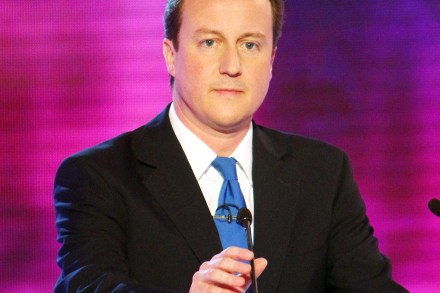
Fresh from David Cameron's victory in the final TV debate, the Tory campaign has taken another assured step this morning.  As Tim Montgomerie reports over at ConservativeHome, they're going to flood the doorsteps with the leaflet, 'A contract between the Conservative Party and you' (pdf here).  Inside, a list of clear policy commitments from "publishing every item of government spending over £25,000," to "reducing immigration" to the levels of the 1990s – meaning tens of thousands a year, instead of the hundreds of thousands a year under Labour."  And, on the back page, a refutation of some of Labour's most misleading claims about the Tories.  Clear, simple and direct.
Tonight David Cameron turned in the performance he needed to. In the post-debate polls, Cameron has won three comfortably, one narrowly and tied the other

From our UK edition

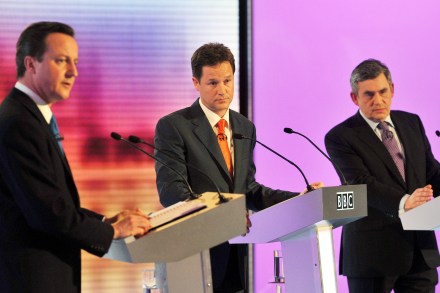
For the first forty-five minutes it was rather like the first debate. Brown attacked Cameron, Cameron hit back and all the while Clegg soared above it. But then immigration, Clegg’s Achilles heel, was thrown into the mix. Cameron went hard for Clegg over his amnesty policy, and Clegg had no clear answer—initially backing away from the policy, before coming back to it. Throughout this exchange, Cameron had covering fire from Brown. Clegg appeared knocked back as he came under the most sustained attack of the campaign and didn’t get back into his groove until his closing statement. In the meantime, Cameron capitalised; delivering some of his strongest answers of the whole debate series.

Cameron shines, Clegg wobbles and Brown sinks

From our UK edition

Well, Cameron saved the best till last. His aides are even joking that they could do with a fourth debate because their man is really getting in the swing of it. He looked more confident, assured – and spoke convincingly about immigration at last, a subject he fluffed last time. I’d place Clegg second. Brown was worse than awful: third in this debate, and will probably be third next week’s election too. Clegg was his usual telegenic self – in thespian terms, an accomplished performance. But he ran away from his own asylum policy, and was comically inept with the facts. He screamed at Cameron: “Will you admit that 80 percent of immigrants come from the EU?” Cameron did not: because the real figure is a third.

Sunshine wins the day for Cameron

From our UK edition

So that's the second time that immigration has had a major impact upon proceedings this week.  Until we came to the question on that topic, I thought Clegg was bossing the TV debate.  He was clear, personable and managed to hover elegantly above Brown and Cameron's dusty brawl over spending cuts.  But as soon as it came to clarifying Lib Dem policy on an amnesty for illegal immigrants, the wings rapidly fell off the yellow bird of liberty.  All of a sudden, Clegg sounded rattled and unpersuasive.  From then on in, it was Cameron's game. It helped that Cameron had the clearest – and, I suspect, the most popular – line on immigration: "We would cut immigration from the hundreds of thousands to the tens of thousands.

The final TV debate – live blog

From our UK edition

2227, JGF: Rumour going around the press room that a certain A Campbell has been overheard saying 'I think we've had it' 2201, PH: And that's it. I'll be putting up my verdict in a separate post shortly. Thanks for tuning in. 2200, PH: Woah. Brown starts positive - thanking everyone involved in the debates.  But he's soon into hardcore negativity: attaking the Tories for their inheritance tax plans and pointing out what areas of spending they will cut.  It's all scaremongering about child tax credits, cancer guarantees and the like.  This, lest you need reminding, is his pitch for the country. 2128, PH: Clegg hones in on the "old parties," claiming that they will stand in the way of "real change".  He says that he will "fight for fairness".

Ten questions for Gordon Brown tonight

From our UK edition

By rights, Gordon Brown should fear this debate on the economy more than any other. Here are ten questions I would like to hear him answer:   1. You told Gillian Duffy yesterday that you have a "deficit plan to cut the debt in half over four years." This was a lie, wasn't it? Our debt is £771bn now. Your deficit plan ­- ie, to run huge deficits for years - will actually double it to £1,406 billion within four years according to the Treasury. The debt for which Mrs Duffy and other taxpayers are liable would double under your plans ­- yet you told her it would halve. How can you tell a lie of that magnitude, to the very sort of women whose taxes you intend to use to service this extra debt? 2.

Dear Dave,

From our UK edition

Tonight is about the economy - the most important issue troubling voters. Amazing, though, your economic mesage has not been particularly clear. Incredible given what the Labour government has done, I know, but true. George Osborne cannot seem to win over the City; the Lords of Finance never miss an opportunity to tell the FT that they don't like/trust him. Your deficit-reduction message is on the other hand clear - but voters don't seem to like it, believe it is actually necessary and seem worried about the "Sword of Cable", which, like that of Damocles, is said to hang over the country by a hair and can come plunging down if the deficit-slashing is too great.

Should Cameron attack Brown or Clegg?

From our UK edition

Obviously, yesterday's disaster has written-off tonight's debate for Brown. But ‘Bigot-gate’ is obscuring the European bailout crisis. Allister Heath and Iain Martin surmise that the euro crisis gives David Cameron a further advantage, if he can exploit it. Iain writes: ‘Mr. Cameron has just been dealt a potential ace by the markets. It will be interesting to see if he realizes this and works out a way of playing it in a manner that voters understand. The worsening crisis in the euro zone has attracted very little attention in the general election, thus far. After all, the U.K. isn’t a member.

Dubious Lib Dem tactics, continued…

From our UK edition

Last week, I reported on dubious expenses scheming by two Liberal Democrat MPs – Paul Rowen in Rochdale and John Leech in Manchester Withington – and subsequently wrote a blog fdetailing Paul Rowen’s method of funding his political campaigning at public expense. Inevitably, having failed to respond to my questions, Rowen stated that the pieces were part of a “Tory smear campaign” – but that’s just not the case. In fact, in the last week, I’ve received a wodge of correspondence from constituents disgusted not just by the candidates’ questionable fundraising methods but also about the campaigns themselves. I thought I might share a few of them.

A tale of two images

From our UK edition

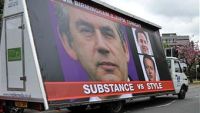
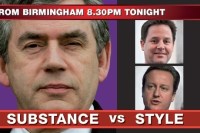
Labour's, erm, "poster" ahead of the TV debate tonight: And Coffee House's take on what Number 10 might look like on May 7th (with thanks to the great Carla Millar for putting the photo-montage together):.

To what extent should Cameron and Clegg use Brown’s gaffe against him?

From our UK edition

Given the timing of Brown's Mega Gaffe, you've got to wonder how it will play out in the TV debate tonight.  Will it, for instance, mean that he gets a hostile reception?  Will he try to defuse the situation by repeating his apologies, or perhaps by making some sort of light out of it ("Yesterday, I met a woman in Rochdale...")?  Will it overwhelm the deeply serious economic questions which need asking and answering?  And so on. There's one question, in particular, though, that I'd be keen to hear CoffeeHousers' views on: how much should Cameron and Clegg use Brown's gaffe against him?

The morning after the duffing up

From our UK edition

It will be hard to isolate the influence of ‘bigot-gate’ on the polls as any taken after today will also include the effect of the final debate. But a few things are worth noting. First, this will be a ‘slow-burn’: Brown’s dismissal of such a large section of the electorate will take a while to sink in. It’s the kind of thing that is going to get discussed for days. I was doing a phone-in on Radio Five last night and those working on the programme told me that it was one of their highest ever volumes of calls.  Second, its ultimate result might be reduced Labour turnout—note how Mrs Duffy is just not going to vote now rather than switching to the Tories or the Lib Dems.

Brown’s apology to Labour members

From our UK edition

This message has just been blasted out to Labour members: As you may know, I have apologised to Mrs Duffy for remarks I made in the back of the car after meeting her on the campaign trail in Rochdale today. I would also like to apologise to you. I know how hard you all work to fight for me and the Labour Party, and to ensure we get our case over to the public. So when the mistake I made today has so dominated the news, doubtless with some impact on your own campaigning activities, I want you to know I doubly appreciate the efforts you make. Many of you know me personally. You know I have strengths as well as weaknesses. We all do. You also know that sometimes we say and do things we regret. I profoundly regret what I said this morning.

Will there be a backlash against criticism of Brown?

From our UK edition

Gordon Brown badly needed Mrs Duffy to come out of her house after his 40 minute meeting with her and grant him public absolution and declare that she’s voting Labour after all. But she chose to stay firmly inside. There’s now no footage to replace that of the initial gaffe on the nightly news tonight.   In his statement after his meeting with her, Brown said he had ‘simply misunderstood some of the words she had used.’ But it is hard to see how he could misunderstood what she said.   Some are asking if there’ll be a backlash to the criticism of Brown as there was after the Jacqui Janes letter. I don’t think there will be.

The timing could not be worse

From our UK edition

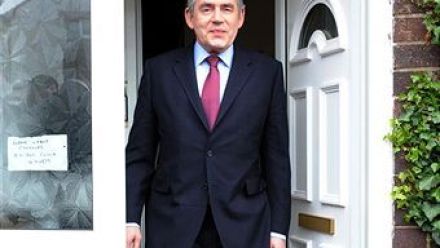
So Brown has now visited Gillian Duffy's home to apologise to her in person.  Somehow, I think that's not going to defuse this row.  Labour have, in the lingo of the The Thick of It, a major omnishambles on their hands.  And he's called Gordon. The worst aspect of this for Labour, though, is the timing.  Sure, they wouldn't have chosen this at any point the campaign.  But, with only a week left, it threatens to both obliterate eveything that's gone before and overshadow whatever Brown does from now until polling day.   And then there's the final TV debate.

Brown v The Voters

From our UK edition

We have just witnessed the biggest moment of the 2010 election campaign. It wasn't that Brown let off steam: it was that he instinctively described as "bigoted" a woman who represents what should be Labour's core vote. Sure, she mentioned immigration - but just said "where are they coming from"? Her main concern was the national debt, and what her grandchildren will have to pay. Neither Cameron or Clegg would have thought these points bigoted - and neither would Tony Blair. The thought would not have crossed his mind. Nor that of Kinnock, Foot or Callaghan. Labour's campaign is led by a man who dislikes campaigning, having to get down and dirty with ordinary voters. He doesn't like standing for election. "Whose idea was that?" He asked when inside the car. Whose idea was what?

Deeper into the mire

From our UK edition

It is just getting worse and worse for Brown. The woman he insulted is a widow whose husband died of cancer and who worked with handicapped children.

Clegg will be hurt by this too

From our UK edition

Brown calling Gillian Duffy that ‘bigoted woman’ from the safety of his car having ended his conversation with her cordially is, obviously, hugely damaging for Labour’s campaign. But I suspect Nick Clegg will also suffer some collateral damage as it will push immigration to the top of the political agenda, an area where the Lib Dems with their plan for an amnesty for illegal immigrants are on the wrong side of public opinion.