Uk politics

The Tories work to seize the moral high ground

From our UK edition

Well, well today just keeps getting more and more extraordinary. The Tories have responded to the Lib Dems beginning formal negotiations with Labour by offering the Lib Dems a referendum on AV in exchange for a full coalition with Lib Dems in the Cabinet. The Tories stress that this is their final offer to the Lib Dems. Having spoken to several members of the shadow Cabinet, it appears that the offer is designed to allow the Tory party to seize the moral high ground. They believe that if the Lib Dems were to join with Labour to ram through a change in the voting system—Labour are offering the Lib Dems AV without a referendum and then a referendum on STV—then they would be discredited.

How can the Lib Dems deal against the backdrop of a Labour leadership contest?

From our UK edition

And so it begins. With Brown's statment earlier, the Labour leadership contenders are already creeping out of of the Downing Street woodwork.  Paul Waugh tweets that David Miliband will announce his candidacy tonight.  The News of the World reports that Ed Balls has his campaign primed and ready to detonate.  And I'd be very surprised if there aren't more names about the enter the fray. All this activity is sending electic currents through the Westminster air – and it could end up burning Labour and the Lib Dems.  Both sides are are saying that they want to create a "strong" and "stable" government.  But how can Clegg & Co. see anything stable in this situation?

Brown saves the worst till last

From our UK edition

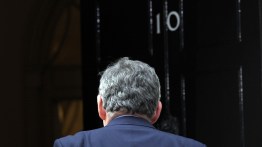
We have just witnessed Gordon Brown’s last and most audacious confidence trick. “Gordon Brown to resign” says the television newsflash: but the story was the very opposite. Gordon Brown is staying on, saying – pretty much – that it will take an SAS operation to get him out of No.10 before the autumn. He declared a "constitutional duty" to stay until a new administration is formed "with majority support in the House of Commons". Untrue. You just need a majority to pass laws. One can govern with a parliamentary minority (see Alex Salmond in Edinburgh, and Harold Wilson in 1974). Cameron won the right to govern, when he last week secured a greater share of the vote than Blair in 2005 and two million more votes than Brown.

Brown statement: now with added video

From our UK edition

And here's a transcript of the statement "We have a parliamentary and not presidential system in this country and as I said on Friday, with no party able to command a parliamentary majority arising from the general election, my constitutional duty as prime minister is to ensure that government continues while parties explore options for forming a new administration with majority support in the House of Commons. "The business of government has continued including concerted action in Europe today to avert the financial crisis in the Euro area. Alistair Darling the chancellor spent much of his time yesterday in the European finance ministers meeting in Brussels.

Gordon Brown announces his resignation

From our UK edition

You're witnessing history, CoffeeHousers: Gordon Brown has just announced his departure from frontline politics.  In a statement outside Downing St, he confirmed that he would be stepping down as Labour leader by September – triggering a leadership contest in the process.  It's clear that he's using himself as a bargaining chip, making a Lib-Lab deal more palatable to Nick Clegg.  Indeed, he even said that formal talks between the parties are now commencing. This threatens not just to shake the kaleidoscope, but to smash it to pieces.  Until 17:05 this afternoon, most folk thought that a Lib-Con deal was imminent.  But surely Brown wouldn't have taken this step if there wasn't a chance – however slight – of sabotaging those efforts.

Suspended animation | 10 May 2010

From our UK edition

Weirdness reigns in Westminster at the moment, as the entire political establishment sits drooling and waiting for insights into the Lib-Con talks. The latest negotiator to break cover was the Lib Dem's David Laws who managed, very artfully, to give very little away.  And so we were told that the Lib Dems are speaking with Labour, and that they are seeking "clarification" from the Tories over every issue from eduction to tax and electoral reform.  In other words: all the parties concerned are still negotiating. There is a growing sense - fuelled by reports that Nick Clegg is meeting his MPs later this evening - that we may not get a deal quite as quickly as expected.  It may be tonight, it may be tomorrow morning, it could even be later this week.

The return of David Davis

From our UK edition

The shadow Cabinet were gathering before their meeting at 2pm. One member told me ‘it is looking less like formal coalition now.’ But coalition remains the leadership’s preferred option. Talking to Tory MPs—old and new—this morning, there’s a sense that they would slightly prefer minority government. Though, no-one is planning to blow themselves up if the country does end up with a Tory-Lib Dem coalition. One other interesting development today is that there is a growing expectation that David Davis will be recalled to the colours. Certainly, his return would make Cameron’s top team more accurately reflect the ideological balance of the party.

Do the Lib-Lab talks alter the landscape?

From our UK edition

Isn't it all very cosy?  Turns out the Lib Dem negotiating team secretly met with a Labour delegation over the weekend: Ed Balls, Peter Mandelson, Ed Miliband and Andrew Adonis.  And it's thought that Nick Clegg has had more conversations with Gordon Brown, both on the phone and in person.  So the Tories aren't the only ones enjoying some quality LibTime. It doesn't really alter the cut of the situation, though.  Most folk around Westminster seem to expect a Lib-Con deal, of sorts, at some point today.  But Clegg and his team would weaken their hand if they didn't at least explore every option.  The Tory leadership will appreciate this – and, I'm sure, won't be all that perturbed by these latest developments.

Who’s using whom?

From our UK edition

Another day of live political theatre, staged live at College Green. Given that Cameron last night negotiated a confidence-and-supply deal - ie, enough to keep him in a minority government like Alex Salmond has in Scotland - why is he negotiating further? What's more to discuss? This is what we find out today. David Steel told Radio Four this morning that Nick Clegg had told him, before the election, that he would put a time cap on any Con-Lib Pact - ie, a shelf life of one or two years. This suggests that the Lib Dems would not fall for the obvious Tory ruse: the offer of a referendum on PR due in 2012, but with the sneaky expectation of a new election in May 2011 at the latest. But Cameron has much more to offer - and things that suit him rather well.

The coalition nears

From our UK edition

‘A government by this evening’ is what several Tory MPs have told me they expect. Those who have spoken to David Cameron say that he has no appetite for a second election within 12 months and that he wants the stability of a coalition. David Cameron is in the House of Commons. When I passed him earlier, he was without the entourage that so often accompanies him and was saying hello to those he passed. This might not sound like much but it does suggest that Cameron is adjusting to the new circumstances, that he is taking greater care to be nice to his parliamentary party than he has previously. Shadow Cabinet meets at 4pm and then the parliamentary party at 6. In both meetings, Cameron will be on stronger ground if he has a deal to present.

Who should get what?

From our UK edition

In February I pontificated about the composition of Cameron-Clegg government - to general ridicule. The blogpost looks increasingly prescient now that David Cameron seems to be favouring a formal deal with the Lib Dems. Assuming that Lib Dem MPs will sit around the Cabinet table, what ministries should they get? The assumption is that the Lib Dems want six Cabinet post and will probably end with no more than four. The Conservatives cannot give up the Chancellorship, Education or the FCO - departments that are important for the leadership, its worldview and its reform agenda . Nor is it easy to see a Lib Dem in Defence or someone like Liam Fox passed over (even if it was for Paddy Ashdown).

So now we know how Boris feels about coalition government

From our UK edition

Aside from a few quips about Walls sausages and Meccano, Boris has kept his views relatively private since the events of last Thursday.  But you can always count on the Mayor of London to open up for his Daily Telegraph column, and, today, he does exactly that.  Here's his take on a Lib-Con coaltion – which, to my eyes, seems more than just a little bit dismissive: "The Lib-Con negotiations are still going on, in a foretaste of the Belgian orgies of tedium and paralysis that proportional representation will inflict on the country. Everyone is trying politely to work out exactly how many Cabinet seats to give a party that came a resounding third and did worse than in 2005.

A rolling Westminster drama

From our UK edition

Another extraordinary day in Westminster. A deal looks likely to be agreed by Clegg and Cameron tomorrow morning, put to backbench MPs in the afternoon and then Brown will advise the Queen to send for Cameron on Tuesday. (Brown may choke on those words, but if he says 'send for Ed Balls' I don't think she will fall for it.) This evening at 6pm, the handful of Tories MPs who are in London met Cameron at the Commons to discuss the coalition talks. Rumours still fly but as I understand it a deal has been reached where the LibDems will vote for Tory cuts - thereby fulfilling Vince Cable's pledge to be the guarantor of stability. "But they will want Cabinet seats," I am told by a LibDem source. "Why be tainted with cuts with nothing in return?

My understanding is that Cameron will not sacrifice schools reform

From our UK edition

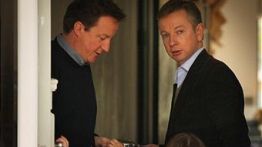
During coalition talks, wild rumours can fly - and some of them can be true. That's why Michael Gove would have stopped many a Tory heart this morning by telling Andrew Marr that he was by no means wedded to a Cabinet job and then heaped praise on David Laws. The Gove schools policy is ranked by The Spectator as reason in itself to vote Tory and by The Economist as the best single policy of the election campaign. Might it be sacrificed? The 10am radio headlines were suggesting so.  I bumped into Gove just afterwards and asked him: panic over. He had simply sought to make clear that he was not insisting on a Cabinet job, and nor was he drawing some kind of red line around is own position. He sought to state the obvious: that he serves at the pleasure of the party leader.

Don’t forget the Party, David

From our UK edition

Days, perhaps only hours away from the expected announcement of a Con-Lib deal, the Tory party rank-and-file is getting increasingly restive. Many MPs and party activists do not feel that Team Cameron has been sufficiently attentive to them and their concerns. They look longingly at the Lib Dems, whose democratic set-up enables MPs and party members to make their views known to Nick Clegg and the leadership. In a Tory party that has always favoured single-minded leadership, the options for representing rank-and-file views are few, particularly as the chairmanship of the 1922 committee remains vacant. As a result, many senior MPs have been reduced to calling hacks to find out what is actually going on.

A long day’s journey into night

From our UK edition

Sky News are reporting that Brown is to hold a meeting with Cabinet ministers tonight. Lord Ashdown made it pretty clear on Andrew Marr this morning that there would be no 'progressive coalition' with a Labour party that has been comprehensively rejected at the polls, and which would rely on backroom deals with celtic nationalist parties prepared to sell their support for a measure of protection from necessary spending cuts. You'd have thought that tonight's meeting is the beginning of the end for the Labour government.

Swords around a throne

From our UK edition

The Sunday Times reports that the Cabinet is suggesting to Gordon Brown that he resign as Prime Minister, and that Labour goes into opposition against a weak Conservative government facing an unenviable economic task. The ‘Caretaker Prime Minister’ did not fly to Scotland to consider a re-shuffle, though that would have provided some light entertainment. And his swift return to London this afternoon suggests that Brown’s premiership is gasping its dying breaths. With the exception of a brief lapse on the telephone, Brown’s conduct has been dignified in recent days. For once, he has led. Will he remain as Labour leader if he resigns as PM? He might; he's stubborn whilst the pretenders to his crown are lachrymose. Tactical considerations also favour Brown.

Cameron’s Clause 4 moment

From our UK edition

David Cameron never really had a Clause 4 moment. True, the Conservatives never believed anything so absurd as socialist economics. But the fact that he never had a genuine dust-up with his party made many voters think that he had rebranded but not reoriented them. In the end, it made many would-be supporters wary of voting Tory. Now, the Tory leader may have a Clause 4 moment thrust upon him by virtue of the Lib Dem talks. For if a Con-Lib pact is to be made, it will include a lot of things the party finds unpalatable. Like Tony Blair's experience with the Labour Party over the Clause 4 discussions, some in the Conservative party will try to hold out against a coalition agreement and any compromise on Tory policies.