Uk politics

Gove’s school reforms get off the ground

From our UK edition

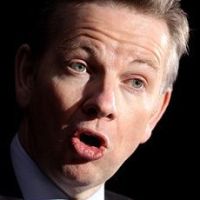
The arduous process of reforming our country's education system begins today.  After two school reform bills were announced in yesterday's Queen's Speech, Michael Gove is writing to all English primary and secondary schools inviting them to cut loose from local authority control and become academies.  This is but stage one of the reform process: changing the system that's already in place.  The really radical part will come after the summer recess, with the government's plans for pupil premiums and the like.

Laughs, politics and sincerity

From our UK edition

The opening of the Queen’s speech debate is, traditionally, a light-hearted affair. Peter Lilley opened up with a rather witty speech. He compared the Liberal Democrats to the bastards of the Major Cabinet, it is better to have them inside the Cabinet pissing out than outside the Cabinet pissing in. He went on to warn the new Prime Minister that the appropriate response to John Major and Gordon Brown’s microphone troubles is not to turn your microphone off but to keep ‘your receiver switched on to hear legitimate concerns.’ David Cameron would be well advised to heed this tactfully-expressed advice. Lilley ended with a heart-felt plea to bring the troops home from Afghanistan as soon as possible.

What Harriet Harman can do for us all

From our UK edition

Today's the day, I suspect, when it will really hit home with Labour that they are now in Opposition.  Attacking a government's legislative agenda isn't something they've had to do for 13 years.  And while you could say that the Brown machine acted as an opposition in government – geared to destroy its rivals – this is different terrain, with different priorities.  It will fall to Harriet Harman to lead the charge from 1430 onwards. The FT's Jim Pickard has some sensible advice for Labour's stand-in leader.  But the crucial point is this: "It will be tempting to slam 'Cameron and Clegg' for 'taking £6bn out of the economy' and 'risking a double dip recession'.

A day of pomp and positivity

From our UK edition

The sun is filtering through the garden at 22 Old Queen Street, and a brass band is marching around St James's Park: we're getting the light and the pomp in equal measures for today's Queen's Speech.  As for the actual policy, well, we largely know what it's all about.  There will be proposals for scrapping ID cards, strengthening civil liberties, reforming schools, making the police more accountable, and more.  The emphasis from the government is on handing power back to the people. The question is whether the coalition can make today's positives balance out the age of austerity.  The stock market today provides a gloomy reminder that their biggest challenge is, and will remain, the economy.

The media helps the coalition’s fiscal cause

From our UK edition

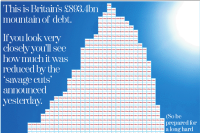
This feels like a watershed moment: a national newspaper devoting its cover to an image of the country's "debt mountain," with a small shaded-off area showing how little of it is covered by yesterday's cuts.  The paper in question is today's Independent.  And while the cover may not perfectly depict what's going on with our public finances – yesterday's cuts will reduce the government's annual overspend, not the overall debt burden which will keep rising for years to come – it is still a powerful reminder of Brown's toxic legacy. In some respects, the coalition might not appreciate this kind of focus: after all, politicians don't much like mentioning the debt burden and their powerlessness in the face of it.

A show of Cameron’s adaptability

From our UK edition

Great to hear that David Cameron has decided to keep the 1922 committee reinstated. This is a significant, unexpected development – and sign of strength, not weakness. Interestingly, I hear that George Osborne had not been properly consulted about last week's events: ie the way in which MPs were asked to vote into effectively abolishing the 1922 committee of backbenchers and being strongarmed, Blair-style, by the leadership. Cameron had not intended things to turn out as they did and Osborne, in particular, was dismayed.   I always suspected that last week's fracas was a simple misjudgment, easily explained under the chaotic events of coalition.

Undoing the spending of the last government

From our UK edition

In the table below, we consider how the budgets of various departments grew over the last Labour government. It spells out the very large rises in Health and Education (together, the rises in these two departments accounted for 61 percent of the total rise in departmental expenditure over the period). And we can see that other departments, such the Foreign Office, experienced cuts. Then, in the later columns, we consider what percentage falls today’s cuts represent and what proportion of the total rises since 2004/5 they undo.  We see that the largest cuts fall on CLG communities, down by 7.3 percent, reversing 74 percent of the rises over the last Parliament.

The long haul starts here

From our UK edition

Sunshine might have won the day but today was also the start of the age of austerity, as George Osborne and David Laws laid out £6.243bn of cuts. Despite the fact that they were cutting ‘wasteful’ and ‘low priority spending’, both men were keen to insulate themselves against the Labour attack that the coalition is cutting for ideological reason. Osborne said that ‘controlling spending is not an end it itself.’ While Laws stressed that the Coalition would ‘cut with care.’ Within its first fortnight in office, the government has found savings with commendable celerity. But the fact that the whole package was agreed on at 11.

Those coalition cuts in full

From our UK edition

Here, via the Guardian Data Blog, is what each department will be contributing to Osborne's £6.2 billion package of cuts this year: Department Contribution to cuts in 2010/11, £million % of department's overall 2008/09 spending Business, Innovation and Skills 836 54.60 Communities and Local Government 780 2.12 Devolved Administrations 704 1.09 Transport 683 4.

Osborne needs to make the moral case for cuts

From our UK edition

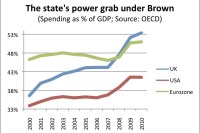
Gordon Brown may have been defeated, but you can hear his voice in the broadcast reports this morning about the £6 billion cuts which George Osborne will mention today. The BBC was still expressing this in terms of frontline service cuts – the equivalent of 150 schools, apparently. This was the root intellectual error which sent Britain on the path of fiscal ruin – the idea that extra spending magically means extra, better services. If that were true, Britain should have the best schools on the planet and healthiest population in the world, given that our spending over the last decade years increased, quite literally, faster than any other country over any other postwar decade*. Source: OECD George Osborne is not even reversing this.

The spending battle begins

From our UK edition

Mark the date, dear CoffeeHouser – for this the day when the spending cuts began.  George Osborne is set to give details on his £6.2 billion cuts package later today, but we already know the broad outlines of it all: £900 million from the business department budget, £500 million from chopping down some quangos, £150 million from cutting Whitehall recruitment, and so on.  One encouraging fact is that only £500 million of these cuts will be "recycled" back into the public sector. The rest will go towards getting the government's annual overspend down. But let's not pretend that this is anything other than a start.  With the deficit at £160 billion (not to mention total debt rising towards £1.

The big week ahead

From our UK edition

After the historic events of the past two weeks, it seems odd to say that the next few days are the most important of the coalition government so far.  But, until the emergency Budget on 22 June, there's little that will hold quite so much significance as tomorrow's announcement on spending cuts and the Queen's Speech on Tuesday. This will be a major chance for the coalition to get more of the public onside for a programme which is set to last years. In which case, it's unsurprising to read that the government will sweeten the medicine of cuts by hastening through some of its most radical, positive policies before summer recess.  School reforms, a Great Repeals Bill, and Parliamentary reform – all are expected to be introduced in double-quick time.

Have the Tories fallen victim to the Lib Dem Hug of Death?

From our UK edition

First, a little bit of history: as recently as last Christmas, I was a member of the Liberal Democrats. I can't remember why I joined them, and I can't remember why I left – which strongly implies that I put very little thought into either – but that's a story for another time. As a member, I was part of a group within the party that wanted to pull it in a more classically liberal direction: a smaller state, lower taxes and greater personal freedom. The idea of a party committed to greater personal freedom, but not greater economic freedom, always struck me as equal parts ridiculous and confused. If the Lib Dems exist to find a balance between liberty and equality, we thought we needed to prove that the correct balance was 100 percent liberty.

Cameron should seek the common ground

From our UK edition

Last weekend, David Cameron had few rebels at all in his party. This week, he has 118. The vote on the 1922 Committee membership was a free vote, of course, so this can by no means be compared to a proper, whip-defying Commons rebellion. But we have seen there are scores who are not prepared to support the leadership automatically. As I say in my News of the World column today it was unnecessary to draw such a dividing line over a party that badly wants the coalition to succeed. True, Tony Blair bossed his party about. But Blair earned the right to when he won a landslide victory. His message was “if you follow my modernising path, we get mass popular support”.

The Tories have their eyes on Iran

From our UK edition

You may not have expected anything less, but it's still encouraging to see the new government pay so much attention to Afghanistan. After David Cameron's meeting with Hamid Karzai last week, no less than three ministers have visited the country today: William Hague, Liam Fox and Andrew Mitchell. And Whitehall's number-crunchers are busy trying to find extra money for the mission. There's a sense, though, that all the attention actually represents an underlying shift in focus.

Dodging Iraq

From our UK edition

Disowning the Iraq War: that's the task which Ed Balls and Ed Miliband have a set themselves today, as part of their continuing efforts to distinguish themselves from the Blair and Brown years.  In interview with the Telegraph, Balls says that the public were misled by "devices and tactics" over the case for war.  And, in the Guardian, Ed Miliband argues that the weapons inspectors should have been given more time, and that the conflict triggered "a catastrophic loss of trust in Labour".  He has since claimed that he would have voted against the war at the time.

The axeman speaketh

From our UK edition

There's an entire gaggle of noteworthy interviews in the papers this morning, but let's start with David Laws in the FT. It's generally quite hard to draw substantive conclusions about the actual interviewee in political interviews, but I'm sure you wouldn't come away from this one thinking anything but that Laws is a good man to have in the Treasury right now. Here, anyway, are five observations about what he actually said:  1. Sharing the blame. If people in Tory circles feel that there's one major consolation to working with the Lib Dems, then it's that they can share the blame over spending cut.