Uk politics

Flotilla follies

From our UK edition

Two groups in the Conservative party that have worried most about Con-Lib government are the social conservatives and the neo-conservatives. The latter have been particularly worried about UK relations with Israel. There is a real concern in parts of the Conservatives Party that three factors would come together to sour Anglo-Israeli relations: what the neo-conservatives see as the Foreign Office’s knee-jerk Arabism, the presence of many supposed Arabists in Cameron-Hague’s teams, and the anti-Israel bias exhibited by many leading Liberal Democrats. Whatever the truth of these allegations, they are held with considerable fervour.
The gun control question

From our UK edition

Inevitably, the horrendous tragedy in Cumbria has led to calls for gun control to be reviewed.  An already sensitive issue is complicated by philosophical differences between those who argue that safety lies in tightened controls and those who believe it's ensured by relaxed controls, or no controls. So, a political minefield, and the government and opposition are as one today: a premature reaction would be irresponsible, let’s have a review. That seems sound to me. Thankfully armed rampages are rare in Britain partly because gun control is tight, as anyone who’s bought a shotgun will attest – hours of paperwork and endless recommendations and character assessments. A review is likely to maintain that status quo for the most part.

The case for Carswell

From our UK edition

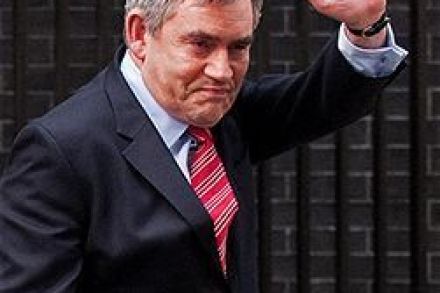
Douglas Carswell has an outside chance of becoming the chairman of the Defence Select Committee. I hope MPs take a punt and elect him because his ideas on defence procurement deserve regular airings. The festering sore of defence procurement went septic under Gordon Brown. The Nimrod Inquiry and the Gray Report concluded that contractors and the defence establishment operate a ‘conspiracy of optimism’ which disregards the requirements of specific theatres, causing casualties and diminishing military capability. Soldiers in Helmand cannot subdue Helmand with Viking trucks that were designed for arctic warfare (why the hell would we be fighting there anyway?).

Harman’s schtick

From our UK edition

Harriet Harman is irresistibly attracted to the absurd. This morning, she has decreed that the shadow cabinet be split 50:50 between men and women. Naturally, she would pervert Labour party rules to ensure the quota was a statutory requirement. To be honest, I’ve lost track of Harman’s myriad ruses to increase the female presence in high politics; and to be equally honest I’m no longer interested. It’s Harman’s schtick, leave her to it. Speaking to the national Unite conference, Harman made some sensible points about Labour’s electoral failure.

The Third Man for the third way

From our UK edition

Peter Mandelson’s Machiavellian streak runs deep. Like the wily Florentine, Mandelson wants to retire to the country to farm and be close to the earth; but first, there is the small matter of a book for political princes. In this morning’s Times, Mandelson has written an exhaustive plug for his forthcoming book, The Third Man: Life at the heart of New Labour.   In the course of writing his publisher’s press release, Mandelson makes two important points: one historical and one current.   He admits his greatest mistake was to broker Blair and Brown’s deal in 1994; the soap opera that followed, Mandelson argues, would never had occurred had they fought it out there and then.

Minimum unit pricing: NICE, but wrong

From our UK edition

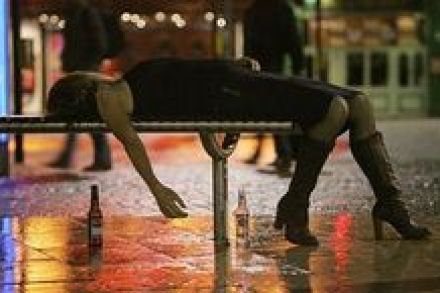
So, NICE, the body charged with ensuring cost-effectiveness in the NHS, says that alcohol minimum unit pricing is the most effective way to tackle excessive drinking and its impact on the NHS and society.  Interesting, and certainly a challenge to the new Health Secretary and his alcohol taxation review, but ultimately misguided.     Where NICE have got it right, is that there is a clear and consistent relationship between the price of alcohol and its level of consumption.  Indeed, the effects of price changes on alcohol consumption are more effective than other alcohol policy interventions, such as restricting the number of outlets, or bans on advertising or price promotion.

Cameron impresses on first outing

From our UK edition

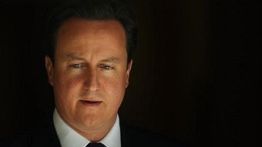
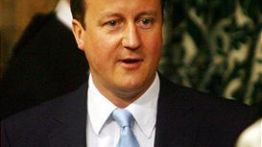
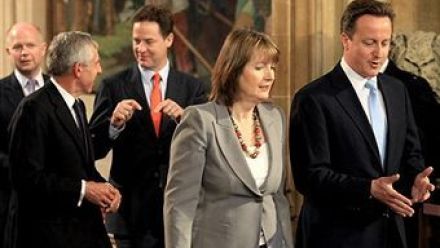
The shootings in Cumbria this morning meant that today’s PMQS was always going to be a subdued affair. David Cameron was impressive, though.  You wouldn’t have guessed it was his first time answering questions and he controlled the pace of the session expertly. There were fewer people on the front bench than last week meaning that Nick Clegg was more visible than he had been during the opening of the Queen’s Speech debate. Clegg sat to Cameron’s right while Hague was on his left. Harriet Harman asked some cleverly constructed questions, her ones protesting at plans for those accused of rape to be given anonymity are never going to be easy to dismiss.

The Commons’ bizarre new chemistry

From our UK edition

It still looks like your TV set is on a horizontal flip when you see Cameron at the government dispatch box. Even more disorientating to see Chris Huhne on the front bench and Nick Clegg beside Cameron - making supportive facial gestures on areas he agrees with (pupil premium), and looking quizzical on areas on which he does not (marriage). Cameron’s performance shows that Britain has just had a tremendous upgrade in the eloquence of its Prime Minister: his performance was no better than as Leader of the Opposition, but still at a high standard. Without Brown’s henchmen leading Labour, their backbenchers were disorientated. But still rather numerous: Labour has 258 MPs, more MPs than any party which has not gone on to win the next election.

Cameron must not radically change his style at PMQs

From our UK edition

Watching David Cameron’s mannequin-like performance during the TV election debates, it became apparent just how good he is at the dispatch box. Quick witted, funny and incisive, Cameron invariably demolished Gordon Brown at PMQs. Daniel Finkelstein’s column is a must read today, bludgeoning the absurd guff about  the ‘new politics’. But Finkelstein argues: ‘David Cameron is very good at being combative in the chamber. He has won many battles. And it will seem unecessarily risky to change his style. But the prize is great. For he can be a national leader, not a party one. And he can make a reality out of the nonsense of the new politics.

Hughes in the ascendant

From our UK edition

The indications are that Simon Hughes will become Lib Dem deputy leader. Politics Home reports that Hughes is backed by 29 of the party’s 57 MPs, which make him the outright winner in the race with Tim Farron. Hughes also received the backing of 60 percent of party activists on the Lib Dem Voice website. The Tories will be both wary and pleased at this development. Hughes is left-wing, determinedly so, and among those who favoured a deal with Labour. Rumours abound that Cable’s resignation was contrived to promote Hughes, who is also said to be livid at being excluded from government - an Ashen-faced Hughes was spied shaking his head during the Queen’s speech debate. Animus and ego make for toxic coalition politics.

The Department for Fragile States?

From our UK edition

The Department for International Development (DFID) should forsake peaceful but poor countries and instead turn into “a world leader in tackling the problems of fragile states.” That’s what a new Chatham House report by Alex Evans, who used to be an adviser to Hilary Benn, and his colleague, David Steven, argue: 'If the UK wants to deepen its commitment to backing the challenges posed by fragile states, it needs to remodel DFID extensively, with the department concentrating on developing a coherent preventive agenda for fragile states.

The novelty factor

From our UK edition

Nick Clegg was run-through when he and Jim Naughtie last crossed swords. A different outcome today – the deputy Prime Minister was composed, defending the coalition’s tight agreement. Naughtie was in ‘we’re lolling in a cafe on a dusty street, a donkey brays at the dying sun' mode, and never pressed Clegg.   First, Clegg assured Naughtie that government continued without David Laws, and he echoed John Redwood’s and William Waldegrave’s point that Chief Secretary is a political job in which the author of the coalition agreement, Danny Alexander, has every chance of excelling. Naughtie didn’t mention Lib Dems’ hypocrisy on expenses, which might have shaken Clegg. CGT tapering came next.

Labour’s gruelling task

From our UK edition

There was a great sense of pathos after the election, when Jack Straw was the only Labour politician who could recall the shadow cabinet room’s location. It must have been surreal for those who knew only government. The loneliness of opposition would have struck at last week’s Queen’s Speech. The party must renew whilst avoiding the internecine struggle that condemned the Tories to 13 years in opposition. Fantasy politics won’t be sufficient. Introspection must yield a coherent and credible agenda, free from the undeliverable abstractions and the oscillation between arrogance and desperation that characterised the Brown government.

Coming clean whilst going straight

From our UK edition

Combating drug misuse in our prisons could be one of the best ways to cut reoffending. A prison sentence should, for a drug-addicted criminal with a  chaotic lifestyle, act as a form of respite – not just for the community, but also for the offender themselves. Yes - prison should be a place of punishment, but it should also be a chance to get clean.   An effective strategy to combat drug misuse in prisons means tackling drug smuggling and supply, while ensuring that the treatment regimes give prisoners the best possible chance of getting – and staying – clean.  The previous Government failed to do either.

Call the committee to order

From our UK edition

It’s committee chairmanship season in Westminster, and there are two noteworthy battles. Michael Fallon and Andrew Tyrie are scrapping over the Treasury Select Committee. The FT summarises the pros and cons of both. Fallon, who served as John McFall’s deputy, remains the front-runner, but the cerebral Tyrie has an impeccable record as an economist, committee member and constituency MP - I grew up near Chichester and Tyrie deserves credit for tackling the city’s perennial flooding problems; and, for what it’s worth, he won the Spectator’s backbencher of the year award again last year. I understand that Tyrie has the requisite number of backers, as well as ties with Nigel Lawson, Ken Clarke and William Waldegrave.

I’m alright Jack

From our UK edition

Transparency is this government’s quintessence. It is a mantra to two gods. First, it is a constituent of the ‘new politics’ – that jewel over which the three partisan thieves squabble. Second, it enables the government to amputate gangrenous public sector pay.   The public sector is powerful. The previous government’s economic policy bred a bowler-hatted Leviathan. You can argue the toss whether civil servants are overpaid per se, or that their pension entitlements are grotesque in an era of budget restraint. But the government’s battle will be more brutal because the public sector is the final redoubt for the antediluvian fat-cat unionism of Simpson, Woodley and Crow, to name but three.

The Labour leadership contest continues

From our UK edition

With the Coalition facing its first major test, it is easy to forget that there is a Labour leadership contest going on. But there are two interventions in that race worth noting this Bank holiday weekend. First of all, Jon Cruddas and Jonathan Rurtherford have anessay in the New Statesman  sketching out a ‘new covenant with the electorate.’ It would be based around the ideas of an ethical economy, reciprocity and liberty. The piece will make Cruddas’ many admirers in the Labour movement regret that he’s not running. What’ll be interesting to see is which of the declared candidates picks up his ideas and runs with them.

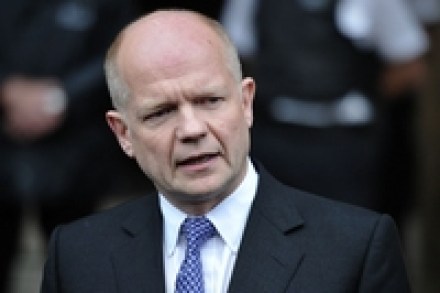
Hague pitches it right

From our UK edition

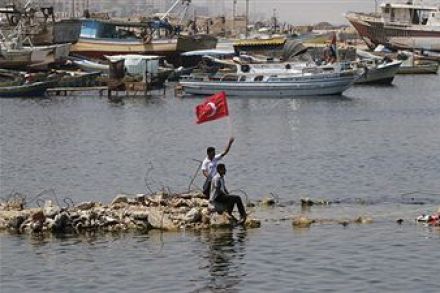
It would be wrong to pass comment on the loss of life on the Gaza Flotilla; the facts are not established. Israel is right to investigate convoys that it feels might be supplying Hamas with arms. But, as ever in the Middle East conflict, it must be determined whether Israel’s use of force was proportionate. Not that the answer to that question ever deters Hamas from terror or Israel from retaliation. Peace does not lie in abstract nouns. However, international law will determine the facts of this incident, and perhaps bring clarity to the divisive Gaza border issue.