Uk politics

Did the bureaucrats lose the war?

From our UK edition

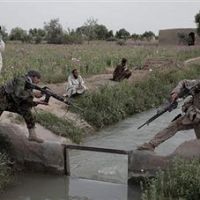
The Times went big on their story of Britain’s campaign in Helmand, and all the mistakes made in 2005 when the deployment was being planned. It is a good piece of reporting, which adds to the volume of stories about the war, its planning and execution. Britain’s effort Helmand, like the one in Basra, will in time need a magisterial study, a sort of multi-volume study like Winston Churchill’s The Second World War, which can weave the front-line experience together with the turning of the bureaucratic wheels. But at least the first draft of history is now being written.

What can Cameron do about Obama’s war against BP?

From our UK edition

Very little is my immediate answer. The President’s approval ratings are biting the dust. Powerless to stem the tide of oil and unpopularity, Obama can only victimise a ‘foreign’ oil company. Obama may be embattled at home, but if any doubt the US President’s ability to influence global events, they need only look at BP’s share value and the pension funds derived thereof. BP is mired in an expensive oil disaster, but the President’s rhetoric about the ‘habitual environmental criminal’ and threatening BP with criminal proceedings demolishes market confidence. If the British government had condemned AIG, Goldman Sachs and Merrill Lynch in similar tones, the US administration would have retorted. Cameron can do nothing.

No politician visits the frontline

From our UK edition

A few years ago, when I was serving with the Grenadier Guards in Iraq, I was part of a team tasked with looking after the visiting Secretary of State. There were five Defence Secretaries during my short spell in the army – a sign, perhaps, of the lack of attention the last government paid to the armed forces. Some were impressive, some less so. One was famous for falling asleep during briefings, but the one I was accompanying in Basra was wide awake. He wished to carry out of the most important missions facing Cabinet members in a warzone: conduct an interview with the Today programme on BBC Radio Four. He asked if we could turn off our own radios, so as to reduce the background noise – and seemed amazed and a not a little put out when we refused.

Simon Hughes elected Lib Dem deputy leader

From our UK edition

As expected Simon Hughes, has won the race to be Lib Dem deputy leader, congratulations. Both candidates pledged to assert the party’s independence within the context of supporting the coalition. Hughes intends to appoint Lib Dem spokesmen for all government departments to improve accountability in parliament. A renowned left-winger, Hughes’s inclination must run contrary to the Conservative dominated coalition, and I wonder how he will take Patrick Wintour’s news that the coalition is beginning to act as one politically, mastering a strategy to deflect Labour’s political assaults.

Who could Britain place in the UN’s humanitarian department?

From our UK edition

After Sir John Holmes retires as the head of the UN’s humanitarian activities later in the year, the Cameron government will have the chance to make its first high-level international appointment. Officially, the job is appointed by UN secretary-general Ban ki-Moon, but the unpopular South Korean is likely to want to keep the new British government on board as he seeks re-election for a second term. So the UK is likely to get its pick. Rumours have it that three people are on the short list drawn up by officials:  Valerie Amos, the Labour peer and former International Development Secretary; Dame Barbara Stocking, the head of OXFAM, and Martin Griffiths, the head of the Centre for Humanitarian Dialogue and formerly Deputy UN Humanitarian Relief Coordinator.

Cameron repulses Harman’s misdirected assault

From our UK edition

The PMQs attack No 10 was expecting from Labour on the Coalition’s planned spending cuts did not materialise and today’s was another relatively quiet affair. It started with a minute’s silence in memory of those who died in the shootings in Cumbria. Harman asked one question on gun laws before moving on to the electoral roll and whether it is fair to redraw the boundaries on a roll that does not include three and a half million people. Harman would be on quite strong ground here except for the fact that the boundaries were redrawn under the last government using this electoral register, a point Cameron made.

BREAKING: Abbott has made it onto the ballot

From our UK edition

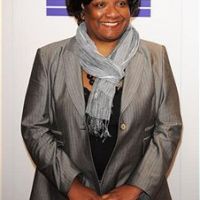
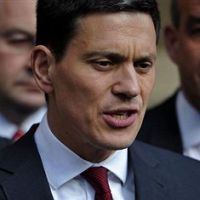
David Miliband's patronising ruse has worked. The rumours that have circulated for half an hour or so have now been confirmed by the BBC. I wonder what damage Abbott will now cause the other candidates? Also, what does it say for the case for diversity and Labour's internal policy debate if Abbott's election was a stitch-up?

The Labour leadership race descends into farce

From our UK edition

Perhaps it’s just me but this morning’s Labour leadership machinations are a farce of political correctness. Everyone is falling over themselves to be as nice as possible and essentially rig the ballot so that Diane Abbott receives a nomination. As James notes, it's a peculiar tactic as Abbott will cause no end of trouble for the ‘serious’ contenders for the ultimate prize. Needless to say, David Miliband, that auteur of absurdity, planted the banana skin. Attempting to be magnanimous but excelling in pomposity, he has voted for Abbot and urges all to do the same. My hunch is that there are many on the right of the party who will resent this move and conclude, finally, that David Miliband is not a leader.

A day of elections at Westminster

From our UK edition

By the end of the day, we will know the identity of the Liberal Democrat Deputy Leader and the chairmen of Select Committees as well as a sense of the shape of the Labour leadership contest. The races for the Select Committees are a mix of near certainties and unknown quantities. Keith Vaz is expected to return to the chair of the Home Affairs Committee. Michael Fallon is understood to have the backing of the members of the Treasury Select Committee, whilst his rival Andrew Tyrie is in with a shout of winning the cross party vote. The leadership races are clear cut. Simon Hughes' team have briefed that their man has up to 60 percent of the parliamentary party's support. In the Labour stakes, Andy Burnham is expected to join the current nominees.

Nats go nuclear on the Lib Dems

From our UK edition

The Scottish and Welsh Nationalists have managed to prompt the first Commons vote where one of the governing parties has to vote against its own manifesto. They have put down an amendment calling for Trident to be included in the SDR, which will be voted on at 10pm tonight. The Lib Dem manifesto commits the party to ‘Saying no to the like for like replacement of the Trident nuclear weapons system, which could cost £100 billion. We will hold a full defence review to establish the best alternative for Britain’s future security.’ But the Coalition agreement states that the government will keep Britain’s nuclear deterent and says that the renewal of Trident should merely be scrutinised for value for money.

From targets to results

From our UK edition

As I wrote last week, momentum is important if the coalition’s reform agenda is to avoid stagnating. So far so good and the latest morsel of progress is Andrew Lansley’s pledge to hold hospitals accountable for outpatients’ health for one month after discharge. The plan is designed to prevent the early discharge of patients in order to meet waiting list targets. NHS trusts will be fined if a patient is re-admitted with related symptoms. Lansley will also seek the abolition of non-clinically justified targets, which were introduced by the previous government. The emphasis is on results, not targets; transparency, not ruses; efficiency, not waste.

Obama’s antagonism to BP is rooted in desperation and prejudice

From our UK edition

To all bar Tony Hayward, it is clear that BP is finished in America. A Macarthyite degree of opprobrium has been cast against the interloper. As Matthew Lynn notes, BP’s PR flunkies are grovelling across the networks, apologising in that singularly lachrymose British fashion. They should stop demeaning themselves and fight back. BP is to blame for the leak, but it is being demonised by an American President whose desperate populism and prejudice is masquerading as principled leadership; it is the latest British institution to be victimised by Barack Obama. Owing largely to the demands of the insatiable US market - which Obama has done nothing to abate, despite his green credentials - oil exploration has never been so risky as companies drill in deeper and rougher seas.

Achtung, Liam

From our UK edition

Defence Secretary Liam Fox is used to looking across the Atlantic for military inspiration and across the English Channel to France for the future of defence cooperation. But he might do well to look somewhere else – namely to Germany where the young defence minister, Karl-Theodor zu Guttenberg, has launched one of the Cabinet’s most ambitious cost-cutting programmes. He is planning to cut the number of active-duty soldiers from 250,000 to 150,000 as part of a an effort to find  €1bn (£840m) worth of cuts as part of the government’s €80 billion austerity programme. He is even contemplating an end to compulsory military service -- something normally seen as a fundamental principle for the CDU and CSU.

Ed Balls and the art of opposition

From our UK edition

There’s been a lot said about Ed Balls’ Observer piece on immigration. But the most striking thing about it to my mind is that it shows that Balls has made the transition to an opposition mindset.   Take his proposal that ‘Europe's leaders need to revisit the Free Movement Directive’. This is classic opposition politics; suggest something that sounds good but it practically impossible. The other EU member states are unlikely to agree to agree to renegotiating this directive. But the Tories can hardly point this out; emphasising the UK government’s impotence when it comes to changing the rules of the game would hardly go down well with the Tory base. So Balls gets to make the weather on this point.

The Prince of Darkness passes into night

From our UK edition

If Ed Miliband wins, it’s curtains for Peter Mandelson. Michael Crick reports this exchange between GMB president Mary Turner and Ed Miliband. ‘"As Labour leader, would you invite Peter Mandelson to join your shadow cabinet?" "All of us believe in dignity in retirement," replied Ed Miliband.’ Is Mordor mobilising? You bet your sweet life it is. No. In reality, I think that Mandelson, the uncompromising diarist, is finished with frontline Labour politics, and it with him.

The previous government’s economic failure laid bare

From our UK edition

As Ben Brogan notes, there was a clean symmetry to David Cameron’s speech this morning: the crisis was Labour’s fault; therefore, Labour is to blame for the painful measures needed to restore stability. As Cameron put it: ‘I think people understand by now that the debt crisis is the legacy of the last government. But exactly the same applies to the action we will take to deal with it.’ Cameron made constant reference to the actions of the ‘previous government’. As a foretaste of what the Independent Office for Budget Responsibility will expose, Cameron alleged that Alistair Darling withheld estimates that Britain will be repaying £70bn per annum in debt interest by 2015.

Cameron lays the ground for cuts

From our UK edition

David Cameron’s speech today was about preparing people for the cuts to come, persuading them that Labour’s mismanagement of the public finances had made this ‘unavoidable’ and reassuring them that he had no ideological desire to make cuts and so would do them in the most sensitive way possible. Cameron managed to pull this off fairly effectively. He is managing the rhetorical transition from leader of the opposition to Prime Minister fairly well. In a way, what Cameron is doing now is the easy bit: the intellectual case for dealing with the deficit is unarguable. It is when the Coalition has to outline not broad principles but the specifics that things will get tough.

How the coalition makes room for Labour

From our UK edition

Whoever wins Labour's leadership, whether it's a breed of Miliband or Balls, its future will be dominated by its understanding of how it found itself on opposition benches. Philip Gould, Tony Blair, Gordon Brown and the other progenitors of the New Labour project - were wrong. Their fatal assumption was that their core vote, the working classes, had no-where else to go. Labour, therefore, could reach out the middle classes, broadening their support and thus New Labour was born. At first their calculations were correct. Two slogans, "Education, Education, Education" and "Tough on Crime, Tough on the Causes of Crime" brought together the two separate demographics to create a powerful - and seemingly unstoppable - election winning machine.