Uk politics

Achtung, Liam

From our UK edition

Defence Secretary Liam Fox is used to looking across the Atlantic for military inspiration and across the English Channel to France for the future of defence cooperation. But he might do well to look somewhere else – namely to Germany where the young defence minister, Karl-Theodor zu Guttenberg, has launched one of the Cabinet’s most ambitious cost-cutting programmes. He is planning to cut the number of active-duty soldiers from 250,000 to 150,000 as part of a an effort to find  €1bn (£840m) worth of cuts as part of the government’s €80 billion austerity programme. He is even contemplating an end to compulsory military service -- something normally seen as a fundamental principle for the CDU and CSU.
Ed Balls and the art of opposition

From our UK edition

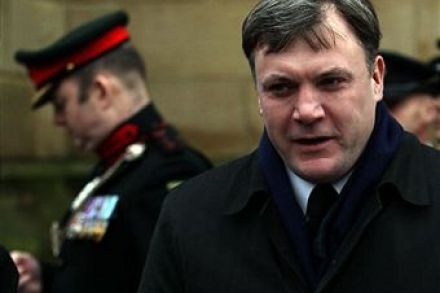
There’s been a lot said about Ed Balls’ Observer piece on immigration. But the most striking thing about it to my mind is that it shows that Balls has made the transition to an opposition mindset.   Take his proposal that ‘Europe's leaders need to revisit the Free Movement Directive’. This is classic opposition politics; suggest something that sounds good but it practically impossible. The other EU member states are unlikely to agree to agree to renegotiating this directive. But the Tories can hardly point this out; emphasising the UK government’s impotence when it comes to changing the rules of the game would hardly go down well with the Tory base. So Balls gets to make the weather on this point.

The Prince of Darkness passes into night

From our UK edition

If Ed Miliband wins, it’s curtains for Peter Mandelson. Michael Crick reports this exchange between GMB president Mary Turner and Ed Miliband. ‘"As Labour leader, would you invite Peter Mandelson to join your shadow cabinet?" "All of us believe in dignity in retirement," replied Ed Miliband.’ Is Mordor mobilising? You bet your sweet life it is. No. In reality, I think that Mandelson, the uncompromising diarist, is finished with frontline Labour politics, and it with him.

The previous government’s economic failure laid bare

From our UK edition

As Ben Brogan notes, there was a clean symmetry to David Cameron’s speech this morning: the crisis was Labour’s fault; therefore, Labour is to blame for the painful measures needed to restore stability. As Cameron put it: ‘I think people understand by now that the debt crisis is the legacy of the last government. But exactly the same applies to the action we will take to deal with it.’ Cameron made constant reference to the actions of the ‘previous government’. As a foretaste of what the Independent Office for Budget Responsibility will expose, Cameron alleged that Alistair Darling withheld estimates that Britain will be repaying £70bn per annum in debt interest by 2015.

Cameron lays the ground for cuts

From our UK edition

David Cameron’s speech today was about preparing people for the cuts to come, persuading them that Labour’s mismanagement of the public finances had made this ‘unavoidable’ and reassuring them that he had no ideological desire to make cuts and so would do them in the most sensitive way possible. Cameron managed to pull this off fairly effectively. He is managing the rhetorical transition from leader of the opposition to Prime Minister fairly well. In a way, what Cameron is doing now is the easy bit: the intellectual case for dealing with the deficit is unarguable. It is when the Coalition has to outline not broad principles but the specifics that things will get tough.

How the coalition makes room for Labour

From our UK edition

Whoever wins Labour's leadership, whether it's a breed of Miliband or Balls, its future will be dominated by its understanding of how it found itself on opposition benches. Philip Gould, Tony Blair, Gordon Brown and the other progenitors of the New Labour project - were wrong. Their fatal assumption was that their core vote, the working classes, had no-where else to go. Labour, therefore, could reach out the middle classes, broadening their support and thus New Labour was born. At first their calculations were correct. Two slogans, "Education, Education, Education" and "Tough on Crime, Tough on the Causes of Crime" brought together the two separate demographics to create a powerful - and seemingly unstoppable - election winning machine.

D-Day (plus one)

From our UK edition

Cuts are here. The most important news of the weekend was the G20’s official backing for spending cuts. It was a significant volte face, and doubtless the sight of violent uprisings in Greece concentrated minds. Finally, George Osborne has been vindicated; but having convinced finance ministers, he must now carry the coalition and the country with him. The first thing to do is ignore Nick Clegg and his claim that cuts will not be savage. Cuts will re-configure government in Britain, the current invasive Leviathan will be dismantled; but the process will be painful in the short-term, it must be.

Balls: we have to be more bigoted

From our UK edition

Meet Ed Balls, the candidate for Mrs Duffy. As the race for nominations closes, the Labour leadership candidates are beginning to focus on party members. With varying degrees of conviction, the contenders have identified immigration as the issue the party must address if it is to reconnect with those voters who spurned it. Ed Balls is that analysis's most fervent advocate. He devoted an article in the Observer to the subject.  Balls argued that there has been too much migration from Eastern Europe, and it has caused economic and social ills in communities such as the one he represents. In hindsight, Britain should have accepted the transitional controls during the eastern bloc’s accession in 2004.

Cable, the free radical, dreams of a grand future

From our UK edition

What is Vince Cable up to? He is on manoeuvres, keeps making attempted power grabs from George Osborne. Barely a week passes without him rattling the cage to which Cameron and Clegg have confined him  - that is, the unwieldy and yet fairly powerless Department for Business, Innovation & Skills. For all its bulk, the department doesn’t really do anything. It has the universities brief, which is important, but it is certainly not an economics department as Cable was pretending last week. “It is a bit like the German economics ministry and the finance ministry,” he claimed. “Two departments, working in parallel.” As if.

Lord Ashdown’s the right man for the Balkans

From our UK edition

Last week, Europe’s foreign ministers gathered in Sarajevo under much fanfare – and did very little except issue a repetitive press release about the region’s future in the EU. The only highlight of the event was William Hague’s speech, which was excellent.   Enlargement, however, is deeply unpopular among European elites, and the gathered foreign ministers seemed to be acutely aware of how little the market will bear by way of new ideas and initiatives.   So the ideas I put out in a brief in the run-up to the summit for improving the EU’s accession process went nowhere. Only Austria and Estonia openly defended proposals at the meeting. Germany joined France as a major opponent of any change in enlargement policy.

The other Rachel

From our UK edition

The boat the Israelis peacefully intercepted was called Rachel Corrie  - named after a young American protester accidentally killed when  offering herself as a human shield in Gaza. Her name became immortalised, some 30 songs have been written for her, a London play named after her and a film last year. But another Rachel, completely forgotten, is Rachel Thaler - a 16-year-old British citizen murdered by a Palestinian suicide bomber in 2002. Only one British publication has ever mentioned her: The Spectator.

Labour leadership contenders eyeing the past, not the future

From our UK edition

I wonder if the Labour leadership contenders worry that the previous generation’s forthcoming memoirs have created more excitement than them? I would be. The insipid campaign has laid bare the paucity of talent on Labour’s benches, and the party’s ideological exhaustion. No serving Cabinet minister lost their seat at the election; Tony Blair aside, the Milibands and Ed Balls are the best Labour has. That’s a grim prospect if your colour’s red. Ed Balls has the panache of a Vauxhall Zafira; and the two Milibands are trapped in a Beckettian whirl of meaningless jargon, convinced that using abstract nouns is a mark of vital intelligence. It isn’t; it’s irritating, and voters spurn it.

Politicize aid? It already is – and good too

From our UK edition

On Thursday, Andrew Mitchell rolled out the government’s first overseas aid initiative – a transparency watchdog – and took to the airwaves to explain the idea. It makes particular sense in a downturn to ensure that taxpayer’s money is well spent but also to give voters the feeling that independent assessments are carried out to guarantee value for their money.   On Newsnight, the International Development Secretary ran into a criticism, often voiced by the aid community – that the Conservatives are too willing to “militarise” aid or to “politicise” it. He dealt with the criticism  robustly – but I want to have a go too. Because while these are snappy sound bites they miss a number of fundamental points.

New Labour, a question of dates

From our UK edition

Ed Balls makes an interesting definitional point in his interview with The Times. He says that to him “new Labour was 1994 to 1997, us translating from being a party of opposition to a party of government, understanding that our radicalism had to be based on credible foundations, that no one would trust you on public services unless you were trusted on interest rates and inflation.” What many other people mean by New Labour is the public service reform agenda. But that didn’t really kick into gear until after 2001. Balls claims that, that was when New Labour lost its way. Balls is trying to argue that it was the ’94 to ’97 period that was responsible for the three election victories and that the party can, therefore, move left.

Post-2011 Afghanistan: Plan B

From our UK edition

Having returned from Washington DC, where I spoke to a range of senior policy-makers about Afghanistan and Pakistan, I am struck by how much confusion there is about what President Obama meant when he said that he wanted US combat troops return home in 2011. Did he mean that 2011 would allow the first assessment of the progress and his strategy and a tokenistic reconfiguration or forces? Or did he genuinely mean that the date would see the beginning of a real, if drawn-out withdrawal? For what it is worth, I am convinced the US president meant the former. This is crucial to the UK, since so much of what the Britain does – and presumably much time was spent on this at the recent Chequers discussion – is about staying close to the US.

The transparency revolution is this government’s immediate lifeblood

From our UK edition

Transparency is the government’s immediate obsession. It costs nothing to enact and gives power to the people. In an excellent post for Con Home, Stephan Shakespeare explains why publishing the COINS database is a revolutionary, seminal moment in British politics. The whole piece is worth reading, but here is an excerpt: ‘It is one of those moments that changes things for ever. When people can’t see where their money goes, they can make no comment, they can have no influence. Governments live and die by public approval; and once you can link spending decisions to identifiable civil servants, their careers will also live or die by our approval; so this kind of openness to scrutiny is utterly revolutionary.

Wrong kind of sex in the City

From our UK edition

By far the most surprising twist in the sorry tale of the demise of David Laws, is that it has yet to unleash another round of banker bashing. There is plenty potential for it. Why, it might be asked, would such a confident and accomplished MP refuse to admit to being gay? Why in this day and age, when so many have paved the way before him, couldn’t he have just come out? The answer may well lie in his career background. Laws came from one of the very hardest places for gay man to be open about their sexuality: the City of London. As I know from my own time among them, the world of financiers is one in which turning up at work wearing a pink shirt prompts a relentless barking chorus of ‘bender!

Red Vince sips clear blue water

From our UK edition

Deprived of the comforts of third party opposition - the ability to say and do as he pleased – Vince Cable has had to put away childish things. Of necessity, the business and enterprise secretary cannot be a socialist. And Cable used yesterday’s speech at the Cass Business School to prove he’s no socialist.   He convinced. Cable will enact the coalition’s plans to reform regional development agencies, cut preferential micromanagement grants that supersede the judgement of markets, demolish stifling small business regulation, curtail short-term speculation on company takeovers to protect shareholders, cutting the deficit early and the part-privatisation of the Royal Mail.