Uk politics

A worrying poll for the Tories

From our UK edition

Ipsos-MORI’s July political poll will make uncomfortable reading for the coalition as the summer break looms. It has the Tories on 40 percent, Labour on 38 percent and the Lib Dems on 14 percent . It is just one poll – the Tory lead is usually around 7 points – but the Lib Dems’ crisis is real enough. George Eaton’s spot on when he says that Labour’s resurgence is ‘impressive’. The worry is that cuts have not yet been felt, and that the Lib Dem position can only get worse. The coalition has all sorts of possible plans to protect the Lib Dems. With growth as it is, Osborne could be persuaded to limit cuts. The parties are seeking a closer political union by attacking Labour’s position on the deficit.


Forging a cheaper green policy

From our UK edition

The debate over climate change is one of the most polarised in UK politics, between those advocating doing everything possible (no matter what the cost) and those who refuse to think about doing anything at all. If, like us, you take the view that the science tells us there are major risks from climate change – albeit with uncertainty around how bad, when and where the risks might bear out – but that costs matter, you are likely to find yourself simultaneously denounced by both sides as a ‘denialist’ and a ‘warmist’. Our new report, Greener, Cheaper explores how we can cut the costs of cutting carbon.

More grist for the welfare reform mill

From our UK edition

How many incapacity benefit claimants could actually work? Well, we get a sense of the answer with some figures released by the Department for Work and Pensions today. They show that, of the people who have gone through the new Work Capability Assessments so far, some three-quarters are able to look for a job. Scale that up for everyone on incapacity benefits, and it suggests that around 1.8 million claimants could return to the labour market. Although the numbers are eye-catching, they're not entirely surprising: similar figures were published when the WCA was introduced under Labour.  And it could be worth holding fire until the necessary review of those assessment tests has reported back later this year.

Cameron’s provocative language over Gaza serves to obscure the issue

From our UK edition

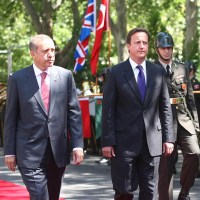
And there's me thinking that David Cameron's overtures to Turkey were newsworthy enough, when he drops this into his speech in Ankara: "Let me also be clear that the situation in Gaza has to change. Humanitarian goods and people must flow in both directions. Gaza cannot and must not be allowed to remain a prison camp. But as, hopefully, we move in the coming weeks to direct talks between Israel and the Palestinians so it's Turkey that can make the case for peace and Turkey that can help to press the parties to come together, and point the way to a just and viable solution." In a wider sense, this is indicative of the West's firmer attitude towards Israel in the wake of the flotilla incident.

Boris’ calculations

From our UK edition

There has been some speculation, most of it idle, that Boris Johnson will not stand for re-election as London Mayor in 2012. Speaking to the Today programme about the necessity of protecting the Olympics budget, Boris commented on his putative re-election campaign. He said: ‘If things are still going well I would be totally crackers not to have another go at it then. But I'm going to be making an announcement later on.’ Many would describe his tenure so far as a comedy of inertia. I don’t: Johnson battled hard to shield the City from puerile political indignation at the height of the financial crisis. It showed a seriousness and determination not usually associated with a panel show politician.

The coalition’s summer challenge

From our UK edition

How striking that, as another Parliamentary term draws to a close, all the talk is of some sort of union between the Tories and the Lib Dems.  There was Mark Field's blog post about an electoral pact, yesterday, of course.  But now Rachel Sylvester follows it up with an article in the Times outlining a possible "metrosexual merger" between the two parties.  And Paul Goodman has a piece in the Telegraph suggesting that such a merger may well be in the offing. In many repsects, all this chatter is testament to the early success of the coalition.  What we have seen over the past few months has, on the whole, been responsible and surefooted government by a group of people who seem to get on personally as well as politically.

Cameron’s foreign policy is music to the ears of a resurgent FCO

From our UK edition

Tim Montgomerie observes that the FCO now stands for Foreign and Commerce Office. David Cameron is determined to conduct British foreign policy in our economic interest. And, in that spirit, he is off to charm India in the hope of gaining access to that enormous emerging market – last week’s magazine has exhaustive coverage of the trip. Tim also claims that the Foreign Office won’t like this ‘redirection of their mission’. I’m not so sure. From what I hear, the Foreign Office is loving it; it’s just like old times. The FO was marginalised under the previous government; Labour cut staff in embassies and consulates around the globe.

The coalition must tread carefully over electoral pacts

From our UK edition

Well, Mark Field has certainly got Westminster talking with his suggestion that the Lib Dems and Conservatives might not oppose each other in marginal seats come 2015. It's the kind of idea that has been sloshing around for a few weeks now, but having it relayed through a Tory MP's blog post gives it a little extra punch. And so plenty of questions abound. What would this mean under AV? Who would do better out of it? Is it sensible for both parties to effectively make the next election a referendum on the coalition? etc. etc. But one question doesn't seem to be getting enough airtime: what would this mean for the voters themselves? You see, these electoral pacts may, more or less, make sense when it comes to strengthening the coalition.

System failure aids another EU power-grab

From our UK edition

David Cameron's so-called “referendum lock" is supposed to ensure no more powers are handed to the EU. His thinking, bless him, is that if he just keeps a low profile and doesn't sign any extra treaties then things won't get worse. This fundamentally mistakes the way the EU works. As we say in the leader for this week's magazine, ever-greater integration is hardwired into the system. An example we cite is the coming European Investigatory Order, which Theresa May has naively described to other ministers as a tidying up exercise (Jack Straw said the same about the EU constitution).  As we put it: “Another power grab is looming. Plans are being drawn up for a European order that would mandate British police officers to follow requests lodged from overseas.

Guess who’s back | 26 July 2010

From our UK edition

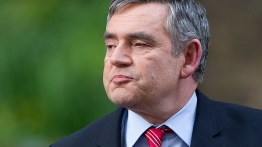
Oh look, Gordon Brown has continured his return to public life with a sizeable interview in today's Independent.  It's a generous portrait which seems designed to dispel any rumours about the former Prime Minister's wellbeing. Apparently, he "looks healthy and fit … seems quite cheerful." And we're treated to descriptions of his face, "like a map of a man's soul." For those who can read any further, there are accounts of his constituency work and his aspirations to "do more on international development". The world shudders. Despite his claims to the contrary, there are ominous signs that Brown is keen to impact upon our national politics.

Desperate Balls comes out fighting

From our UK edition

Springtime for Ed Miliband, curtains for Balls. Or at least it should be, following the news that Unite will back Miliband for the leadership. It is rumoured that Balls will pull out of the race and support David Miliband in an attempt to secure the shadow chancellor’s post. But only Brown does seemingly blind defiance better than Balls. This morning, Balls has assaulted the airwaves with the full complement of Brownite clichés: ‘I fight on; I fight to win. I’m in it to win it. I am the best person to fight this coalition.’ You get the impression that he means it, and he’ll fight on in hope rather than expectation. It will take a miracle for Balls to win from here.

Alistair Darling – a loss to the Labour party

From our UK edition

Alistair Darling was one of the ministers to emerge from the Brown years with his reputation enhanced. His honesty about the state of the economy, beginning with that extraordinarily stark interview about the coming collapse, contrasted with what is politely described as Brown’s eternal optimism. Darling also deserves commendation for fighting Brown and Balls’ shameless politicking, and for winning. However, Darling lost the battle over raising VAT hike. Darling told Andrew Marr this morning: ‘There's a choice really, you can put up VAT or you can put up an income-related tax which is what the National Insurance is... "The advantage of VAT is it brings in a lot of money.

US double talk on Megrahi

From our UK edition

If what the Sunday Times reports is true, then Kenny McAskill deserves an apology. ‘In the letter, sent on August 12 last year to Alex Salmond, the first minister, and justice officials, Richard LeBaron (deputy ambassador in London) wrote that the United States wanted Megrahi to remain imprisoned in view of the nature of the crime. The note added: “Nevertheless, if Scottish authorities come to the conclusion that Megrahi must be released from Scottish custody, the US position is that conditional release on compassionate grounds would be a far preferable alternative to prisoner transfer, which we strongly oppose.

Clegg denies it was a mistake to assert the illegality of the Iraq War at PMQs

From our UK edition

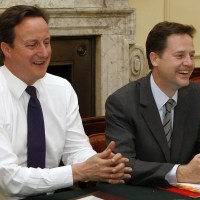
Nick Clegg has made this statement on Channel Four News: ‘I have always been open that my personal opinion that the legal base is not justified for our going into war. That wasn't the view of the previous government, this government as a whole, the new coalition government, doesn't take a view on the legality of it. But I don't think it is right for me to enter government and somehow completely airbrush out well-known personal views that I have held and expressed for a very long time. ‘I am the deputy prime minister, I am also a human being who feels with great conviction about things. I don't think that politics is well served by politicians suddenly falling utterly silent on things that they are well known to feel strongly about.

Unite back Ed Miliband

From our UK edition

Ed Miliband has secured a clean sweep of the major unions. That poses Miliband a problem in the future – centrist opponents can characterise him as ‘the union candidate’ with all its negative connotations. In the meantime, Miliband’s chances of becoming the next Labour leader have been greatly enhanced.   Ed Balls, however, is effectively finished. Balls will recognise this, and will be considering his next move. Now his ambition is to be shadow chancellor, and, as Paul Waugh argued yesterday, David Miliband is the candidate most likely to offer him that, or so the theory goes.  It is, if you'll excuse the expression, all eyes on Balls.

The Brokeback coalition

From our UK edition

It’s the silly season. The Newspapers have been trawling for anti-coalition quotes from MPs, their wives and their dogs. They’ve found two. Tim Farron, the defeated candidate for the Lib Dem deputy leadership, said yesterday that David Cameron had a ’toxic brand’ and it wasn’t his job to cleanse it. Well, the latter is certainly true, and Lib Dem benches are concerned by plummeting polls and intense flak from Labour. David Cameron will make a very public effort to grant the Lib Dems concessions on civil liberties and fairness in the tax system, a pre-emptive tonic ahead of cuts.    There is disquiet on Tory backbenches - there always is. David Davis has been stitched-up in the Boot and Flogger in Southwark.

Balls to back David?

From our UK edition

Paul Waugh sees it as his duty to pass on little drops of intrigue, and this one’s a dollop. If, as is expected, Unite back Ed Miliband tomorrow, the clapped-out Balls juggernaught will finally croak: there is no chance of him winning without Unite’s backing. There is a widespread rumour that Balls will pull out and back David Miliband. Waugh explains why: ‘The scenario painted to me is this: by dropping out and backing David M, his chances of becoming Shadow Chancellor are greatly enhanced. (The assumption here is that Ed Mili can't offer him Shadow Chancellor because the top of the ticket would just look too unbalanced...that's an assumption some will challenge).’ Only time will tell.

Bluntly speaking

From our UK edition

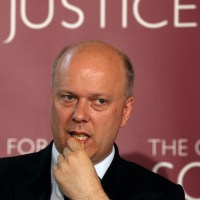
Crispin Blunt has been unceremoniously slapped down by No 10 for saying that the ban on parties in prisons will be lifted. The Coalition is following a liberal line on criminal justice but it has no desire to pick a fight on the question of whether prisoners should be allowed to party in jail. A look at The Sun and The Mail this morning show why Downing Street dumped on Blunt so fast. The Mail followed up yesterday’s critical coverage of the Coalition with a devastating front-page assault on Blunt and his arguments. The Sun, which has been extremely supportive of the Coalition, also went for Blunt.

If the Tories go on like this Labour will become the party of law and order

From our UK edition

Before such fripperies were banned, al-Qaeda terrorists were given lessons in stand-up comedy while in high-security prisons. I’d have thought that the exploding underpants fraternity had natural advantages in comedy, but never mind. What I want to know is who gave the lessons? It’d be ironic if it was a voluntary group. The Mail has worked itself into a panicked fury about that the ban on prison parties would be revoked. To be fair to the Mail, Crispin Blunt, the Prisons Minister claimed as much in speech last night, and he vowed to abolish Indeterminate Sentences for Public Protection - orders that incarcerate the sort of charmers who butcher you in the bus queue if you give 'em a look.