Uk politics

The unions up the ante

From our UK edition

The front cover of the Times (£) provides a dreary snapshot of what the coalition can expect once the cuts start to bite. Unison have responded to job losses in the NHS by arguing that the government is "conning" the public over the impact on frontline services. And they're threatening to all get all litigious about it. As one of the union's spokeswomen tells the paper, "If we are not happy with the [government's reply], we are reserving the right to issue urgent judicial review proceedings." You wonder whether they'd have done the same against Labour's proposed 20 percent cuts. And this will be just the start of it.

Miliband’s Big Society

From our UK edition

Paul Waugh has already noted David Miliband and Tessa Jowell's proposal to turn the BBC into a co-op. But the language they use to outline the idea is striking in itself. Here's an excerpt: "In confronting the big challenges ahead of us, whether it's rebuilding our economy, tackling climate change or protecting frontline public services – the need for collective action is greater than ever. This is a moment for mutualism, which offers us the opportunity to take collective action in step with individual aspiration, drawing on the values and practices of the cooperative movement and today's Coop party.

Why Gove’s school reforms could go further

From our UK edition

The latest issue of the magazine is out today and, with it, all of the articles from last week’s edition have been made available online to non-subscribers. Among them is Toby Young’s column which raises some important points about, and criticisms of, Michael Gove’s school reforms. Toby, if you hadn’t heard, is working to set-up a free school himself – so he’s very much operating at the coalface on this, and his thoughts deserve attention. In which case, here’s the entire article for CoffeeHousers’ benefit: It has been described as the most radical overhaul of the school system since the introduction of comprehensives.

The battle over IPSA enters a new phase

From our UK edition

MPs have never really got along with the new expenses body, the Independent Parliamentary Standards Authority. But now their mood towards it seems to have become even frostier. I imagine that IPSA's three-month anniversary, and the rather complacent-sounding celebrations that accompanied it, are something to do with that. Tom Harris's wonderfully acerbic Birthday message, from a couple of days ago, captures how many MPs feel about the whole affair. In letters to the Telegraph today, Michael Fabricant and Denis MacShane ratchet up the attacks on IPSA. And while many will not see them as the ideal poster boys for a rebellion against an expenses watchdog, it's worth remembering that they are far from alone.

What you need know ahead of the Spending Review – Health

From our UK edition

With this autumn’s Spending Review set to be one of the most important moments in the life of the coalition government, Coffee House has linked up with the think-tank Reform to investigate what could – and should – be in the final document. This first post, by Reform’s director Andrew Haldenby, is the first in a series of “What you need to know” summaries, looking at each of the main policy areas – in this case, health. Other posts will cover specific policies, examples from abroad and Reform events. We’re delighted to get the ball rolling… What is the budget? The NHS is the biggest public service budget in England by far.

Bring on the debate about social housing

From our UK edition

David Cameron did say that his proposal to end council houses for life would trigger "quite a big argument" – and that is exactly what he has got today. The Lib Dems' Simon Hughes has offered the most vociferous dissent so far, stressing that this "in no way represent the policy of the coalition and certainly do not represent the policy of the Liberal Democrats." And, to be fair, he has a point: the idea had not gone through coalition channels before Cameron mooted it yesterday, and neither was it contained in the Tory manifesto – so there still needs to be a lot of conversation and consideration before anything like it can be put into action. It would be a shame if this reduced to a Tory-Lib Dem split story, though.

The equality landmines that Labour have left the coalition

From our UK edition

Oh dear, the Treasury is mired in another controversy about equality after the Guardian published a letter which Theresa May sent to George Osborne before the Budget. In it, she warned that the government could face legal action if it is unable to show that its decisions were made with a consideration to "existing race, disability and gender equality duties." As she puts it: "If there are no processes in place to show that equality issues have been taken into account in relate to particular decisions, there is a real risk of successful legal challenge by, for instance, recipients of public services, Trade Unions or other groups affected by these decisions.

How tightly are the Lib Dems bound to the Tories?

From our UK edition

A thoughtful and thought-provoking column from Danny Finkelstein (£) in the Times this morning, which is well worth a trip beyond the paywall to read. In it, he makes a persuasive point: that, despite their plunging poll ratings, the Lib Dems aren't doing too shabbily at all. After all, who, looking back at the party's recent history, would have thought they would be in power in 2010? That they are suggests, in Danny's words, that "this is not not the bottom for the Lib Dems, it is the top." From there, an important point is made against those who still contend that the Lib Dems would have been better off shacking up up with Labour in May, that it would have been a more natural fit. Here it is: "…the price of joining Labour might well have been greater.

The government could make political and fiscal gains if it reviews the Trident upgrade

From our UK edition

On one level, there is something admirable about the government's uncompromising support for a Trident upgrade: senior Tories really do believe in the deterrent's strategic importance, and are not willing to sacrifice that. But, on many other levels, that same inflexibility is looking more and more unwise. Three former senior military figures write to the Times today with a new riff on a point that they have frequently made before. Why not squeeze another 15 years out of the current system, they say – by which time, "the anachronistic and counterproductive aspect of our holding on to a nuclear deterrent would be even more obvious." This is an argument with which a whole host of military figures and Lib Dems will sympathise.

Zardari drops a rhetorical bombshell

From our UK edition

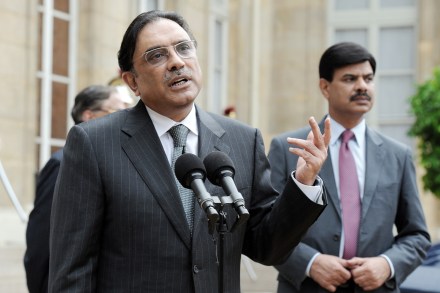
David Cameron isn't the only world leader who can lob rhetorical hand-grenades about the struggle in Afghanistan, you know. Speaking ahead of his visit to the UK, Pakistan's President Zardari has said that the "international community … is in the process of losing the war against the Taliban." Adding that, "And that is, above all, because we have lost the battle for hearts and minds." Given his pivotal, front-seat role in proceedings, it's got to go down as one of the most significant statements on the war so far. Is this intended as a riposte to Cameron's remark about Pakistan and terrorism? I'm not sure.

Why the government needn’t fear the strikes

From our UK edition

With the threat of major strikes timed to coincide with Osborne's spending review in October, I think it's worth exhuming an important point that Julian Glover made in his Guardian column last month: "UK politics is often characterised as a contest for the centre ground, but that misdescribes the nature of the quest. Centrism implies banality, but I don't think voters want their governments to be mundane. There is a willingness to endorse radical action if it is explained and if it looks practicable. It worked for the left under Attlee and Blair; it worked for the right under Thatcher; and it is working – so far – for this government.

Balls: let’s remain on the centre ground and oppose cuts

From our UK edition

As the New Statesman's George Eaton suggests, there's quite a lot packed into Ed Balls's piece in the Times today (also on his website for those who can't venture beyond the paywall). And, what's more, some of it makes sense. Take his argument that Labour shouldn't cede the "radical centre ground" of British politics to the coalition. That's the right argument to make, even it if is rather undermined by Balls's own efforts to drag the party leftwards. As usual, it all starts to unravel as soon as Balls gets to the public finances. His position is blunt and straightforward: that "Labour needs strong leadership to make a credible argument against slashing public spending and raising VAT, which will increase unemployment and risk a double-dip recession.

A postcard from Dave and Nick

From our UK edition

Here's a slightly curious one: David Cameron and Nick Clegg have written a public letter to their ministers, reminding them that, "deficit reduction and continuing to ensure economic recovery is the most urgent issue facing Britain," and that, "the purpose of our government … [is] … putting power in the hands of communities and individuals and equipping Britain for long-term success." If you wanted to read into it, then you could say that the emphasis on the "long-term" throughout the letter is a warning to any disgruntled sorts: policies for the long-term require time to implement, so the coalition has to be built to last, etc. etc. But, of course, this missive is directed at voters as much as anyone else.

Tyrie asserts himself once again

From our UK edition

Few MPs have made quite so many waves recenty as last year's Spectator backbencher of the year, Andrew Tyrie. Under his chairmanship, the Treasury Select Committee seems to have gained a new vitality and edge. And it has certainly accumulated more powers, with the ability to veto the government's appointments to, and dismissals from, the Office for Budget Responsibility. As he put it himself in an interview with the Independent last week, "The fight back by Parliament is beginning now." Just how aggressively he intends to prosecute that fight back is suggested by his comments in the Times (£) today.

Dannatt’s departure means one less cook stirring the defence broth

From our UK edition

So Sir Richard Dannatt has departed the Tory fold almost as curiously as he entered it. Sure, have been no gaffes from Chris Grayling this time around – but when it was announced last October that the former head of the Army was advising David Cameron, it was widely expected that he'd graduate to become a peer and a minister in any Tory government. But today he announces his "retirement" as neither. The Tories are downplaying all this, eager to avoid a repeat of the speculation that surrounded Sir Alan Budd's departure. And, to be fair, there are few signs, as yet, that this is a viciously unamicable split.

There is no Cabinet rift on benefit reform

From our UK edition

Here's me about to go on holiday, and the welfare wars seem to be opening up. Neil O'Brien has a piece on it over at the Telegraph website. And Hopi Sen, one of the better leftie bloggers, has written a response to my post yesterday. Partly, he wants to stir: it's not so much that the Treasury want to block IDS's reforms, he says, but rather that they are following Osborne's orders to reduce the deficit. And so it's one part of the government at war with another. By contrast, the Whitehall wars I outlined are hangovers from the Brown days, where the Treasury set policy for all other departments and its instinctive reaction was to destroy any proposal it did not come up with.