Uk politics

Tony Blair’s advice for Labour: be more like the coalition

From our UK edition

There's a remarkable self-certainty about what we've seen of Tony Blair's book so far. Sure, there are the fleeting moments of doubt and insecurity: the drinking that was becoming less a pleasure and more a habit, for instance.  But, apart from that, the dominant motif is how His Way was the Right Way. And so, he was right to keep Brown on as Chancellor. He was, it seems, right to prosecute war in Iraq – even if the WMD intelligence was "mistaken". And his chapter on Northern Ireland is written up as a ten-point action plan for future peace processes after future conflicts. Make no mistake, this isn't a bad thing in itself.
Tony Blair’s memoirs: the first extracts

From our UK edition

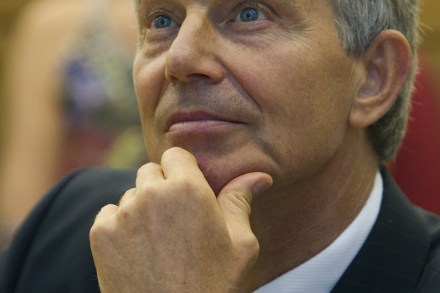
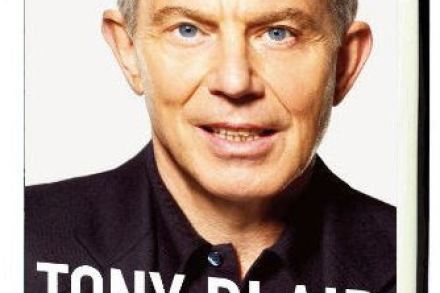
Even the literary critics have to wait until tomorrow for the Blair memoirs – but the book's contents are slowing spilling out onto the Internet this evening. A series of extracts has just been published on the official website, and the Guardian has extensive coverage, including an interview with the man himself. So far, there's nothing too surprising. Blair, for instance, lays into Brown – but adds that it would have been wrong to sack him as Chancellor. And he declines to endorse a candidate for the Labour leadership, beyond offering a handful of veiled criticisms of Ed Miliband. Coffee House will have more tomorrow.

Britannia ruled the waves

From our UK edition

As Pete wrote this morning, the plan to share aircraft carriers with France is controversial. It seems that concerns over sovereignty, job losses and differing strategic interests reduce to the one issue that no government has addressed: the protectionist system of defence procurement, which hampers the operational effectiveness of our armed forces. Typically forthright, Douglas Carswell identifies the problem: ‘Seems like protectionist defence procurement isn’t quite giving us sovereign capability the way we were promised, eh? Had we ordered much of the new carriers to be built overseas, we could have had them at a fraction of the £5 billion cost.

The Blair memoirs loom over Labour’s leadership struggle

From our UK edition

A day before the ballot papers get sent out, and the grey corpse that was the Labour leadership contest has suddenly leapt into a crazy jig. Ed Balls is slamming the "soap opera" of the Mili-rivalry, while calling for more social housing. Andy Burnham is insisting that he's still in with a chance of winning. Alan Johnson has - with a nod to Jose Mourinho, of all people - labelled David Miliband as "the special one". And as part of his rebranding exercise the former Foreign Secretary has even starting making fairly amusing gags. Welcome to the Twilight Zone. But it's not just the prospect of imminent voting that is animating the contenders.

The stars of the spending review

From our UK edition

Insightful work by the FT's George Parker, who traces the choreography of the spending review in an article for the paper today. What's striking is how much the coalition expects to achieve by what Parker calls "peer pressure". Ministers who get through their spending settlement quickly and successfully will be held up as examples to their colleagues, and will be drafted into the the "star chamber" to cast an axeman's eye over other departments' plans. Ken Clarke, we are told, "can hardly wait". According to Parker, the process is already producing its darlings. Jeremy Hunt has exceeded the Treasury's demands by identifying 50 percent cuts in the budget for running his department.

A totemic austerity measure

From our UK edition

As austerity measures go, the plan to share aircraft carriers with France is totemic stuff. Not only could it save the Exchequer a heap of cash – by reducing the need for two replacement carriers – but it also says a lot about how our government wants to operate in the world: multilaterally, flexibly and, perhaps, with less emphasis on military force. Divvying up one's navy with another country does not suggest a strident foreign policy. Indeed, future operations would have to be planned and conducted with the aid of phonecalls to Paris. Of course, this will likely be a controversial move.

The role of libraries

From our UK edition

New government statistics show that libraries are less popular than ever, with a drop over 5 years of nearly one-third in the number who visit them. Over 60 percent of adults do not use them even once a year. Libraries seem vulnerable. With government striving to make economies and councils made to cut budgets, libraries could see their spending cut dramatically. Libraries face a downward spiral in which councils try to make savings by cutting hours, letting some staff go, and closing some facilities altogether. Libraries then become less convenient to use, and usage figures decline even further. There are alternatives. Although libraries mostly loan popular bestsellers and do-it-yourself books to adults, they also introduce children into the world of reading.

Darling exhumes Cameron’s Big Mistake

From our UK edition

Amid all the feverish commotion about cuts, it's easy to forget that it took the Tories until November 2008 to ditch Labour's spending plans - and, indeed, that it was barely a year ago when George Osborne first mentioned the c-word in public. Even David Cameron admits that this delay was his biggest mistake. It weakened his party's claim to foresight, and gave them less time to embed a new narrative about the economy before the election. So it's noteworthy that Alistair Darling exhumed this mistake on the airwaves earlier, telling the Beeb that "the Tories supported [our spending plans] until the end of 2008." This may sound like a cheap shot at Cameron and Osborne, but I expect we'll hear more of it in coming months.

Old Labour, New Labour – or just Same Labour?

From our UK edition

Whatever happened to Peter Mandelson's regard for Ed Miliband? A year-and-a-half ago, the Ennobled One was thought to have marked out MiliE as a future Labour leader. But, today, he pulls out the verbal chainsaw and sets about tearing him down. The younger Miliband, Mandelson implies in an interview with the Times (£), would lead Labour into an "electoral cul-de-sac," because, "to suggest that we should be concentrating on our core current voters … is by way of saying that we want to remain a minority party." And, just in case we didn't get the message, he adds: "we're not looking for a preacher as our leader." Although Mandelson doesn't say as much, it all adds up to an endorsement for the other Miliband brother.

Don’t mention the NHS

From our UK edition

As Tim Montgomerie notes, cuts are becoming more real. Yesterday, the government axed NHS Direct, the telephone health service. Actually it hasn’t been axed but replaced by the more cost effective ‘111’ service. Removing the sacrosanct letters ‘NHS’ from the title of any body is anathema to the opposition, who have mobilised a frantic defence over the past 24 hours, so predictable and I can barely contain my indifference. Twitter has exploded in a fit of righteous indignation; Ed Balls, without a hint of irony, is using words like ‘callous’ and ‘ill-thought policies’; and Andy Burnham’s talking about Andrew Lansley’s ‘vindictive mission to break up the NHS’.

No tax cuts in England’s green and pleasant land

From our UK edition

Danny Alexander has told the Observer that substantial tax cuts are highly unlikely for five years. Alexander argues that ‘the tax burden is necessary as a significant contribution to getting the country's finances in order. So it will have to stay at that level for quite some time.’ Given that the income tax threshold will rise to £10,000 over the course of the parliament, designed to help lower earners, we can take it that there will be no tax cuts for the well-off and hard pressed middle classes. So the 50 percent rate stays, which is not wholly foolish strategically as Labour would preserve it. The squeezed middle classes pose more of a problem for the coalition.

New Labour’s psychodrama went global

From our UK edition

Not as thick as he looked, Dubya. The Sunday Telegraph reports that the Bush administration urged Tony Blair to remain in office because it had ‘big concerns’ about working with the monomaniac Gordon Brown.  Here are the details: ‘Senior officials in the US administration sounded the alert after a meeting between Mr Brown and Condoleezza Rice, Mr Bush’s secretary of state, in which Mr Brown “harangued” her over American policy on aid, development and Africa. After the uncomfortable session, sources said she reported her misgivings to the White House, and they were sent on in turn to Mr Blair.

Bad news for Clarke

From our UK edition

Professor Ken Pease, the renowned criminologist, has written a report for the think-tank Civitas which rubbishes Ken Clarke’s plan to reduce prison numbers by extending community sentencing. Pease is of the Howard school: prison works. The key is that community sentences do not reduce reoffending. Pease estimates that 13,892 convicted offences could have been prevented by incarcerating prisoners for one extra month. The crimes for which offenders are convicted are a fraction of what they author. Pease quotes one estimate that there are 130 burglaries per conviction. Money is not saved by reducing incarceration because the costs associated with the victims (police time, NHS treatment, increased insurance premiums) increase.

Cameron: I fear David Miliband most

From our UK edition

Strange but true: the Cameroons are wary of a Labour Party led by David Miliband. The Guardian's Nick Watt has been eavesdropping and he's gathered a few choice quotes. Kool-aid drinking Tories say: "David Cameron said the candidate he hoped for was Ed Miliband, and the candidate he most feared was David Miliband."  "On the whole we would prefer if Ed Miliband won. His analysis that Labour has to go for a traditional Labour vote, rather than the middle classes, is absolutely wrong. The Ed Miliband analysis will lead them into big trouble." In spite of his best efforts, David Miliband is likely to win.

Who governs Britain? | 28 August 2010

From our UK edition

CoffeeHousers may like to see the full leaked letter (pasted below) to which I referred in The Spectator's cover story this week. It shows how the NUT is using Freedom of Information to try and force school heads to hand over a list of names of anyone who might support a campaign to opt out of local authority control and become quasi-independent Academies. We have blacked out any information that may reveal the source. This letter helps explain why Michael Gove will have so few names next week, when he lists the list of schools who have succeeded in their fast-track application. Out of the 3,000 eligible, a few dozen will have made it.

The legacy of a century of vain politicians

From our UK edition

Monday is the August Bank Holiday – at least in England and Wales, where it is the last weekend before the schools go back. In Scotland, the schools break up earlier (traditionally, so the kids could join in the work of lifting potatoes in the fields) but have already gone back. The August Bank Holiday is just one of eight permanent bank holidays in England and Wales (along with New Year, Good Friday and Easter Monday, the Early May Bank Holiday, the Spring Bank Holiday in late May, Christmas Day and Boxing Day). In Scotland there are nine – an extra day at New Year and St Andrew's Day to replace the August holiday). Northern Ireland has ten, which include St Patrick's Day and the anniversary of the Battle of the Boyne in 1690.

The Milibands, Balls and Attlee

From our UK edition

I know, I know – there's only so much information about the Labour leadership contest that a sane person can take. But as an addendum to Ed Balls' pugnacious speech earlier, it's worth noting that Ed Miliband has since deployed exactly the same argument about deficits and the Attlee era: "We do need to reduce the deficit but politics must be bigger than that. Remember our history. After 1945, with the biggest deficit in our history, that Labour government set out the vision of a good society - for a new welfare state and a new economy." To be fair to MiliE, he's made the same point before now. But its reappearance is a reminder that he has more in common with Ed Balls on the economy than his brother does.