Uk politics

David Miliband strikes for the middle ground

From our UK edition

It must be quite satisfying for the David Miliband campaign that they can commission a YouGov poll and get all the results they would have wanted. According to the Guardian, MiliD has a signigicant lead when it comes to which candidate is the "most effective alternative to Cameron". But it's this finding that is the most significant:   "The poll of 2,907 people, conducted between 25-27 August, also found that David Miliband enjoys a strong lead among voters who abandoned Labour – a key battle in the leadership campaign. He has a 25% lead over his brother among these voters on who would be the best alternative to Cameron, and a 27% lead as the candidate most likely to persuade people to vote Labour.

A question of judgement

From our UK edition

Up until today, the Hague-Myers story was confined to scurrilous rumour on Guido’s blog and the occasional cautious article in the Telegraph or the Mail; the rest of the media were uninterested. But, as James notes, Hague’s two extraordinarily frank statements, particularly yesterday’s impassioned denial to ‘set the record straight’, have forced the issue into the mainstream political debate. The personal always becomes political. What of William Hague’s judgement? John Redwood condemns Hague’s ‘poor judgement’ in personal matters before going on to cast aspersions on his policy judgements, particularly those relating to the EU.

Darling: bankers’ super tax failed

From our UK edition

Honesty is an attractive though rare quality in a politician, and Alistair Darling’s self-awareness and morose delivery always grabs attention. Last night, the former chancellor told a conference of bankers that the 50 percent levy on bonuses over £25,000 was a failure. The FT reports him saying: ‘I think it will be a one-off thing because, frankly, the very people you are after here are very good at getting out of these things and . . . will find all sorts of imaginative ways of avoiding it in the future… what I wanted to do was send a message to them that we all live in the same world together.’ Darling’s is a curious definition of failure.

The Today Programme has its Hague cake and eats it too

From our UK edition

The Today Programme this morning demonstrated the problem with putting out an official statement on your private life: it makes the media feel that they have official sanction to discuss the matter. There were three separate discussions of Hague’s statement on the programme this morning. In a classic case of the BBC trying to both have its cake and eat it, one of the segments spent several minutes debating whether they should be talking about the matter at all. Hague’s problem is that the press is now obsessed with this story; it isn’t going to let it go even after this extraordinarily personal statement.

“The worst-written memoir ever twittered by a serious politician”

From our UK edition

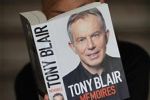
That's how Bruce Anderson sums up Tony Blair's book in a caustic piece for the magazine. Here's the whole review for the benefit of CoffeeHousers: 'It is bizarre. As he often demonstrated in the House of Commons, Tony Blair knows how to use words. He could also have mobilised a team to help him write his memoirs. Instead, it is all his own work, and the words mutinied. This book is not just badly written. it is atrociously written. For almost 700 pages, Tony Blair stumbles between mawkishness and banality. Prime ministers send soldiers into combat. Some of those soldiers are killed. That is a subject which would lead the least sensitive of men to reach into their souls and craft language out of emotional depth. This is Mr Blair's version.

Coulson under the spotlight again

From our UK edition

The New York Times Magazine's article about phone hacking at the News of the World comes, it must be said, a little out of the blue. It's over a year since the story last exercised printing presses in the UK – and a year, too, since David Cameron's communications chief, Andy Coulson, was hauled in front of MPs to explain what happened under his editorship of the paper. Back then, he distanced himself from the dubious methods of some Screws reporters, saying that he was neither aware of, nor complicit in, any phone hacking. And, in the absence of any countervailing evidence, the process left Coulson with a few light bruises, but no real scars. But today's article contains material that could put the heat on Coulson once again.

Tony Blair, freelance statesman

From our UK edition

Say what you like about Blair, but he is something of a political entrepreneur. He detects a gap in the market and fills it: he did with New Labour in the mid-1990s. And he detects a trend in the globalised world: a system where governments don't matter so much and power is held by a global elite. This, CoffeeHousers, is what he's up to with his memoirs. He is presenting himself in new incarnation, a statesman without a state, able to move without being tied down to an electorate. There's a very revealing passage in his book where he talks about Condi Rice: “She is a classic example of the absurdity of people with experience and capacity at the highest level not having big political jobs after retirement from office,” he writes.

Hague statement on Christopher Myers

From our UK edition

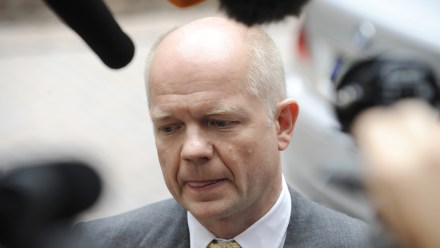
William Hague has just released this statement: “I feel it is necessary to issue this personal statement in response to press and internet speculation over the last ten days.

 Earlier this year a Sunday newspaper began questioning whether my marriage to Ffion was in trouble, and last week another media outlet asked whether there was a statement about our supposed separation. This seemed to be linked to equally untrue speculation surrounding the appointment of Christopher Myers as a Special Adviser.

 Christopher Myers has demonstrated commitment and political talent over the last eighteen months. He is easily qualified for the job he holds.

The education battle opens

From our UK edition

Michael Gove has announced that 32 schools will open as Academies at the start of the new term. More schools are set to open over the next academic year, but it is a disappointing figure. However, it could’ve been worse – I’ve heard rumours that as few as 10 schools would adopt Gove’s reforms. The figure of 32 is at the upper limit of recent estimates knocking around Westminster. Disappointing it may be, but slow progress is unsurprising. These are radical steps and teachers are hesitant in the face of change. Blair’s original academy reforms were frustrated in part by teachers and governors eager to preserve the status quo. However, first Blair and now Gove are committed to an attritional struggle with the recalcitrant Educational Establishment.

Blair: the sex scenes

From our UK edition

Not just a Prime Minister, not just a global statesman, in A Journey Tony Blair also demonstrates he knows how to treat a girl: CHERIE: "I DEVOURED HER LOVE" "…that night she cradled me in her arms and soothed me; told me what I needed to be told; strengthened me; made me feel that I was about to do was right … On that night of the 12th May, 1994, I needed that love Cherie gave me, selfishly. I devoured it to give me strength. I was an animal following my instinct, knowing I would need every ounce of emotional power to cope with what lay ahead. I was exhilarated, afraid and determined in roughly equal quantities." ANJI HUNTER: "SEXY - WITH DEVASTATING EFFECT" "Anji was my best friend.

Blair’s contempt for the left

From our UK edition

In tomorrow's papers the reviewers will compare 'A Journey' to those "real-life" misery memoirs that seem to be publishing catnip. It is not inaccurate to conclude that this is tale of one man's struggle in an abusive relationship, and all the more unstatesmanlike for it. The tiny details of the relationship between TB and GB fascinate me. Brown is the one, Blair admits, who coined the soundbyte "tough on crime, tough on the causes of crime" for example. However, by far the most interesting aspect of the book is Blair's barely disguised hatred of the Labour left and, most of all, the left-wing intellectuals. So here, very quickly are some of his key quotes about today's leading left-wing Labour figures. Tony Blair, it is reasonable to conclude, does not like the Labour Party one bit.

Tony Blair’s advice for Labour: be more like the coalition

From our UK edition

There's a remarkable self-certainty about what we've seen of Tony Blair's book so far. Sure, there are the fleeting moments of doubt and insecurity: the drinking that was becoming less a pleasure and more a habit, for instance.  But, apart from that, the dominant motif is how His Way was the Right Way. And so, he was right to keep Brown on as Chancellor. He was, it seems, right to prosecute war in Iraq – even if the WMD intelligence was "mistaken". And his chapter on Northern Ireland is written up as a ten-point action plan for future peace processes after future conflicts. Make no mistake, this isn't a bad thing in itself.

Tony Blair’s memoirs: the first extracts

From our UK edition

Even the literary critics have to wait until tomorrow for the Blair memoirs – but the book's contents are slowing spilling out onto the Internet this evening. A series of extracts has just been published on the official website, and the Guardian has extensive coverage, including an interview with the man himself. So far, there's nothing too surprising. Blair, for instance, lays into Brown – but adds that it would have been wrong to sack him as Chancellor. And he declines to endorse a candidate for the Labour leadership, beyond offering a handful of veiled criticisms of Ed Miliband. Coffee House will have more tomorrow.

Britannia ruled the waves

From our UK edition

As Pete wrote this morning, the plan to share aircraft carriers with France is controversial. It seems that concerns over sovereignty, job losses and differing strategic interests reduce to the one issue that no government has addressed: the protectionist system of defence procurement, which hampers the operational effectiveness of our armed forces. Typically forthright, Douglas Carswell identifies the problem: ‘Seems like protectionist defence procurement isn’t quite giving us sovereign capability the way we were promised, eh? Had we ordered much of the new carriers to be built overseas, we could have had them at a fraction of the £5 billion cost.

The Blair memoirs loom over Labour’s leadership struggle

From our UK edition

A day before the ballot papers get sent out, and the grey corpse that was the Labour leadership contest has suddenly leapt into a crazy jig. Ed Balls is slamming the "soap opera" of the Mili-rivalry, while calling for more social housing. Andy Burnham is insisting that he's still in with a chance of winning. Alan Johnson has - with a nod to Jose Mourinho, of all people - labelled David Miliband as "the special one". And as part of his rebranding exercise the former Foreign Secretary has even starting making fairly amusing gags. Welcome to the Twilight Zone. But it's not just the prospect of imminent voting that is animating the contenders.

The stars of the spending review

From our UK edition

Insightful work by the FT's George Parker, who traces the choreography of the spending review in an article for the paper today. What's striking is how much the coalition expects to achieve by what Parker calls "peer pressure". Ministers who get through their spending settlement quickly and successfully will be held up as examples to their colleagues, and will be drafted into the the "star chamber" to cast an axeman's eye over other departments' plans. Ken Clarke, we are told, "can hardly wait". According to Parker, the process is already producing its darlings. Jeremy Hunt has exceeded the Treasury's demands by identifying 50 percent cuts in the budget for running his department.

A totemic austerity measure

From our UK edition

As austerity measures go, the plan to share aircraft carriers with France is totemic stuff. Not only could it save the Exchequer a heap of cash – by reducing the need for two replacement carriers – but it also says a lot about how our government wants to operate in the world: multilaterally, flexibly and, perhaps, with less emphasis on military force. Divvying up one's navy with another country does not suggest a strident foreign policy. Indeed, future operations would have to be planned and conducted with the aid of phonecalls to Paris. Of course, this will likely be a controversial move.