Uk politics

Miliband rises from his deathbed

From our UK edition

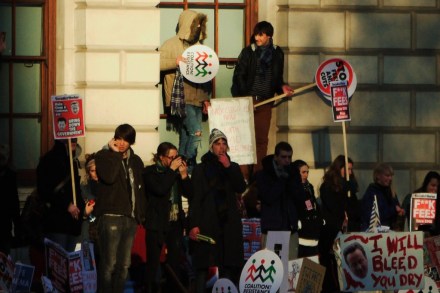
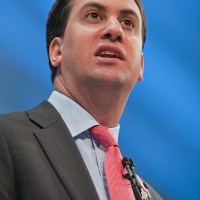
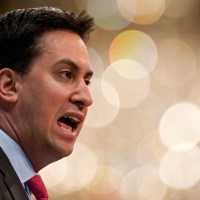
At last Wednesday’s PMQs Cameron kicked Ed Miliband into touch with a debonair swagger. Today anger replaced disdain. The PM’s eye-popping rage is so palpable that some commentators take it for vulnerability or even a hint of self-doubt. Milband has Cameron rattled? Nothing of the sort. Cameron just can’t control himself.   Asked about the Coalition’s higher education policy, he heaped rancid abuse on the opposition leader from a lofty perch. He called him "an opportunist,"  who "posed about social mobility" and was guilty of "rank hypocrisy." "He saw a big crowd in the Mall," fumed Cameron, referring to the student protests, "and said, 'I am their leader I must follow them'.

Miliband’s jibes throw Cameron off course

From our UK edition

After last week’s PMQs, Ed Miliband needed a clear win today—and he got one. Cameron, who had admittedly just flown back from Afghanistan, didn’t seem on top of the whole tuition fees debate and kept using lines that invited Labour to ridicule the Lib Dems. When Cameron tried to put Miliband down with the line, ‘he sounds like a student politician—and that’s all he’ll ever be’, Miliband shot back that “I was a student politician but I wasn't hanging around with people who were throwing bread rolls and wrecking restaurants." It was a good line and threw Cameron off for the final exchange.   The rest of the session was not a cracker.

The Sun gives Clarke a kicking

From our UK edition

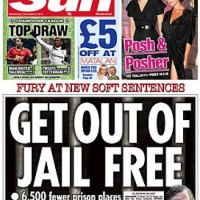
It may not be The Sun wot won or lost the last election, but its readers did swing heavily from Labour to the Tories and, even, to the Lib Dems. Which is why No.10 will not be untroubled by the paper's cover today. "Get out of jail free," it blasts, marking what Tim Montgomerie calls the "beginning [of] a campaign against Ken Clarke's prisons policy." And it doesn't get any kinder inside. Their editorial on the issue ends, "Mr Clarke and Mr Cameron owe Britain an explanation." It captures a strange split in the government's approach to crime. When it comes to catching crooks, the coalition is putting forward policies – such as elected police commissioners – that will go some way to ensuring the public get what they want.

Labour stumble into tomorrow’s tuition fee vote

From our UK edition

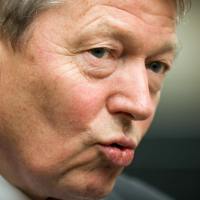
Oh look, Alan Johnson has performed a hasty Reverse Cable. Only a few days ago, the Shadow Chancellor suggested that he didn't believe a graduate tax – Ed Miliband's chosen policy – could work. Yet, in a wilting Thunderer column (£) for the Times today, he now claims that "there is a very strong case for a graduate tax." From unworkable to strong, in only four days. Sounds like a disclaimer for Ikea flatpack furniture, not a policy position. In a separate article, the Times characterises this as a minor victory for Ed Miliband – and so, in some respects, it is. He has managed to rein his Chancellor on this issue, if not on 50p tax, and the Labour leadership are now backing the same policy, albeit a misguided one.

How far our schools have fallen

From our UK edition

Comparing GCSE or A-Level results to previous years is a meaningless exercise. Leaving aside all the arguments about whether or not these exams are getting easier, it doesn’t much matter if children today are doing better academically than their peers a generation ago. What does matter is how they are doing in comparison to children in other countries, the people they’ll be competing with in the global marketplace.   Today’s PISA rankings, the OECD’s comparison of education standards, makes for depressing reading on this front. England has fallen from 7th in reading in 2000 to 25th today, from 8th to 27th in maths and 4th to 16th in science.

Some framework for the prisons debate

From our UK edition

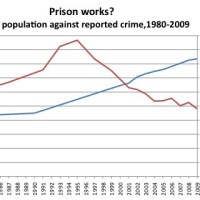
I thought that CoffeeHousers might appreciate a few graphs to steer them around the prisons debate. It's by no means a complete overview of the issue, but just three of the trends that hover over Ken Clarke's proposals: 1. Rising prison population, falling crime Well, that's striking enough. Expect, as any fule know, correlation doesn't necessarily imply causation – which is to say, the fall in crime could be due to something other than the rise in prisoners. Some put it down to improving economic conditions. Others mention deterrents such as CCTV. But those correlations can barely be hardened into a cause, either. So, all rather inconclusive.

Why we must remember the lessons of the Anglo-Scottish Enlightenment

From our UK edition

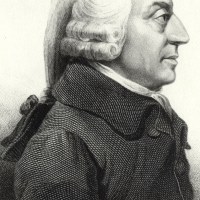
The Adam Smith Institute kindly asked me to speak at their Christmas reception last night, and yesterday I was mulling what to say. When at The Scotsman ten years ago, I would sometimes visit the great man's grave in Edinburgh, and be surprised to see only Chinese tourists paying tribute. It was a pretty good sign of how political power would play out. Edinburgh is, with Prague and Stockholm, among the most beautiful cities in Europe; itself a monument to the Enlightenment. And how tragic that students – even Scottish ones – are taught about the E word only in the context of the French Enlightenment. The likes of Rousseau, Voltaire, Diderot wrote of grandiose ambitions and recasting society using state power.

Bercow vs McLoughlin

From our UK edition

Iain Dale has news of a remarkable exchange between the Speaker and the Chief Whip last night (see from 22:16:30 in the video above). The coalition were attempting to pass a motion limiting the debate on tuition fees to three hours. Labour was trying to prevent this.   The Labour front bench shouted ‘object’ at the wrong moment so Bercow, with a broad grin on his face, coached them through it. At which point, Patrick McLoughlin heckled, ‘give them an indication, won’t you?’ McLoughlin then goes to leave the Chamber. At which point, Bercow explodes, wagging his finger and ordering the Chief Whip to remain in the Chamber.   This row won’t have done anything for Bercow’s standing on the Tory side of the House.

Compromise time for Nick Clegg?

From our UK edition

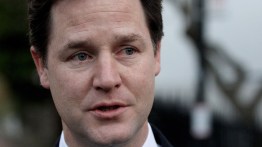
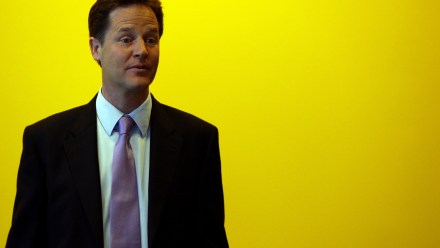
Where are we with the tuition fee rebellion? Nick Clegg has an article in the FT claiming that the coalition's policy is fairness codified, but he is running out of time to persuade his own MPs either way. Barring various unlikelihoods, the crunch vote will be held on Thursday. Before then, a handful of PPSs could well resign their bag-carrying roles. And, judging by today's Sun, a few ministers might even join them (Norman Baker, of course, as well as Steve Webb and Lynne Featherstone). The plan to present a "united front" has already crumbled to naught. What's left for Clegg, ahead of his meeting with MPs later today, is to prevent some of the more toxic fallout from this vote.

Now the Tories have an issue to get stuck into…

From our UK edition

While Nick Clegg battles on the tuition fee front, another internal conflict breaks out for the coalition today: prisons. And rather than yellow-on-yellow, this one is strictly blue-on-blue. On one side, you've got Ken Clarke, who is controversially proposing a raft of measures for reducing the prison population. On the other, Tory figures like Michael Howard who insist that prison works – and that there should be more of it. Philip Davies, the Tory MP for Shipley, even told Radio 4 this morning that millions of Conservative voters would be disappointed by the coalition's plans.

A day of gaffes

From our UK edition

You really couldn’t make this up: it wasn’t Michael Moore’s PPS who was on the World at One resigning but someone impersonating him. The actual PPS, Michael Crockart, is still trying to make up his mind. I suggest that he doesn’t try and call in to a radio show to announce his decision. (Who would have thought we have lived to see the day when Lib Dem PPSs have impersonators?)   One has to feel sorry for Radio 4 today. It had the whole Jeremy Hunt business this morning on the Today Programme and Start the Week, and now it’s other flagship news programme has been very publicly duped.   The Jeremy Hunt gaffe, though, is catching. People keep unintentionally calling the Culture Secretary that word.

The Lib Dem rebels make themselves heard

From our UK edition

Here in Westminster we are all brushing up on the names of Lib Dem PPSs, as we try and work out who might quit the payroll vote over fees. The latest is that Michael Crockart, PPS to Michael Moore – who is himself the most anonymous Lib Dem Cabinet minister – looks set to walk. But one of the better known Lib Dem ministers has now put his head above the parapet. Norman Baker has told the BBC that quitting over fees is one ‘option’ but he hasn’t yet made up his mind. (Oddly enough, these comments seem to have been made on the South East edition of the Politics Show on Sunday, but only just reported).   Baker has always been a maverick.

The mundanity of espionage

From our UK edition

And the most curious political story of the day has to be the one about Mike Hancock's 25-year-old parliamentary researcher, Katia Zatuliveter. If you haven't seen it already, she is facing allegations of spying for the Russians – and looks set to be deported as a result. It's the first time that a Commons employee has been arrested on charges of spying since the Cold War thawed out twenty years ago. There's some lively colour in this tale, but the full picture is, as yet, shaded from view. For his part – as per the video above – Hancock has denied that Zatuilivter is a spy. But the only Cabinet minister to comment on the matter so far, Iain Duncan Smith, has said that the allegations have to be taken seriously.

The Passion of Nick Clegg

From our UK edition

You almost feel sorry for Nick Clegg this week, with the tuition fees vote in prospect. Being hated is difficult for LibDems because they didn’t expect it. Not so with the Tories. As a conservative, you usually realise early on that you're going to be a small fish swimming against the current of fashionable received wisdom – and that will involve various tribulations. Like having to persuade your non-political friends that you do not advocate slaughter of the firstborn, and that there is a difference between believing in empowering people, and wanting to let the devil take the hindmost. If you turn up to the Islington Conservative Carol Concert (as Eric Pickles is doing), then you brace yourself for protesters outside it (as there will be).

How the OBR measures up

From our UK edition

There are only so many Labour interviews a blog can take, so I'll skip over Yvette Cooper in the Guardian (sample: "I did think about standing, and Ed said he thought I should stand and if I wanted to stand he would not stand"). Instead, another catch-up on how the Office for Budget Responsibility's growth forecasts are shaping up against those made by other institutions. Since I last did this, two new documents have been processed into the public domain: the OBR's latest economic and fiscal outlook, of course, as well as the the Treasury's round-up of long-term independent forecasts.

Brown struggles on beyond the crash

From our UK edition

Today's Guardian calls it his first interview since leaving office, although I think the Independent beat them to that one back in July. But, in any case, Gordon Brown's chat with Larry Elliot is another staging post on his slow path back to public life. Here's my quick summary: 1) Sniping from the moral high ground. A bit late now, but Brown is making a desperate scramble for the moral high ground. Not for him, he says, scurrilous memoirs that sift through the "arguments" of the past. No, he's got far more important things on his mind than muck-raking and innuendo, like the future of financial regulation across the world. Or has he? It's hard not to see barbs mixed in amongst it all. Take this line from the interview: "I am a full-time MP, not a businessman.

The Lib Dem tuition fee confusion continues

From our UK edition

Who knows how, and whether, Vince Cable is going to vote in next Thursday's tuition fee decider? Not even the man himself, it seems. A few days ago he suggested he might abstain for the sake of party unity. Yesterday, he told his local paper that "I have a duty as a minister to vote for my own policy – and that is what will happen." And yet this morning's Guardian has a "party source" saying, "a final decision has not been made. It is still possible Vince could abstain." At least we haven't heard that he might vote against the proposal – although, at this rate, I wouldn't be surprised. To my mind, the most likely outcome – and one mooted in the papers today – is a three-way split.

Frank Field’s report highlights the coalitions within the coalition

From our UK edition

Frank Field's review of child poverty policy covers a daunting expanse of ground. From breast-feeding to the little society ("the younger sister of the Big Society"), it's stuffed with more ideas than reviews that are twice the size – and will take some time to digest properly. But, in a way, that's precisely the point. Field's central argument is that New Labour took an overly simplistic view of poverty. For Brown & Co. it was all about funnelling cash handouts to poor families, often to lift them from just under an arbitrary poverty line to just above it. For Field, it is more about improving opportunities across the board, with a particular focus on children aged 0 to 5.