Naughty Naughtie
From our UK edition
James Naughtie with some very improper language on the Today Programme this morning. NSFW, and all that.
From our UK edition
James Naughtie with some very improper language on the Today Programme this morning. NSFW, and all that.
From our UK edition
And the most curious political story of the day has to be the one about Mike Hancock's 25-year-old parliamentary researcher, Katia Zatuliveter. If you haven't seen it already, she is facing allegations of spying for the Russians – and looks set to be deported as a result. It's the first time that a Commons employee has been arrested on charges of spying since the Cold War thawed out twenty years ago. There's some lively colour in this tale, but the full picture is, as yet, shaded from view. For his part – as per the video above – Hancock has denied that Zatuilivter is a spy. But the only Cabinet minister to comment on the matter so far, Iain Duncan Smith, has said that the allegations have to be taken seriously.
From our UK edition
You almost feel sorry for Nick Clegg this week, with the tuition fees vote in prospect. Being hated is difficult for LibDems because they didn’t expect it. Not so with the Tories. As a conservative, you usually realise early on that you're going to be a small fish swimming against the current of fashionable received wisdom – and that will involve various tribulations. Like having to persuade your non-political friends that you do not advocate slaughter of the firstborn, and that there is a difference between believing in empowering people, and wanting to let the devil take the hindmost. If you turn up to the Islington Conservative Carol Concert (as Eric Pickles is doing), then you brace yourself for protesters outside it (as there will be).
From our UK edition
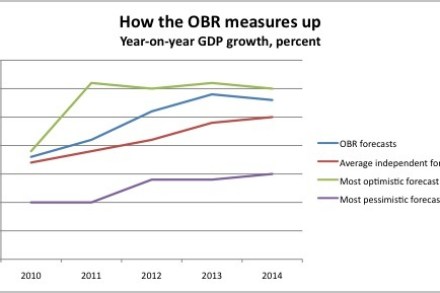
There are only so many Labour interviews a blog can take, so I'll skip over Yvette Cooper in the Guardian (sample: "I did think about standing, and Ed said he thought I should stand and if I wanted to stand he would not stand"). Instead, another catch-up on how the Office for Budget Responsibility's growth forecasts are shaping up against those made by other institutions. Since I last did this, two new documents have been processed into the public domain: the OBR's latest economic and fiscal outlook, of course, as well as the the Treasury's round-up of long-term independent forecasts.

From our UK edition
Today's Guardian calls it his first interview since leaving office, although I think the Independent beat them to that one back in July. But, in any case, Gordon Brown's chat with Larry Elliot is another staging post on his slow path back to public life. Here's my quick summary: 1) Sniping from the moral high ground. A bit late now, but Brown is making a desperate scramble for the moral high ground. Not for him, he says, scurrilous memoirs that sift through the "arguments" of the past. No, he's got far more important things on his mind than muck-raking and innuendo, like the future of financial regulation across the world. Or has he? It's hard not to see barbs mixed in amongst it all. Take this line from the interview: "I am a full-time MP, not a businessman.
From our UK edition
Who knows how, and whether, Vince Cable is going to vote in next Thursday's tuition fee decider? Not even the man himself, it seems. A few days ago he suggested he might abstain for the sake of party unity. Yesterday, he told his local paper that "I have a duty as a minister to vote for my own policy – and that is what will happen." And yet this morning's Guardian has a "party source" saying, "a final decision has not been made. It is still possible Vince could abstain." At least we haven't heard that he might vote against the proposal – although, at this rate, I wouldn't be surprised. To my mind, the most likely outcome – and one mooted in the papers today – is a three-way split.
From our UK edition
Frank Field's review of child poverty policy covers a daunting expanse of ground. From breast-feeding to the little society ("the younger sister of the Big Society"), it's stuffed with more ideas than reviews that are twice the size – and will take some time to digest properly. But, in a way, that's precisely the point. Field's central argument is that New Labour took an overly simplistic view of poverty. For Brown & Co. it was all about funnelling cash handouts to poor families, often to lift them from just under an arbitrary poverty line to just above it. For Field, it is more about improving opportunities across the board, with a particular focus on children aged 0 to 5.

From our UK edition
Phil Woolas has lost his appeal against the election court declaring his victory in Oldham East and Saddleworth. As I understand it, Woolas has not exhausted his legal options and could take the whole matter to judicial review. Word is that no decision will be made on a by-election until it is known whether or not Woolas will appeal. Interestingly, Woolas was accompanied to court today by John Healey, the shadow Health minister. Healey is extremely popular with his Labour colleagues, he came second in the shadow Cabinet elections, and his decision to stand by Woolas today is a sign of where the emotional energy in the Parliamentary Labour Party is on this issue.

From our UK edition
Today's Wikileaks will make uncomfortable reading for all parts of the British defence establishment – ministers, both old and new, and the senior military leadership. As a senior military officer told me, "this isn't going to be good." The diplomatic cables reveal that US officials and President Hamid Karzai at some point thought that British forces had bitten of more in Helmand than they could chew. The US NATO commander, General Dan McNeill, is quoted as saying three years ago that British forces have made a mess of Helmand. This is backed up by a comment, more than a year later, suggesting that President Karzai also agreed that British forces were "not up to the task of securing Helmand" without US assistance. Cue headlines of British military failure.
From our UK edition
It’s not often that I disagree with James, but I don’t think that David Cameron returns from Zurich with egg on his face. Of course, we Scots learn to see the upside in sporting defeat, but I really do believe the World Cup bid was a credit to England – and to the Prime Minister. That video which Pete blogged yesterday spoke with incredible elegance: England is already the home of world football. People get up at 4am in Singapore to watch Manchester United and Chelsea play, and I suspect most Man Utd fans have never visited Britain, let alone Old Trafford. It’s an extraordinary national asset, an area where Britain punches above its weight time and time again.
From our UK edition
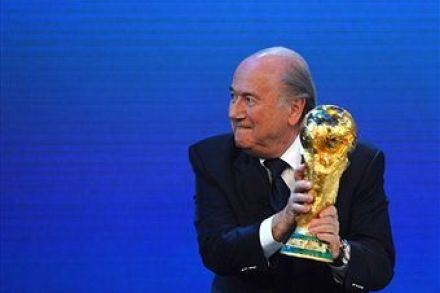
‘We only got two votes, we only got two votes.’ That England’s World Cup bid only mustered two votes is a national embarrassment. All the briefing had suggested that we were in a very competitive position; The Times was predicting that we could win as many as 15 votes. This failure has led to a rapid change of tune from Cameron loyalist MPs. One told me just now that ‘you know how awful the whole process is you saw Panorama.’ But just yesterday, Cameron was proudly holding up the Sun’s BBC-bashing front page (have a look at the spread on pages 4 and 5 of the paper). In truth, we should never have got ourselves involved in this horribly mucky process. Instead, we should have demanded that the FIFA stables be thoroughly cleaned out.
From our UK edition
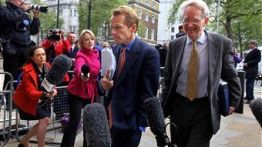
David Laws has responded to Andrew Adonis’ partisan review (no link apparently) of 22 Days in May. Laws’ account of the formation of the coalition and its infancy in government. Laws denies Adonis’ charge that the Lib Dems had a ‘right-wing agenda’ and, to prove the point, drops a wonderful quotation from Peter Mandelson during a discussion on tax, saying: ‘Haven’t the rich suffered enough already.’ Rather, Laws’ argues that the coalition formed as it did because Labour were simply too divided to be credible. He writes: ‘Labour was too disorganised or divided even to table clear positions on tax, education spending, pensions or the deficit.
From our UK edition
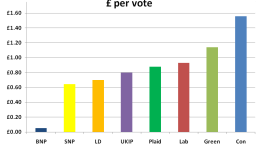
Coffee House has wrung today's party expenditure figures through the calculator to produce the colourful graphs below. As the headings suggest, they show how much was spent by each party* for every individual vote and seat they won in the general election: *That is, each party that received over 100,000 votes. Excluding Northern Ireland-based parties.
From our UK edition
After CoffeeHouse raised a virtual eyebrow and a few questions about the behaviour of War on Want and the Jubilee Debt Campaign, Tory MP Matthew Hancock has written to the Charity Commission asking for an investigation into their status: "Quite apart from the issue over whether a charity should support an organisation that seeks to disrupt the operations of UK companies, I also believe that the charities’ support of UK Uncut clearly appears to breach Charity Commission guidance on political activity." Let us see what Dame Suzie Leather, the Chairman of Charity Commission, thinks.
From our UK edition
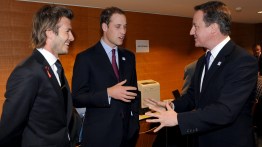
Football and Coffee House rarely mix, except of course when Manchester United win the European Cup. Yet I'm sure plenty of CoffeeHousers want to see England come out on top when the winning nation of the 2018 World Cup bid is announced later today. This morning saw the English delegation – including Davids Cameron and Beckham, and Prince William – make their final presentation to FIFA dignitaries. To my eyes, it was schmaltzily effective stuff, but you can judge for yourself from the video above. All that remains to do is echo Iain Dale's call of "Come on England!" And if we don't win, then it was obviously fixed. P.S. There's even some World Cup-related embarrassment for Ed Miliband.
From our UK edition
Yesterday's PMQs already feels like a turning point. It wasn't so much the nature of David Cameron's victory – comprehensive though it was – but rather the way Labour MPs have reacted to Ed Miliband's defeat. Whatever doubts some of them held privately about their leader have suddenly spilled out, mercilessly, across the snow. In his Daily Mail sketch, Quentin Letts describes Miliband's excrutiating exit from the chamber yesterday; Guido and the Telegraph are carrying remarks from disgruntled Labour figures. The volume of hostile radio chatter has risen considerably over the past twenty-four hours. Of course, there are several caveats to be slapped across all this – not least that Labour are bobbing up above the Tories in the polls.
From our UK edition
The Tories have the evil gene – that was the subtext to Ed Miliband’s jibes about the complacency of the children of Thatcher. Labour’s former General Secretary, Peter Watt, disagrees. In an important post for Labour Uncut, Watt observes: ‘But there is an arrogance at the heart of our politics that is going to make it difficult to really understand why we lost. It is an arrogance that says that we alone own morality and that we alone want the best for people. It says that our instincts and our motives alone are pure. It’s an arrogance that belittles others’ fears and concerns as “isms” whilst raising ours as righteous.
From our UK edition
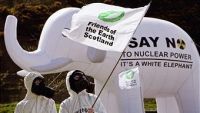
It’s that time of year again, time for the world to pay attention to climate change policy for a few weeks. Most of the year, schemes like the EU Emissions Trading System and the Renewables Obligation just wallow in dysfunction and quietly cost us a fortune, adding to our electricity bills in particular. Manufacturers pay attention, and higher energy costs threaten to drive industrial jobs abroad, and the poor and elderly feel the effects, even if they don’t know why their bills are rising. But the only people who really have the staff and the organisational clout to pursue this issue all year round are the environmental campaigns. Many of them, like Friends of the Earth, have multi-million pound budgets and dozens of staff.
From our UK edition
Forget the children of Thatcher, here's what the Americans were saying about the Iron Lady herself when she became Tory party leader. The source is a confidential cable from the American Embassy in London to the US State Department, dated 16 February 1975, and referenced in Claire Berlinski's book There is No Alternative: Subject: Margaret Thatcher: Some First Impressions 1. We understand Department is providing Secretary with biographic data on Margaret Thatcher prior to his meeting with her February 18, Here are our initial impressions of Britain's newest political star. 2. Margaret Thatcher has blazed into national prominence almost literally from out of nowhere.

From our UK edition
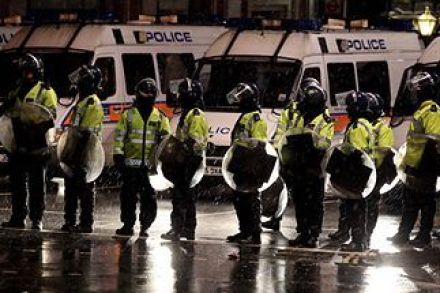
Directly-elected Police & Crime Commissioners (PCCs) are the boldest reform of policing since the 1960s. In May 2012 there will be 41 new political beasts in England and Wales with large, direct mandates. They look set to transform policing and public debate about crime. The new Commissioners will replace weak and invisible police authorities who, despite costing £65m a year and spending £25m in the last 3 years alone on expenses and allowances, have failed to hold chief constables to account. As a result, police chiefs have become too powerful, too detached and too risk-averse – with failure to tackle crime often just excused.