Uk politics

More Tory discontent with the Speaker

From our UK edition

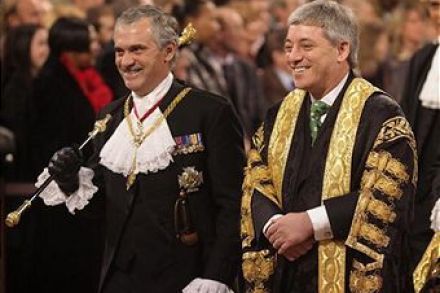
Guido and Benedict Brogan have already drawn attention to Paul Waugh's latest post. But a story this good deserves repeating, at length: "Tory MP Mark Pritchard is not one to swear. In fact he's ribbed by colleagues in the Tea Room for saying "Schmidt" instead of sh*t. But today, he exploded when the Commons Speaker confronted him over an alleged breach of the courtesies of the House. It all started when Pritchard got to his feet towards the end of Business Questions. As he rose, the Tory backbencher was told by John Bercow that as he was not present for the beginning of Sir George Young's business statement, he could not ask a question.

Miliband talks the language of cuts

From our UK edition

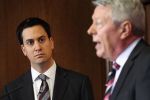
Much of Ed Miliband's Grand Confession on the economy is wearily familiar. I mean, we've known his take on the deficit for some time: that the drop in tax receipts from a crumbling financial sector was to blame, rather than Brown's spending. And to have him argue that Labour should have made the economy less dependent on the City is just another way of saying exactly the same thing. But there is something new in there, too. Miliband is set to admit that Labour didn't "talk the language of cuts" soon enough. Not that he's saying Labour should have – or still should – cut deeper and faster, mind. It's simply that Brown and his ministers didn't breath the c-word early enough.

King’s inflation nation

From our UK edition

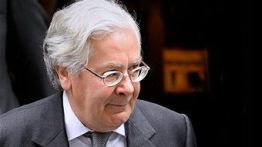
If Mervyn King and his team are trying to deal with Britain's debt crisis by letting inflation rip, I do wish they would just say so - rather than go through this monthly farce. Yet again, base rates have been left at an absurd 0.5 per cent, in an economy expected to grow by a full 2 percent this year but with inflation at 3.3 percent or 4.8 percent depending on how you measure it. Petrol prices are bad, but now they are matched with soaring prices elsewhere - from train travel to groceries. Here's a list of some price rises confronting shoppers:   Add Osborne's VAT rise to non-food items and we will see CPI inflation soon at 4 percent, twice the Bank of England's much ignored target. Here's what puzzles me.

Five more things you need to know about the IDS reforms

From our UK edition

Last November, I put together a ten-point summary of IDS's benefit reforms – so why add five more points now? Two reasons. First, it's worth dwelling on what, I believe, will be one of this government's defining achievements. Second – and far more prosaic – the Insistute for Fiscal Studies released a report on the matter yesterday. The following points have all been harvested from that document, and represent the IFS's judgement, so to speak. Only one judgement among many, but one that warrants some attention. Here goes: 1. Who gains and who loses (in financial terms)? This question courses through most of the IFS report, and stands out in most of the news coverage this morning.

An important test for the Lib Dems

From our UK edition

Tomorrow’s vote in Oldham East and Saddleworth is the first big event of the political year. It is a marginal seat that Labour just held at the last election, beating the Liberal Democrats by a touch over a hundred votes. But the by-election has been caused by the Lib Dem candidate taking the Labour MP to an election court over false statements which has placed particular pressure on the Liberal Democrats to perform well. The polls at the weekend had Labour romping home. But the Liberal Democrats are confident that they will run Labour close, talking about a margin of a thousand or less. If the Lib Dems come a strong second, the result will be pretty much be a wash politically.

The China arms embargo should be discussed – though not lifted

From our UK edition

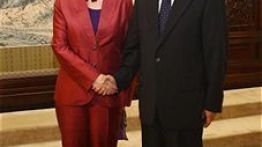
Today's Times splashed on the spat between Britain and EU foreign policy "czar" Catherine Ashton over the embargo barring arms sales to China. The embargo was put in place after the Tianamen Square massacre and has remained in place, largely at US insistence, ever since. But is it the right policy? The policy has not prevented China from becoming a military power — its annual defense budget officially stands at $70 billion, although the Pentagon believes the real figure to be twice as high. China is developing carrier-killing missiles that even NATO does not have, and will soon sell weapons rather than seek to import them. There is, of course, a moral argument: the sanctions were put in place because of China's human rights violations.

A shock for Dave

From our UK edition

Wow. Dave had a real wobble at the start of PMQs today. Ed Miliband stood up, looking as mild as a puppy, and asked about the ‘tip’ of two million quid recently paid to the boss of Lloyds. ‘In opposition,’ said Ed, ‘the prime minister promised, “where the tax-payer owns a large stake in a bank, no employee should earn a bonus of over £2,000”.  Could he update us on how he’s getting on with that policy?’ He was already seated when the first peals of laughter echoed around the chamber. Dave had stood up but he didn’t speak. Nothing came out. Silence seemed to have mastered him for a micro-second.

Exclusive – Adonis: I back Gove

From our UK edition

Is Michael Gove’s school reform a hideous distortion of the Labour Academies programme, as Ed Balls put it, or the fulfillment of that agenda? Until now Lord Adonis, the architect of the Academies programme, has kept silent on the issue. But he’s interviewed in The Spectator tomorrow by Matthew Smith, editor of Attain magazine. Here is a brief extract: 'Ed Balls has declared Gove’s plans for academies as ‘a total perversion of Labour’s policy, which was about turning round under-performing schools in disadvantaged areas’. Adonis’s response is rather different.  ‘Neither I nor Tony Blair believed that academies should be restricted to areas with failing schools.

An ill-tempered exchange

From our UK edition

The first PMQs of the year was a bad tempered affair. The Prime Minister had clearly decided that attack was the best form of defence, hurling insult after insult across the despatch box. He accused Ed Miliband of being a ‘nothing man’, told him that his Shadow Chancellor can’t count and that he doesn’t count and mockingly brought up Miliband’s brother. But Cameron didn’t do anything to politically detoxify the bonus issue, which is going to carry on haunting this government, note that Lloyds — partly state owned — is going to award its boss a £2million pound bonus.

PMQs live blog | 12 January 2011

From our UK edition

VERDICT: Woah. If you ever needed a PMQs to brush away the last morsels of festive cheer, then this was it. Every question and answer came laced with some sideswipe or other, and it made for a scrappy exchange between the two party leaders. Both struck blows against each other, but both were also guilty of errors and mis-steps. Miliband squandered an easy attack on bankers' bonuses, even allowing Cameron to turn it back against Labour. While, for his part, the Prime Minister was so relentlessly personal that it came across as unstatesmanlike. I don't think either one really emerged victorious, or well, to be honest. It was simply unedifiying stuff. 1230: And that's the end of the first PMQs of 2011 - and what a heated one it was, too. My verdict shortly.

Clegg: time to air our differences

From our UK edition

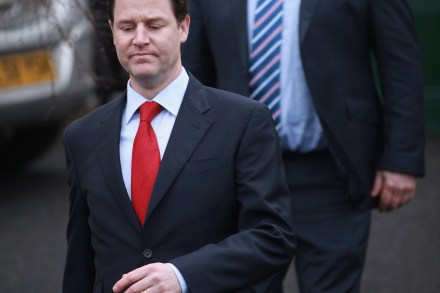
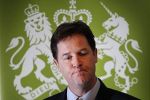
Why vote Lib Dem? Even Nick Clegg is now asking that question. After 8 months of broken pledges, deep cuts and atrocious polling (due to reach its nadir tomorrow in Oldham East and Saddleworth), Clegg worries that his party is losing its identity. Speaking to the Guardian, Clegg reveals that he hopes to arrest decline by expressing publicly his private differences with David Cameron. This is not defiance from Clegg but a statement of positive intent. Taking brave decisions, he says, has proved that the Liberal Democrats can govern and that coalition works; the government’s strength is sufficient to withstand disagreement. That’s all very well, but Clegg needs more than mere differences: all politicians have their differences.

Illsley’s untenable position

From our UK edition

After David Chaytor's conviction last week, the dominoes just keep on tumbling. Today, it was Eric Illsley's turn to confess to his expenses-related sins – and he did so by pleading guilty to three "false accounting" charges in Southwark Crown Court. Given that he's still MP for Barnsley Central – although now as an independent, rather than the Labour MP he was elected as – that makes him the first sitting parliamentarian to face sentencing as a receipt offender. A dubious accolade, to be sure. In terms of day-to-day politics, the next question is whether Illsley will be able to hang on to his seat. He could, theoretically, remain in place if his sentence is under a year's jail time.

Mixed attitudes towards the cuts

From our UK edition

Forget the voting intentions, the real action in YouGov's latest poll comes in the supplementary results. There, as Anthony Wells suggests, are attitudes towards spending cuts that will both perturb and hearten the coalition. Let's take the bad stuff first: "Asked if the government’s cuts will be good or bad for the economy only 38% now think they will be good, compared to 47% who think they will be bad. In comparison between October and December last year it was roughly even between people thinking the cuts would be good and those thinking they would be bad. On whether the cuts are being done fairly or unfairly, 57% now think the cuts are being done unfairly, again the highest we’ve shown so fair.

Opposing the EU Bill

From our UK edition

The EU Bill is back in parliament today, amid speculation that Cameron has a Europe-fuelled rebellion on his hands. Despite the talk, the chances are that the Bill will go through Parliament wholly unscathed in its first test.   Today’s debate is about the so-called ‘sovereignty clause’ – or Clause 18 – within the EU Bill. Of the Bill’s 17 pages, the clause only takes up four lines, but has still managed to cause the most fuss (the vast majority of the text relates to the EU ‘referendum lock’).

The broken Lib Dem pledge that didn’t provoke riots

From our UK edition

Coalition politics sure does throw up some peculiar situations. Take today's vote on the EU Bill. As part of the horse-trading that's going on around it, Tory Eurosceptics have put forward a series of amendments to mould the Bill more to their liking. Of these, the most striking is Peter Bone's suggestion that Parliament should legislate for a referendum, not on this minor constitutional change or that, but on whether we should leave the EU altogether. So far, so unsurprising. But the curious part of all this is that the Lib Dems once offered an in-out referendum on Europe themselves. If you remember back to the row over Lisbon, Clegg's get-out clause was what he called "a referendum on Europe with substance".

The coalition decides to accept the flak over bonuses

From our UK edition

The truth, as they say, is out: it doesn't look as though the coalition will be doing much about bankers' bonuses after all. According to this morning's Times (£), it's a case of the Tories getting one over the Lib Dems – and particularly Vince Cable – by not pushing down with more taxes on the City. But that, I suspect, is only half the story. The other half is that the coalition never had much in their armoury, but harsh rhetoric, in the first place. If they want the banks to start lending to business again, then their most substantial hope has always been a trade-off over bonuses. Which – as Benedict Brogan suggests in an insightful post over at the Telegraph – is hardly an ideal situation for the coalition.

The crash from an Austrian perspective

From our UK edition

It’s not all politics at Westminster. There’s a pretty good think-tank scene too, with lectures on topics that you’re unlikely to read about in the newspapers. One took place today: the Adam Smith Institute hosted a lecture by Steven G. Horwitz, from St. Lawrence University, entitled “An Austrian perspective on the great recession of 2008-09”. As many CoffeeHousers will know, "Austrian" refers to von Mises, Hayek and the others whose analysis of bubbles and crises certainly seems to fit current events. My colleague Jonathan Jones was there, and took some notes – which I have moulded into a six-point briefing.  It’s not often we do a post based on a think-tank talk – we may do more, if CoffeeHousers find them useful.

An unsurprising coup for UKIP

From our UK edition

As Adam Boulton says, the Oldham by-election has produced another noteworthy moment. And, in this case, it's one of the smaller parties making the splash. In a press conference in the constituency this afternoon, UKIP confirmed that Stuart Wheeler has joined their party as treasurer. This is, of course, the Stuart Wheeler who gave £millions to the Tories during the wilderness year after 1997 – including a £5 million mega-donation in 2001 alone. That Wheeler has made the conversion is unsurprising. He was expelled from the Conservatives, in 2009, for donating £100,000 to UKIP. And, soon after, he wrote a piece for The Spectator explaining why he would be voting for Farage & Co. in the European elections.