Uk politics

Lib Dem grassroots turn on the government

From our UK edition

More so than other parties, the Liberal Democrats depend on their grassroots’ presence in local government. The foot soldiers’ importance has increased as the party’s polling strength wanes. So, Nick Clegg will be aghast that 88 leading Liberal Democrats have written to the Times (£) to castigate the government’s ‘front-loaded’ cuts to local government. Tuition fees were thought to be the toughest possible battle for Clegg, but this will run them close. Government MPs have been cast into a black mood. The coalition’s unity has been rocked; its long-term prospects weakened. Now Clegg and Cameron face a tactical dilemma: do they conciliate or do they fight? The indications tend to fighting.

In their own words…

From our UK edition

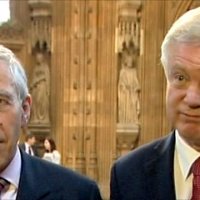
Parliament will debate a prisoner’s right to vote tonight, to satisfy the ECHR’s now infamous judgement. Jack Straw and David Davis, the progenitors of tonight’s discussion, have taken time to explain why they believe the ECHR does not have the right to dictate to sovereign states on such matters. Writing for Con Home, Davis has constructed an impassioned polemic, decrying the British government’s ‘pusillanimous culture of concession’. Essentially, Jack Straw is making the same argument, albeit with precise procedural insight. He writes (£): ‘But is there some contradiction between my support for the HRA and my criticism of the Strasbourg court’s judgment in this case? Not at all.

Burnham’s slide to the left

From our UK edition

One of the more depressing sights in politics at the moment is how Andy Burnham is leading the Labour party back to its comfort zone on education. Burnham, who The Spectator once named minister to watch, seems to have jettisoned all of his Blairite reforming instincts. He now wants to draw as many dividing lines as possible and side with the vested interests and the status quo at every turn. In last night’s education debate, Barry Sheerman, who chaired the education select committee during the Labour years, pointed out that Gove’s education plans are building on the last government’s incomplete reforms. As Sheerman put it, “I am going to be honest: much of the Bill could have come from the previous Labour Administration.

Clash of the wonks

From our UK edition

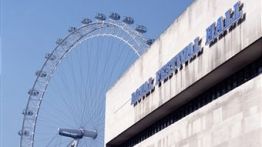
Last night the Southbank Centre hosted its second “Think Tank Clash”.  As last year, it was a sell out event, and saw representatives of six of the country’s top think tanks take each other on in three debates.  These debates were ably and wittily compared by writer John O’Farrell and the winners determined by audience vote.  The winners of each “clash” then competed in a three-way discussion to determine the overall top tank. Round 1: “Revenge” – Res Publica v Demos Res Publica founder and director Phillip Blond commenced by making the case for breaking up the banks. He argued that the current system does not distribute capital, but rather concentrates it, thereby “strangling real business”.

Despite the difficulties, Project Merlin isn’t at all bad

From our UK edition

Bankers make estate agents look popular and so any government deal with bankers that doesn’t involve kicking them is politically tricky. The Treasury, acutely aware of the politics of all this, are very keen to stress that the government ‘played hardball’ with Barclays, HSBC, Lloyds and RBS in the Project Merlin talks. The actual deal is not a bad one. The promised £10 billion pound increase in lending to small businesses is better than expected. On bonuses, the banks have got off relatively easily. But crucially the bonus pool will be smaller than last year and bank head’s bonuses will be dependent on meeting lending targets for small businesses.

A well fought fight

From our UK edition

Plenty of personality at today’s PMQs. Not much policy. Miliband opened with one of his stiletto questions. Short sharp and deadly. ‘How’s his Big Society going?’ he asked the prime minister. Potentially this is tricky ground for Cameron and he rose to a barrage of Labour jeers. At least he’s had time to rehearse his defence. ‘Devolving power to local authorities was in the opposition manifesto and in ours and in the LibDems’ …Every member of the House of Commons backs what we’re talking about,’ he said cheerily. A robust counter-attack. Pose as an optimistic philosopher-king and leave Ed Miliband looking like a whining defeatist.

PMQS live blog

From our UK edition

VERDICT: A rowdy session, but constructive. Miliband went for the Big Society, which is in severe difficulty at present. He was very effective, but his attacks lacked absolute coherence. He failed to establish a link between his examples and his wider political point that the agenda is mere packaging for latent libertarianism. So, Cameron had enough wriggle room to repulse Miliband and was able to launch his own attacks on the Labour leader's irresponsible opportunism, and he also savaged Liverpool Council's reactionary politicking. Both leaders had good lines and were deft on their feet, as point was met by counter-point. Their supporters were in full voice too, sufficient to allow the quibbling Speaker to intervene and re-assert himself after last week's wife-related incident.

Today’s battlefield

From our UK edition

Today’s PMQs threatens to be overshadowed by the statement on Project Merlin, the government’s deal with the banks, expected at one o’clock. I suspect that Cameron will try and push away any questions on banks with the line that Miliband should wait for the Chancellor’s statement. But PMQs will still be a far livelier affair than last week’s one. Watch to see whether Miliband tries to attack Cameron for hurting the Big Society. Miliband has moved Labour away from ridiculing the idea to embracing it and saying that ‘Tory cuts’ are the threat to it. This is all part of Labour’s strategy to try and ‘recontaminate’ the Tory brand.

More bad economic news for the government

From our UK edition

Presently, the waves of bad news are as relentless as biblical plagues. The latest trade figures show that Britain’s trade gap opened in December; the seasonally adjusted deficit stood at £9.2bn, a rise from £8.5bn in November. There are plenty of explanations as to why the export-led recovery failed to jump customs, despite the comparatively weak pound. The various acts of God couldn’t have helped and the continuing financial crisis on the continent will have further eroded demand.   However, the government will realise that these figures indict its growth strategy. As the ONS graph below indicates, the trade deficit is a persistent problem and one feared by the British Chambers of Commerce.

A legion of attacks

From our UK edition

Some attacks hurt more than others. And the attack launched by Chris Simpkins, the director-general of the Royal British Legion, on the government's approach to the military covenant will be particularly painful. For it comes after a Defence Review that left few happy, and when the nation is engaged in a war from which many feel the Prime Minister is a bit too keen to withdraw. Speaking to The Times, the Royal Legion chief said plans set out in the Armed Forces Bill requiring the Ministry of Defence to publish an annual report on the unwritten pact between society and the military were not the same as writing it into legislation - something he said the government pledged to do last June.

The Big Society in crisis?

From our UK edition

An ungodly alliance has converged on the Big Society. From the left, The Voice of the Mirror, the Unions and Steve Richards have published diverse critiques; from the right, Philip Johnston has joined Peter Oborne in suggesting that the policy is suffering a near-death experience. The Local Government Association and councillors have added their disgruntled voices as the day has progressed. All in all, it’s quite a circus and the government’s gentle response has been totally inadequate. Francis Maude penned an article for today’s Times (£), which, despite being commended by Tim Montgomerie, couldn’t really distract from the mauling Maude received on Newsnight last night.

Osborne bests the Man With A Past

From our UK edition

Balls is a bit like a vampire – he has bite, but he works best in the darkness. In the House of Commons, with those lights shining on him, his powers drain. George Osborne had the better of him in their brief exchanges at Treasury Questions. Balls led on the snow joke. But Osborne had pre-empted that earlier, when he first stood up. Balls teased him about going to Klosters in the winter, but these things only work in newspapers where you can run a picture of Osborne in ski gear. It leaves the House cold.   The key Osborne line was that Balls is “the man with a past” – and how. It was said with just the right touch of menace. And he had a fairly decent gag: that Eds Miliband and Balls both “know what's it's like to be people's second choice.

What has Osborne done today?

From our UK edition

In October last year, Osborne announced a new levy on banks’ balance sheets. It was 0.05 percent for this calendar year, before rising to 0.075 percent from 2012 onwards. But, today, the Chancellor has announced that the ‘introductory’ rate has been abolished – so banks will be charged the 0.075 percent rate on all liabilities. Here's my nine-point Q&A, by way of delivering my take: 1) So, a retrospective tax? Not quite. He’s imposing a 0.05 per cent rate on balance sheets in January and February. But he’ll up the charge to 0.1 percent for March and April to compensate. It will go back to 0.075 percent in May. This is a move clearly intended to generate revenue, rather than change behaviour. 2) How much will he nab?

Irish to block EU integration

From our UK edition

In continental lore, it is Britain that is often seen as the greatest impediment to EU integration. The government's EU Bill initially caused horror in the rest of Europe. Would Britain have to vote for each treaty change, even those needed to enlarge the Union? Before the text of the bill became clear, every self-respecting eurocrat spat the name 'Britain' over their lait russe. Even now, they are not best pleased. But in future it may not be Britain, but Ireland that will block any further EU integration. For Ireland is turning a lot more eurosceptic. The role of the euro in Ireland's decline remains a subject of debate. In eurosceptic circles, there is wilful ignorance of the role played by Ireland's politicians. Much better, it seems, to blame the euro alone.

Doubts remain over al-Megrahi

From our UK edition

The morning after the day before, it seems that some of the murk around Abdelbaset al-Megrahi's release has lifted. In particular, one thing is explicit that wasn't before: that the policy of the Brown government was to "do all it could" to facilitate the convicted Lockerbie bomber's transfer to Libya. We might have surmised the same from David Miliband's statements at the time. But now, at least, we know for sure. Naturally, this is tricky news for Labour, and especially for the Ghosts of 2008 whose names are splashed across the papers today: Brown himself, Jack Straw, Des Browne, etc. And yet Gus O'Donnell's report has also absolved them of the worst sin of all: lobbying the Scottish government to release al-Megrahi.

Osborne quells some dissent with his latest ruse

From our UK edition

This morning’s newspapers would have made grim reading for the government. The Department for Transport has been forced to reverse its helicopter privatisation plan, there are doubts that the baccalaureate will suit Michael Gove’s education reforms and diverse packs of hounds have converged on the Big Society fox – and this is a cruel bloodsport.  But, the master tactician has struck again. George Osborne’s sudden decision to raise an extra £800m through this year's banking levy has relieved some pressure from the government. This is a minor operation by the standards of Osborne’s previous political coups, but it diverts attention and illustrates that the government is making some progress in the arduous slog against the banks.

King’s credibility is faltering

From our UK edition

We at The Spectator have not had much company in criticising Mervyn King for the failure of his monetary policy. The Bank of England governor has a status like the Speaker used to: someone whose position must command respect, otherwise the system collapses. And yet there are Octopuses with a better track record in inflation forecasting. People have been repeating that the Bank’s independence is a great success for so long that it has become a truism. Why? We’ve just had a huge crash, the result of a credit bubble - fuelled by dangerously low lending rates. And the recipe for restoration? Even cheaper debt, with resurgent inflation. The British economic commentators agree with King that inflation is not a problem; 0.

Bringing rights back home

From our UK edition

Thursday’s debate on the backbench motion on prisoner voting tabled by Jack Straw and David Davis is set to be a real parliamentary event – a rare occasion where the will of the elected legislature might just make a big difference.  The real news will not be how many endorse the ban, but which MPs – aside from those abstaining Government Ministers and Denis MacShane – choose to bow to Strasbourg.   MPs preparing to speak out against Strasbourg are now armed with a powerful academic case.  A new Policy Exchange report authored by the political scientist Michael Pinto-Duschinsky – Bringing Rights Back Home – outlines how the UK can address the growing problem of conflicts between judges and politicians in human rights cases.