Uk politics

From the archives: government for the Lib Dems, not the people

From our UK edition

The AV referendum campaign began in earnest today. Not without justification, the No campaign argue that AV is a Lib Dem cause, an innovation designed to make ensure they are always the power-brokers. The alternative vote, so the No camp’s argument runs, obscures political transparency and weakens the voice of the people. The argument originates from the preludes to the formation of the Jenkins Commission in 1997. Not so bad for the Tories – leading article, The Spectator, 6 December 1997 Proportional representation is a political gamble with lasting office as the stake and the prize. Mr. Ashdown supports a change in the voting system because he thinks it would give the Liberal Democrats more seats in parliament.
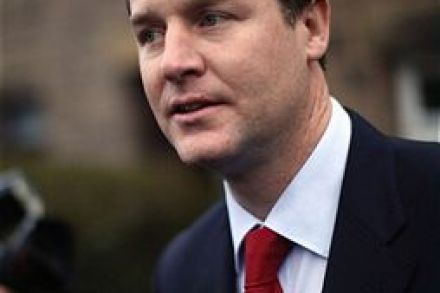
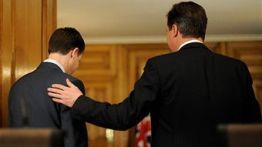
Cameron and Clegg, head to head

From our UK edition

Now here’s a shock: something to trump the relentless tedium of the Cricket World Cup. The AV referendum. Labour MP Jim Murphy held his constituency surgery in a large supermarket today and it was well attended, but no one asked about the referendum. Murphy ruefully tweeted: ‘the public are so out of touch with today’s politicians.’ But it is odd, or at least it should be, that the nation’s second ever plebiscite has inspired only indifference; then again, electoral reform is not a subject to quicken the pulse. Even the campaigners are resigned to expect scant enthusiasm for their cause. The campaign is days old and already its emphasis has shifted from principle to personality.

On the basis of this legal advice, the government is not planning to defy the ECHR

From our UK edition

As I wrote this morning, the Times has obtained a copy of a government legal memo (written before last week’s prisoners’ debate in parliament) examining non-compliance with the ECHR’s infamous judgment. The newspaper argues that the government plans to defy the Court; and there are plenty rumours swirling around Westminster to that effect, which is hardly surprising given that the Times chanced upon this document. But it’s mostly hot air. The government lawyers actually advised against non-compliance on four separate grounds and revealed that British officials are working towards compliance. First, here are the recommendations of the advice: 1).

It’s a knock out: judicial activism versus the sovereignty of parliament

From our UK edition

The prisoner voting debate is coming to a head, and Dave has turned once too often. The Times has received (£) what it describes as a government legal memo, urging the government to defy the demands of the European Court of Human Rights. After last week’s parliamentary debate, the government’s lawyers calculate that the ECHR can only put ‘political pressure rather than judicial pressure’ on British institutions. This is a seminal moment: political will has not been met by administrative won’t. But would non-compliance succeed?

The government has been weak over forests

From our UK edition

A very dangerous precedent has been established today over the forest fiasco. Caroline Spelman earlier gave the most extraordinary interview on Radio 4's PM. "We got it wrong," she said in the Commons. "How so?" asked Eddie Mair. She wouldn’t say. As he kept asking her, it became increasing clear that she didn’t think they got it wrong. They conducted the U-Turn because they were losing the media war.   Really? Is that all it takes to defeat Cameron's government? A decent two-week campaign with a couple of celebs? The forest policy was a good one: why do we need state-run timber farms? Not that this argument was ever aired. They government just sat mute, and was beaten up by Rachel Johnson and her brilliantly mischievous campaign.

Miliband’s economic immaturity

From our UK edition

As an economist working in politics, I’m sometimes shocked at some of the arguments about the economy. But today’s statement on welfare reform is economically shocking.   Miliband argues that you can’t reform welfare until there are more jobs. Set aside the fact that this is another area where Miliband’s argument is Lord make me virtuous, but only tomorrow. Team Brown delayed welfare reform for over a decade under Labour, and their position today is to call for yet more delay.   Let’s look at the economics.   First, Miliband falls for the classic lump of Labour fallacy. It’s as if he thinks there are a set number of jobs to go round.

It’s time for Britain to go cold turkey

From our UK edition

There's a simple truth underlying opposition to spending cuts: the country is drugged up to the eyeballs in entitlements. Today, IDS, Nick Clegg and David Cameron renewed their assault on welfare dependency - the most obvious and damaging of Britain's addictions. The Labour party is broadly supportive, but the coalition's plans were still be met by the predictable criticism that they are regressive. These arguments miss the point. Work is of value; even in good times it must be made to pay. Even if the public finances were in order, reform would be necessary; now that they have collapsed, reform is imperative. Britain cannot afford all those expensive welfare schemes, the purpose of which is to avoid uncomfortable reforms.

Spelman: I got this one wrong

From our UK edition

Caroline Spelman has just told the Commons that ‘I am sorry. We got this one wrong.’ The forests u-turn is now complete. Rachel Johnson has successfully duffed up the government. The coalition is trying to make the best of the situation, stressing that this shows that this is a ‘listening’ government. But there’s no getting away from the fact that this is an embarrassing u-turn and one that will encourage other opponents of the coalition’s reforms to redouble their attacks. The coalition cannot — and must not — continue making u-turns like this.

Hopeless Harriet

From our UK edition

Last night, Harriet Harman launched a pre-emptive attack on the coalition's failure to give 0.7 percent of GNI to overseas aid. Pre-emptive because the government has made no such U-turn - nor is it like to. Much as Tony Blair spoke law-and-order like the Tories, the coalition speaks aid like New Labour - just better. As a result, Labour has nowhere to turn except to warn against "strong voices" in the Tory party who would like to cut DfiD from the Budget. Next Labour will launch a protest against what a mind-reader has told them Tory politicians secretly think. Seriously, though, of course there are such sceptical voices - many of whom are heard here on Coffee House. But these discombobulated voices are equally present among Labour ranks and no more influential.

Cameron fells the forestry consultation

From our UK edition

Despite his easy charm, David Cameron is unsentimental. His dismemberment of Caroline Spelman’s sagging forestry policy at yesterday’s PMQs was as ruthless as it was abrupt. The Prime Minister cannot be an enemy of Judy Dench and other doughty dames, so the hapless environment minister had to be shafted. Cameron’s strategic withdrawal did not end there. Several newspapers report that the 12-week consultation will be curtailed by the end of the week, on the simple grounds that the public does not like it. Spelman is expected to pronounce the project dead in the Commons at lunchtime today, and the chamber will ring with the noise of Labour’s braying benches.

Curing youth unemployment

From our UK edition

Youth unemployment in the UK has hit another record. More 16 to 24-year olds are out of work than ever. The unemployment rate in this group is now a shocking 20.5 percent, which amounts to nearly a million young people out of work. Of those, 600,000 have never had a job since leaving school or college. All unemployment is bad news, but youth unemployment is particularly bad news. We want young people who leave education to get a job, learn the skills and disciplines of work and build up the experience that will help them be upwardly mobile. That benefits them, obviously, and it benefits the whole community too. But instead of young people getting into the work stream, too many are getting into the welfare stream.

The Tories’ secret weapon

From our UK edition

Too much time at the barbers. That’s the opposition’s problem. Ed Miliband showed up at PMQS today after a long morning lounging in the chair having his hair coiffed and burnished. His darkly gleaming scalp now looks like the kind of thing toffs scrape their boots on after a morning’s shooting. And that’s precisely what the Prime Minister proceeded to do with him today. With no time for a strategy meeting beforehand Ed had just grabbed a list questions from the last PMQs-but-three.   He began by having a go at Cameron on youth unemployment. But we know how Cameron deals with that one. Been a problem for decades, old boy. Miliband then challenged him on the economy. And we know Cameron’s answer to that one too.

Parliament is not sovereign

From our UK edition

Enough is enough. The British Bill of Rights is set to return: a consequence of the government’s running battle with parliament over the European Convention on Human Rights. Recent days have been filled with clues and suggestions of imminent reform: Dominic Grieve, a former advocate of the ECHR, went so far as to assert that Britain may leave the convention. Cameron let slip the news that a Bill Of Rights commission is to be convened at PMQs; at the time he was answering a question about the Supreme Court’s controversial sex offenders’ register decision. There are no details as to what the commission will consider, but Theresa May aired the guiding philosophy during her statement on the sex offenders’ register.

Cameron breaks from the norm at PMQs

From our UK edition

PMQs today contained a rare moment: the Prime Minister admitting that he wasn’t happy with government policy. Ed Miliband, who split his questions up this week, asked Cameron if he was happy with his position on forestry and Cameron replied, ‘the short answer to that is no.’ The answer rather drew the sting from the rest of Miliband’s questions on the topic. But it was a rather embarrassing admission for the PM to have to make.    Cameron made quite a lot of news at the despatch box this week. He accused Manchester City Council of making “politically driven” cuts, said that more regulations needed to be scrapped and announced that a commission on the British bill of rights is imminent.

Unemployment rises

From our UK edition

It was the snow wot done it. The new unemployment figures have been published and the headline figures are that unemployment increased by 44,000 to 2.49 million between December 2010 and January 2011; the claimant count also went up by 2,400 to reach 1.46 million. It’s disappointing news, especially as figures from Germany are markedly different. Miliband may exploit the news at PMQs. But there are reasons to be positive. The government’s mouthpiece on these issues, Chris Grayling, who is less attack dog more beast of burden these days, argued that Q4’s negative growth figures will have had some effect on employment (and it’s likely to continue to do so into this month and the next, if the economy did indeed contract in the last quarter).

Pickles on the offensive

From our UK edition

The normally chummy Eric Pickles was in a black mood on the Today programme. Despite councils’ brazen politicking, Pickles has been deferential in recent months, a stance bemoaned by his allies in local government. But he cut loose this morning. Ostensibly, he was on the programme to defend his policy that councillors vote, in open session, on pay deals worth over £100,000. He believes this will strengthen local authorities by empowering ‘backbench councillors’, provided that they honour the privilege they have been awarded: council meetings are not renowned for being edifying. (There is clear case for extending the policy to the Civil Service, and no doubt many will call for remuneration in majority publicly owned banks to receive the same scrutiny.

Why AV will cost £250 million

From our UK edition

Today the NO to AV campaign has published research showing that the change to AV will cost the UK an additional £250 million, and – judging by the Yes campaign’s panicky reaction – this charge has hit home. Our estimate represents the additional cost of AV. The government stated the referendum would cost over £90 million – less, admittedly, than if it were not combined with council elections – and the remainder comes from vote counting machines (£130 million) and voter awareness (£26 million). This is, if anything, a conservative estimate. For voter education, we have only set aside 42 pence per person, and we haven’t included the costs of additional polling stations, election staff or training.

What Andy did next…

From our UK edition

Westminster has bent its collective knee in cooing supplication to Larry, Downing Street's new cat. The slinky feline is already three times more famous than Mrs Bercow - no crude double-entendres please. Meanwhile, Politics Home has been sent a photograph of a van in Smith Square.