Uk politics

How young Arabs saved the old West

From our UK edition

Three months ago the future looked bleak for the West. The countries that once dominated the world, invented capitalism, articulated mankind's universal desire for freedom and defended it against all enemies looked destined for an impoverished future squeezed by the authoritarian capitalists of the East and unsure about the righteousness of its ideological foundation. Even one-time liberals, whose life has been shaped in a struggle for human rights embraced China and its state-backed progress. Now, thanks to the pro-democracy protesters in the Middle East, the West is back. Not that it backed the democratic movements and now stands to reap the benefits.

Coffee House Exclusive: McBride joins CAFOD

From our UK edition

                  The penance of Damian McBride continues. After being ejected from No10, and disowned by his mentor Ed Balls, I can reveal that our antihero now has a new job – head of media at the Catholic overseas aid charity CAFOD. He will be doubtless be brilliantly effective at briefing against its enemies (in CAFOD's case, hunger and the devil). I imagine the pay is several leagues below what he'd get from cashing in on his notoriety and publishing a hit man's confessions. The weird thing is that McBride could have done so well, had he steered clear of Balls. He was a Treasury civil servant, specialising in VAT, before Balls trained him up in the art of character assassination.

Reforming the NHS: accountability

From our UK edition

Last week, Reform published its 2011 public service reform scorecard. It judged each major government department against the three criteria set out by David Cameron: accountability, flexibility and value for money. The report finds the Home Office’s policing reforms succeeding on all three fronts, but inconsistency across other government departments. The Government’s health reforms are awarded grade D overall, with an E for accountability, a D for flexibility and a D for value for money. Here's how the coalition can get its NHS reforms back on track.   The government has recognised the need for fundamental reform of the NHS. The proposals announced in the July 2010 White Paper are substantial.

Libya catch-up: Gaddafi on the precipice

From our UK edition

Aside from official – and provocative – proclamations from Saif al-Islam Gaddafi, the news from Libya is still arriving piecemeal. The latest reports are that the protestors have prevailed in Zawia, in the west of the country, to add to their "liberation" of Benghazi last night. And there is some speculation that Gaddafi Senior has fled the country, which would certainly reinforce the sense that his power is being whittled down, potentially to naught. As for Britain, the questions about our prior relationship with Libya still hover awkwardly over proceedings, and over the heads of the last government in particular. There was the al-Megrahi deal, of course, as well as all those meetings in Gaddafi's tent.

Why a major reshuffle is unlikely

From our UK edition

The clamour for a reshuffle is getting louder. Caroline Spelman is said to be a leading candidate for ejection, following her awful performance over the forestry sell-off. Many also want Ken Clarke's scalp. Party chairman Baroness Warsi has already been the target of gossip, while dissatisfaction with Chief Whip Patrick McLoughlin is palpable. Then there is the desire by Nick Clegg to bring back David Laws, if he is cleared of financial malfeasance.   However, most of the talk of a reshuffle is fuelled by self-serving backbench MPs who lost out of jobs in the coalition negotiations. Those from the 2005 intake feel the 2010 intake breathing down their necks, while older MPs hiss about the "cult of youth".

How far will Cameron go to break the state monopolies?

From our UK edition

Call it the Big Society, decentralisation, people power, whatever – but David Cameron's vision for society just became a good deal more concrete. In an article for the Telegraph this morning, the Prime Minister makes a quite momentous proposal: that there ought to be a new presumption towards diversity in public services, whereby the private, voluntary and charitable sectors are as privileged as the state is now. Or as he puts it: "We will create a new presumption – backed up by new rights for public service users and a new system of independent adjudication – that public services should be open to a range of providers competing to offer a better service.

The Bahraini challenge

From our UK edition

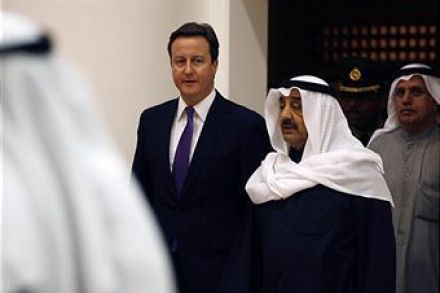
The debacle in Bahrain cuts close to the British bone. The Ministry of Defence has helped train at least 100 Bahraini officers and supplied a range of equipment to the Gulf state. Egypt was important because of its regional role and ties to the United States. But there was no link to London, anymore than there was one to Paris or Berlin. Bahrain is different. Only a few months ago, British officials were applauding the Khalifa dynasty for taking steps towards democracy. But the fact is simple: the steps were insufficient – not by British standards, but by Bahraini ones. It should serve as a wake-up call to the Foreign Office and those in government with close ties to Bahrain.

Cameron’s back is against the wall – now he must fight

From our UK edition

Given that David Cameron will have a tougher fight than perhaps any postwar Prime Minister other than Thatcher, it’s a bit unfortunate that his team doesn’t like political combat. Losing to Rachel Johnson over forests last week exposed major weaknesses, and sent a message to the government’s enemies: that these guys have pretty poor political combat skills. Now word is out, the cuts protests in Liverpool today will be the first in a series of challenges. Cameron, too, is stung by the avoidable mistakes of the last few weeks – and is reshaping No.10 to account for them. Some changes are great, some less so, others downright worrying. Here's my overview: 1. The Big Society. Cameron has started from first principles.

British jobs for whom?

From our UK edition

Immigration isn’t a topic much discussed nowadays, because it’s one where the Tories and Lib Dems don’t agree. That’s a shame. Because there’s an urgent problem to be fixed in the British labour market: that every time the economy grows, it sucks in immigrant workers. If this dysfunction continues, it will finish Cameron. The News of the World (where yours truly is a columnist (£)) has today looked at the latest figures for this. I reprint them for CoffeeHousers below. They show that during that disastrous fourth quarter in 2010, where the economy shrank by 0.5 percent, the number of employed British-born people fell by 110,000. As grim as you’d expect. But the number of foreign-born workers actually rose – by 7,000.

Tinkering with solar panel subsidy risks making bad policy worse

From our UK edition

The fallout from Chris Huhne's sudden review of the government's system of subsidies for small-scale renewable energy gathers momentum. Solar firms, who built business cases on the system of subsidies, are threatening judicial review over the Energy Secretary's change of direction. So why did the government raise concerns about the policy? Apparently, because it has been too successful. The scheme encourages householders, communities and businesses to cover their roofs in solar panels and erect wind turbines by offering them a generous subsidy for the electricity they produce.

Cuddly Ken comes out snarling, and sneering

From our UK edition

Another Saturday, another interview with Ken Clarke. This time, the bruised bruiser has been talking to the FT and the remarkable thing is that he has managed to say nothing. Not a sausage. Colleagues were not insulted, Middle England escaped unscathed and the European Court of Human Rights wasn’t even mentioned.  But Clarke conveys his determination to fight. He defends his prison reforms and community sentences, to which the right has now applied the grave term ‘misconceived’. Clarke retorts: ‘We are trying to take 23 per cent out of the budget. I don’t recall any government that’s ever tried to make any spending reductions on law and order – let alone 23 per cent.

Bad banking

From our UK edition

No wonder the banks like Britain's corporation tax regime. This morning’s newspapers all tell that Barclays paid just £113m in corporation tax in 2009, despite making profits of more than £11bn. In a rare instance of justified anger, Labour’s chosen men have launched an attack on the government’s failure to ‘take the robust action needed to make sure that the banks which caused the crash pay their fair share, and will stick in the stomachs of small businesses struggling to borrow and ordinary people feeling the pinch of the government's austerity measures.’ Whatever the absurdities of Labour’s position, this news will ‘stick in the stomachs’ of the little people, whose wealth is withering before their eyes.

From the archives: government for the Lib Dems, not the people

From our UK edition

The AV referendum campaign began in earnest today. Not without justification, the No campaign argue that AV is a Lib Dem cause, an innovation designed to make ensure they are always the power-brokers. The alternative vote, so the No camp’s argument runs, obscures political transparency and weakens the voice of the people. The argument originates from the preludes to the formation of the Jenkins Commission in 1997. Not so bad for the Tories – leading article, The Spectator, 6 December 1997 Proportional representation is a political gamble with lasting office as the stake and the prize. Mr. Ashdown supports a change in the voting system because he thinks it would give the Liberal Democrats more seats in parliament.

Cameron and Clegg, head to head

From our UK edition

Now here’s a shock: something to trump the relentless tedium of the Cricket World Cup. The AV referendum. Labour MP Jim Murphy held his constituency surgery in a large supermarket today and it was well attended, but no one asked about the referendum. Murphy ruefully tweeted: ‘the public are so out of touch with today’s politicians.’ But it is odd, or at least it should be, that the nation’s second ever plebiscite has inspired only indifference; then again, electoral reform is not a subject to quicken the pulse. Even the campaigners are resigned to expect scant enthusiasm for their cause. The campaign is days old and already its emphasis has shifted from principle to personality.

On the basis of this legal advice, the government is not planning to defy the ECHR

From our UK edition

As I wrote this morning, the Times has obtained a copy of a government legal memo (written before last week’s prisoners’ debate in parliament) examining non-compliance with the ECHR’s infamous judgment. The newspaper argues that the government plans to defy the Court; and there are plenty rumours swirling around Westminster to that effect, which is hardly surprising given that the Times chanced upon this document. But it’s mostly hot air. The government lawyers actually advised against non-compliance on four separate grounds and revealed that British officials are working towards compliance. First, here are the recommendations of the advice: 1).

It’s a knock out: judicial activism versus the sovereignty of parliament

From our UK edition

The prisoner voting debate is coming to a head, and Dave has turned once too often. The Times has received (£) what it describes as a government legal memo, urging the government to defy the demands of the European Court of Human Rights. After last week’s parliamentary debate, the government’s lawyers calculate that the ECHR can only put ‘political pressure rather than judicial pressure’ on British institutions. This is a seminal moment: political will has not been met by administrative won’t. But would non-compliance succeed?

The government has been weak over forests

From our UK edition

A very dangerous precedent has been established today over the forest fiasco. Caroline Spelman earlier gave the most extraordinary interview on Radio 4's PM. "We got it wrong," she said in the Commons. "How so?" asked Eddie Mair. She wouldn’t say. As he kept asking her, it became increasing clear that she didn’t think they got it wrong. They conducted the U-Turn because they were losing the media war.   Really? Is that all it takes to defeat Cameron's government? A decent two-week campaign with a couple of celebs? The forest policy was a good one: why do we need state-run timber farms? Not that this argument was ever aired. They government just sat mute, and was beaten up by Rachel Johnson and her brilliantly mischievous campaign.

IDS vows to tackle Britain’s welfare addiction

From our UK edition

IDS and David Cameron have been evangelising. An insistent newspaper article and pugnacious speeches herald the latest welfare reform drive. There has been one significant u-turn: the threat to decimate housing benefit for those who have been unemployed for more than a year has been dropped. There is debate about the origins of this sudden decision, but Nick Clegg has been apportioned some credit. He is understood to have expressed private concerns about ‘hammering the poor’ and also argued that private sector landlords in areas of high unemployment would be reluctant to rent to claimants, which would impede reform. IDS agrees with Nick, confiding to the Today programme that the proposal would be hamper the wider aim of breaking the benefits trap.

Miliband’s economic immaturity

From our UK edition

As an economist working in politics, I’m sometimes shocked at some of the arguments about the economy. But today’s statement on welfare reform is economically shocking.   Miliband argues that you can’t reform welfare until there are more jobs. Set aside the fact that this is another area where Miliband’s argument is Lord make me virtuous, but only tomorrow. Team Brown delayed welfare reform for over a decade under Labour, and their position today is to call for yet more delay.   Let’s look at the economics.   First, Miliband falls for the classic lump of Labour fallacy. It’s as if he thinks there are a set number of jobs to go round.