Uk politics

The growing clamour for intervention

From our UK edition

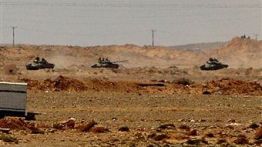
In the last two days, Nato and European leaders have declared that Gaddafi must go, but both have baulked at taking unilateral action. Their reticence has sparked a response from those in favour of intervention. Speaking in Brussels today, David Cameron said that situation on the ground may be getting worse and that Europe and the West in general “must be ready to act if the situation requires it”. Liberal interventionist Bill Clinton went further. Speaking at the Women in the World summit, he said: “I wouldn’t do it if they [the rebels] hadn’t asked… [But] it’s not a fair fight. They’re being killed by mercenaries.

Clegg’s unedifying slip reveals an underlying truth

From our UK edition

Project Merlin, the deal between the government and the banks, was meant to turn the page on banker bashing. But the deputy prime minister is still stuck on the previous page, telling Radio Sheffield today ‘I want to wring the neck of these wretched people’ the bankers.   The language isn’t very statesmanlike and is sure to infuriate many of his coalition colleagues (it is also hardly sensible for the deputy prime minister to be using language which appears to condone violence ahead of a conference where the police are preparing to deal with a riot). But it does reflect a political reality: the banks remain public enemy number one.

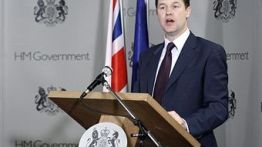
Clegg ushers in the next phase of the coalition

From our UK edition

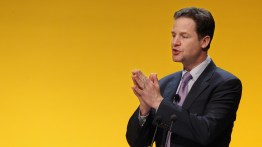
What have the Lib Dems ever done for us? That's the question that Nick Clegg sets about answering in interview with the Independent today — and he does so with righteous vigour. "Brick by brick, policy by policy, decision by decision, sometimes almost invisibly," he insists, "we are putting in place good policies that will make a long and lasting difference." He dwells, and rightfully so, on the pupil premium and raised personal allowance. "All these things will outlive the immediate task of dealing with the deficit." This salesmanship is only to be expected from Clegg, speaking on the eve of his party's spring conference and in the aftermath of their electoral cremation in Barnsley.

Our monetary policy needs sorting — and quick

From our UK edition

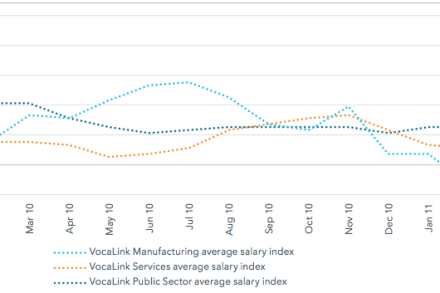
Today’s decision to leave base rates at an emergency 0.5 per cent — the lowest since the Bank of England was founded in 1694 — shows how Britain is running out of options. Not even Mervyn King would deny that Britain has an inflation problem: global prices may be up, but the UK seems to have been hit worse than almost any major economy, as I blogged yesterday. With food prices up by 6.3 per cent and CPI inflation by 4.1 per cent, what’s happening to prices? The below graph, again out today from a FTSE350 survey, suggests that pay is up by just 0.5 per cent in the private sector. And it’s even worse in the manufacturing sector.   You could argue that one should not compound this pain by jacking up debt interest.

Liberal hawks

From our UK edition

From the moment David Cameron started agitating for a no fly-zone, he's been looking for allies. France and Denmark look like they will support him, with Russia and India opposed and China perhaps willing to abstain at the United Nations. But what about closer to home, inside the coalition? Since the formation of the coalition, every policy has been tested by what will it do for relations between the parties? Oddly, however, there has been no such test about Libyan policy. Newspapers have not been writing about splits, differences and agreements. That may be because Lord Ashdown went on the Today Programme and voiced conditional support for a no-fly zone. But the Lib Dem peer has always been a hawk.

What is happening to the Conservative party?

From our UK edition

Mark Wallace has been passed some very interesting information about local Conservative associations. He writes: ‘Apparently Andrew Feldman reported (at a meeting this morning) on a study CCHQ has carried out into the effectiveness of local Conservative Associations. In a “mystery shopper” exercise, CCHQ wrote to over 300 associations under the guise of being a person who wanted to join up, and asking how to do so. Over half of the letters received no response at all, which is bad enough. Weirdly, a handful who wrote back saying the applicant would need to pass a membership interview before they could join the Conservatives.

To strike or not to strike?

From our UK edition

The situation in Libya is still uncertain, but the fog of war is clearing to expose a depressing picture. Forces loyal to the Gaddafi regime are conducting a successful offensive. The Times’ Deborah Haynes confirms reports (£) that Zawiya has fallen and rebels have been forced from the oil town of Ras Lanuf. William Hague has spoken to Mahmoud Jabril, Special Envoy of the Libyan Transitional Council. The Foreign Office has issued a communiqué on the conversation and some of Jabril’s emotional concern escapes the bland text. In the words of the Foreign Office, he wants ‘the West to act to hinder Qadhafi's ability to inflict further violence on the Libyan people, including through a no fly zone.

Cuts? Regulation needs to be cut

From our UK edition

The cuts in spending are going to feel very unpleasant indeed. Rising interest costs, resulting from past expansions in public debt, are going to crowd out other parts of the budget. It is proving difficult to curb the cost of transfers, such as benefits and pensions, and this combines with the ring-fencing of health and development spending to leverage the cuts in unprotected departments. But, as I show in my report published today by the Centre for Policy Studies, the stark reality is that the spending clock is only being turned back to 2008-09, not to the dark ages.   In fiscal year 2014-15 the government plans to spend £758bn, equivalent to £647bn at 2009-10 values.

The threat of a general strike increases

From our UK edition

As expected, John Hutton’s review of public sector pensions has recommended that final salary schemes end. Hutton was across the broadcasters this morning, explaining that he was reflecting an “inescapable reality”: “The solution to this problem is not a race to the bottom, it's not to hack away at the value of public service pensions. It’s to manage the risks and costs sensibly. The responsible thing to do is to accept that because we are living longer we should work for longer.” Beside realism, Hutton’s guiding principle has been fairness.

High tax Britain

From our UK edition

The government says that the forthcoming budget is going to be all about growth. And rightly so: the economy is still in the doldrums, and without much stronger growth than we are currently witnessing, the coalition has no hope whatsoever of balancing the budget by 2015. But few of the measures being trailed in advance are likely to have much effect, so long as Britain is stuck with a highly uncompetitive tax regime.    International tax surveys highlight just how bad our comparative situation has become. According to KPMG, out of the 86 largest economies in the world, we now have the fourth highest top rate of tax.

Labour’s inflation pitch

From our UK edition

Curiouser and curiouser. We in Coffee House have been saying for some time now that – whatever Mervyn King thinks – Britain has the worst inflation in the Western World apart from Greece. An OECD report out today shows we’ve got it worse than most eastern countries too. Korea, Turkey and Estonia are the only eastern nations with higher inflation: But what strikes me most about today is that food prices are soaring here, to an extent far worse than the rest of the world. This is what voters notice most: putting food on the table is very expensive. As Micawber might put it: annual food price inflation 6.3 per cent, annual wage inflation 2.5 per cent, result: misery. And plenty of it.

Abel fights back

From our UK edition

One of the hardest tasks of any opposition is to gain the trust and credibility to run the economy. After what happened over the last few years, Labour have an enormous credibility gap. Ed Balls’ decision to oppose any measure to deal with the deficit has reduced Labour’s economic credibility still further. So too has the two Eds’ decision to make attacks based on mis-truths, like denying there was a structural deficit before the election; or attacking the coalition for cutting bank taxes, when it is actually putting them up; and like backing another bonus tax, despite opposing it at the election, and despite Alistair Darling’s careful explanation of why it won’t work.

A tasty contest

From our UK edition

Today’s PMQs was full of verve and bite. A welcome change after last week’s washout. It’s all getting a bit tasty between Ed and Dave. The Labour leader opened with Libya and after making ritual noises about wanting to support the government’s foreign policy he admitted he found it hard not to voice his ‘concern about incompetence’. Nice tactics there. Pose as a statesman and stick the blade in under the table. But Cameron wasn’t standing for it. ‘I don’t want to take a lecture from Labour about dealing with Libya and Gadaffi,’ he said furiously. And the cheers from the Tory benches redoubled when he called for Labour to apologise for its part in the release of the still-not-dead Al Megrahi.

A second national debt that needs to be dealt with

From our UK edition

Public sector workers will be waiting nervously for John Hutton’s pension review, due out tomorrow.  It is likely to mandate extra pension contributions of around 2.5-3.5 percent of pay and new ways to make entitlements grow more slowly.  Policy Exchange advocated a similar solution in a report published last year.  Predictably, the TUC is up in arms. It says that public sector pay is not significantly out of line with the private sector – despite all the evidence that it is. The main reason why those in the public sector get a better deal is their pensions. These add up to the equivalent of 44 per cent of public employees’ wages and 71 per cent for uniformed services – but are just 9.

PMQs live blog | 9 March 2011

From our UK edition

VERDICT: A turgid sort of PMQs, where most of the quips were clumsy rather than cutting. Cameron probably won it by virtue of one of the few direct hits – his line about Ed Miliband knifing a foreign secretary, aka MiliD – and because Miliband failed, really, to prod and aggravate the coalition's wounds over Libya. The Labour leader's main attack – over the competence of the coalition – was clear enough, though, and could have some purchase depending on, erm, how competent the coalition is. As it is, Cameron's hint that he still has the occasional cigarette will probably capture the spotlight. 1231: And that's it. My quick verdict shortly.

It’s all in the language

From our UK edition

Sue Cameron’s FT Notebook is always laced with delicious vignettes. This morning, she reveals that the new cabinet manual has been withdrawn temporarily because Sir Gus O’Donnell’s Latin grammar is like Pooh's spelling: it wobbles. What are things coming to when even Sir Humphrey puts the definite article before a Latin phrase? Cameron also reviews yesterday’s shin-dig at the Institute for Government. She reports: ‘Tom Kelly (Tony Blair’s former official spokesman) noted that the coalition was “beginning to learn the hard way that you have to get a grip from the centre”.’ It’s well known that Number 10 is reorganising. The days of the soft-touch have gone.

Cameron’s threadbare praetorian guard

From our UK edition

One of the worst kept secrets of David Cameron’s leadership is that some in the inner circle don’t think much of the members of the shadow Cabinet who are now in Cabinet. What is far more dangerous is when the leader himself lets slip his low opinion of some of his colleagues, as Ben Brogan reports he has been doing lately. This is the kind of behaviour that is bound to cause resentment as this criticism always get back to the objects of it.   At the moment, Cameron can get away with this. He is still seen as the Tories’ primary electoral asset and there is no obvious, or even viable, alternative to him. But when Cameron gets into trouble, this will matter.

Libya has not been Cameron’s finest hour, but it’s not been a disaster

From our UK edition

The government has been damaged by its response to the Libyan crisis and the SAS incident in particular. William Hague has been branded a 'serial bungler', and the FCO’s response was condemned as slow and ill-prepared. The consensus is that heads should roll at King Charles Street. Many commentators have also argued that the Prime Minister was too quick to call for a no-fly zone over Libya. Nobody, not even government loyalists, could argue that the last few weeks have been David Cameron’s finest.   However, one can be too critical. Let’s start with the SAS mission. Something obviously went wrong, but it is hard to believe that ministers could have done anything differently. Their job is to set direction, not to micromanage operations.