Uk politics

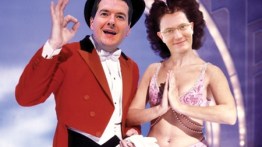
Are two Eds better than one?

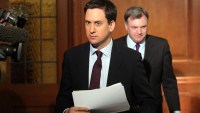
This was the question raised by today’s joint Balls Miliband press conference. The two Eds are very different in both body language and temperament. Balls is the far more pugilistic politician, always looking to dispute the premises of a question and happy to use aggressive language. While Miliband is far more of a conciliator, looking to find consensus and using only gentle humour. They even stand at the lectern in different ways: Balls hunched over his, leaning into the fight. Miliband hanging back from his, and taking a gentle step towards it when answering a question. The danger for Miliband is that Balls appears to be the alpha male, the one taking the fight to Labour’s enemies.

Balls and Miliband fail the credibility test

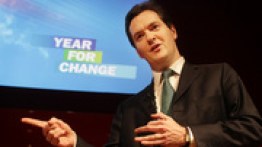
Eds Miliband and Balls gathered the press corps together this morning to broadcast a straightforward message: oh yes, we do have an alternative. And the shape of that alternative? A repeat of the one-off tax on bankers' bonuses that, Balls claimed, raised £3.5 billion last year. The money would be used for an entire buffet of economic delights, from the creation of new houses to the funding of job schemes for the young. The upshot, apparently, would be 110,000 new jobs. Nice work, as they say — if you can get it. But there are a couple of problems with all that, the first of which Labour has pre-empted. It is that last year's bonus tax may not have raised as much as £3.5 billion, after all.

Another call for an in/out referendum

In or out? — that is the question that a new cross-party campaign would have put to the British people. And so they're launching their "People's Pledge" today. The idea is that voters would promise to support only those parliamentary candidates who back a referendum on our membership of the EU. The signatures will then be enumerated, presented on a website, and — it is hoped — shock Westminster into delivering the referendum itself. At the very least, it might persuade some candidates to face up to, and meet, the tide of public opinion on Europe. It seems we've been here, or somewhere like it, before now. Daniel Hannan, for instance, launched a campaign last year to collect signatures for an EU referendum.

Clegg’s cure for the tuition fee trauma

The Liberal Democrats are still traumatised by what happened over tuition fees. Nearly every fringe meeting contained a long discussion of the issue and how the party could have handled it better. Clegg’s plan to heal the wound is to show that the new system will go hand in hand with a broadening of access to the best universities. The deputy prime minister seems to be straining for a fight on this issue. In his speech, he laid into those at Oxbridge ‘who shrug their shoulders and say: That’s just the way things are’ about how dominated these institutions are by the children of the well-off. He demanded, ‘fair access now.’ But the problem is that access can only be as fair as the schools system allows.

The coming war with Libya

If the West is not ready to intervene decisively against Colonel Ghadaffi, it needs to get ready for a post-revolutionary Libya, where the dictator and his bloodthirsty family seek revenge on pro-democracy activists and countries like Britain. Think of Ghadaffi's previous record: the Lockerbie bombing, targeted assassinations like in the 1970s, and attacks on US soldiers in Germany. Libya could in future represent a threat to Britain akin to al Qaeda. So, the British government needs to think how it will deal with Ghadaffi MK II. Its policy should draw on past examples of containment and isolation. Libya's neighbours will have to be incentivised to bolster European - and especially Italian - attitudes.

Clegg defines his liberalism

I do feel for Nick Clegg. He’s taken an oppositionalist party into government, and they hate it. He is politically and psychologically prepared for what goes with power; grassroots LibDems less so. And this brings problems. Yesterday, he was complaining that his party is “too male and too pale”; but his main problem is that there are too few of any. At the peak of Cleggmania, the Lib Dem had 30 per cent of the the vote. Now it’s 10 per cent in the polls. If things continue at this rate, he won’t need a ‘ring of steel’ for his next conference: a phone box will suffice. So, what can he do? His speech tries to define a new word: ‘liberal’. He has this to say: 'For the left, an obsession with the state.

Clegg’s pitch for the middle

‘Governing from the middle for the middle’ was the message of Nick Clegg’s unapologetic speech to Lib Dem conference. His effort to redefine the Liberal Democrats continued as he tried to move the party away from its traditional yoghurt-weaving concerns and instead focus on appealing to ‘alarm clock Britain.’ Clegg’s view is that the left wing protest votes that the party used to get are gone for the foreseeable future, repulsed by coalition, and that the Lib Dems need to reach out to new voters. The calculation is that Labour is seen as being for those on benefits and the Tories for the rich, so the Liberal Democrats should try and seize the middle.

Clegg urges his party to face reality

The cultural change Nick Clegg is trying to bring to the Liberal Democrats was summed up by one exchange during his Q&A with party delegates. One delegate, a member of the Federal Policy Committee, got up and said how conference had "sent the government a message" with its decision to amend the coalition’s health reform plans. To which a visibly exasperated Clegg replied, "you’re part of the government."   Clegg was uncompromising in his message that the party has to accept the realities of coalition government. After he had dismissed a series of questions about whether he was too close to Cameron, Clegg said — only half-jokingly — to the hall "who else would like some of that?

The Lib Dems vote to amend Lansley’s NHS reforms

Lib Dem conference has just overwhelmingly voted to amend Lansley's NHS bill. In the end, the Lib Dem leadership simply accepted the amendments because it was so clear they were going to pass. Evan Harris, the former Lib Dem MP, warned that the party would not accept the leadership simply ignoring these amendments. He said "we expect Liberal Democrats in government to follow what we overwhelmingly vote for." Harris predicted that if they went along with Lansley's bill, the Lib Dems would be associating themselves with the "retoxification of the Tory brand".

Balls sets Labour against Clegg (again)

It's not just the protestors who are rallying against Nick Clegg today. Here's what Ed Balls has to say about the Lib Dem leader, in interview with the Guardian: "'Clegg looks an increasingly desperate, shrill and discredited politician, losing both public and party support. People think that if Clegg says something, it cannot be the truth. The Liberal Democrats need to have some real hard thinking about what they stand for' He says it would be impossible for Labour to govern with Clegg after the election, arguing: 'I don't see how Nick Clegg could change direction again with any shred of credibility, or how he could work with Labour now, but that is not true of Liberal Democrats more widely.

In protest at the Lib Dems

The Liberal Democrats have, as Clegg’s team like to joke, gone from being the party of protest to the party people protest. Here in Sheffield, at Lib Dem spring conference, there’s a growing group of demonstrators standing just outside the secure zone. They are keeping up a steady chant of ‘Lib Dem scum, Lib Dem scum.’ The authorities are clearly nervous about trouble this weekend. There are a huge number of police out on the streets, a number more akin to a full party conference rather than one of these smaller spring affairs. There is a 10,000 strong demo planned for tomorrow. If there is going to be trouble, it will likely be a spill-over from this.

The growing clamour for intervention

In the last two days, Nato and European leaders have declared that Gaddafi must go, but both have baulked at taking unilateral action. Their reticence has sparked a response from those in favour of intervention. Speaking in Brussels today, David Cameron said that situation on the ground may be getting worse and that Europe and the West in general “must be ready to act if the situation requires it”. Liberal interventionist Bill Clinton went further. Speaking at the Women in the World summit, he said: “I wouldn’t do it if they [the rebels] hadn’t asked… [But] it’s not a fair fight. They’re being killed by mercenaries.

Clegg’s unedifying slip reveals an underlying truth

Project Merlin, the deal between the government and the banks, was meant to turn the page on banker bashing. But the deputy prime minister is still stuck on the previous page, telling Radio Sheffield today ‘I want to wring the neck of these wretched people’ the bankers.   The language isn’t very statesmanlike and is sure to infuriate many of his coalition colleagues (it is also hardly sensible for the deputy prime minister to be using language which appears to condone violence ahead of a conference where the police are preparing to deal with a riot). But it does reflect a political reality: the banks remain public enemy number one.

Clegg ushers in the next phase of the coalition

What have the Lib Dems ever done for us? That's the question that Nick Clegg sets about answering in interview with the Independent today — and he does so with righteous vigour. "Brick by brick, policy by policy, decision by decision, sometimes almost invisibly," he insists, "we are putting in place good policies that will make a long and lasting difference." He dwells, and rightfully so, on the pupil premium and raised personal allowance. "All these things will outlive the immediate task of dealing with the deficit." This salesmanship is only to be expected from Clegg, speaking on the eve of his party's spring conference and in the aftermath of their electoral cremation in Barnsley.

Our monetary policy needs sorting — and quick

Today’s decision to leave base rates at an emergency 0.5 per cent — the lowest since the Bank of England was founded in 1694 — shows how Britain is running out of options. Not even Mervyn King would deny that Britain has an inflation problem: global prices may be up, but the UK seems to have been hit worse than almost any major economy, as I blogged yesterday. With food prices up by 6.3 per cent and CPI inflation by 4.1 per cent, what’s happening to prices? The below graph, again out today from a FTSE350 survey, suggests that pay is up by just 0.5 per cent in the private sector. And it’s even worse in the manufacturing sector.   You could argue that one should not compound this pain by jacking up debt interest.

What is happening to the Conservative party?

Mark Wallace has been passed some very interesting information about local Conservative associations. He writes: ‘Apparently Andrew Feldman reported (at a meeting this morning) on a study CCHQ has carried out into the effectiveness of local Conservative Associations. In a “mystery shopper” exercise, CCHQ wrote to over 300 associations under the guise of being a person who wanted to join up, and asking how to do so. Over half of the letters received no response at all, which is bad enough. Weirdly, a handful who wrote back saying the applicant would need to pass a membership interview before they could join the Conservatives.

To strike or not to strike?

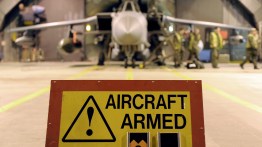
The situation in Libya is still uncertain, but the fog of war is clearing to expose a depressing picture. Forces loyal to the Gaddafi regime are conducting a successful offensive. The Times’ Deborah Haynes confirms reports (£) that Zawiya has fallen and rebels have been forced from the oil town of Ras Lanuf. William Hague has spoken to Mahmoud Jabril, Special Envoy of the Libyan Transitional Council. The Foreign Office has issued a communiqué on the conversation and some of Jabril’s emotional concern escapes the bland text. In the words of the Foreign Office, he wants ‘the West to act to hinder Qadhafi's ability to inflict further violence on the Libyan people, including through a no fly zone.

The British Bill of Rights stalls

A British Bill of Rights has long been the Tory leadership’s sticking plaster solution to the problems posed by the ECHR. The idea is that a British Bill of Rights would give this country a greater margin of appreciation in interpreting the convention. But this morning this plan is in tatters.   The long-awaited commission on the British Bill of Rights is clearly going nowhere.  Any commission which includes Lord Lester and Helena Kennedy, two of the Lib Dem appointees to it, isn’t going to improve the situation.   The failure of this commission even before it has started is a reminder that this problem isn’t going to be solved in coalition.

Cuts? Regulation needs to be cut

The cuts in spending are going to feel very unpleasant indeed. Rising interest costs, resulting from past expansions in public debt, are going to crowd out other parts of the budget. It is proving difficult to curb the cost of transfers, such as benefits and pensions, and this combines with the ring-fencing of health and development spending to leverage the cuts in unprotected departments. But, as I show in my report published today by the Centre for Policy Studies, the stark reality is that the spending clock is only being turned back to 2008-09, not to the dark ages.   In fiscal year 2014-15 the government plans to spend £758bn, equivalent to £647bn at 2009-10 values.