Uk politics

What was Brown’s biggest mistake?

From our UK edition

“I have to accept my responsibility.” Who would have thought that Gordon Brown would ever breathe those words, let alone breathe them to a conference in America over the weekend? Our former PM has, it's true, suggested that his regulatory system was inadequate to the financial crash before now. But here he was much more explicit: “We set up the Financial Services Authority believing the problem would come from the failure of an individual institution. That was the big mistake. We didn’t understand just how entangled things were.” And that's event before he got onto the "responsibility" bit. I'll repeat it, just in case it didn't sink in the first time: “I have to accept my responsibility.

Cameron takes it to the councils

From our UK edition

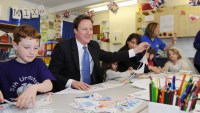
Ignore what your council is telling you. So says no less a personage than the Prime Minister of our country, speaking at one of his freewheelin' roadshow events this afternoon. Cameron may have been referring specifically to the red tape being wrapped around Royal Wedding street parties, but it's still a pretty pugnacious point for a PM to make. Here's the full quotation, courtesy of the superb PoliticsHome: “I hope people are able to join in and celebrate and I am very much saying today that if people want to have a street party, don't listen to people who say 'it is all bureaucracy and health and safety and you cant do it.

The Vickers Review, acceptable to both halves of the coaltion

From our UK edition

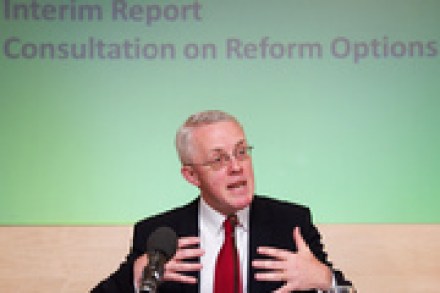
The Vickers Review into the future of banking appears to have prevented a possible coalition row. The Tories and the Liberal Democrats have had different views on what to do about the banks, with the Lib Dems keener to break up the banks come what may and the Tories more worried about preserving the competitiveness of the City.   At the very start of the coalition there was a rather unseemly turf war between Cable and Osborne about who controlled policy on the banks, and many have expected a row to break out when he review reported. But, as we predicted on Coffee House back in February, the review has come up with a solution acceptable to both sides.

Beyond the frontline

From our UK edition

Labour's cartography department has been hard at work all weekend to produce this. It is, lest you haven't heard Yvette Cooper today, an "interactive web-map" of the job losses announced by police forces so far, all across the country. You can interact with it in ways that include clicking to view a larger version. So far as web campaigning goes, this is probably fertile ground for the Opposition. No one likes the idea of more crime — and "more crime" is often conflated with "fewer bobbies" in the public debate. Yet Labour's point is diluted, somewhat, by one simple fact: that their former Home Secretary refused to guarantee that police numbers wouldn't fall under his party.

Meanwhile, in America…

From our UK edition

We really oughtn't let the weekend pass without some mention of political events across the Atlantic. As you've probably heard, a US government shutdown was avoided on Friday evening, and all thanks to a budget compromise which saw Barack Obama slash a cool $38 billion from his spending plans. Although the debate over who has credited or discredited themselves is still ongoing, it's striking that the Republicans — urged on by the Tea Party corps — achieved around two-thirds of the cuts that they demanded. Yet disaster, or at least the prospect of it, has still not been averted. The Tea Party has already claimed several fiscal scalps along the way — and the next target for their administrations is the impending debate over America's debt ceiling.

Lamb volunteers for the slaughter

From our UK edition

We'll try to get the video later, but, for now, a transcript of Norman Lamb's appearance on the Politics Show will have to do (UPDATE: video added above). Here we had a very unusual political moment: an assistant whip, and adviser to Nick Clegg, not only calling for changes to government policy, but also threatening to resign should they not happen. His main argument was that the NHS reforms should be dealt with more slowly: "I think it would be a crying shame if that really important principle [giving GPs more power and responsibility] was lost because we rushed the reform process and got it wrong. My real concern is the financial risk of doing it too quickly because then you lose services, patient care suffers...

Lansley fights back, sorta

From our UK edition

Pause, listen, engage and ... push back. That just about sums up Andrew Lansley's article for the Sunday Express today, as well as the government's general effort to reconstruct and repackage its shaky NHS reforms. Which is to say, the Health Secretary makes sure to mix reassurance ("There is no more important institution in this country than the NHS") with resolve ("The NHS is not some kind of museum") for his Sunday sermon. He dwells on the failures of the Labour years, particularly the proliferation of bureaucrats ahead of doctors and nurses.

The Treasury Select Committee gets prescriptive

From our UK edition

Andrew Tyrie promised that the Treasury Select Committee would be an assertive, insistent body under his stewardship — and he hasn't disappointed so far. The committee's recent evidence sessions have been fiery affairs, particularly by the usual standards of these things. And today they have released the result: an extensive and prescriptive report into last month's Budget. Several of the report's observations are worth noting down — not least that advance briefing of the Budget is "corrosive of good government," and that "almost all the evidence received [about the government's Enterprise Zones] is unsure about the extent to which they will contribute to UK growth.

Unite chief blames MI5 for protest violence

From our UK edition

Sometimes, just when you think that the craziest left-wing ideologues have gone off to tend to their gardens, up one pops. Meet Len McCluskey, the head of Unite, who tells The Times's Rachel Sylvester (£) that Fidel Castro has been a "heroic" leader of his people. That would be the same Cuban dictator who jails journalists and trade unionists. Odd choice of hero. But it gets better. McCluskey seems to think that MI5 encouraged violence at the last anti-cuts protest. I kid you not: "Mr McCluskey believes that the secret services, in particular MI5, may have been working under cover to encourage the violence as part of a conspiracy to undermine the peaceful message of the march.

Osborne needs to make his case for growth

From our UK edition

The Guardian have an odd story today. “Business chiefs who backed cuts now doubt UK growth,” runs the headline — suggesting that these sinners are now being confronted with the error of their own ideology. Who are the business chiefs? We have Archie Norman, the retired head of Asda, now part-time chairman of ITV. He “said the government's growth targets were too optimistic”. Set aside the fact that the government doesn’t make growth targets now, and has subcontracted that the Office for Budget Responsibility. Where is the connection between growth downgrades and cuts? In the imagination of The Guardian, I suspect.

Doing the splits

From our UK edition

When is a split not a split? When it's a subsidiary, of course. We learn this morning that the Vickers Banking Commission will not recommend a complete, Glass-Steagall-style separation of retail and investment activities. But it will advise that banks erect some sort of barrier between the two, to ensure that everyday savers' (and taxpayers') cash isn't risked by the Masters of the Universe. Specifically, it will propose that banks create subsidiaries out of their investment arms. Those subsidiaries could then go bust without, in theory, affecting the retail half of the equation. As Robert Peston explains, there are two ways of implementing these subsidiaries — and the Vickers Commission is expected to hurl them both out into the realm of public debate.

Europe, and the UK, should be much more proactive about Portugal

From our UK edition

As Portugal bites the dust – following Ireland and Greece in asking for an EU bail-out – the most important question is still not being asked by EU policy-makers, or by the British government for that matter: will a bail-out actually solve any of Portugal’s problems? The simple answer is, it won’t. Asking the European Central Bank to take on more junk bonds, or piling more taxpayer-backed loans on Portugal’s already heavily indebted economy is not a long term solution. Ireland and Greece have already sought to renegotiate their bail-out terms as they are struggling to grow fast enough to repay their EU/IMF loans (ECB rate increases like the one we saw yesterday are unlikely to help).

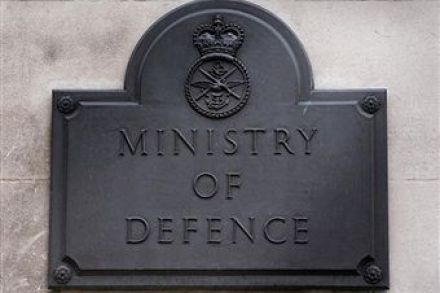
How might the MoD get round its spending settlement?

From our UK edition

The Ministry of Defence is Whitehall’s last monolith. Charged with the nation’s defence, it is powerful enough to challenge the Treasury. As Pete notes, there are signs that it’s trying to defer (if not avoid) the cuts laid out the punishing strategic defence and security review. It has many ways of doing this. Obviously it can use political pressure because troops are deployed in Afghanistan and Libya. But there’s also a neat accounting step that allows the MoD can transfer costs directly to the Treasury. You may recall that the Budget contained a £700m increase for ‘single use military expenditure’ (SUME) in 2011-2012.

How about reintroducing conscription?

From our UK edition

The American academic and foreign policy realist Stephen Walt has put an interesting idea on his blog: would re-introducing the draft make America less interventionist? Perhaps it would, and perhaps there’s a good case to be made for doing the same in Britain. Calling for a return to conscription might sound like a silly right-wing trope, but it makes sense from an anti-war perspective: we might be less eager to send our soldiers to fight and die in distant conflicts if there were the slightest possibility that we might have to go, too. I’m not sure I agree, though. It’s not as if national service prevented war in the past. We happily shipped off young men to Korea in the 1950s, for instance. Maybe compulsory military training only encourages bellicosity.

More demands on George Osborne

From our UK edition

Is the defence budget the most chaotic in all Whitehall? George Osborne said as much last October — and he's still dealing with its hellish intricacies now. The main problem, as so often in military matters, is one of overcommitment. Thanks to various accounting ruses on Labour's part, large parts of the MoD's costs were hidden in the long grass of the future. It was buy now, pay later — with Brown doing the buying bit, and the coalition doing the paying. The number that William Hague put on it last year was £38 billion. The MoD was spending £38 billion more, over this decade, than had been budgeted. Even after the cuts, elements of that overspend were likely to remain. Which is why this story from today's Telegraph is worth reading in full.

An obstacle to the Big Society

From our UK edition

Toby Young’s piece in the latest issue of the Spectator magazine captures one of the problems facing the Big Society. It’s not that people don’t want to donate their time to fill in the cracks left by the cuts – it’s that they’re often blocked from doing so. Toby highlights the case of Kensal Rise Library, which a local group of volunteers had hoped to save from the axe. But local council chiefs have hardly greeted their plan for running the library with enthusiasm. As Toby puts it: “On Monday, the council produced its considered response in the form of a 178-page ‘supplement’ to … well, it doesn’t say. In addition to having no table of contents and no index, it has no title.

Labour fights back in Pickles’ war on propaganda sheets

From our UK edition

Most councils publish a newspaper – usually delivered to your door and instantly discarded. The government has decided that these freesheets are both a waste of public money and detrimental to local newspapers competing in the open market; the accusation that they are predominantly used for propaganda purposes has also been made. Labour opposed the revisions to the Code of Recommended Practice on Local Authority Publicity, which might suggest that these publications are too valuable to their councils. However, some of the red camp’s objections were valid.

The Portuguese fallout

From our UK edition

How much are we in for? That is the question that springs most readily to mind after Portugal's request for fiscal aid from the EU. And, sadly, the answer is difficult to work out. The figures being spread around range from £3 billion to £6 billion, with valuations in between. But, really, it depends on how much of the €80 billion package is agreed to by European finance ministers, and which lending mechanisms are used. The European Stability Fund, the EU's emergency fund and the IMF's pot of gold all have differing levels of UK involvement. If our country does end up making a significant contribution to any bailout package, then the government will certainly have some explaining to do.

Reinforcing the schools revolution

From our UK edition

There is extraordinary news today, suggesting that the Academies revolution is continuing apace. What was a trickle under the Labour years is turning into a flood. This time last year just 1 in 16 state secondaries had 'Academy' status: that is, operationally independent within the state sector. Now, it is 1 in 6. By Christmas, it should be 1 in 3. And by the next election, the majority of state secondary schools in Britain — about 1,600 — should have turned into Academies. Had Gove suggested such an expansion before the election, he would have been laughed at. The last time the Conservatives sought to give state schools independence was under Kenneth Baker, when just 50 availed themselves of such freedoms in three years. Now, freedom appears to be contagious.