Uk politics

Cameron in new war with his backbenchers

From our UK edition

The House is united in loathing of IPSA, which explains why Tory MP Adam Afriyie’s amendment to the Parliamentary Standards Bill 2009 is proving so popular. Afriyie’s aim is ‘to simplify the way in which expenses and salary payments to Members of Parliament are made’ and attempt to limit IPSA’s costs.   The government, however, is wary of Arfiyie’s reform – sensing, perhaps, that the public might not stomach changes to the expenses system so soon after the recent scandal.   The bill’s second reading will take place this Friday and it is now understood that enough Labour backbenchers will support the motion to allow it to pass. It is rumoured that Cameron is insisting his backbenchers are whipped to defeat the bill.
The press becomes the story

From our UK edition

The power of the press has, almost from nowhere, become one of the defining leitmotifs of this Parliament. Only two years ago, the Telegraph exerted that power to (partially) clean out British politics, and won general acclaim in the process. But now, it seems, the media is more likely to have its actions attacked, or at least questioned and contained. Whether it is the Press Complaint Commissions's censure today for those clandestine Cable tapes, or the continuing hoo-hah over super-injunctions and their infraction, there is a question hanging unavoidably in the air: how much does the public have a right to know? This is a precarious political issue, not least because of the immediate problems it has thrust upon the coalition.

Cameron sets out the bounds of Lib Dem assertiveness

From our UK edition

Our coalition government was forged one year ago tomorrow — and we shall have more on that then. But the Sun has already marked the occasion by publishing an interview with David Cameron today. It is a wide-ranging sort of conversation, touching on everything from the Prime Minister's workload ("every day feels like a week") to the shelf life of the government ("five years"), although much of it is unsurprising. It does, however, contain one or two useful insights into how the coalition's game of give-and-take is going to operate from now on. First up, Cameron's insistence — contra Clegg — that the Lib Dems should not be portrayed as a "moderating influence" on his party.

The Dame departs

From our UK edition

Pauline Neville-Jones was a first. She was one of the first women in the Foreign Office to climb the department's male-dominated ladder, serving as Lord Tugendhat's chef de cabinet at the European Commission, obtaining the coveted post of Political Director and eventually becoming JIC Chairman. She led the British delegation at the Dayton Peace Accords and she probably thought she would be the first British National Security Adviser. But it was not to be. Her usefulness to the Prime Minister seems to have been mainly in opposition, where she could add a voice of knowledge to a Shadow Cabinet with very little governmental experience. The Tory Green Paper on National Security was all the more serious for her drafting it. But it was not always easy.

A leadership contest might be just what the Scottish Tories need

From our UK edition

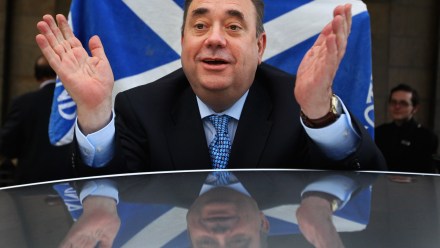
That's it, the full house. Alex Salmond has seen off all three main opposition party leaders before the Scottish Parliament has even convened for the first time in this new session. Yesterday afternoon, Scottish Conservative leader Annabel Goldie joined her Labour and Liberal Democrat counterparts (Iain Gray and Tavish Scott) in standing down. The Conservatives did not do quite as badly as either of the other two opposition parties in the election – they went down two seats, from 17 to 15 – and many will see that as the reason Miss Goldie delayed her resignation for a few days, to work out of she could continue. But, in reality, Miss Goldie always seemed destined to resign after this Holyrood poll.

Credit where it’s due

From our UK edition

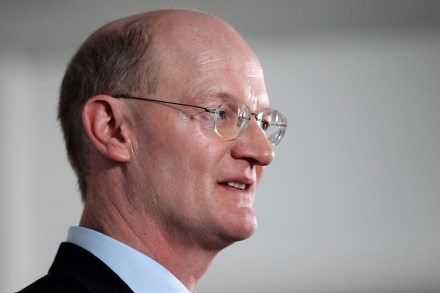
One of the worries of Tory modernisers about the coalition back in May last year was that the Tories would end up being seen as being responsible for all the tough but necessary stuff, eg deficit reduction, while the Lib Dems would claim the cuddly stuff, for example the pupil premium — a policy that was in both the Tory and Lib Dem manifestos.   David Willetts in a piece in the Telegraph today, taken from a speech he’s giving tonight, makes this point anew in the context of the new, frostier coalition relations: “This agenda is shared, so it would be a mistake to get into a game of identifying Liberal measures and Tory ones in a perpetual trade-off.

The Lib Dems’ hostage situation

From our UK edition

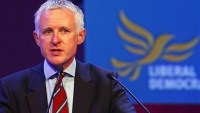
Norman Lamb’s comment on the Daily Politics about the Lib Dems having become a "human shield" for the government sums up the mood on the Liberal Democrat benches. Lamb went onto wonder whether this was inevitable: "Whether that's inevitably the case for the junior partner I don't know... But we are in this for the long term." The bad news for the Liberal Democrats is, I fear, that it is. On Friday I was having a discussion with a senior Labour figure who was explaining how the party was now going to concentrate its fire on Cameron not Clegg.

The gulf between public opinion and Westminster opinion on Europe

From our UK edition

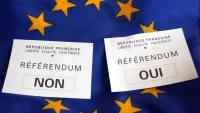
It's Europe Day today, where the flag of the EU will be flown by 26 of its 27 member states. David Cameron is refusing to join in* — and rightly. Why celebrate an institution to which the British public is hostile? I've always found it strange that Euroscepticism is caricatured as a fringe, minority position when the polling evidence is so overwhelming. The European Commission anxiously monitors this, conducting identical polling in all member states — the largest poll in the world. The results are never publicised in Britain because they make clear the depth of public hostility. We have dug a few out, from the Eurobarometer data archives, and print them below.

Another European mess for the coalition to deal with

From our UK edition

Financial meltdown. As Ben Brogan says this morning, it tends to concentrate the mind. And so it is with the coalition, after days of infighting and spiteful diversion. The meltdown is not our own, of course, but that of the Greeks. And although much will be said by Conservative and Liberal Democrat politicians about how "there, but for the grace of George Osborne," etc., the real issue for them is simply this: how much are we in for? If Greece requires another bail-out, how much British money might be involved? Osborne himself – speaking across the news channels yesterday – has set out out a firm line. "We certainly don't want to be part of any bail-out of Greece," stresses the Chancellor.

Sectarianism breathes again in Ulster

From our UK edition

Can Tom Elliott lead the Ulster Unionists? That’s the question commentators in Northern Ireland are asking, after the party suffered yet another reverse at the polls. Elliott was elected leader on a landslide in September and he is already under pressure, seemingly powerless to arrest the decline of the once dominant force in Northern Irish politics. He is visibly rattled, as the clip above proves. It was probably a reaction in the heat of the moment, but one that should alarm for those Tories who still seek an alliance with the UUP.* It was hoped that the scale of Elliott’s victory would unite the fractious party. But the divisions that characterised Sir Reg Empey’s leadership have intensified under Elliott. The factions are many and various.

The Tories’ intellectual dishonesty over the NHS

From our UK edition

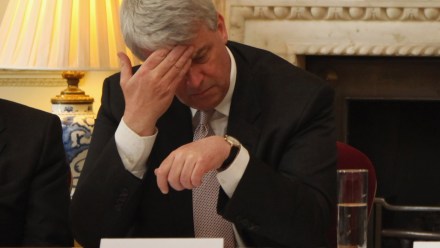
Why should Cameron ditch the Lib Dems? Coalition has made his party more radical, more electorally successful – and the worst ideas in the Cabinet come from men with blue lapels. Take Andrew Lansley. His press release today would have been shocking had it come from a Lib Dem, and denounced as dangerous leftist nonsense that renders the government's overall message incoherent. Ed Balls' arguments against cuts have routinely been challenged in Coffee House. So we can hardly be expected to applaud when his arguments are plagiarised by a Tory. The hapless Lansley, whose needless and complex heath reform bill has stalled, is today trying to win back the initiative by attacking Balls and Miliband from the left.

Why Clegg will get his way on NHS reform

From our UK edition

On Andrew Marr this morning, Nick Clegg made clear that changes to the NHS bill are his new priority. He said that there would be ‘substantial’ changes to it and declared that ‘no bill is better than a bad bill.’ I suspect that Clegg will get what he wants on the NHS bill. When I spoke to one senior Clegg ally after the AV vote, I was told that Number 10 is ‘conceding everything to us in that area.’ My source went on to say that because of the Tories’ traditional weakness on the the NHS, the Tories ‘are mortally afraid of a row over the NHS with us on side and them on the other and rightly so.’ The NHS, though, was the only area where Clegg appeared to be setting a new tack.

Huhne on the rack

From our UK edition

It may not be reflected in the popular vote, but politics is still mostly about the Liberal Democrats this morning. We have Ed Miliband's latest sally for their affections. We have the usual veiled threats and dread innuendo from Vince Cable. And then there's the weird, but piercing, accusation on the cover of the Mail on Sunday: Chris Huhne pressurised others – and, specifically, a constituency aide – to take speeding points on his behalf, as he didn't want to lose his driving licence. The accusation, it is said, is inspired by rumours spread across Westminster – and now by testimony from Huhne's former wife. While, for his part, the Energy Secretary is denying it all. Whomever you believe, the story has flared up at an intriguing time.

An election before 2015 could soon be illegal

From our UK edition

Amazingly, the forces of conservatism derided by Tony Blair, are in the ascendant, their enemies scattering and in retreat. Bin Laden is dead, the oil price tumbling, the Royal Wedding was a triumph and now Labour and the Lib Dems beaten at the ballot box. Surely, we tell ourselves, this is an alignment of the stars, a Conservative moment. David Cameron must seize the day, or at least the year, by abandoning the Coalition and calling a general election soon. Landslide, here we go! Hold your horses. Britain’s electoral machinery is off the road, its parts all over the workshop floor. Thanks to the constitutional tinkering of the Coalition, the procedural and practical obstacles to holding a general election in the next four years are substantial and rising.

The winners and losers from Thursday’s elections

From our UK edition

After every election, the political stock exchange goes into a frenzy trying to work out who is a buy and who is a sell. Thirty-six hours after the polls closed, it is a little clearer who the winners and losers of this election season have been. Here are our selections: Winners Alex Salmond, the biggest winner of Thursday night. Salmond has achieved what the Scottish electoral system was meant to prevent, an overall SNP majority in the Scottish parliament. Salmond now has the votes he needs for a referendum on independence.

Weapons-grade Cable

From our UK edition

Which Lib Dem can be rudest about the Tories? Chris Huhne, you must admit, gave it a decent shot yesterday, describing his parties' "extraordinary anger" with their coalition stablemates. Even Nick Clegg had a go, with a little swipe at Thatcherism. But I reckon Vince Cable's remarks this morning will take some beating. The Tories – on his utterly unscheming, non-partisan account – are "ruthless, calculating and very tribal". Although he did add that, "that doesn't mean to say we can't work with them." How very broadminded of him. The trick of the next few days will be sifting out the Lib-Con separations that have Downing Street's blessing from those that are simply vicious attacks by one coalition partner on the other.

It’s official: Britain says NO to AV

From our UK edition

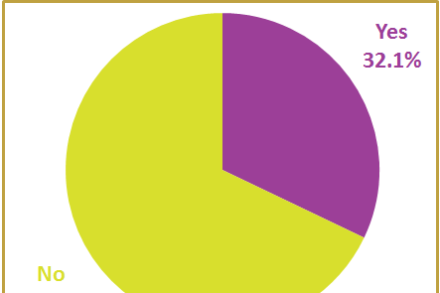
The count hasn't quite finished yet, but the Noes already have it – having crossed the threshold for victory only a few minutes ago. The official Electoral Commission website is lagging a bit behind, but it captures just how comfortable this win has been for the defenders of FPTP. So comfortable, in fact, that you imagine we're done with major voting reform for at least a generation. And for the Lib Dems, Ed Miliband and the Yes campaign, the recriminations that were simmering away earlier can now come to a boil. What joy. We will update this post as soon as the final tallies are available. UPDATE: Final results shown in the pie chart above.