Uk politics

Osborne pledges more and more transparency

From our UK edition

The Post-Bureaucratic Age — mostly just plain and simple transparency, to you and me — barely got a mention once the Tories alighted on the Big Society, of which it is a component. But the thinking behind it never went away, as George Osborne's speech to the Google Zeitgeist conference testifies today. It may be unusual to hear an address from the Chancellor in which he doesn't mention the deficit, not even once. But, in talking about publishing details of government spending and contracts online, this is natural territory for him. The thinking behind much of the transparency agenda is simply to cut down waste and extravagance in the public sector.

Huhne digs his feet in

From our UK edition

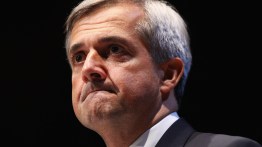
Chris Huhne has, at last, responded to the allegations set against him — and he has done so with some defiance. In a statement this afternoon, the Energy Secretary said that the claims made by his former wife are "simply incorrect," and that he welcomes the police looking into them. Here's a more complete transcript, courtesy of Andrew Sparrow: "All I want to say is simply that these allegations are simply incorrect. They have been made before and they have been shown to be untrue. And I very much welcome the referral to the police as it will draw a line under the matter. I don't want to say any more than that. I think the police can get to the bottom of this.

Lansley stands up for his reforms

From our UK edition

If there's anything that stands out from Andrew Lansley's interview with the Sunday Times (£) it is his air of quiet defiance. Of course, the Health Secretary sounds some of the conciliatory notes that have crept in to the government's rhetoric since they decided to pause, listen and engage on NHS reform. But he also stands up for the original reforms as he conceived them. "From my point of view," he says, "the White Paper was setting out what sensible, intelligent people inside the NHS were saying." For him, the concerns that remain are not with the general thrust of his reforms, but with "implementation, the nuts and bolts of how it will work." Lansley also makes sure to bind Cameron into the White Paper.

How to fix the National Security Council

From our UK edition

The National Security Council was a sound idea. But it has disappointed, both inside and outside Whitehall. The Ministry of Defence has complained that it "failed to give strategic direction". Among previous supporters in the media, Con Coughlin has commented sourly that “all it has achieved so far is the replacement of Blair’s much-derided ‘sofa government’ with a new, back-of-the-envelope approach”. James Kirkup was even driven to ask “What exactly is the point of it?” Where did things go wrong?

The Huhne story speeds up

From our UK edition

Looking at today’s papers, it is clear—as Pete says—that Chris Huhne’s political career is in real danger. The most striking thing about the Mail on Sunday and Sunday Times stories about the allegation that he asked someone to take driving penalty points for him is that the person who took the points appears to have taped a recent conversation between the pair about the matter. This suggests a total breakdown in trust between them. The Sunday Times also includes the allegation that Huhne “is alleged to have entered another person’s name on the form, without consulting them.

Huhne falls victim to another secret microphone

From our UK edition

The vultures appear to be circling closer and closer to Chris Huhne — does he have enough strength to shoo them away? After all, he was already diminished by last weekend's claims about his delinquent motoring practices. Today, he is diminished further still. Both the Mail on Sunday and the Sunday Times (£) have published extracts from a taped conversation between the Energy Secretary and an unnamed someone who is alleged to have taken the fall for his speeding tickets. "There is no evidence for this story," says Huhne in one extract, "unless you give it some legs by saying something.

Another blow to the Lansley plan

From our UK edition

Number 10 has now taken charge of coalition health policy to such an extent that the Department of Health press office was caught unawares by the news that the Prime Minister was to deliver a major speech on health next week. David Cameron is determined to present the coming substantial changes to the Lansley reform plan as the changes he wants, not the ones forced on him by the Lib Dems. To that end, the head of the NHS future forum, a body Cameron has set up to oversee the NHS listening exercise, Steve Field telling The Guardian that he thinks all competition should be removed from the bill is helpful to Cameron. But these sentiments will exacerbate the growing concerns in Conservatives circles that the bill is going to end up being so diluted as to be pointless.

Cable talks similarities, not differences

From our UK edition

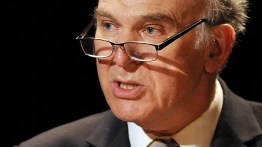
Vince Cable, it seems, has notched his Tory-baiting down from 11 to about 8. Last weekend, in the bitter wake of the local elections, the Business Secretary labelled his coalition partners as "ruthless, calculating and thoroughly tribal". Today, in an address to the Fabians, he would only argue that the Tories will benefit most from tribalism in politics — and it was an argument delivered soberly and without obvious malice. He even praised David Cameron (along with Tony Blair) as someone who has tried to suck the poisonous partisanship from Westminster's bloodstream. Sunder Katwala has quoted the speech extensively here, so I won't dwell for too long on what was said.

The man who hopes to win English votes for Labour

From our UK edition

Maurice Glasman and Ed Miliband do not think as one. But Miliband's Favourite Thinker™ is an undoubted influence on the Labour party — and, as such, it's worth tuning into his ideas from time to time, if you have a tolerance for such things. Glasman's "Blue Labour" philosophy has already enjoyed heavy exposure this year, and he has an interview in today's Times (£) to explain it even further. If you're not minded to buy, borrow or steal a copy of the Thunderer, then here are a few observations. First, it's striking just how much Glasman dwells on the personal. "If you want to know everything that was wrong about Scottish Labour and Labour," he urges, "then just look at the career of Gordon Brown.

Back to the start on a military covenant

From our UK edition

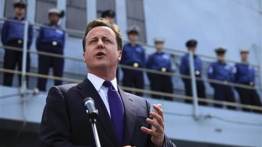
I suppose you could call it an O-turn. First, the Prime Minister declared, in a speech aboard HMS Ark Royal last year, that a new military covenant would be enshrined "into the law of our land." Then, there seemed to be a U-turn, with the government committing only to review the covenant annually, not to lend it legal force. Yet, now, a U-turn on the U-turn, with the news that it will be etched into the staute books after all. The defence minister Andrew Robathan tells today's Telegraph that, "we are putting the military covenant on a statutory basis for the first time." The formal announcement is expected in the House on Monday, pending the outcome of some "final discussions".

Gove takes the attack to ailing Burnham

From our UK edition

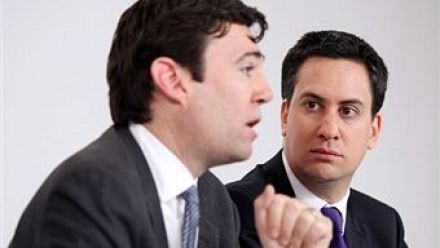
There are intriguing manoeuvres on the education front today. Michael Gove has written a letter to Andy Burnham, calling on his counterpart to guarantee to protect the Academies programme. There’s nothing unusual in this: politicians are always writing pointless letters to each other. But the timing of this one is quite significant, coinciding as it does with former Blair spinner Peter Hyman’s decision to create a free school, with, it is understood, the tacit support of Andrew Adonis. As I’ve written before, Burnham has forsaken his reforming instincts. Convinced that Gove is a weak link, he has not seen the need to leave ‘old Labour’s’ comfort zone on education. Now the mood seems to be turning against him.

Another European squabble looms

From our UK edition

There is much excitement in Westminster at the moment about Hugh Fearnley-Whittingstall’s campaign to end ‘discards’ under the Common Fisheries Policy. DEFRA and non-governmental organisations estimate that perhaps as much as 60 per cent of a catch will be returned dead to the sea because the CFP’s controversial quota system is based on the amount of fish caught. DEFRA has been pressing the European Commission to reform the quota system for years. At last, they seem to have succeeded. The commission is due to announce in July that the quota system will now be based on the amount of fish landed in port. With that apparently comes a concession to reduce discards significantly.

Mixed news from the Eurozone

From our UK edition

France and Germany’s better than expected growth numbers are making news today. But the divergence within the Eurozone — Estonia grew at 2.1 percent in the first quarter, Portugal shrank by 0.7 per cent — highlights one of the single currency’s biggest problems: how can one interest rate fit all? Economists expect Germany, whose GDP is now larger than before the financial crisis, to continue to outperform the rest of the Eurozone. Given that Germany and France together make up half of the Eurozone economy, interest rates will have to be set with this in mind. But, on the other hand, the Iberian countries and Greece are struggling with austerity and need a continued monetary stimulus.

Eh?

From our UK edition

This photograph adorns the homepage of the Labour Party's website. It's rather odd to show the PM and his deputy looking quite so soigné as the starting point for a critique. The New Statesman's Dan Hodges descibes it as 'insanity'.

MacShane’s contradictory testimony to the Iraq Inquiry

From our UK edition

A trickle of documents from the Chilcot Inquiry have been released today, among which is the written witness statement of former Europe Minister Denis MacShane. It's rather intriguing. MacShane told the inquiry that it was his understanding that France 'would not leave the US, Britain and other allies alone in any action against Saddam' and that President Chirac then vetoed military action in the UN at the stroke of the twelfth hour, apparently against the wishes of his colleagues and France's political establishment. MacShane says he gained this impression after speaking to a senior French official at the Anglo-French summit at Le Touquet on 4 February 2003, six weeks before the invasion.

The challenge of demographic change

From our UK edition

There may be a lot of debate about what the “big society” means, but there’s one thing we should all be able to agree on: we live in a big society – and it’s getting bigger. 62 million today. 64 million in five year’s time. And then on up to 70 million by 2028, according to the government.  (No, I’m not doing my bit, as my wife is about to have our third child.) What’s odd is how little debate there’s been at Westminster about all this. Why? Partly because it means you have to talk about immigration (still seen as toxic by many in SW1); partly because it is one of those issues that is just so big that it almost saps the will to live.

Remaking Laws

From our UK edition

David Laws has just apologised to the House of Commons in a short statement listened to in sombre silence. Laws stressed that he was glad that the commissioner and the committee had accepted that his motivation had been to protect his privacy not to enrich himself. Indeed, Laws pointed out — somewhat boldly — that there had been ‘no adverse effect’ for the taxpayer from his arrangements as he could have claimed more. The report and the punishment are harsher on Laws than many expected. But given that the coalition needs him and, as David has noted, that Laws’ own explanation for why he broke the rules has been accepted, I think Laws is a contender to return in the March 2012 reshuffle.

Laws punished but in the clear

From our UK edition

The Parliamentary Commissioner for Standards, Sir John Lyon, has delivered his report on David Laws’ expenses claims. The headline is as expected: ‘Mr Laws was guilty of a series of serious breaches of the rules', and it is recommended that he be suspended for 7 days from 7 June. It is a stern punishment for a serious transgression. However, nothing has really changed since Laws resigned from the government last May, because Lyon has not disinterred anything new. Crucially, the report accepts Laws’ explanation that he was conniving to protect his privacy, not to increase his personal wealth. For example, in paragraph 36 Lyon says that Laws would have been paid more in expenses had he followed the rules.