Uk politics

What Ken Clarke should have said

From our UK edition

The Ken Clarke media storm continues. But, talk to lawyers and they complain that the Justice Secretary did not have sufficient command of his brief to redirect Victoria Derbyshire’s line of questioning. There was one particularly illustrative example when she said: “(The starting points) for single offence of rape by a single offender are 10 years’ custody if the victim is under 13, eight years’ custody if the victim is 13 but under 16, and five years’ custody if the victim is 16 or over.” Those numbers look a little light and they create the impression that the justice system is soft on rapists. Clarke should have countered that Derbyshire’s example lies at the very bottom of the CPS’ sentencing guideline scale.
Sex and Westminster

From our UK edition

Just who is Carrie Fox, the pseudonymous author of this week's Spectator cover piece? And, more to the point, who is the "political big beast" who once pinned her down and slathered his amorous intentions in her ear? (She declined). There's plenty of speculation on both fronts in Westminster today, so we thought we'd let CoffeeHousers in on the intrigue. The entire piece, featuring a complete bestiary of Parliament's sexual predators, has been made freely available here.

Clarke for the high-jump

From our UK edition

Dominic Grieve’s fate as shadow Home Secretary was sealed by a lunch at News International headquarters in Wapping. Grieve went to lunch with various Sun executives and rather than talking tough on crime he laid into the paper for how it covered the issue, claiming that it stoked fear of crime. The word then came back to Tory high command, via Andy Coulson, that the paper would not endorse the Tories as long as Grieve remained in that job. He was duly replaced by Chris Grayling in the 'pub-ready reshuffle' of January 2009 after less than a year in the job. So one can only imagine how Downing Street feels about this morning’s edition of The Sun. It starts with the front page headline: ‘Clarke’s a danger to women…He must go’.

Clegg adheres to the script on deficit reduction

From our UK edition

What a curious speech by Nick Clegg to the CBI last night. Curious, not because it was bad — but because, in straining to give a uniquely "liberal" justification for deficit reduction and the spending cuts, the Deputy Prime Minister actually crafted an address that most Tory ministers should, and would, deliver themselves. Take his "liberal analysis" of the last decade: "On a liberal analysis, the last decade represented the worst of all worlds. On the one hand: unchecked private debt; an unsustainable housing market; an overleveraged banking sector; overreliance on City-based financial services while other regions and sectors suffered neglect.

Keeping the States interested

From our UK edition

David Cameron has a good relationship with Barack Obama, which will be on display when the US president visits Britain shortly. They speak regularly and frankly and their senior advisers are in near-constant contact. The idea that the Lib Dems would foist a more "Love Actually" policy onto the coalition has come to naught. Yet Britain's influence in Washington has waned. This is no fault of the Prime Minister. In fact, his personal diplomacy has probably slowed-down the process. Instead it has to do with structural changes in the US: the coming to power of a "pacific" President, the importance of US-China ties, the emergence of the Tea Party.

Laws calls for unity — but faces trouble

From our UK edition

The personal and the political. They mesh to readable effect in David Laws' interview with the Times (£) this morning, his first since resigning from government last year. There are the observations about his personal life, about why he concealed his sexuality and the relief of having it out in the open. And there are the political ramifications that tumble on from that. We know that Laws came close to standing down as an MP when the scandal over his expenses first emerged, but here it is revealed that, "he would have quit as an MP last week had the commissioner rejected his explanation that his Commons claims were to protect his privacy, not to benefit financially.

Against vulgarity

From our UK edition

Where once the British set out for new fields to conquer, they now set out for new cultural nadirs to reach. And it must be admitted that, in the latter search, they show considerable ingenuity as well as determination. In the field of popular vulgarity they are unmatched in the world. Just when you think that their childish lavatorialism can descend no further, along come their future Queen’s sister’s buttocks to prove you wrong. No feeling for the person to whom the buttocks belong (if ownership is quite the relationship one has to one’s buttocks), no sense of national or personal dignity restrains them. The British are a nation of playground sniggerers who insist, in the name of freedom of expression, that their sniggers not only be heard but broadcast.

Cameroons livid with Ken

From our UK edition

It is hard to overstate the fury with Ken Clarke in the Cameroon circle today. One well-informed Tory source just told me, ‘they [Cameron and Osborne] just can’t wait to see the back of him’ before pondering whether Clarke was now just too old for frontline politics. Another bemoaned that Clarke had managed both to deepen the party’s problems with women and further undermine its reputation as the party of law and order. While one more couldn’t believe how on a day when unemployment fell, two men were charged with the murder of Stephen Lawrence and the Queen and PM were marking a new era in Anglo-Irish relations, the coalition had managed to get a series of bad news stories to top the bulletins.

Is Clarke’s fate sealed?

From our UK edition

Ken Clarke is in the middle of a media firestorm following his comments on rape. The remarks were typical of Clarke’s dismissive attitude to the victims of crime and Downing Street is clearly furious about them. It has ruled out sacking him, but I suspect that Clarke's fate is now sealed come the much expected March 2012 reshuffle. Clarke is of the never explain, never apologise school of politics. But Number 10 clearly want him to ‘clarify’ his remarks. I suspect that Clarke, who has been busily defending his comments, will not want to do that. This could well be the cause of the next row between Clarke and the centre. Leaving aside the dubious content of the Justice Secretary's comments, his timing was also particularly unfortunate.

PMQs live blog | 18 May 2011

From our UK edition

VERDICT: That was probably the most straightforward PMQs that Ed Miliband will ever experience. Thanks to Ken Clarke, the Labour leader had several shots into an open goal — and most were excuted efficiently, if not skilfully. Cameron was left in an unforgiving position, and he just about hung in there, eventually mustering some sort of defence and then turning it around to Labour's mismanagement of the criminal justice system. It was an intriguing exchange, not least because it presaged what could become a major problem for the Tories — their crime and justice policy — and how Labour might exploit it. And it was all supplemented by a set of backbench questions that ran the gamut from blistering to blithering. For once, a PMQs to really remember.

Clarke’s calamity

From our UK edition

Has Ken Clarke just signed his own political death certificate? Whether you agree with his liberal sentencing reforms or no', there's little doubting that the Justice Secretary has just stumbled quite emphatically on Radio 5. It looked bad enough for him when, discussing an idea to cut the sentences of those who plead guilty to sex attacks, he blustered that, "No, I haven't put this idea to women who've been raped because I haven't met one recently." But then it turned even worse when a rape victim called in to describe her tragic case: she had been dragged through the courts for almost two years in search of justice, only for her attacker to plead guilty, have his sentence cut, and then go on to reoffend. Through tears, she described Clarke's proposal as "a disaster".

Cameron must defeat Clegg and break the NHS’ monopoly

From our UK edition

'NHS good, private health bad'. 'State good, market bad'. 'Four legs good, two legs bad'. Whenever political leaders get into a tight corner they have to find allies fast. There is no time for reasoning to work its gentle magic. Basic sentiments need to be stirred and the popular favourite is usually hate. Yesterday Mr Clegg used this classic strategy to rebuild his support base. The cold-hearted Tories were at it again, dismantling that icon of compassion the NHS. In public they were declaring their undying love for it but out of sight they were promising fat profits for ‘health care corporations’ once the new law was passed. Mr Clegg even resorted to another child-like contrast.

Coalition’s NHS battle turns personal

From our UK edition

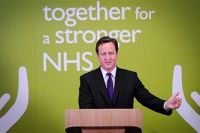
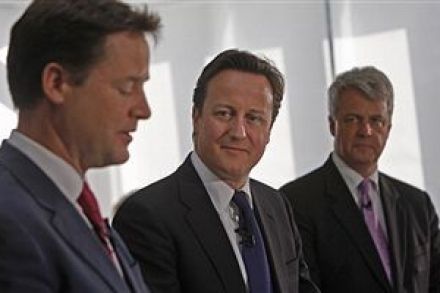
David Cameron’s ‘love for the NHS’ is a critical part of his political persona. It is, his advisers believe, what proves that he is a different kind of Tory. So it is remarkable that Nick Clegg is questioning it in semi-public. In a speech to Lib Dem MPs and peers last night — that Clegg would have known was bound to leak, he criticised politicians — eg, the Prime Minister — who express their love for the NHS but take advice from people who see NHS reform as a chance for private companies to make big profits. What makes this intervention all the more remarkable is that Downing Street has been on a full court press to deny the Observer’s piece which set this story running.

When Dublin trembled

From our UK edition

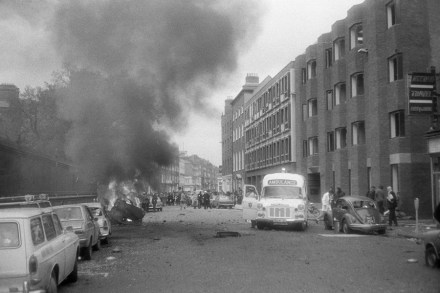
On 17 May 1974 — 37 years ago today — I was a 19-year-old student at Trinity College Dublin, celebrating the end of term in the Pavilion Bar near the sports fields. The summer exams were still to come, but we were carefree; the main subject of conversation was whether we could organise a disco party later on. Then, a little after 5.30 p.m., everything changed. First, all about us seemed to shiver, as if there were an earth tremor. Then, just as it occurred to me that Dublin did not generally suffer tectonic stress, there was a deafening bang that seemed to go on for an age. Somebody shouted: ‘It’s a fucking bomb!

Clegg’s great rejuvenator falls a little flat

From our UK edition

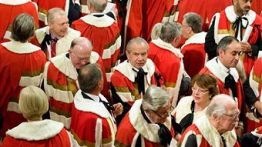
‘Constitutional reform is a waste of time, pure and simple. It never actually achieves its avowed end of reconnecting the voters with democratic institutions,’ wrote John McTernan, the former advisor to Tony Blair, recently. There are signs that the current government agrees.   Nick Clegg has unveiled the next stage of his constitutional reforms today by revealing draft plans to reform the House of Lords. The coalition speaks in unison in public: the Cabinet discussed reform last and apparently there was “very strong support for the proposals around the table”. But dissenting voices must have sounded in private.   The inestimable Rachel Sylvester reveals (£) that Clegg’s draft is very rough.

An historic moment

From our UK edition

There is something incredibly resonant about the images of the Queen arriving in the Republic of Ireland this afternoon. You have probably heard the facts by now — that she is the first British monarch to do so for 100 years, and the first since Irish independence — but they are no less striking. Against a backdrop of terror threats and of Britain's participation in the country's bailout, Queen Elizabeth II is making some kind of history today. It is also, as Ed West says in a thoughtful post over at the Telegraph, a time for remembrance. He suggests that we remember the 300,000 Irishmen who fought in the Great War — and rightly so.

Fox letter: storm in a fair trade, biodegradable cup

From our UK edition

David Cameron probably let out a sigh when he was informed that yet another letter from Liam Fox had been leaked to the press. And when the Defence Secretary called No 10, as he undoubtedly did, to do his now-familiar Captain Renault routine, the Prime Minister can be excused for feeling a little frustrated. For the debates that have occurred in consequence miss a number of key points. The PM believes in overseas development – believes it is right, believes it is useful. No doubt he may find it useful to “decontaminate” the Tories but would not have been willing to spend 0.7 percent of GDP for something he did not believe in.