Uk politics

The myth of cuts

Last week, Ed Balls warned against the effect of George Osborne’s vicious, front-loaded cuts. Today, we have an update in the form of monthly state spending figures. In cash terms, a new record has been set in state largesse. The UK government’s current spending was £51.7 billion in May, up from £50.6 billion in May last year (the last month of Gordon Brown). George Osborne has so far outspent Gordon Brown every month that he’s been in the Treasury. Even adjusted for the runaway inflation, the Chancellor has on average outspent Brown during his first 12 months:     To fund this extra spending, the Chancellor borrowed £27.4 billion from the public for April and May. Labour chirp today that this is more than the £25.

Cameron muscles Clarke off the stage

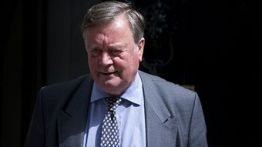
The toughening-up effort continued with David Cameron's press conference just now. There he was, at the prime ministerial lectern, not just announcing a stricter sentencing system than Ken Clarke broached a few weeks ago, but explaining why the government's change of mind was actually "a sign of strength". Out are the 50 per cent sentence reductions for those who plead guilty early. In is a commtiment to jail those caught using a knife threateningly, as well as a bundle of tougher measures all round. "Being strong is about being prepared to admit that you didn't get everything right the first time around," said Mr Cameron, again and again.

Lib Dems wary of “Tory traps”

The government’s u-turn on sentencing reveals something quite important about the Lib Dems' approach to coalition. Despite having backed Ken Clarke in private, they have stayed as far away as possible from the issue in public.   The Liberal Democrats were determined not to put themselves on the wrong side of the public on this issue, to end up copping the blame for ‘soft sentencing’. As one senior Liberal Democrat said to me recently, "we’re determined not to walk into any bear pits. If there is a big flashing neon sign above something saying ‘Tory trap’, we’ve got to be disciplined enough not to fall into it.

Cameron gets tough

Toughness, or at least the appearance of it, is clearly the theme of the week on Downing Street. After the vacillations over NHS reform, David Cameron seems to be going out of his way to sound that little bit more hard. There's the headline on the front of today's Times, for instance: "Cameron to Europe: not one penny more." And there was the PM's claim, yesterday, that a Tory majority government would be "tougher" on immigration and welfare. Even the recent hyperactivity of Michael Gove is, I'm sure, all part of the plan, given that schools reform is broadly one of the areas where the government will (probably) never apologise, never surrender. But the new hardline isn't just a straight one, oh no.

The limits of stigma

As James says, it’s been a day of high passions here at The Spectator. He feels strongly that many of the problems in Britain are societal, and require a cultural shift. Maybe so. I disagree with James when he says a Prime Minister's role is to “lead society". I disagree. We pay him to run the government, not offer his advice (or, worse, condemnation) on how society is running itself. Sure, society is shaped by government incentives. Cameron can fix these. But shaping society by exhortation is not what we expect of limited government. Fundamentally, it confuses what I see as the natural pecking order. In Britain, the people pass judgment on politicians. Not the other way around.   Tim Montgomerie is on James’ side, and chastised me yesterday.

Cameron is right to use the bully pulpit of his office

The normal Monday morning calm of The Spectator was disturbed today by an argument about David Cameron’s comments about fathers who go ‘AWOL’. I thought Cameron was right to say what he did, my editor didn’t. He felt that it wasn’t the Prime Minister’s job to moralise, and that him doing so was the beginning of a descent into totalitarianism.   The reason I think Cameron was right to speak out is that so many of the problems in this country are social or cultural. They can’t be solved by another piece of legislation or a government initiative.

Gove reaffirms his faith in free schools

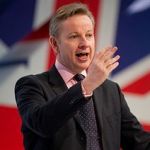
Invigorating, that's probably the best word for Policy Exchange's event on free schools this morning. Right from Sir Michael Wilshaw's opening address — which set out the reasons why he, as headteacher of Mossbourne Academy, is optimistic about education reform — to Michael Gove's longer, more involved speech, this was all about celebrating and promoting the new freedoms that teachers are enjoying. There were some specifics about the schools that are opening, and the numbers of them, but very little of it was new. For the first time in a week, Gove wasn't announcing policy, but instead referring back to it. Which isn't to say that this was an ornamental occasion — far from it. Sir Michael's "four reasons for optimism" were, by themselves, pretty noteworthy.

Boris’s one-two punch against the coalition

Boris, we know, has never had any compunctions about distinguishing his views from those of the coalition government. Take his recent proclamations on the unions or on the economy, for instance. But his latest remarks are still striking in their forthrightness. Exhibit A is the article he has written for today's Sun, which — although it doesn't mention Ken Clarke by name — clearly has the Justice Secretary in mind when it exhorts that "it's time to stop offering shorter sentences and get-out clauses." And Exhibit B is his column for the Telegraph, which waxes condemnatory about Greece and the euro.

It’s not just about public sector pensions

The bustle around public sector pensions has obscured an equally significant, pensions-related story today: the Sunday Telegraph's claim that George Osborne is considering sucking £7 billion from the pensions of higher earners. The way it would be achieved, reports Patrick Hennessey, would be to terminate the tax relief on pension contributions made by those in the 40 and 50 per cent income tax brackets. He adds that the Exchequer could spend the resulting funds on deficit reduction, or on notching up the basic state pension. At the moment, it sounds as though this is just one of those on-the-table type deals: an idea being passed around the Treasury, but not yet decided upon.

Profit could hasten Gove’s school reforms

Michael Gove is giving a big speech tomorrow on free schools amid evidence that the policy is beginning to gather momentum. The papers report today that there have been 281 applications to set up free schools in the round that closed this month alone (sentence updated).   One of the best known of these planned free schools is the one being set up Tony Blair’s former strategist Peter Hyman. Ever since The Spectator revealed back in May that Hyman was planning to take advantage of the Tories’ reforms to start his own school, there’s been considerable interest in what Hyman is up to. In today’s Sunday Times he eloquently defends his project, arguing that free schools are just the logical continuation of Blair’s education reforms.

Labour’s striking attack

Quite some claim from Ed Balls, writing in the Sunday Mirror today. "Let's be clear what George Osborne's game is," he blusters, "he's trying to pick a fight about pensions, provoke strikes and persuade the public to blame the stalling economy on the unions." And it is a charge that Andy Burnham repeated on Dermot Murnaghan's Sky show earlier. I was on live-tweeting duty, and lost count of how many times the shadow education secretary used phrases such as "provocation," "confrontation," "playing politics," and "back to the 1980s." This, clearly, is an attack that Labour are determined to push as relentlessly as possible. George Osborne is politicking, they are saying, at the nation's expense. It is, at the very least, an intriguing gambit on Labour's part.

Cameron takes on bad dads

It’s Fathers’ Day today — and David Cameron is marking it with an extraordinary attack on those dads who are AWOL. It comes in one paragaph of an otherwise excellent and moving piece for the Sunday Telegraph (albeit one that downplays the role of the taxman), in which he says that men leaving their family is "beyond the pale"; that such fathers should feel the "full force" of society; and goes as far as comparing them to drunk drivers. This is a brave move — in the Sir Humphry sense of the word — for three reasons. 1. Britain has more absent fathers than any country in the EU. That’s numerically: as a proportion, only in Estonia do single mothers compose a larger chunk of the electorate. Perhaps Cameron is appealing to single mothers here.

Why enshrining the military covenant in law might not be such a good idea

Charles Moore’s column in the Telegraph today makes a very good case against enshrining the military covenant in law. As Charles argues, once the lawyers and the judges get their hands on it there could be a whole slew of unintended consequences. Judges could decide, for instance, that the court martial system does not offer soldiers ‘fair treatment’. Indeed, it is worth noting that the Major General, now retired, who drafted the covenant does not believe that it should be made law for precisely this reason. There’s no doubt that under the last government were expected to fight wars on peace time budgets and that spending on the military overall was too low. But putting the covenant into law is not the right solution to that problem.

Cameron vs Kirchner

After stating the obvious at PMQs this week — that the Falklands would remain sovereign British territory as long as they want to be — David Cameron has come under heavy fire from the Argentine President, Cristina Kirchner. As today's papers report, she yesterday described our PM as "arrogant," and said his comments were an "expression of mediocrity and almost of stupidity". But there is nothing new in the British position, which has always been that there can be no negotiations over sovereignty unless and until such a time as the Falkland Islanders so wish.

Osborne throws his weight behind education reform

Pete rightly points to Michael Gove’s interview in The Times this morning as the story of the day.  Some producer interests are objecting to Gove dismissing the exam system as ‘discredited’ and his plans to return A-Levels to being a proper preparation for undergraduate study. But there’ll be no backing down. A Gove spokesman tells me that ‘'The system is discredited and it needs fixing. The public know it and support change. If some don't like hearing that, tough. They'll find it much more unpleasant in ten years if we don't fix the system and they're working for Chinese billionaires who did maths at Harvard.' But, perhaps, the most important development on education reform this week was George Osborne throwing his weight behind it.

Gove keeps on going

My gosh, Michael Gove is hyperactive at the moment. From his interview with James in the latest issue of the Spectator, to his recent announcements about failing primary schools and secondary school standards, this is a man who just cannot stop. So stop he doesn't. The Secretary of State for education is delivering yet another speech on Monday. And he has another interview (£), with Rachel Sylvester and Alice Thomson, in today's Times. The Times interview, if you can vault across the paywall, is a worthwhile read.

From the archives: Ed Miliband, before the leadership

It has been a turbulent, ol' week for Ed Miliband — all the way from those Ed Balls files, through his most substantial speech so far, to that bruising Twitter appearance. By way of putting a full-stop to it all, here's an interview that our deputy editor, Mary Wakefield, conducted with him in 2007. This is MiliMinor, aged 37, and relatively carefree:  The charm of Ed Miliband, Mary Wakefield, The Spectator, 2 June 2007 Sitting opposite Ed Miliband MP in a large and airy office, the sort of office that befits the Minister for the Third Sector, I suddenly have the surreal impression that I’m at the doctor’s. It’s the medicinal green of the carpet but, more than that, it’s Ed’s demeanour.

Hilton will probably ride it out

Not for the first time, a throwaway line in a Spectator article by James Forsyth has been picked up by Fleet St and set the hares running. It's about Steve Hilton, Cameron's best friend and chief strategist, and whether he'll quit. Hilton is a man in a hurry — rightly, in my view, as the Tories are not incapable of blowing the next election. So he wants things transformed, and — for all his faults — acutely feels the sense of urgency and tries to communicate it through government. The Whitehall machine (and, more specifically, the permanent secretary of No.10) does not share this urgency and waters down change. It poses a grave risk. Cameron's mission to change Britain could be over, before it begins.

Don’t dismiss Davies out of hand

Touchpaper, meet match. That's the explosive situation engendered by Tory MP Philip Davies and his comments about disabled people this afternoon. His suggestion, made in the Commons, was that disabled people could work for less than the national minimum wage. And his justification? That the minimum wage "prevents those people from being given the opportunity to get to the first rung on the employment ladder." Charities such as Mind have since lambasted Davies for even broaching such a thing. The phrase "nasty party" is gushing around Twitter with tidal abandon. But before we pile on, it's worth noting that Davies has identified an issue that is more shades of grey than black-and-white.