Uk politics

Murdoch stands by Brooks

From our UK edition

Released by News Corporation this afternoon: "Statement from Rupert Murdoch, Chairman and Chief Executive Officer, News CorporationLondon, 6 July, 2011 - Recent allegations of phone hacking and making payments to police with respect to the News of the World are deplorable and unacceptable. I have made clear that our company must fully and proactively cooperate with the police in all investigations and that is exactly what News International has been doing and will continue to do under Rebekah Brooks' leadership. We are committed to addressing these issues fully and have taken a number of important steps to prevent them from happening again.

Cameron’s Coulson problems may be getting bigger

From our UK edition

The Guardian’s story that News International believes that Rebekah Brooks was on holiday when Milly Dowler’s phone was allegedly hacked will place further pressure on Andy Coulson, who was her deputy editor at the time. This is the second piece of trouble for Coulson in the past 24 hours following last night’s revelations. Some in News International are unapologetic about how Coulson is being treated. They say that if Coulson had not gone into Downing Street then the whole phone hacking saga would not have got a second wind and there wouldn’t be all this trouble. Indeed, they allege that Coulson had assured a senior figure at News International that he would not go into Downing Street if the Tories won the election.

Miliband takes the battle honours

From our UK edition

Wow. That was a hell of a session. It shouldn’t have been but it was. A few days ago Mr Miliband seemed to be in the dog-house again. Fresh from his Ed Nauseam interview to a TV reporter – when he repeated the same soundbite on public sector strikes about 36 times in a row – he’d been stung by Lord Goldsmith’s complaint that he was failing to connect with the public. But salvation arrived in the shape of News International. The worse things smell at Wapping the rosier it all is for the opposition leader. PMQs today was easy. All he had to do was to appear suitably revolted by the hackers, to demand an inquiry in his sternest whine, and to resume his seat with a self-righteous quiver fading along his lips. But he did far more.

Miliband gets serious about phone hacking

From our UK edition

The striking thing about the phone hacking debate is that Ed Miliband is sitting on the Labour front bench, a statement of how seriously the Labour leader is now taking this issue. Miliband nodded vigorously when Chris Bryant declared that if Rebekah Brooks had a single shred of decency she would resign. Dominic Grieve is currently replying for the government and is taking a consensual line. I suspect that Grieve, unlike many ministers, has no great love for News International. His career has never recovered from his clashing, when Shadow Home Secretary, with Rebekah Brooks over how the tabloids report crime. It is said that from that day on, Andy Coulson put the black spot on him and Grieve was subsequently moved in the next reshuffle.

PMQs live blog | 6 July 2011

From our UK edition

VERDICT: A crescendo of a PMQs, which started in sombre fashion but soon swelled into a vicious confrontation between the two leaders. It is strangely difficult to say who won, not least because both men had their moments. Ed Miliband's persistent anger — including over Rupert Murdoch's takeover of BSkyB — will have chimed with public sentiment. But Cameron went further than expected by backing a public inquiry into the phone hacking affair, and without much equivocation either. In the end, though, I'd say Miliband probably came out on top, for seeming less on the side of News International. 1242: No surprises from Cameron's statement on Afghanistan.

Schooling the judges

From our UK edition

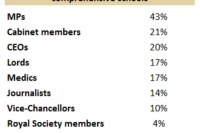
The judges are judging the judges, or at least judging by the cover of this morning's Times (£) they are. "Radical reform of the selection of judges," some leading figures tell the paper, "is needed to break the stranglehold of white Oxbridge males at the top of the judiciary." The story continues inside the paper, with a tranche of statistics on just how white, Oxbridge and male the judiciary actually is (i.e. very). It all reminded me of a table we put together for Coffee House some months ago, and which I thought I'd excavate this morning. Here it is, with judges sitting firmly at the bottom: Of course, some caveats apply to those figures: the state sector isn't just made up of comprehensives; this refers to the schools system of some decades ago; and so on.

Westminster prepares for a day of News International

From our UK edition

The cascade of News of the World stories has, this morning, become a deluge. On top of last night's Andy Coulson news — which, as George Eaton points out, really oughtn't be that surprising — we have the Indepedent claiming that Rebekah Brooks personally "commissioned searches" from one of the private investigators tangled up in the Milly Dowler affair. The Guardian reveals that Cabinet ministers are minded to establish a full review into both ownership and regulation of the media. And the Telegraph suggests that the bereaved families of those killed in the 7 July bombing may have had their phones targeted.

Andy Coulson thrown back into the story

From our UK edition

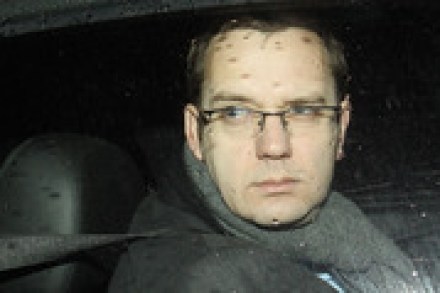
On the Ten o’clock News tonight Robert Peston reported that News International have allegedly handed emails to the police that show Andy Coulson as editor of the News of the World authorised payments to the police. If this was true, it would be illegal. But it should be stressed that Peston could not reach Coulson for comment on the story. There are two immediate implications of this latest development in the story. First, the fact that this development has come out now shows that News International is keen to move the spotlight away from Rebekah Brooks. But given the Independent’s front page tomorrow this tactic is unlikely to succeed Second, it brings David Cameron into this story.

Labour make a public inquiry their cause

From our UK edition

I briefly mentioned Ed Miliband's assertive remarks about the News of the World earlier. But it is worth returning to the video, above, to highlight one of his specific demands. "A police inquiry needs to take place without fear of favour," said the Labour leader, "and then we need a much wider inquiry to restore the reputation of British journalism." Harriet Harman has since echoed this sentiment in Deputy Prime Minister's Questions, urging the government to "act" and establish a public inquiry into the newspaper trade. So, only hours after Tom Watson berated his party leadership for their timidity on this front, a public inquiry appears to have become official Labour policy.

Rebekah Brooks statement on phone hacking

From our UK edition

Released in the last hour or so: Dear All, When I wrote to you last week updating you on a number of business issues I did not anticipate having to do so again so soon. However, I wanted to address the company as a matter of urgency in light of the new claims against the News of the World. We were all appalled and shocked when we heard about these allegations yesterday. I have to tell you that I am sickened that these events are alleged to have happened. Not just because I was editor of the News of the World at the time, but if the accusations are true, the devastating effect on Milly Dowler's family is unforgivable.

Regulators on the rack over phone hacking

From our UK edition

The latest, hideous developments in the phone hacking scandal are emblazoned across all this morning's papers — all, that is, expect the tabloids. And our political leadership is putting voice to its concerns, too. Only this morning, David Cameron said of the allegations surrounding the News of the World that, "If they are true, this is a truly dreadful act and a truly dreadful situation." And Ed Miliband has since given an atypically firm and assertive interview, calling on Rebekah Brooks to "consider her conscience and consider her position." Perhaps he was stung by Tom Watson's criticism, last night, that all three party leaders have "let the Dowler family down" by not calling for a public inquiry.

Politics needs to respond to the changed phone hacking terrain

From our UK edition

The politics of the phone hacking saga have changed dramatically in the last 24 hours. Up to now, it has been a scandal that has been of huge interest in political and media circles but hasn’t cut through to the public. But that could all be about to change with the allegation that Milly Dowler’s phone was hacked after she was abducted and voice mails deleted (it should, obviously, be noted that nothing has been proven in a court of law on this point yet). If this allegation is true, it shows just how out of control and unrestrained the culture of phone hacking was.

The Afghan conflict creates other conflicts for Cameron

From our UK edition

Another day, yesterday, to remind us of the precariousness of everything in Afghanistan. With David Cameron in the country, it was announced, first, that a British soldier had gone missing from his base; and, then, that the same soldier had been found dead with gunshot wounds. "His exact cause of death is still to be established," said a spokesman, "and the circumstances surrounding his disappearance and death are currently under investigation." His is the 375th British military death in the country since operations began. And, of course, the politics quiver on in the background.

Barroso’s EU confidence trick

From our UK edition

Say what you like about Jose Manuel Barroso, he's a wily old card. The European Commission president makes public demands for Britain to surrender its rebate in European Union membership fees. The government refuses. Then, hey presto! Headlines suggesting that Brussels has been seen off. "Brussels bribe to buy off UK rebate," says the Daily Mail. "Britain's rebate is fully justified and we are not going to give way on it," a Treasury spokesman tells the media. The quotation is true, Barroso did indeed offer £23 billion to tweak the UK funding formula, and a short-termist like Gordon Brown might have accepted. But the battle for Britain's EU spending was lost under Blair. In 2001-02, Britain was a net beneficiary of EU to the tune of £900 million.

Personality and politics

From our UK edition

One of the things about the press that politicians frequently complain about is that papers concentrate more on personalities than policies. But reading the latest extracts from Alastair Campbell’s diaries you see just how much personality matters. Indeed, according to Campbell, Tony Blair excluded Gordon Brown from a discussion about what to do after 9/11 not because of any difference about how to respond but because he had become fed up with how difficult Brown was to deal with on a personal level. Now, there are nowhere near the personal tensions at the top of this government that there were in the last one. But because politicians are humans and not purely rational actors, the individual relationships in the government matter.

To see whether the coalition will last, watch how the Lib Dems respond to Dilnot

From our UK edition

The approach that the Liberal Democrats take to social care over the next few weeks and months will be the best guide we have to how they now view the future of the coalition. If, in the coming all party talks, they effectively ally with Labour and try to score points off the Tories by suggesting that their coalition partners are ‘too mean’ to fund a solution to the problem then it will be apparent that they have moved fully into distancing mode and are preparing to position themselves as the party who restrained the Tories. This would imply a Lib Dem exit from the coalition sometime well before the 2015 election.

The trouble with today’s social care report

From our UK edition

Uncertainty reigns. Or at least when it comes to today's Dilnot Report into social care it does. We largely know what measures will be contained within its pages: a higher threshhold for council-funded care, but a cap (of around £35,000) on how much individuals ought to be liable for. What's less clear is how the government will respond. Far from welcoming the report wholeheartedly - as has been the recent form with these things - there are signs that the government is set to resist some of its recommendations. Andrew Lansley spoke cagily of it yesterday, hinting that the cap was proving particularly difficult in Coalition Land. George Osborne is said to have concerns at the £2 billion cost of the cap, and at how that money will be raised.

Coffee House Interview: Andrew Mitchell

From our UK edition

The government has stuck to its guns on overseas aid, promising to donate 0.7 per cent of our national income to other countries. In the Chancellor’s words, the government will not balance the books on backs of the world’s poorest people. In fact, as the criticism of the policy was at its highest the Prime Minster hosted a development summit in London and pledged £814m to help vaccinate children around the world against preventable diseases like pneumonia. On this issue, David Cameron does not seem for turning — however many letters he receives from the Defence Secretary.   But Liam Fox is not alone. A slew of recent polls show that Britons have mixed feelings about the utility of overseas aid.