Uk politics

PMQs live | 13 July 2011

From our UK edition

A change from the Coffee House norm for this last PMQs before the summer recess. Instead of the usual live-blog, we'll be live-tweeting the session, and our tweets will appear in the special window below (you may be familiar with it from Guido's PMQs coverage). Tweets from other political types may also appear. And you can add your own remarks to the live-stream not in the comments section, but in the space below the window. Anyway, it should all be fairly self-explanatory. It might work, it might not. In either case, do let us know what you think.

Cameron on the back foot

From our UK edition

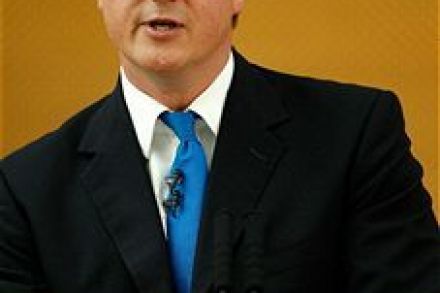
This has been another difficult morning for David Cameron. He’s now taking flak for having said he would take part in the BSkyB debate this afternoon and then deciding not to. But what should, perhaps, worry the Prime Minister more than this criticism is the evidence that the Liberal Democrats are siding with Labour to portray Cameron as being behind the curve on this issue. The FT, the Lib Dems' paper of choice, reports that Clegg and Miliband pushed Cameron for a wide-ranging public inquiry. The paper details how Clegg is demanding an end to the practice of politicians, and particularly Prime Ministers, meeting newspaper proprietors but keeping the meeting secret by not holding it on official premises.

Might Gaddafi shunt Murdoch from the front pages?

From our UK edition

Loyal Tories and government types are hoping that the media will soon move on from Murdoch. And the unusually heavy briefings emanating from George Osborne’s office last night were perhaps an attempt to shift the spotlight. But it will take a very gripping story to displace the phone hacking saga, especially if yet more has-been politicians shuffle back into public life to settle old scores with Murdoch. With the British press immersed in this tempestuous revenge drama and the whirl of hypocrisy that surrounds it, you wouldn’t guess that the euro has embarked on a 72 hour ordeal that may decide its future.   But, Rupert Murdoch’s mugshots could yet be superseded by those of Colonel Gaddafi.

Parliament prepares to take on Murdoch

From our UK edition

Politicians are swarming all over the phone hacking scandal today, in even greater number than during the past week. If it isn't the main topic at PMQs at noon, then it certainly will be immediately afterwards; when David Cameron delivers his statement on an inquiry into the whole mess. And then there's Labour's Opposition Day motion, urging Rupert Murdoch to withdraw his bid for BSkyB. By the end of the day, our parliamentarians will surely have delivered an official reprimand to the News Corp boss and his ambitions. The news that the government will vote in favour of Ed Miliband's motion has sucked some of the vicious factionalism out of today's proceedings. But, never fear, there will still be plenty of political one-upmanship to go around.

Osborne warns Eurozone that decisive action must be taken now

From our UK edition

The UK government is becoming increasingly concerned about the situation in the eurozone and the fact that there does not appear to be the political will to address it. One government source complained to me earlier today that "unless they get their act together the eurozone are in danger of fiddling while Rome burns." Tonight, in a major departure from Britain’s previous softly-softly approach to the issue, George Osborne is issuing a statement calling on the eurozone countries to take "decisive action" to "prevent market uncertainty doing real damage to the world economy." The Chancellor calls on eurozone countries to: "...

The euro’s death rattle

From our UK edition

The end might be nigh for the euro. The currency has hit an all-time low against the Swiss franc, as individual eurozone government bond yields vaulted higher due to mounting concerns about the region's debt crisis. To spell out what this means: in Spain, 12 billion euros of interest payments will accrue for every 100 point bond rise in Germany. That is more than Spain's annual public investment in infrastructure (8.6 billion) and its entire defence budget (7.6 billion). At the same time, Greece is heading towards disorderly default or some form of devaluation. Or both. And now Italy looks vulnerable.

Attention turns to the police

From our UK edition

Today, the spotlight in the phone hacking scandal is shifting onto the police — who have an awful lot of questions to answer. Indeed, I suspect at the end of this the reputation of the police will have been hugely damaged. The evidence from senior Met officials — some retired, some serving — has not convinced the Home Affairs committee today. It is a sign of how poor relations are between the police and MPs that a Tory MP has asked the current and former assistant commissioners of the Met if he they have ever taken a bribe from a journalist. Both John Yates and Andy Hayman reacted indignantly to the question but the committee members clearly thought the question was reasonable.

Brown speaks out

From our UK edition

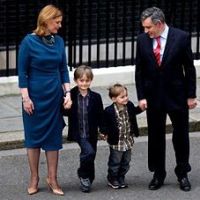
We'll try to post the video of Gordon Brown's interview with the Beeb soon. But, for now, here's the transcript of his remarks about News International and his son's medical records: Gordon Brown: [The Sun] told me they had this story about Fraser's medical condition, and that they  were going to run this story. Interviewer: How did that affect you, as a father? GB: In tears. Your son is now going to be broadcast across the media. Sarah and I are incredibly upset about it. We're thinking about his long-term future. We're thinking about our family. But there's nothing that you can do about it. You're in public life, and this story appears. You don't know how it's appeared. I've not questioned how it appeared.

Livingstone’s double standard over Murdoch

From our UK edition

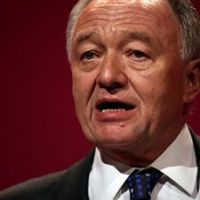
As soon as the recent phone hacking scandals broke, Ken Livingstone lost no time in castigating Boris Johnson’s ‘dire judgement’ in dismissing the original claims as ‘codswallop cooked up by Labour’. Livingstone also said that Boris ‘had at least two meals with Rebekah Brooks, one dinner and one lunch with James Murdoch, and one dinner with Rupert Murdoch [when he was] trying to keep the lid on this story.’ Livingstone was at it again on the Today programme this morning, saying the ‘scandal goes right to the heart of the establishment’. Certainly, it was rash to describe the claims as ‘codswallop’, but is dinner such a crime?

What didn’t make it into today’s reform paper?

From our UK edition

"It's like Blair and Brown — but without the acrimony." So sayeth one Cabinet Office source, describing the prolonged build-up to today's public services White Paper to me a couple of months ago. His point was that, although the yellow and blue halves of the Downing Street operation are genuinely chummy with one another, their differences can still put a block on reform. In his story, the Tories are like Blair, striving to go further, faster, stronger. Whereas the Lib Dems can occasionally stand in the way. So what has been blocked from the White Paper? Listening to David Cameron today, you wouldn't guess that anything has been. "Let me assure you of this," he said in his speech this afternoon, "we are as committed to modernising our public services as we have ever been.

Where we are on phone hacking

From our UK edition

David Cameron’s speech on public service reform is being crowded out today by all the other news about hacking. First, there was there were the emails News International has allegedly passed to the police, which apparently contain information about payments to Royal protection officers. This was followed by an angry statement from Scotland Yard claiming that there is a ‘deliberate campaign to undermine the investigation into the alleged payments by corrupt journalists to corrupt police officers and divert attention from elsewhere.

A victory for common sense

From our UK edition

For years, teachers have been increasingly reluctant to restrain unruly pupils — for fear of being slapped with a lawsuit. But now, it seems, the government is trying to ease those concerns. Its guidance today may not change any laws, but it does encourage schools to change their approach. Among the directions is that "schools should not have a 'no touch' policy": teachers can use reasonable force to restrain pupils, remove disruptive children from the classroom or prevent them from leaving the classroom when they shouldn't.

Yet more questions for News International to answer

From our UK edition

The phone hacking controversy first began to come to public attention because of a story in The News of the World about Prince William’s knee in 2005. Now, the Royal angle has revived because of a report from Robert Peston that the newspaper allegedly paid a Royal protection officer for contact details of senior members of the Royal family. Peston reports that:   ‘According to a source, the e-mails include requests by a reporter for sums of around £1000 to pay police officers in the royal protection branch for the information. The phone details could have been used to hack phones of the royal family. "There was clear evidence from the e-mails that the security of the royal family was being put at risk", the source said.

Clegg puts the boot into Murdoch’s BSkyB bid

From our UK edition

What Jeremy Hunt's letter this morning started, Nick Clegg has just finished. Thanks to the Deputy Prime Minister, it is now even clearer that the coalition is reluctant for Rupert Murdoch's BSkyB deal to go ahead. "Look how people feel about this, look how the country has reacted with revulsion to the revelations," he exhorted in interview with the Beeb, "so do the decent and sensible thing and reconsider, think again about your bid for BSkyB." The question now is what's meant by that "reconsider" — whether it means the government is pushing for a delay, or for Murdoch to drop the bid altogether. But, either way, it's several degrees firmer than anything they've said previously.

The wheels come off the BSkyB deal

From our UK edition

The BBC reports that Jeremy Hunt has written to Ofcom and the Office of Fair Trading about Rupert Murdoch’s proposed takeover of BskyB. Hunt asks the regulators if they now have any ‘additional concerns in respect of plurality over and above those raised in your initial report to me on this matter received on 31 December 2010.’ Hunt concentrates on Murdoch’s provisions about maintaining the independence of Sky News. His concern with plurality is ironic given that the British media has become much more plural following the demise of the News of the World. This favours Murdoch’s takeover bid, on the face of it at least. Hunt also touches on the ‘fit and proper persons tests’ with regard to the deal.

The latest phone hacking revelations

From our UK edition

The latest report from Robert Peston about how William Lewis has been cleaning house at News International makes for dramatic reading. Peston alleges that emails News International has been aware of since 2007 ‘appear to show Andy Coulson, editor of the News of the World from 2003-2007, authorising payments to the police for help with stories. They also appear to show that phone hacking went wider than the activities of a single rogue reporter, which was the News of the World's claim at the time.’ Obviously, The Spectator must stress that nothing has been proved on either of these fronts. But if Peston’s report is accurate, it would also suggest that there must have been a determined cover-up at the company.

Huhne pooh-poohs rising energy bills as ‘nonsense’

From our UK edition

Chris Huhne was on the Andrew Marr show this morning. As you might expect on a day when the Sunday Telegraph broke the news that fuel bills will boom by 30 per cent as a result of green taxes, the Energy Secretary was asked to ruminate at length on all matters Murdoch. Eventually, though, Huhne had to answer searching questions pertaining to his brief. Confronted with the Sunday Telegraph’s story, Huhne described it as ‘nonsense’ because it did not take potential savings into account. Huhne also pledged to introduce more competition to shatter the grip that the ‘Big Six’ utility companies have on 90 per cent of the UK's energy market. Greater competition should, theoretically, lower bills.