Uk politics

Cameron passes test

From our UK edition

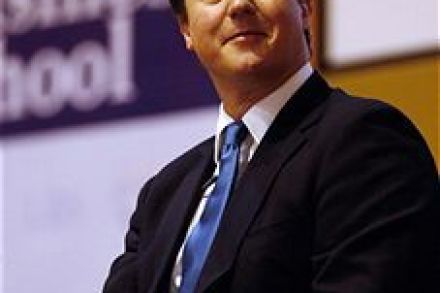
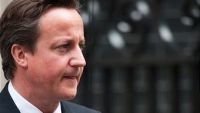
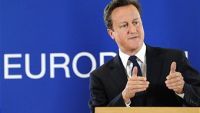
The questions following David Cameron’s statement to the House of Commons have just finished. As Cameron answered 136 questions, it became increasingly clear that the immediate moment of political danger appears to have passed for the Prime Minister. By the end of the session, Cameron was even joking about inviting Mrs Bone to Chequers for the weekend. In his opening statement, Cameron placed far more distance between himself and Andy Coulson than he had before. For the first time, he expressed regret about the appointment. He told the House that, ‘With 20:20 hindsight – and all that has followed – I would not have offered him the job’.

Gearing up for another European drama

From our UK edition

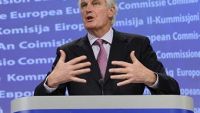
Away from the amateur dramatics in parliament this afternoon, the government is fighting yet another battle with the European Commission over banking reform. European leaders will vote later today on proposals to introduce the rubric of Basel III across European financial institutions. Led by EU Finance Commissioner Michel Barnier and ECB Vice-President Jean-Claude Trichet, these proposals would insist that minimal and maximum capital requirements are imposed on banks. The terms dictate that banks hold 7 per cent of their top-class assets in reserve. Britain opposes the scheme, not because the requirements are too steep: the UK’s Banking Commission has suggested that banks hold 10 per cent of their assets in reserve.

A real crisis?

From our UK edition

David Cameron is under pressure now that the phone hacking scandal has slithered its way closer to his door. The news that Neil Wallis informally advised Andy Coulson in the run up to last year’s election will spark questions about Cameron’s judgement and the competence of his leadership, as will the revelations about his chief of staff, Ed Llewellyn. Criticism is likely to come from both sides of the House: Tories I’ve spoken to are none too pleased about yesterday’s events. Cameron rebuffed his critics at last week’s PMQs by rising above politics to strike a calm and prime ministerial tone, for the most part. He will have to do so again.

Brooks comes to Cameron’s aid, perhaps unintentionally

From our UK edition

Rebekah Brooks’s  appearance before the Culture Media and Sport Committee was largely uneventful. Most of the questions addressed her editorship of the News of the World, a period about which she cannot openly speak at present because of the criminal proceedings brought against her. However, Brooks was very keen to distance herself from David Cameron. Towards the end of the session, Tory MP Philip Davies asked of the stories circulating about her relationship with Cameron. She took the opportunity to deny them and set the record straight. “I have not visited David Cameron at Downing Street since he has become Prime Minister,” she said and then added that she had visited Tony Blair and Gordon Brown there on numerous occasions.

The crisis gets closer to the Tories

From our UK edition

The news that Neil Wallis was informally advising Andy Coulson without the knowledge of any of the other senior figures in the Tory party is a reminder of just how dysfunctional the Tory party machine was pre-election. It is also an indication of the license that Coulson was afforded. The Tories cannot say if anyone else offered Coulson this kind of ‘informal advice’. The Tories are stressing that they did not pay Wallis or his company. But it is a massive embarrassment for the Tory party that two people who did work for it in its preparations for the election have now been arrested by the police. I expect Cameron will face hard questions from Tory MPs about this matter when he appears before the ’22 committee.

Crouching Tiger, Slapping Wendi

From our UK edition

All hail, Wendi Deng. It took her a split second to attack the guy hurling a pie at Rupert Murdoch, slapping so hard that the sound was picked up by the cameras. According to the BBC's Nick Robinson she then started shouting "I got him, I got him." First tiger mums, now tiger wives. "Mr Murdoch, your wife has a good left hook," said Tom Watson afterwards. Better than his, at any rate. For all the hype, it was a strikingly uninformative session. About ten minutes into this Trial of Rupert Murdoch, it was pretty clear the committee was not going to get a "you can't handle the truth!" moment out the Dirty Digger.

Only police reform can keep politics out of policing

From our UK edition

We expect and openly tolerate close, even cosy, relations between politicians and the media – each relies on the other for survival in a society that is less deferential and where politicians find it difficult to be heard, let alone trusted. The police need to tell their side of the story. But the police are not politicians. When senior police officers begin to behave like politicians – and 18 dinners with one media group looks like a politician’s diary – they damage the wider reputation of the service. First, officers who meet with the press are still public servants with a duty of discretion, and yet insight and understanding can quickly descend into un-attributable briefings that demean the police.

Shaking our faith in money

From our UK edition

Addictive though the hacking inquiry is, the average Brit is probably more worried about the slow decimation of his spending power at a time when salaries are flat. Against this backdrop, the price of gold today has broken $1,600 an ounce.  With inflation and the Fed's printing presses whirring, faith in paper money is taking a knock – and this is reflected in the price of gold.  Fears of a debt crisis in Europe add to it too, with a disaster scenario all too easy to imagine. Over the last decade, the West blew a bubble fuelled by low interest rates and debt-financed consumption. The bubble burst. Solution: even lower interest rates, and even more debt-financed consumption – but this time, with added inflation.

From the archives – Yates had previous

From our UK edition

As Theresa May put it in an impressive statement to the House earlier, “These allegations are not, unfortunately, the only recent example of alleged corruption and nepotism in the police.” She then vowed to open an inquiry into these matters, which will stand in addition to the two already announced by the government. The panel will have plenty to look at, as Michael White explained in the Spectator a few years back. John Yates has previous, by Michael White, 10 March 2007 When I was a young reporter on the London Evening Standard nearly 40 years ago I spent a lot of time in the press room at Scotland Yard, not learning very much.

Some good news for Cameron?

From our UK edition

In the midst of the fall-out from the phone hacking scandal comes some positive news for David Cameron: it appears that the Libyan rebels have won control of Brega, as most pro-Gaddafi troops retreated westward leaving around 150-200 loyalist fighters pinned down inside the town. If true, this is an important step towards the end of the Gaddafi regime: control of the oil-rich town is decisive for the Transitional National Council in Benghazi. It gives the rebels control over Libya's eastern oil network, with access to more than 2m barrels of stored crude.

Yates has his say as new allegations against him emerge

From our UK edition

John Yates has spoken and those expecting a grovelling apology were met with dignified defiance. Where Sir Paul Stephenson threw dainty little parcels of mud at the government, Yates struck an earnest tone that was quite without contrition or malice. He admitted to “great personal frustration” that his part in the 2009 phone hacking scandal was still subject to debate and for this he blamed the press. “There has been much ill-informed and downright malicious gossip about me,” he said. “I have acted with complete integrity and my conscience is clear.” And he claimed that his actions would be examined in a calmer environment that that which prevails at present.

Yates goes as Boris stands by

From our UK edition

Yates of the Yard has gone as the phone hacking scandal claims yet another scalp. Yates walked after being told he would be suspended. Yates’ departure was necessary given the appalling mistake of hiring Neil Wallis, a former editor at the News of the World, while the Met was investigating — or supposed to be investigating — phone hacking at the paper. There will, though, be particular pleasure in Blairite circles at Yates’ departure. They remain furious with Yates for his behaviour and tactics during the cash for honours investigation. The talk is of appointing a new Met Commissioner by the autumn.

How Cameron can regain some initiative

From our UK edition

The phone hacking scandal has now been leading the news for a fortnight straight. When a story has been on the front pages for this long, it develops its own momentum. If we were on day two of the story, I very much doubt that Sir Paul Stephenson would have resigned as quickly as he did or if David Cameron would have agreed so readily to extending the parliamentary session. Cameron is now out of the country, allowing Ed Miliband to stay on the front foot. The danger for Cameron is that Miliband constantly appears to be half a step ahead of the PM. Miliband’s line that Cameron is ‘hamstrung’ in this matter by his own actions over Coulson has something to it. Leaders of the Opposition can move far quicker than incumbents.

Quizzical eyes turn on Yates

From our UK edition

The phone hacking saga is now moving at such pace it threatens to engulf the political establishment (whether it is a sufficiently serious story to do so is another matter). After Sir Paul Stephenson’s theatrical resignation, timed to upset newspaper deadlines and plotted to embarrass the Prime Minister, attention has now turned to John Yates. Boris Johnson has said that Yates has ‘questions to answer’; and Brian Paddick argues that Yates should fall on his sword too. The Metropolitan Police Standards Committee meets this morning, and, as Laura Kuenssberg notes, it may discuss John Yates’ conduct.

Stephenson kicks Cameron on the way out

From our UK edition

Sir Paul Stephenson’s resignation statement contains three paragraphs that hand plenty of political ammunition to Labour: "Now let me turn to the reported displeasure of the prime minister and the home secretary of the relationship with Mr Wallis. " The reasons for not having told them are two fold. Firstly, I repeat my earlier comments of having at the time no reason for considering the contractual relationship to be a matter of concern. Unlike Mr Coulson, Mr Wallis had not resigned from News of the World or, to the best of my knowledge been in any way associated with the original phone hacking investigation.

Mitchell rejects allegation that UK aid is going to Islamists

From our UK edition

Yesterday, Andrew Mitchell was the toast of the broadcasters. They have turned on him to an extent today. The news that portions of the £52.25 million given in emergency aid to the starving masses in the Horn of Africa will be distributed in areas controlled by al-Shabaab has forced Mitchell onto the defensive. “We shall have no dealings with al-Shabaab,” he said, and then added that the aid will reach its intended recipients by means other than collusion with the jihadists. This is an embarrassing moment for Mitchell and, of course, it is vital that money and supplies do not fall into the hands of well-fed fighters. However, it is worth pointing out that Mitchell has always intended to distribute aid in al-Shabab controlled areas of Somalia.

Miliband the hero

From our UK edition

Garlands go to the conqueror. The Observer has interviewed Ed Miliband about his response to the News International crisis, and it’s as if Caesar has returned home after crushing the traitor Pompey. Miliband told the Spectator in an interview with James Forsyth in this week’s magazine that Murdoch’s spell on British politics has been broken. He reiterates that sentiment with the Observer and adds that Murdoch’s endorsement will be a “double-edged sword at the next election”. When speaking to James he was careful to insist that there was nothing personal in his burgeoning crusade against Murdoch; he is not so careful now.

Policing the Olympics

From our UK edition

The reputation of the police may be as black as mud at the moment, but the Met has a chance to atone during the Olympics. Security forces have been making their preparations as the Olympic construction site nears completion.  In May, police officers, counter-intelligence officials and the emergency services conducted their first major security exercise. Further stress tests are being undertaken on local transport routes and waterways. And permanent surveillance of Olympic venues is being established; in future, visitors to these sites will be subject to airport-style security and a number of armed officers will patrol the area. Nothing, it seems, is being left to chance. These operations are being delivered amid a background of spending cuts.

The man of the moment

From our UK edition

Andrew Mitchell has announced that DfID will provide £52.25 million in emergency aid to ease suffering in East Africa, which has been wracked by drought. The supplies will be distributed to the Dadaab and Dolo Abo refugee camps in Kenya and Ethiopia, but the bulk of resources will be directed to Somalia, where an estimated 700,000 people are close to starvation. The state's assistance is in addition to the £13m that Britons have given voluntarily. The International Development Secretary said that surveying these numbers made him "proud to be British". Mitchell has been at the forefront of this aid effort and his star has risen accordingly. Jemima Khan was on television this morning, describing him as an “inspiration”.