Uk politics

How Cameron can regain some initiative

From our UK edition

The phone hacking scandal has now been leading the news for a fortnight straight. When a story has been on the front pages for this long, it develops its own momentum. If we were on day two of the story, I very much doubt that Sir Paul Stephenson would have resigned as quickly as he did or if David Cameron would have agreed so readily to extending the parliamentary session. Cameron is now out of the country, allowing Ed Miliband to stay on the front foot. The danger for Cameron is that Miliband constantly appears to be half a step ahead of the PM. Miliband’s line that Cameron is ‘hamstrung’ in this matter by his own actions over Coulson has something to it. Leaders of the Opposition can move far quicker than incumbents.
Quizzical eyes turn on Yates

From our UK edition

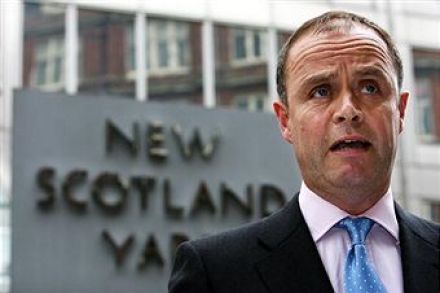
The phone hacking saga is now moving at such pace it threatens to engulf the political establishment (whether it is a sufficiently serious story to do so is another matter). After Sir Paul Stephenson’s theatrical resignation, timed to upset newspaper deadlines and plotted to embarrass the Prime Minister, attention has now turned to John Yates. Boris Johnson has said that Yates has ‘questions to answer’; and Brian Paddick argues that Yates should fall on his sword too. The Metropolitan Police Standards Committee meets this morning, and, as Laura Kuenssberg notes, it may discuss John Yates’ conduct.

Stephenson kicks Cameron on the way out

From our UK edition

Sir Paul Stephenson’s resignation statement contains three paragraphs that hand plenty of political ammunition to Labour: "Now let me turn to the reported displeasure of the prime minister and the home secretary of the relationship with Mr Wallis. " The reasons for not having told them are two fold. Firstly, I repeat my earlier comments of having at the time no reason for considering the contractual relationship to be a matter of concern. Unlike Mr Coulson, Mr Wallis had not resigned from News of the World or, to the best of my knowledge been in any way associated with the original phone hacking investigation.

Mitchell rejects allegation that UK aid is going to Islamists

From our UK edition

Yesterday, Andrew Mitchell was the toast of the broadcasters. They have turned on him to an extent today. The news that portions of the £52.25 million given in emergency aid to the starving masses in the Horn of Africa will be distributed in areas controlled by al-Shabaab has forced Mitchell onto the defensive. “We shall have no dealings with al-Shabaab,” he said, and then added that the aid will reach its intended recipients by means other than collusion with the jihadists. This is an embarrassing moment for Mitchell and, of course, it is vital that money and supplies do not fall into the hands of well-fed fighters. However, it is worth pointing out that Mitchell has always intended to distribute aid in al-Shabab controlled areas of Somalia.

Miliband the hero

From our UK edition

Garlands go to the conqueror. The Observer has interviewed Ed Miliband about his response to the News International crisis, and it’s as if Caesar has returned home after crushing the traitor Pompey. Miliband told the Spectator in an interview with James Forsyth in this week’s magazine that Murdoch’s spell on British politics has been broken. He reiterates that sentiment with the Observer and adds that Murdoch’s endorsement will be a “double-edged sword at the next election”. When speaking to James he was careful to insist that there was nothing personal in his burgeoning crusade against Murdoch; he is not so careful now.

Policing the Olympics

From our UK edition

The reputation of the police may be as black as mud at the moment, but the Met has a chance to atone during the Olympics. Security forces have been making their preparations as the Olympic construction site nears completion.  In May, police officers, counter-intelligence officials and the emergency services conducted their first major security exercise. Further stress tests are being undertaken on local transport routes and waterways. And permanent surveillance of Olympic venues is being established; in future, visitors to these sites will be subject to airport-style security and a number of armed officers will patrol the area. Nothing, it seems, is being left to chance. These operations are being delivered amid a background of spending cuts.

The man of the moment

From our UK edition

Andrew Mitchell has announced that DfID will provide £52.25 million in emergency aid to ease suffering in East Africa, which has been wracked by drought. The supplies will be distributed to the Dadaab and Dolo Abo refugee camps in Kenya and Ethiopia, but the bulk of resources will be directed to Somalia, where an estimated 700,000 people are close to starvation. The state's assistance is in addition to the £13m that Britons have given voluntarily. The International Development Secretary said that surveying these numbers made him "proud to be British". Mitchell has been at the forefront of this aid effort and his star has risen accordingly. Jemima Khan was on television this morning, describing him as an “inspiration”.

Inadequate stress test inspires anti-EU sentiment across Europe

From our UK edition

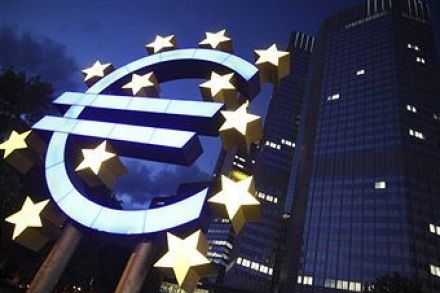
Yesterday’s European Banking Authority (EBA) stress test was supposed to restore confidence in the euro and Europe’s beleaguered financial institutions; it has had the opposite effect. Investors and market analysts are preparing for ‘Black Monday’ after only 8 banks failed the test and must now raise £2.2 billion between them to stave off ruin. A respected estimate by Goldman Sachs expected at least 15 banks to fail, requiring £29 billion to recapitalise. As the Spectator’s business blog reported yesterday, analysts feared that the EBA’s test would not be sufficiently stringent, and so it came to pass.

From the archives: When Gordon loved Rupert

From our UK edition

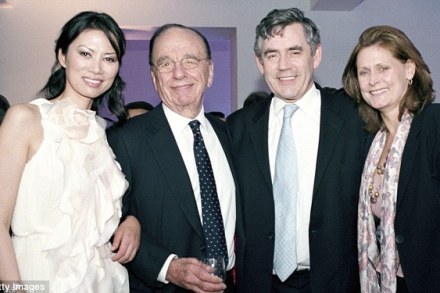
Gordon Brown graced the political stage with a rare cameo this week – if half an hour of deluded invective masquerading as reasoned piety qualifies as a cameo. Brown would have you believe that he had nothing to do with Rupert Murdoch. This following piece by Peter Oborne says otherwise.   The murderous intent of Gordon Brown, Peter Oborne, 20 April 2002 This Friday a triumphant Gordon Brown flies to New York for a business conference. The Chancellor and his colleagues perhaps see the trip as a well-earned break.   In No.10 Downing Street there is a temptation to take a more jaundiced view, and interpret it as a quick exit.

At the PM’s pleasure…

From our UK edition

Here is the list that James referred to earlier in full: Guests to Chequers from May 2010 to present Government guests and senior media guests: Danny Alexander MP and Rebecca Alexander Lord Ashdown Tony Baldry MP Greg Barker MP and George Prassus Lord Terry Burns and Lady Ann Elizabeth Burns Rebekah Brooks (June 2010 and August 2010) Brigadier Ed Butler and Sophie Butler Ian Cheshire and Kate Cheshire Ken Clarke MP and Gillian Clarke Nick Clegg MP Sir Sherard Cowper-Coles Brigadier James Cowan Air Chief Marshall Sir Stephen Dalton Alan Duncan MP and James Dundeath James Fergusson Stanley Fink and Barbara Fink Daniel Finkelstein and Nicky Finkelstein Liam Fox MP and Jesme Baird Sir Christopher Gent and Lady Kate Gent Michael Gove MP and Sa.

Cameron comes clean

From our UK edition

Later on today, Downing Street will reveal all of David Cameron’s meetings with newspaper / media proprietors and editors since the election. This is a welcome move, transparency is the best disinfectant and by getting the information out there it will end speculation about precisely how close he was to various people in News International. But one detail has already leaked out and will cause controversy: Andy Coulson was a guest at Chequers several months after he quit the government. In some ways this is no great shock, Coulson — as Cameron said at last Friday’s press conference — is a friend of the Prime Minister and someone whose advice Cameron valued hugely.

Murdoch atones

From our UK edition

Sky News reports that Rupert Murdoch is set to apologise for the activities of the News of the World in a newspaper advert to be run tomorrow. It will read: ‘We are sorry. The News of the World was in the business of holding others to account. It failed when it came to itself. We are sorry for the serious wrongdoing that occurred. We are deeply sorry for the hurt suffered by the individuals affected. We regret not acting faster to sort things out. I realise that simply apologising is not enough. Our business was founded on the idea that a free and open press should be a positive force in society. We need to live up to this.

Boris’s star turn

From our UK edition

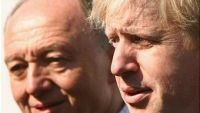
By rights, Labour ought to walk next year’s mayoral election. But all is not going to plan. The latest polls put Boris ahead; one conducted at the end of last month even had him 7 points clear. Labour's problem is Ken Livingstone. As Jonathan found recently, a full fifth of Labour voters in London say they would prefer Boris to be mayor rather than Ken, an extraordinary statistic. Livingstone is also seen as dishonest in comparison to Boris. His opportunism often contributes to that perception — for instance, his attempt to tar Boris with the filthy Murdoch brush earlier this week was the most transparent piece of hypocrisy. Andrew Gilligan has more news on that front; news that illustrates why Boris also leads Ken in the charisma stakes.

Brooks resigns

From our UK edition

Rebekah Brooks has finally resigned this morning. Her departure was actually expected yesterday, in the morning indications were given that she would quit that afternoon. My understanding is that the thinking at News International was that if she was still in her job when she attended the select committee hearing on Tuesday, she would just be monstered. But this strategy was thrown into confusion when the Murdochs themselves were compelled to attend. But this morning, the decision has clearly been taken that she has to step down before facing parliament. Her departure was in many ways inevitable. But it does remove the last fire break between this scandal and the actual Murdoch family.

Murdoch prepares to fillet Brown

From our UK edition

“He got it entirely wrong.” That is Rupert Murdoch's response to Gordon Brown’s singular account of his relationship with the Murdoch press. "The Browns were always friends of ours,” Murdoch added in an interview with the Wall Street Journal, in which he promised to set the record straight on the “lies uttered in parliament” when he appears before a select committee next Tuesday. It is going to be a moment of the most gripping political theatre. Murdoch also uses the interview to defend News Corp’s handling of the phone hacking crisis. He concedes that ‘minor mistakes’ have been made, but, fundamentally, all is well with the Kingdom.

Another self-inflicted wound by Murdoch

From our UK edition

The Murdochs have done a reverse-ferret and now will attend the Culture select committee on Tuesday. The harm done to their reputation by their initial refusal is yet another self-inflicted wound. It was clear, given how previous select committee inquiries on these matters had not received proper answers from various representatives of News International, that parliament would do everything it could to compel their attendance. Indeed, both the Prime Minister and Deputy Prime Minister had gone on the record to say they should attend before the Murdoch’s curt letters saying they wouldn’t were dispatched. Their appearance on Tuesday will, I suspect, now become the focus of this story in the UK. The weekend papers will be full of previews of it.

Parliament versus Murdoch, part two

From our UK edition

The Culture, Media and Sport Select Committee has responded to Rupert and James Murdoch rejecting their request to give evidence to them, by issuing a summons. My understanding is that parliament cannot compel them to attend because they are not British subjects. But others think that as long as they are in the country they can be forced to come to parliament. That a select committee chaired by Margaret Thatcher’s former political secretary is prepared to issue this summons shows how much the standing of the Murdochs has changed in the past ten days. MPs are pretty much united in their fury that News International figures failed to give proper answers to previous select committee hearings on this matter.

Coalition’s crime worries ease, but concerns remain

From our UK edition

The British Crime Survey is published today and the Home Office had prepared for the worst. For months now, figures close to Theresa May have been expressing their fear that the combination of Ken Clarke’s liberal prisons policy and economic hardship would cause a rise in crime for which the Home Office, graveyard for so many political careers, would be blamed. Today’s figures will have eased their disquiet somewhat, insulating them from Labour’s critique that police cuts are endangering society. The headline is that crime in England and Wales has remained stable over the last year, except for a 14 per cent spike in domestic burglaries according to the British Crime Survey and an alarming 35 per cent increase in domestic violence.

Ed Miliband: Murdoch’s spell has been broken

From our UK edition

I have an interview with Ed Miliband in the latest issue of The Spectator, conducted the evening before yesterday's Parliamentary debate on News Corp and BSkyB. Here's the whole thing for CoffeeHousers: Rupert Murdoch’s hold on British politics has finally been broken. The politicians who competed to court him are now scrapping to see who can distance themselves fastest. As the Labour leader, Ed Miliband, says when we meet in his Commons office on Tuesday afternoon, ‘The spell has been broken this week and clearly it will never be the same again.’ Miliband and his staff have just heard that the government will support their motion calling for Murdoch to withdraw his bid for BSkyB.