Uk politics

Rengotiating the loan with Ireland

From our UK edition

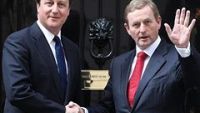
All eyes were on Greece at last week’s crisis summit in Brussels, but other indebted countries took advantage of Angela Merkel’s generous mood. In line with concessions made to Greece, the Irish secured a substantial cut in interest repayments on its bailout loan: the rate has fallen from 6 per cent to somewhere between 3.5 per cent and 4 per cent, and the loan period has been extended from seven to 15 years. This was a long-term goal of Enda Kenny’s government and the renegotiations are being heralded as a major victory. But the matter does not end there.

Cameron compromises, but Gaddafi might not

From our UK edition

What a difference four months of air sorties make. Back in the early days of the Libya intervention, David Cameron was unequivocal when it came to Muammar Gaddafi remaining in the country: there was "no future" for the dictator within its borders, he said. But now, on top of comments by William Hague yesterday, the Prime Minister is thought to be softening his stance. As the Independent says today, he has decided that "the time has come to find a way out of the conflict and back a French proposal to allow Gaddafi to stay in the country as part of a negotiated settlement with rebel forces." So, from no future for Gaddafi to some sort of future, and all while the bombs have been dropping. But France and Britain's change in tack is unlikely to have much effect on the ground.

How do you measure cuddles?

From our UK edition

There's been a lot of fuss about this morning's GDP numbers, but if David Cameron has his way we'll soon be fretting about an entirely different set of statistics. The Prime Minister has given the data-crunchers at the Office for National Statistics a new mission: measure the nation's well-being. The idea is to create new stats to accompany economic figures like the Gross Domestic Product as an additional gauge of how well things are going in the UK. It's an idea that makes a great deal of sense. After all, the shortcomings of GDP are well-known. As Bobby Kennedy put it back in 1968: "It measures neither our wit nor our courage, neither our wisdom nor our learning, neither our compassion nor our devotion to our country.

GDP grew by 0.2 per cent in Q2

From our UK edition

Growth in the 2nd quarter was an anaemic 0.2 per cent, in line with recent predictions. Another headline is that manufacturing fell by 0.4 per cent, in line with global slowdown in the sector. Also, the ONS says that growth would have been 0.7 per cent if it weren't for the Bank Holidays, the fine weather and external economic factors. Now the political fun starts.

The Game of Growth

From our UK edition

The release of the Q2 growth figures is still half-an-hour away, but Westminster is already on the boil. Much of the fuss and froth is because it's expected that the economy barely grew at all between April and June, or perhaps even shrank. But some of it is down to this Telegraph story, which suggests not just that "Downing Street aides [have] become increasingly impatient with a lack of growth," but that David Cameron's permanent secretary, Jeremy Heywood, recently held a meeting with Treasury and Business officials, and "read them them Riot Act". So is the longstanding friendship between Dave and George fraying at the edges? Benedict Brogan says not, but adds that things are far from rosy when it comes to their respective teams.

How to get from Plan A to Plan A+

From our UK edition

Terrible events in Norway and the ongoing phone hacking scandal have kept the economy out of the media in the last couple of weeks. Coverage of the latest bail-out of Greece last week was comparatively muted, especially considering how important it is for the eurozone and, by implication, the UK. However, if the soothsayers are correct, it is unlikely that the release of the Q2 GDP figures tomorrow will fail to hit the headlines. When the Office for Budget Responsibility published their forecast for the UK economy in April they had forecast growth of 1.7 per cent this year, but signs are that tomorrow's Q2 data will raise stark questions about the likelihood of that level of growth. Indeed, many commentators have revised their UK GDP forecasts down in recent weeks.

What you need to know ahead of tomorrow’s growth figures

From our UK edition

By now, George Osborne will have seen tomorrow's GDP figures and I suspect will be having a mid-afternoon whisky. Ed Balls will be warming up for his demands for a Plan B. "Austerity isn't working," he'll say — and will doubtless tour TV studios with his usual bunch of dodgy assumptions which he hopes broadcasters won't challenge. Here, as a counterweight, are a few facts and figures about austerity, how harsh it is, etc. — and the case for a Plan A+. 1. Where are the "deep, harsh" cuts? The Q2 GDP data will complete the economic picture for the first year of George Osborne's time in the Treasury. But where are the cuts? The Treasury produces figures for current spending each month. Here they are below, in cash terms and adjusted for CPI inflation.

Lansley’s letter pours fuel on Labour’s bonfire

From our UK edition

Just when everyone is all afroth about the murky connections between the political class and the media, a letter by Andrew Lansley to Danny Alexander has mysteriously leaked to the Telegraph. It was sent two months ago, and it concerns the government's public sector pension proposals. For five pages, Lansley riffs on about why the reforms may not be such a good idea, particularly when it comes to NHS workers. "We face a real risk, if we push too hard," he says, "of industrial action involving staff groups delivering key public services." He suggests that lower and higher paid staff may just opt-out of the pensions scheme altogether, leaving the Exchequer with "reduced receipts in the short term while still having to pay for past pension promises.

More questions for Murdoch?

From our UK edition

Much though most readers probably want it to, the phone hacking saga just won’t do the decent thing and die. Today brings fresh revelations. Colin Myler and Tom Crone, respectively former editor and head of legal affairs at the News of the World, have said that they sent an email to James Murdoch that supposedly undermines Murdoch’s testimony to the Culture, Media and Sport Committee. The Guardian reports that the email, “known as ‘for Neville’, because of its link to the paper's former chief reporter Neville Thurlbeck, is thought to have been critical in News International's decision to pay out around £700,000 to Taylor in an out-of-court settlement after he threatened to sue the paper.

Long-term problems

From our UK edition

It is fashionable to say that the nation is divided: the North and South, the haves and have nots, the politically engaged and the apathetic. Educational attainment has been added to that list, following yesterday’s apocalyptic report from the University and College Union (UCU), which found that there are more people without qualifications in one impoverished part of the East Midlands than there are in ten other affluent constituencies across the country. The report concludes that those from the poorest backgrounds have been “short-changed for generations”. What’s so striking about this report is that it follows hot on the heels of an OECD investigation into grade inflation under the previous government.

Fiona Millar to the Commons…

From our UK edition

Richard Kay’s column in the Mail contains the news, as expected, that Fiona Millar (AKA Mrs Alistair Campbell) is a shoo-in to replace Glenda Jackson as Labour’s candidate for the Hampstead and Kilburn constituency. The seat is very marginal: Jackson scraped in by just 42 votes last time round. But, if Millar were to win the nomination and subsequent election, she’s being tipped for immediate promotion. Kay reports that a ‘senior party figure’ told him that Millar would become Education Secretary ‘within a year’, assuming Labour was in government.

Busting myths about Coulson’s security vetting

From our UK edition

A recent turn in "Hackgate" has focused on the level of security clearance given to Andy Coulson. The insinuation is that Number 10 knew that Coulson would not be able to pass the so-called Developed Vetting level (DV) and therefore gave him a lower level. I have no idea what happened in No 10, or whether the allegations made against Coulson automatically disqualified him from obtaining DV level. But having been vetted several times, I can’t help but disagree with the way the story has been covered by some organisations. First, Coulson was, as far as I can gather, vetted to the Security Check (SC) level. That is not ‘the basic level of security vetting,’ as David Cameron and the Guardian have claimed. The basic level is called CTC or Counter Terrorist Check.

Llewellyn is more than a friend to Cameron

From our UK edition

Edward Llewellyn has been making headlines and there was speculation about his future. Many a right-wing MP rubbed their hands with glee, seeing Llewellyn as a ‘wet’ impediment to a tougher European policy. But, Number 10 came out strongly in support of the PM’s aide. Some people huffed, whispering that loyalty to friends like Llewellyn means more to Cameron than the health of the party. But this is a blinkered reading. First of all, John Yates himself said he thought Llewellyn had acted properly.

Phone hacking fag-ends

From our UK edition

Yesterday, in his statement to the Commons, David Cameron responded to a question from Labour MP Helen Goodman about Andy Coulson by saying: ‘He was vetted. He had a basic level of vetting. He was not able to see the most secret documents in the Government. I can write to the hon. Lady if she wants the full details of that vetting. It was all done in the proper way. He was subject to the special advisers’ code of conduct. As someone shouted from behind me, he obeyed that code, unlike Damian McBride.’ The story has developed since then.

Loyal Clegg’s slippery tongue

From our UK edition

Oddly, David Cameron’s most voluble supporter throughout the phone-hacking psychodrama has been Nick Clegg. The deputy prime minister took to the airwaves when no Tory dared or wanted to. Earlier today, Clegg gave a speech-cum-press conference and he defended the prime minister again, saying that he had very little to add to Cameron’s statement yesterday. He also defended Cameron over unanswered questions about Rupert Murdoch’s purchase of BskyB; Clegg said that Cameron had “nothing to do” with the deal, although he added that Vince Cable’s reservations had been vindicated. Clegg then elaborated on media regulation. Unsurprisingly, he insisted that the status quo must change.

The turning point?

From our UK edition

There’s a feeling in Conservative circles that they have finally turned the corner on phone hacking today after David Cameron’s marathon performance at the despatch box today. At the 1922 Committee this evening, Cameron entered and exited to the banging of desks. But, tellingly, there were no questions on phone hacking and Andy Coulson. Instead, the crisis in the eurozone was the main subject of discussion. Cameron did, though, refer to the matter. At the end, he recalled how Peter Tapsell, the veteran Tory MP, had said of him that ‘he had never known a Prime Minister more adept at getting out of scrapes. But he had also never known a Prime Minister who got into so many scrapes.

The (non-)effect of Hackgate

From our UK edition

No Labour bounce, no drop in approval for Cameron or his government. That's the impact that two weeks of front pages dominated by the phone hacking scandal on the opinion polls:  Ed Miliband's numbers have improved, which will come as some relief to the Labour leader who suffered a terrible month of polls in June. But despite a 13 point jump in the last fortnight, his net approval rating has only recovered to where it was six weeks ago, and that was hardly a rosy position. Certainly, Ed's response to the scandal seems to have reflected well on him. 49 per cent of the public think he's handled the affair well, compared to 36 and 33 for Cameron and Clegg respectively. Perhaps most strikingly, even Tory supporters think he's done well, by 44 per cent to 35.

Cameron’s letter to Watson

From our UK edition

Tom Watson fired a barb at David Cameron during the oral questions following the prime minister’s statement. He referred to a letter about allegations against Andy Coulson he had sent to Cameron on 4th October 2010. The letter had gone unanswered and Watson wanted to know why. After struggling to answer for a while, Cameron eventually said he would respond, forgetting that he appears already to have done so. Here is his letter, just released by Downing Street: '1O DOWNING STREET LONDON SW1A 2AA 20 October 2010 Mr Tom Watson MP Thank you for your letter of 4 October. The Standards and Privileges Committee and the Home Affairs Committee have both announced inquiries. The Home Secretary has made an oral statement to the House.

“Why I hit Murdoch”

From our UK edition

The Guardian’s Comment is Free has given a platform to the self-styled comedian Jonnie Marbles, who attacked Rupert Murdoch with a plateful of shaving foam. He says he did it ‘for the people who couldn’t’, which is ironic given that he couldn’t either after, owing to Wendi Deng’s bejewelled fist. This has sparked a debate about whether it is fit and proper to have allowed Marbles the space. CoffeeHousers’, over to you… PS: In a tweet that exceeds the limits of parody, Alec Baldwin appears to have called for David Cameron to resign as Prime Minister of England. The actor also adds that we're a very talented nation.