Uk politics

Huhne ramps up the rhetoric on 50p

Chris Huhne’s comments to Prospect magazine about the 50p tax rate are typically provocative. The millionaire, former City boy accuses the Tories of wanting to abolish the 50p tax rate to help ‘their friends in the City to put their feet up’. He even suggests that the Lib Dems would not vote through any Budget that contained its abolition. Huhne’s intervention comes at a time when George Osborne is trying to build support for abolishing—or, at least cutting—the 50p rate. Tellingly, the letter from economists opposing the 50p rate was drawn up with the help of one of the Chancellor’s closest lieutenants.

Hague says he’s been held back on Europe by the Lib Dems

William Hague’s comments in an interview with The Times that the Liberal Democrats are restraining the Tories on Europe will increase the grumbling among Tory backbenchers about the power of the junior coalition partner. Hague tells the paper that ‘A point of difference in our manifesto was the aim to repatriate some powers. Clearly that’s something I’m in favour of, but that’s the area we had to compromise on in return for other compromises.’ (In many ways this is a statement of the obvious. But in the current uncertain European environment, his remarks are news). In an attempt to reassure euro-sceptics, Foreign Secretary stresses that the Conservative party ‘would like to see powers returned from the EU to the United Kingdom.

Cameron’s well-schooled argument

When Michael Howard offered David Cameron the pick of the jobs in the shadow Cabinet after the 2005 election, Cameron chose education. Howard was disappointed that Cameron hadn't opted to shadow Gordon Brown but Cameron argued that education was the most important portfolio. A sense of that commitment was on display today in his speech on education, delivered at one of the new free schools that have opened this term. His defence of the coalition’s plans to make it easier to sack bad teachers summed up its refreshing radicalism. He simply said, "If it's a choice between making sure our children get the highest quality teaching or some teachers changing career... I know what I choose.

Who cares about abortion?

Thanks to Nadine Dorries' amendment to the Health and Social Care bill, abortion rights have been discussed a great deal this week – both inside and outside of Parliament. In her cover article for this week's Spectator (out today), Mary Wakefield says that this debate has revealed a "strange and unpleasant consensus... that abortion is not just a necessary evil, but a jolly good thing." In the piece, Mary asks "Why are we so keen on abortion?": "The fact is that unless you’re a fan of infanticide you’ve got to agree that somewhere along the slippery ascent from that little Alka-Seltzer of pluripotent cells to the birth of an actual baby, your child becomes human.

Pickles to take charge of dealing with Britain’s 120,000 “problem families”

I understand that following a meeting in Downing Street this morning, Eric Pickles, the Communities and Local Government Secretary, has been put in charge of dealing with Britain's 120,000 "problem families". In the aftermath of the riots, David Cameron promised to put all of these families through some a family-intervention programme by the time of the next election. This policy, though, was bogged down in the bureaucracy as it cut across so many different departments. Pickles' department will now have sole responsibility for this commitment. It will receive extra budget, with the money coming from education and work and pensions, and staff to deal with this.

How will Westminster respond to Vickers?

The Vickers’ report into banks will land on the Prime Minister’s desk tomorrow. It goes to the banks very early on Monday morning before being published later that day. The thing to watch for is how politicians react to it. We know that the report will propose some kind of ring fence. But what we do not know is how strict the ring fence will be and how quickly Vickers will want it implemented. As Robert Peston says the impact of the ring fence on the banks’ creditworthiness will be felt long before the actual ring fence comes into effect. Intriguingly, Ed Miliband is giving a speech to the TUC that day. This gives him a platform to call for the immediate implementation of the whole report.

Willetts plays snakes and ladders

Social mobility has become something of a hot topic for the coalition. February's Social Mobility White Paper made it the government's number one social policy goal. Yet arguments over tuition fees have rather drowned out much of what they have to say on the topic, particularly when it comes to education and skills. So it was interesting to hear Higher Education Minister David Willetts restate the government's case with a speech at the Resolution Foundation yesterday. Willetts, who has been called the poster boy of the think tank community, was as thoughtful as ever – and he didn't mince his words.

50p tax isn’t just hurting the economy, but Treasury revenues too

So where were these 20 economists when Gordon Brown first set the 50p trap for George Osborne? Then, Brown's gamble was that the Shadow Chancellor was a political strategist with little interest or expertise in economics, so he'd be unlikely to work out just how much the 50p tax would lose the Exchequer, or guess it could be more than £3 billion a year – with further, less calculable damage on Britain's reputation as a home for entrepreneurs. This was when we needed those economists. At the time, all Osborne had to go on was the IFS which calculated it would cost £800m - assuming the rich were no more mobile now than they were in the 1980s. A ludicrous assumption, of course. What proportion of Britain's super rich are immigrants?

Cameron Dorries exchange the most memorable moment of a quiet PMQs

The first PMQs of the new parliamentary term was a bit of a damp squib. Ed Miliband avoided the issue of the economy, presumably because he feared being hit by a slew of quotes from the Darling book. So instead we had a series of fairly unenlightening exchanges on police commissioners and the NHS. Labour has clearly chosen to try and attack the coalition from the right on law and order and security. There were a slew of questions from Labour backbenchers on whether the coalition’s anti-terrorism legislation was too soft. But I suspect that this PMQs will be remembered for the Cameron Nadine Dorries exchange.

The conference season blues

Few things irritate the Prime Minister’s circle more than the insinuation that David Cameron is lazy. So Ben Brogan’s column this morning with its slightly barbed observations about the number of box-sets that Cameron finds time to watch will have been read through gritted teeth in Downing Street. Ben argues that Cameron will have to use his conference speech to show the country what he stands for and what he wants. This is, as Ben acknowledges, said about most leaders before nearly every party conference. But I understand that preparations for this year’s Tory conference are particularly chaotic. While the work on Cameron’s own speech is proceeding apace, the rest of the conference programme is short on both ideas and a theme.

A growing argument about the 50p rate

With the Eurozone and American economies both at risk of a double dip recession, how to get the British economy moving again is going to be one of the defining political arguments of the autumn. A first salvo in that fight has been fired this morning with a letter to the FT from 20 economists calling for the immediate scrapping of the 50p rate because of the harm that it is doing to the economy as a whole. This letter will, one suspects, be privately welcomed by the Chancellor who is looking for ways to, at the very least, cut the rate. He has become increasingly convinced that it is making it harder to get a proper recovery going. But, politically, offering a tax cut to the rich is a hard sell at the moment.

Clarke is right to focus on reoffenders

The Justice Secretary Ken Clarke – who was away during the disturbances last month – has signalled his return with an uncharacteristically tough piece in today’s Guardian. The reference to the rioters as a “feral underclass” is not language that the penal reform lobby will welcome from their favourite Minister, but it does signal a firmer line from the Justice Secretary: “In my view, the riots can be seen in part as an outburst of outrageous behaviour by the criminal classes – individuals and families familiar with the justice system, who haven't been changed by their past punishments.

Cameron faces the eurosceptics

If Tony Blair thought that a meeting with Gordon Brown was like dental surgery without anaesthetic, one wonders how David Cameron would describe being questioned on Europe by Bill Cash and Bernard Jenkin. At the liaison committee, the two veteran eurosceptics pushed Cameron on why he was supporting far greater fiscal integration in the Eurozone. Cameron’s answer was, basically, that this was the only way the Eurozone could be made to work. But one can’t help but feel that greater fiscal integration is simply storing up problems for the medium term given that it will do nothing about the divergence in competitiveness between Eurozone members. The rest of the session was dominated by yet more questions about relations between politicians and the media.

Facebook diplomacy

William Hague is an unlikely sort of technophile. Truth be told, for all his strengths he simply does not look like a signed-up member of the Twitterati. His history-dripping, gold-covered office in King Charles Street is about as far away from the internet-enabled Google office as you can get. But the Foreign Secretary has just opened a Facebook profile – and garnered a thousand friends or so in a few days. Ironically, none of his staff can see his family snapshots, his "likes" or who he chooses to poke – as access to Facebook is limited on the Foreign Office IT network. How this foray onto Facebook will end up remains to be seen. Ed Miliband's Twitter experience was famously ill-fated.

Murdoch still in MPs’ sights

Britain's top-selling newspaper was sacrificed to stop the toxicity from the phone hacking scandal infecting the rest of the Murdoch empire. But it is looking more likely by the day that the News of the World closure will have been in vain. MPs have now have James Murdoch clearly in their sights as they continue to dig down into details of decision-making at News International. He is almost certain to be recalled for a grilling after two senior executives openly contradicted evidence the company chairman gave to the Commons two months ago. Former legal manager Tom Crone today told the Commons culture committee he was "certain" he told Murdoch about an email which suggested illegal interception of voicemail messages was more widespread than first thought.

The reformist case for Clegg

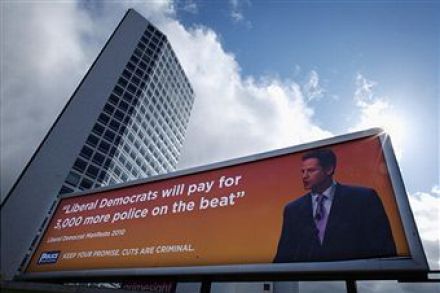
One ally of the deputy Prime Minister suggested to me yesterday that the press was missing the most significant aspect of Clegg’s speech on education: Clegg acknowledging that free schools would now be a permanent part of the educational landscape. This ally argued that this was a big deal given that a year ago Lib Dem conference had voted to boycott these schools. The Lib Dem leader is considerably more liberal than his party. This means that he sometimes needs, so the argument goes, to sweeten the reformist pill with some Lib Dem rhetoric. Hence the emphasis on free schools being fair schools in yesterday’s speech. But this internal Lib Dem party management is frustrating for Conservative ministers.

The riots, one month on

A month has passed since the riots, and it still feels as if nobody has grasped what really happened. The media debate has been limited, to say the least: lots of self-appointed community leaders and youth experts talking about giving kids a "voice" or "stake" in society, or calling the likes of David Starkey racist. The BBC "riots debate" last night, featuring Dame Claire Tickell, Liam Nolan, Shaun Bailey and former gang member Sheldon Thomas was particularly frustrating. Every time somebody came close to making a good point – Bailey, for instance, issued strong remarks about the commercialisation and sexualisation of children – someone else would drown it in bien-pensant blather.

I spy a BBC bias

With Colonel Gaddafi's compound lying in ruins and every self-respecting reporter combing through the wreckage, it was only a matter of time before documents of a dictatorship became public. Most explosively, the BBC's Jeremy Bowen has found letters to and from the Secret Intelligence Service which suggest complicity in extraordinary rendition and, as was suggested on the Today Programme yesterday, an unseemly chuminess with Libya's spies. If any part of the British state took part in illegal acts – which extraordinary rendition is – then this is a very serious matter. But it should be said no evidence has hitherto been found of this by any number of inquiries.