Peter Bone MP gives the Lib Dems a red card
Peter Bone MP: send them off!
Peter Bone MP: send them off!
Today we got the black comedy follow up to Sarah Teather’s stand-up routine. Chris Huhne is going to drive down our energy bills! For those of us wondering how families and businesses can afford his expensive climate policies, it is a bit of a joke. The basic issue – as I set out in the new book Let them eat carbon – is that we need to invest an absolute fortune to meet the range of environmental targets that the government has put in place. Citigroup estimated last September that we need to invest about €229 billion (about £200 billion) in the energy sector this decade. That is far more than any other major European economy.

James wrote at the weekend, Nick Clegg's Orange Book allies fear Tim Farron, the Lib Dem President and standard bearer of the social democrat wing of the party. Yesterday, Farron said that the coalition would "end in divorce" in the months running up to the next general election. That provocative comment followed the barnstorming speech that Farron gave on Saturday, in which he labelled Nick Clegg as the "Leader of the Opposition". Quentin Letts has echoed the views of many party foot soldiers by saying that this was a leadership pitch for the future by the Party President. Unsurprisingly, the leadership has moved to quash Farron.
Communication, communication, communication: that appears to be Nick Clegg's new political mantra. Speaking to the Today programme earlier this morning, the Lib Dem leader said: "If there is a legitimate criticism to be made of our government, it is that we haven't articulated that there are things we can do". He made the same point repeatedly during yesterday's impressive Q&A with activists: 'We need to explain, over and over again, what we have managed to achieve in power: the increased the income tax threshold, the pupil premium, the triple lock guarantee for pensioners … Above all we need to say that there is nothing progressive about being bankrupt. Have we communicated that message successfully? No, clearly not.
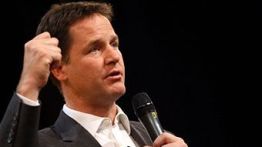
One of the most striking things about Lib Dem conference has been how up for a scrap over Europe the party’s ministers are. Every single Lib Dem Cabinet minister has, over the past few days, ruled out any attempt to repatriate powers from Brussels. Given that the Conservative party wouldn’t forgive David Cameron not attempting to use any new treaty negotiation to try and regain control of various issues (see David’s blog from earlier), this puts the Prime Minister in quite a dilemma. Personally, I expect Cameron will go for the repatriation of powers. The AV referendum showed that when he has to choose between really angering his party or the Liberal Democrats, he crosses his coalition partners.
The Telegraph’s splash on Europe indicates that the issue, which proved so toxic to the last Conservative government, has risen again. Writing a stern op-ed for the paper, serial rebel and anti-Cameroon Mark Pritchard calls for a referendum. This will have irritated Downing Street no end, which is understood to have hoped that the whip-sanctioned Eurosceptic grouping that has formed around George Eustice might have contained the party’s factious elements. But some disgruntled MPs on the right privately say that last week’s well attended meeting of Eustice's group turned into something of a disappointment. The insistence that an exit from the EU was off-limits for the moment was apparently met by a singular lack of enthusiasm in some quarters.

The residents of Dale Farm have been granted a last gasp reprieve by the High Court. The BBC reports: ‘Mr Justice Edwards-Stuart granted the injunction at London's High Court on the basis that there was a realistic apprehension that the measures to be taken - while genuinely believed in by the council - "may go further" than the terms of the enforcement notices. He said: "Having regard to the fact there is no fixed date for starting these - but they are imminent - I do not see that any serious injustice will be caused if the actual implementation of any measures will not take place before the end of this week.

https://www.youtube.com/watch?v=qmHdqWPB_S8 Given that Vince Cable was once a lecturer in economics, it's odd to see him feign ignorance over its basic concepts. Listen to his speech today."There are politicians on both left and right who don’t [get it]. Some believe government is Father Christmas. They draw up lists of tax cuts and giveaways and assume that Santa will pop down the chimney and leave presents under the tree. This is childish fantasy. Some believe that if taxes on the wealthy are cut, new revenue will miraculously appear.” It’s perhaps worth quoting one such ‘childish’ politician who was articulating this long before Art Laffer doodled on a cocktail napkin.
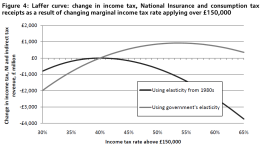
Hat-tip: The Daily Politics.
Even by his own standards Vince Cable’s speech today was noticeably pessimistic. The Business Secretary warned that the post-war cycle of ever-rising living standards has been broken by the crash. There was little in what he said to suggest that he has any optimism about the prospects for growth over the next few years. If Cable’s analysis is correct — and it is shared, at least in part, by several Tory Cabinet ministers — then the politics of the next few years will look very different than we expected. The initial post-election Tory hope of running a ‘It’s morning in Britain again’ campaign in 2015 now seems like a distant memory.

The FT makes for grim reading this morning (£). The paper claims to have replicated the Office for Budget Responsibility’s methodology and it has found that the structural deficit is £12 billion larger than was thought. If this is true, and coalition ministers are scrambling to deny it, then George Osborne is unlikely to have virtually eliminated the structural deficit by the end of this parliament, his avowed aim. The strategic implications are clear: the 2015 election would become a much tougher prospect for the Conservatives, as Osborne might to struggle to present them as the party that delivered the economy from disaster. There have been clear indications that all is not well on the economic front, mainly as a result of global economic slowdown.
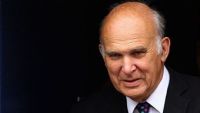
Vince Cable will address the Liberal Democrat conference later on today. Tim Farron's indulgent speech yesterday is a tough act to follow, but Cable has chosen a subject to titillate delegates: curbing high executive pay, bolstered by the popular mantra of no more reward for failure. He signalled his intention yesterday in an interview with the Sunday Times, with further details in the Guardian. The Business Secretary will try to ensure that workers and shareholders are represented at directorial level. He will also strive to diversify the membership of remuneration committees to include union reps and low grade employees.
The intrigue of the Liberal Democrats’ conference has centred on the party’s split personality. A Sunday Times/YouGov poll disclosed that as many as 50 per cent of Lib Dems believe that it was wrong to go into coalition in the first place, leading one to assume that only the small clique of ‘conservatives’ around Nick Clegg is keeping the Lib Dems in government. There is a still a strong feeling that going into coalition was the right thing to do for party and country. Lib-Dems who think otherwise, I’m told, “should seriously question [their] logic” because there was no alternative. However much that is true, Lib-Dems still miss opposition.
A new rule seems to have been adopted at Lib Dem conference: don’t mention Academies. The coalition’s greatest single success story – something David Laws and Michael Gove agreed on before the election – is being airbrushed out. A favourable reference to Academies taking on kids from deprived backgrounds was proposed for a conference motion, but has been excised by the delegates. Lib Dem activists are heavily drawn from the ranks of local authority councilors, many of whom hate the way that schools have been given the power to break free from council control. Confronting them was a key part of Nick Clegg’s modernization programme. It seems that this has been aborted.
Lib Dem conference delegates have just provided the press with a nice easy story, they’ve voted to set up a panel to look at the legalisation of cannabis and the decriminalisation of all drugs. But away from the main hall, Danny Alexander has just given an interview to Andrew Neil in which he has distanced himself from the almost incessant Tory bashing going on at this conference. When asked whether he agreed with Simon Hughes’ description of the Tories as ruthless extremists, he replied "I wouldn’t engage in debate in that way." Alexander said that, contrary to the Jasper Gerard book, there will be no new coalition agreement to cover the second half of the parliament.
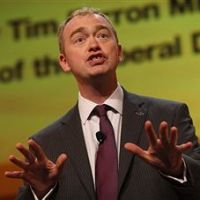
For Lib Dem modernisers there are few more depressing sights than how conference reacts to a Tim Farron speech: he serves up social democratic red meat and they absolutely lap it up. Farron, the party president, delivered one anti-Tory jibe after another. He declared that the government would be an ‘absolute nightmare without’ the Liberal Democrats in it, boasted that Nick Clegg was ‘leading the opposition’ as well as being deputy Prime Minister and accused the Tories of believing it was ok for the super-rich not to pay tax. There were also a slew of attacks on ‘the reactionary Tory drivel’ that the Tories have supposedly sprouted since the riots.
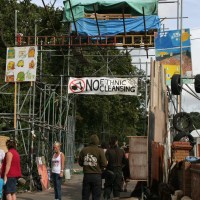
Siobhan Courtney, who blogged for us last week, is part of our ‘another voice’ series – occasional posts from writing from lines of argument different to the ones we normally take on Coffee House. She has sent this report from Dale Farm, where hundreds of travellers are due to be evicted tomorrow. Siobhan was granted access to the site, on what will probably be its last day of existence. Irish folk music pounds out from one chalet. Women vigorously scrub the outsides of neighbouring caravans, while their children bring tea to the men who are fixing their vans. Around them, plastic statues of Mary Magdalene are firmly rooted into the gravel, draped with crucifixes, shadowed only by clothes billowing on the washing lines.
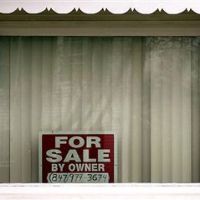
There was much to commend in Chris Skidmore’s article in the Telegraph earlier this week, calling for a radical approach to public services. But there’s one bit that’s worth dissecting: his idea that people in social housing might sell their homes to invest in shared equity, if they behave well. Here’s what he says: 'Any social housing tenant, under certain conditions of tenure and behaviour, would be able to sell their property and retain a proportion of the equity, reserved for investing in a shared equity programme, giving them a first step onto the housing ladder. The remaining equity would be used to build more affordable housing to meet demand.
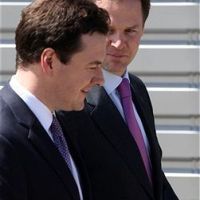
Nick Clegg’s interview on Andrew Marr this morning subtly shifted the Lib Dem position on the 50p tax rate. When Marr asked him what he would do if the George Osborne commissioned HMRC study showed that it raised no money, Clegg replied ‘then I of course think we should look at other ways in which the wealthiest pay the amount that we’d expected through the 50p rate.’ So, in other words, he’ll accept its abolition if something else is put in its place. But, crucially, Clegg wants any replacement to raise not what the 50p rate actually raises but what it was supposed to raise. This presages the next debate in government over 50p.
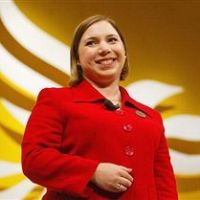
Assorted acolytes from the teaching unions are padding around the Lib Dem conference, fomenting discontent around activists who are opposed to the coalition’s adoption of academies and free schools. Officials from NASUWT and the NUT have pricked the airwaves with tales of concern and frustration. Education minister Sarah Teather addressed the conference earlier this morning and she was unrepentant. She eviscerated Labour’s record on education and, by extension, the system that has been dominated by the teaching unions. She also pledged to double the pupil premium next year to £1.25 billion, which will allow schools to increase their expenditure on tuition, parental support, after school clubs and so forth.