Uk politics

Happy Birthday, Mrs T

From our UK edition

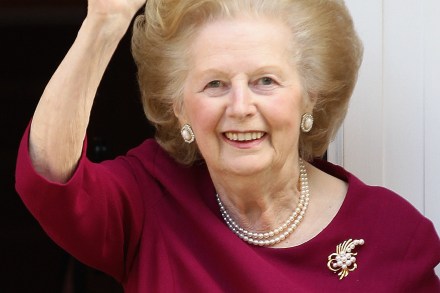
It is, you may have heard, Margaret Thatcher's 86th Birthday today. By way of a congratulatory toast to the Iron Lady, here's a thought-filled article that T.E. Utley wrote about her politics, for The Spectator, some 25 years ago: Don't call it Thatcherism, T.E. Utley, The Spectator, 19 August 1986 There is no such thing as Thatcherism. The illusion that there is is in part a deliberate creation of Mrs Thatcher's enemies. They have proceeded on the age-old maxim that there is nothing (certainly not private scandal) more likely to injure the reputation of a British politician than the suggest that he has an inflexible devotion to principle. This maxim is only partly true, but is an unshakeably established belief, a fact which helps to make it truer than it otherwise would be.
The ongoing NHS scandal

From our UK edition

Shock! Horror! Another report reveals the shameful care given to the elderly in British hospitals. People in the twilight of their life reduced to begging for food and rattling the bars of their beds in a desperate attempt to get the attention of medical staff paid to care for them. The findings came in reports of random inspections by the Care Quality Commission watchdog that found concerns in 55 of the 100 hospitals visited, with 20 of them — one in five — breaking the law in its levels of neglect. They found patients starved of food, denied water, spoken to rudely or simply ignored. It is sickening stuff.

The centre ground’s there for the taking

From our UK edition

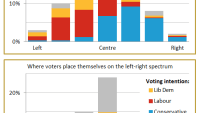
YouGov recently repeated its occassional exercise of asking people where they'd place themselves, the parties and the leaders on the left-right spectrum. Anthony Wells reported some of the findings on Saturday: Cameron is seen as slightly less right-wing than his party, while both the Tories and Labour appear to have moved away from the centre-ground since the election. One thing these YouGov numbers allow us to do is see where on the spectrum the parties get their support from. First, how people voted in 2010 and then how they say they'd vote now: This looks broadly as you'd expect, with Labour dominating among left-wing voters and the Tories doing likewise on the right.

Lansley’s real fight

From our UK edition

Yesterday was a rare good day for Andrew Lansley: the Health Bill survived its trial in the House of Lords. But there are no fanfares in this morning's press for the near-moribund health secretary. The Times, The Telegraph, The Independent and The Mail all lead with the story that 50 per cent of English hospitals fail elderly patients according to the Quality Care Commission. Lansley may have thought that his struggle was with nit-picking peers, who are determined that he, as the secretary state, remains ultimately accountable for the NHS in the letter of the law. But, maintaining the standard of NHS care is his real battle. The irony of the recent squabble between the government and the Owenites is that today’s headlines suggest it was needless.

Werritty’s no Walter Mitty

From our UK edition

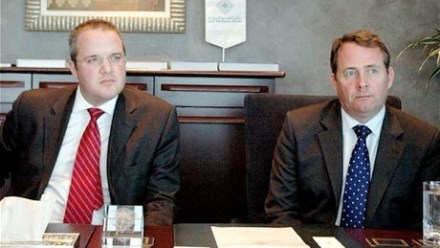
Those "friends" of Liam Fox who are trashing Adam Werritty to journalists (see here, here and here) are doing the Defence Secretary no favours. The idea that Werritty somehow imposed himself on Fox is simply risible. Fox was under no obligation to invite Werritty to dinner with an American general or to go on skiing holidays with him. Crucially, Fox didn't move to cut Werritty off even after he found out about the infamous business cards that described Werritty as an adviser to him. On Monday, Fox told the House that he dealt with this issue in June. But this doesn't seem to have led to any change in Fox's attitude towards his friend.

Time to scrap the minimum wage?

From our UK edition

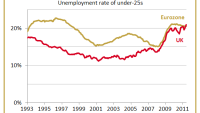
Today’s youth unemployment figures are simply appalling. It’s now 21 per cent amongst the under-25s, above the peak of 18 per cent seen under the 1990s recession. For the first time since then, Britain’s youth joblessness is worse than the European average. This is a tragedy, and not one we should accept as being a grimly inevitable aspect of the recession. Ed Miliband said in PMQs that a million young people are on the dole: a statistic everyone should get angry about. And we can think of what has gone wrong. The above graph shows how Britain has nothing left to boast about in unemployment. Blair used to love heading to Brussels and saying the real 'social model' was lower regulation which meant higher employment. What’s changed over the last 20 years?

Miliband attacks Cameron on jobs

From our UK edition

Ed Miliband chose to ask all six questions on the economy today, making only the quickest of references to the Liam Fox story that the Westminster village is currently obsessing over. Armed with ammunition from the latest unemployment numbers, Miliband did a solid job of pushing Cameron onto the back foot. But there was one moment which will worry Miliband's supporters: the spontaneous way the government benches fell about when Miliband claimed that Scottish and Southern Energy's decision to start selling its electricity on the wholesale market was the result of his conference speech. Three Labour backbenchers did ask questions about Liam Fox. Cameron said he would look at publishing a list of Adam Werritty's professional and social contact with ministers and advisers.

Right to reply: The truth behind the poverty figures

From our UK edition

This morning, Fraser published a piece criticising the Institute for Fiscal Studies’ definition of poverty. Here is a counterpunch from Julia Unwin, Chief Executive of the Joseph Rowntree Foundation, which is the organisation that funds the IFS. This article is the latest post in our Right to Reply series.  Do we really need another debate about the usefulness of a poverty measure? Of course, no definition is perfect. One of the hardy perennials of the poverty debate is the question of measurement. I wonder what it says about us as a country: why do we spend so much effort thinking about definitions of poverty, and so little responding to the reality? All measures of poverty have their uses — and, yes, their flaws.

A counterweight to France-German power

From our UK edition

It was only a matter of time before the Franco-German drive to reshape Europe's "economic governance" met with a counter-proposal. In international politics, a powerful state or group of states tends to lead others to band together in or order to provide some form of balance. This is now happening in Europe. David Owen and David Marsh are proposing the creation of a "Non-Eurogroup" (NEG), corralling the 10 EU countries outside the Eurozone into a group. Writing for the Financial Times, they argue that such an NEG would bring many benefits. They say: "Setting up the NEG would establish rights and responsibilities for non-eurozone members, ending the long-held European position that non-membership of the euro represents a form of second-class EU citizenship.

Which amendments to the NHS bill would the government accept?

From our UK edition

The Lords has been debating the Owen/Hennessy amendment to the NHS bill, which threatens to upset the coalition. Owen and Hennessy have called for the bill to be referred to an extraordinary committee, which would report by 19 December, and they insist that the secretary of state must remain ultimately responsible for services.  Lord Howe opened for the government and spoke of the need to delegate power away from the secretary of state. The he added: ‘We are unequivocally clear that the Bill safeguards the Secretary of State’s accountability. However we are willing to listen to and consider the concerns that have been raised and make any necessary amendment to put the matter beyond doubt.

Gus O’Donnell’s resignation letter

From our UK edition

Today, Downing Street has announced that the Cabinet Secretary, Sir Gus O'Donnell, will resign at the end of the year. Here is the letter he sent: Dear Colleagues I wanted to let you know that I am announcing my retirement today, after over six years as Cabinet Secretary and Head of the Civil Service. I will be leaving the civil service at the end of the year. I am extremely proud of the fantastic work that you do up and down the country – delivering services to the public. I have been a civil servant for 32 years and remain convinced of the importance of our traditional values of honesty, objectivity, impartiality and integrity in underpinning all the work that we do.

Cameron tackles internet porn with more government

From our UK edition

David Cameron is taking his woman trouble seriously. He will unveil plans to curb internet pornography at a meeting with the Mothers’ Union later today. The government will force internet users to opt in to view pornographic websites when they initially chose their internet providers. The government will also clamp down on sexualized advertising and a new website, Parentport, will be established to allow parents to report inappropriate images, articles of clothing, TV programmes etc. This is a fairly blatant pitch for the wandering female vote, which is exercising Cameroon minds at present. It’s a clear attempt to say: We’re going to help you to protect your children.

The poverty of the poverty measure

From our UK edition

‘400,000 children will fall into relative poverty by 2015, says IFS’ we read on The Guardian’s front page today — yes, one of the most pernicious ideas of recent years is back. It’s the definition of ‘poverty’ as being figures on a spreadsheet, households deemed to fall beneath an arbitrary threshold. It’s almost entirely meaningless, and diverts energy and resources away from a real fight against poverty. I really do believe that, as ideas go, this one has damaged Britain more than almost any other over the last two decades — and it’s high time it was confronted.

Fox in the clear?

From our UK edition

Liam Fox demonstrated today why he'll be staying in Cabinet. He's a tough, eloquent and effective Commons performer who does not fall to pieces when the going gets tough. George Osborne and Michael Gove were both on the front bench with him. One MP told me he saw Eric Pickles in the corridors, giving Fox a hug that almost killed him. All this reflects well on them: in politics, it's always worth noting who stands by colleagues, and who scarpers, when it hits the fan. Fox has, finally, made the two steps required to get on top of this scandal: an apology, and full disclosure to stop the drip, drip of allegations which was giving this story such lethal momentum.

Fox defies the hounds

From our UK edition

To the joy of the Tory benches, Liam Fox has just come out swinging in the House of Commons. In his initial statement, Fox apologised to the House for allowing the lines between his personal and professional life to become blurred out of “personal loyalty to a friend.” He then conceded that Werritty had travelled on 18 overseas visits with him since May 2010 and visited the Ministry of Defence 22 times. The presence of George Osborne and Michael Gove on the front bench showed how determined the Cameroons are to indicate support for the defence secretary despite the political differences between him and them. Jim Murphy missed the target in his reply. He was overly theatrical and failed to make clear what he actually wanted answers to.

Another voice: Against austerity

From our UK edition

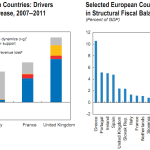
Here's the latest in our Another Voice series of posts, which give prominence to viewpoints outside the normal Coffee House fold: You can't help but notice that the UK economy isn't doing too well. Part of this is down to international developments, sure. But part – as Mervyn King said in "http://www.bankofengland.co.uk/monetarypolicy/pdf/govletter111006.pdf">his letterto George Osborne last week – is the result of "fiscal consolidation", aka spending cuts. The IMF's assessment, published a few days ago, shows both why debt has risen (lower tax revenues) and what is happening now (sharp contraction): And there's much more contraction to come: So why keep on contracting if it is affecting economic growth?