Uk politics

The Spending Review, one year on

From our UK edition

It's been a year since the Coalition's Comprehensive Spending Review, but the public is in no mood to celebrate its anniversary. As the economy has failed to recover – GDP was no higher in June this year than at the time of the Review – sentiment has turned against the government. The latest YouGov polling shows that just one-in-three think the government is handling the economy well, against 58 per cent who say "badly". At the time of the Spending Review, the public was split evenly on this question. Similarly, just 33 per cent think the government's spending cuts are good for the economy, while half say they're bad. But people do think the cuts are necessary – by a two-to-one margin.
The Colonel’s end

From our UK edition

After more than 40 years of murderous rule and months fighting his own people, Colonel Muammar Gaddafi has finally been caught, and killed, in his hometown of Sirte. This marks the end of the formal struggle against the Colonel's regime, and, as such, is a great event for all Libyans. But Col Gaddafi's death does create some complications for the new Libyan authorities. They have avoided a drawn-out judicial drama — like Slobodan Milosevic's — which could have rallied people in the ex-dictator's support. But his death also robs the new Libyan government of an opportunity to show that they are better than he was, by allowing a process of justice to take place.

Cameron needs an amendment – and fast

From our UK edition

A third of Tory backbenchers have now signed the EU referendum motion. Worryingly for the whips, this isn’t the limit to this motion’s appeal. There are several Tories who plan to come out for it on Monday and one PPS, Stewart Jackson, has already made clear that he’s prepared to resign over the matter if necessary. Last night, Number 10 sources told me that they would be interested in a compromise amendment. But I think the Cameron operation will have to offer more than they were planning to. What’s needed to head off this rebellion is a commitment to renegotiation at the first available opportunity followed by a referendum on the results of that.

Cable can’t make any promises

From our UK edition

Did you realise that today is the first anniversary of the government's Spending Review? Neither did I until the politicians started making a fuss about it, starting with Vince Cable on the TV last night. We'll post video footage of the Business Secretary's performance when we can, but this write-up here just about covers it. He made a few earcatching remarks — among them that "we didn't know that there would be a major crisis in our export markets and that energy prices would shoot up" — but one has captured the headlines more than any other. Asked whether he could promise that we wouldn't experience a double-dip recession, Cable replied: "I can't do that. We know conditions are very difficult but the government is doing the best it can to protect people.

Cameron starts playing catch-up over the EU referendum vote

From our UK edition

Adjust your calendars, CoffeeHousers. The parliamentary vote on an EU referendum is no longer set for next Thursday. As the Mail's James Chapman revealed this evening, Downing Street has moved it forward to Monday so that David Cameron and William Hague can both attend. They would have been away on government business otherwise. What to make of this hasty measure? I suppose it could feasibly be seen as a scare tactic on the part of No.10: strengthening the current three line whip by making it very clear that Dave Is Watching You. But it's far more likely that Cameron is appearing in order to set out the sorts of concessions that James mentioned earlier. There are, after all, almost 50 Tory backbenchers signed up to the original motion — 50 potential rebels.

The government’s never-ending European problem

From our UK edition

We thought CoffeeHousers might appreciate an advanced viewing of James' political column from tomorrow's issue of The Spectator, so here it is: In the hours after the coalition was formed last May, a minister and a group of Tory MPs sat around a table in a parliamentary cafeteria discussing what it all meant. One new MP said to the minister that it was a pity that, in the course of the talks, the Tories had agreed to ‘park Europe for the next five years’. The minister, high on the Panglossian spirit of the early days of the coalition, reassured her that this was for the best. The party could devote its full attention to Europe when the economic situation was less pressing.

Cameron outfoxed in PMQs

From our UK edition

Alive or dead? At PMQs today we discovered whether Dr Fox is still an active toxin within Cameron’s government. Ed Miliband, using that special quiet voice he likes to try when he’s got a deadly question, described the affair as ‘deeply worrying’, and asked how on earth the prime minister could have let it all happen. Cameron, evidently relieved that Fox is already a stuffed and mounted exhibit in the Museum of Former Big Beasts, pointed out that his minister had resigned. ‘Not something that always happened under Labour.’  It turned very tetchy all of a sudden. Miliband, apparently miffed, struck out with this hoity-toity harangue. ‘Some advice for the Prime Minister,’ he said. ‘In this week of all weeks.

Will IDS’s reforms get stuck in Whitehall’s digital mire?

From our UK edition

"7m caught in tax blunder," trumpets the cover of this morning's Daily Mail. "After a series of errors, six million will get an average £400 rebate, while a million face demand to pay £600." It's a good story — but it's also sadly, wearily familiar. Rewind the tape to last November, and the Telegraph was running with the headline, "New HMRC tax blunder means thousands face demands to repay". Last September, the Guardian had an article about the 10 million people who might be owed rebates. Last August … oh, you get the point. Nary a month has passed without some tale of how HMRC has screwed up once again.

What Cameron needs to do to avoid a rebellion over Europe

From our UK edition

The backbench motion on an EU referendum has been cleverly crafted. Rather than just proposing a straight In/Out vote it includes a question on whether Britain ‘should renegotiate the terms of its membership in order to create a new relationship based on trade and cooperation.’ This has given the motion real reach into the Tory benches.   Number 10 needs to play catch-up on this issue, and fast. The whips yesterday were talking about limiting the rebellion to ‘30 to 40 MPs tops’. But 46 Tory MPs — including the chairman of the 1922 committee, Graham Brady — have already signed the motion.   It strikes me that there are two ways out of this predicament for Cameron.

Competition: Help Osborne to explain his growth strategy

From our UK edition

Yesterday, Lord Wolfson — the new Tory peer and CEO of Next — made an extraordinary offer: £250,000 of his own money to whoever comes up with the best plan to break up the Euro. It's the second biggest prize in economics, after the Nobel, and a great and patriotic idea from Wolfson, an original and forceful thinker with plenty real world experience from whom I hope we'll hear more. Inspired by this, we at Coffee House would like to make our own offer: a bottle of Pol Roger, our house champagne, to whoever can explain George Osborne's growth strategy. The chancellor needs some help on this front, with some unkind souls suggesting he has no strategy. This is not about suggesting a policy to Osborne — we may have a second competition for that one.

O’Donnell kicks Fox, but not too hard

From our UK edition

It isn't over. That's the abiding impression after reading Gus O'Donnell's report into the Liam Fox farrago. I mean, the outgoing Cabinet Secretary basically admits as much in the opening paragraph of the document: "more allegations about Dr Fox's conduct have arisen," it observes, "many of which will be the responsibility of others to answer, including the Electoral Commission which regulates political parties and their funding." It goes on to clarify that, "This report looks into allegations relating to potential breaches of the Ministerial Code". In other words, this investigation was specific, not far-reaching — and it shows. So what does O'Donnell actually conclude? As expected, he does kick Fox in his post-ministerial shins for breaching the Ministerial Code.

Gus O’Donnell reports — and Liam Fox responds

From our UK edition

Gus O'Donnell's report into Liam Fox, Adam Werritty and all that has finally been released. You can read all ten pages of it here. We shall have more on it shortly, but, for the time being, here's Liam Fox's statement in response: “I am pleased that the report makes clear that the two most serious allegations, namely of any financial gain sought, expected or received by myself and any breach of national security, have no basis. As I said in the House of Commons last week, I accept that it was a mistake to allow the distinctions between government and private roles to become blurred, and I must take my share of the responsibility for this.

The dawdling eurozone

From our UK edition

For all the attention that is being focused in Westminster on the publication of the Cabinet Secretary’s report into the links between Adam Werritty and Liam Fox tomorrow, the real story is the countdown to Cannes. It is now three weeks since George Osborne declared that the eurozone countries had three weeks to save the Euro. So far, they haven’t done anywhere near enough. There’s also little sign that this weekend’s summit will see them make much progress. The Germans are already busy playing down expectations. From a British perspective, the intriguing question is: what does the coalition do if the eurozone continues to show no sign of getting its act together?

A crucial week for the cause of free expression

From our UK edition

For those who care about free expression in the UK, and particularly the reform of our invidious libel laws, this is a crucial week. Today and tomorrow, the UK Supreme Court hears the Times’s attempt to overturn an appeal court ruling in a libel case brought against it by Metropolitan Police officer Gary Flood.   On Wednesday the Joint Committee on the Draft Defamation Bill produce its first report. There are grounds for hope that it will suggest strengthening some key areas, paving the way for full legislation early in 2012 — if the government can be persuaded to find parliamentary time.

The poverty of Britain’s energy debate

From our UK edition

How big does Shale have to get before our policymakers wake up to its implications? There is an Energy Summit in No.10 today where Chris Huhne wants to focus on the need “to help consumers save money on their gas and electricity bills”. A preview interview on the Today programme underlined the dire situation. First, Huhne was not asked about how his own green regulations have massively contributed to the problem. Then, the managing director of British Gas was invited on to say that “unless someone discovers huge amounts of gas and imports it into the UK…”. And, yet, one of BG’s rivals recently discovered 200 trillion cubic feet of gas near Blackpool.

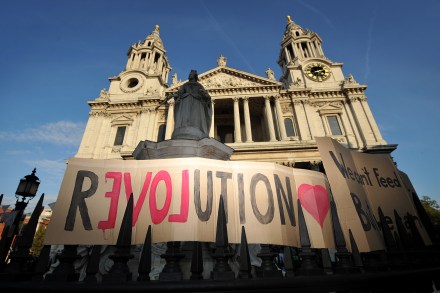
This will Occupy Boris

From our UK edition

A few months ago I hosted a debate at my think tank with one of the key Tahrir Square leaders. After his talk about Egypt, he warned the audience: the protests that toppled Hosni Mubarak were not just an Egyptian or Middle Eastern phenomena; it could – and, he said, would – spread to the West. For the youth of today, he argued, feel disempowered, empoverished and betrayed. As protests spread from New York to London and other European capitals, it seems that Egyptian protester may have been right. Today's efforts to occupy the London stock exchange failed but protesters remain on the grounds of St Paul's Cathedral. Whatever happens in the next days, protests like these are likely to appear, disappear and appear again.