Uk politics

Executive pay: don’t believe the headlines

From our UK edition

Open yesterday's or this morning's papers, and you'll find plenty of reports about the snouts of FTSE100 chief execs being in the trough again, while the rest of us suffer. Their pay is up 49 per cent, we read. Most people’s first and only response to these accounts of the Incomes Data Services' (IDS) latest findings will be anger — and understandably so. But much of this anger and reportage is based on a mis-reading of the actual report. The BBC's influence is huge. Its original report compared the rise in base salaries (which wasn’t 49 per cent, but a much less impressive 3.2 per cent) with a median rise for private sector workers of 2.

From the archives: Cut off in Brussels

From our UK edition

Let's end the working week how it began: with talk of a European referendum. The talk, in this case, is provided by Daniel Hannan, who wrote an article for us in 2008 about his efforts to promote a referendum on the Lisbon Treaty from within the European Parliament. Here it is, our latest excavation from the Spectator archives: For MEPs, public opinion is merely an inconvenience, Daniel Hannan, The Spectator, 22 November 2008 I’ve just done the most pointless thing an MEP can do: I’ve delivered a speech to the European Parliament. Actually, ‘speech’ is rather a grand word for my little soliloquy which, under the rules, had to be squeezed into 60 seconds.

Daylight scrapping time

From our UK edition

Aha, the Spectator's cover story is gathering pace. If you were tuned into The BBC's Daily Politics just now, then you will have enjoyed a preview of the terrific scrap this time-shifting proposal could provoke. They had on both Rebecca Harris MP, who is pushing for us to move to Central European Time (CET), and Peter Hitchens, who revealed in his article for us that the government is minded to back the idea (as well as describing Harris as "one of those homogenised, UHT female Tory MPs"). The pair were, of course, mediated by Andrew Neil. We shall try to secure video of the discussion, if possible.

The government goes cuckoo

From our UK edition

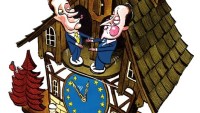
The government has, this morning, confirmed The Spectator's cover story: that it is considering supporting Rebecca Harris’s bill to move Britain onto Central European Time. As we argue in the magazine, such a move would be a huge mistake both practically and politically. Under the new regime, anyone living north of Manchester would have to endure two months of the year when it was dark when they started work at 9am. Any government that supported this move would look like a government of southerners, by southerners for southerners. The consequences for the Union could be horrendous too. Just imagine what a propaganda gift the new time would be for Alex Salmond.

Europe’s new battlefield

From our UK edition

The long flight from Australia should give David Cameron plenty time to think about Europe, and how it just won't go away. He didn't want this battle — not now, not ever. But in the Daily Telegraph today, the first in what will be a weekly column, I lay out the battlefield that awaits him on his return. First, this bailout is not the end. A trillion Euros needs to come from somewhere, and today the Chinese are being tapped up — God knows what we'll agree to in return. But that doesn't address what is, as Mervyn King has said, a solvency issue rather than a liquidity issue. And the tighter these Eurozone countries squeeze together, the more tension we can expect.

Cameron’s Euro-migraine

From our UK edition

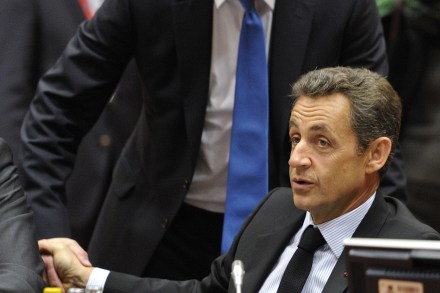
The picture of Nicolas Sarkozy not even turning around to shake David Cameron’s hand rather neatly sums up the Prime Minister’s problems right now. The danger for him is that the 17 Eurozone countries start writing a new set of rules and riding roughshod over the interests of those countries that are outside. This would be bad enough at anytime but with the Conservative party on the warpath over Europe it is a clear and present danger to the Prime Minister. As one ally of the Prime Minister said to me today the PM’s predicament is made even harder by the fact that many of the 10 countries outside the Eurozone want to eventually join the Euro and so have no desire to stand up to the 17.

The politicisation of poppies

From our UK edition

Dave Wooding rightly upbraids one Labour MP, Alex Cunningham, for trying to make political capital out of the fact that MPs on the government benches were not wearing poppies at PMQs yesterday. In another sign of how politicised our symbol of rememberance has become, the Defence Secretary Philip Hammond has written to his Cabinet colleagues providing guidance on when it is appropriate to start wearing a poppy. The note informed ministers that while there was no definitive view on when it was appropriate to start wearing one, that Thursday from noon would be a good time as that would coincide with the launch of the Royal British Legion’s campaign. Obviously, none of this detracts from the remarkable and important work that the Royal British Legion does.

Labour aren’t capitalising on the government’s woes

From our UK edition

Ipsos MORI's latest monthly political monitor is just out, and it doesn't bring much good news for either the government or the opposition. 63 per cent of respondents are dissatisfied with the government and 54 dissatisfied with David Cameron — both the highest proportions since the election. On the public's number one issue — the economy — just 36 per cent say the government's done a good job. And even wose, a whopping 77 per cent say they've done a bad job of keeping unemployment down — hardly surprising considering unemployment has risen by 100,000 since the election. But while all this presents a great opportunity for Labour, other numbers show how bad a job they're doing at taking advantage of it.

The government’s European tribulations continue

From our UK edition

It has been a fraught and ill-tempered week in Westminster. And — whether it is the rumour that Tory backbencher Andrea Leadsom told George Osborne to "f**k off", or David Cameron's dismissal of Ed Miliband as a "complete mug" — most of it has had Europe at its root.  So it is, too, with the latest news of government strife. Iain Duncan Smith, it's reported, had a ferocious row with the Tory chief whip, Patrick McLoughlin, over the EU referendum . Apparently, he warned that, “If you ever put me in this position again, that’s it”. As it happens, there is more on IDS's disgruntlement in Charles Moore's column for the latest Spectator, out today.

Ellwood returns as PPS to the Minister for Europe

From our UK edition

Tobias Ellwood has been appointed as PPS to the Europe Minister David Lidington. The vacancy had been created when Adam Holloway decided to resign from the job so that he could vote for the EU referendum motion. This appointment is a nifty piece of party management. Ellwood was Liam Fox’s PPS but when Fox resigned, the new Defence Secretary Philip Hammond decided, to the resentment of some Tory backbenchers, not to keep him on. Instead, Hammond chose to appoint Clare Perry, a member of the 2010 intake who had worked for George Osborne and Hammond in opposition. Some Tory MPs, and particularly those who felt passed over, saw this as evidence that the party was being run by a clique. Ellwood’s return will be seen as an olive branch from the Cameroons to the party.

Cameron battles it out

From our UK edition

David Cameron came out swinging today at PMQs. Knowing that Ed Miliband would try and exploit the Tory rebellion over Europe on Monday night, Cameron went for the Labour leader. He called him a "complete mug" and mocked him as being detached from reality. At the end of the exchange, Osborne gripped Cameron's shoulder in congratulation – a sign that the pair knew that they needed a strong performance today to calm their backbenches. The other notable aspect of PMQs was its emphasis on the new political battleground: women. The Labour MP Gloria Del Piero asked the PM why the government was more unpopular with women than men, which gave Cameron a chance to rattle off the government's female-friendly initiatives.

Testing the Coalition’s commitment to growth

From our UK edition

The Beecroft report is an early test of the government’s willingness to put growth and jobs first. Replacing unfair dismissal with redundancy pay based on length on service would be a sensible step. The argument for it is two-fold. First, the more difficult it is to fire people, the more reluctant firms will be to hire people. Second, the current unfair dismissal culture not only makes firms reluctant to take people on but also swallows up a huge amount of time as firms try to jump through the legal hoops to avoid the threat of a legal challenge. Norman Lamb’s comments today that "to throw away employment protection for everyone would be madness" is being taken as ruling out Beecroft’s suggestion.

Cable’s latest embarrassment

From our UK edition

"None of this will stop me talking out against tax avoidance." So says Vince Cable, rather hilariously, in response to being fined £500 for failing to pay £25,000 of VAT on his media work. You've got to hand it to the Business Secretary: it is an ingenious, if convoluted, way to top up the public finances. Although there are questions about whether other people would have got off quite so lightly.    You might say, as Vince's people are this morning, that this is the sort of mistake that can befall anyone — particularly someone so busy as a Cabinet minister. But this isn't just anyone. This is Vince Cable, who has staggered between embarrassment, inconsistency and insubordination ever since the coalition government was formed.

Has the EU debacle hurt Cameron?

From our UK edition

Leaving aside Cameron's relationship with his own backbenchers for now, how has yesterday's vote affected the public's view of him? The first proper hint comes from today's YouGov poll (conducted on Sunday and yesterday), which asks respondents to rate the qualities of each of the party leaders. Among the public as a whole, there is no significant change in views of the Prime Minister since last month. But there is a change in what Conservatives think of him, and not in the direction Cameron would like. Now just 40 per cent of Tory voters think Cameron is honest, down from 53 per cent last a month ago. And a mere 19 per cent say he's "in touch with the concerns of ordinary people," down from 31 per cent.

Why this is not the time for an EU referendum

From our UK edition

Having spent five hours in the debate last night, one thing was absolutely clear: we are all Eurosceptics now. So why did I choose to vote against the motion? It is because I believe that anger and frustration alone will not resolve our justifiable grievances towards the EU; we need a clear-eyed strategy to move forward.    We can all agree that Europe in its current form is not working for us. We have passed powers to Brussels at the cost of undermining the sovereignty of Parliament. Regulations that hinder our growth have not only been adopted but gold-plated, and with the Lisbon Treaty we are saddled with a constitution that no-one wanted and no-one voted for.

We need better schools, not more spending

From our UK edition

More money, better services? You might have thought that Gordon Brown had already tested that theory to destruction, but here it is again in the coverage of today's Institute for Fiscal Studies report on education and schools spending. The IFS highlights that education is facing the biggest cuts over a four year period since the 1950s. And the coalition's opponents are gleefully seizing on this as a problem in and of itself. But it isn't, really. As CoffeeHousers will know, education funding increased massively during the past decade. The IFS admit this themselves: “Over the decade between 1999–2000 and 2009–10, it grew by 5.1% per year in real terms, the fastest growth over any decade since the mid-1970s. As a result, it rose from 4.

Cameron needs a new management style

From our UK edition

There seem to be three schools of thought among those close to the leadership about last night's rebellion. One even now maintains that the issue was handled as well as it could have been and blames the rebels for all the trouble. These people don't seem to realise that what they are saying is effectively that the Conservative parliamentary party is unmanageable. The second group says that the issue of Europe sends the Conservative party loopy. But they also concede that Number 10 got caught up in the madness too. The third lot are the ones who have grasped the significance of last night's events. Despite being loyalists, they are in no doubt about the need for Cameron to change his style of party management.