Uk politics

Ed Miliband lives to flop another day

From our UK edition

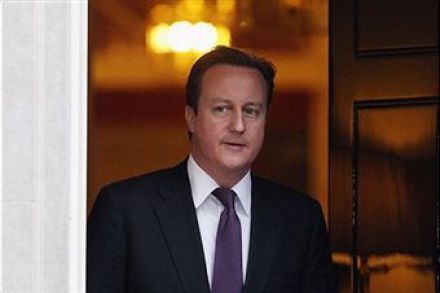
Miliband survives! That news should steady Labour nerves. For today at least. Their leader has the knack of turning near-certain defeat into absolutely-certain catastrophe, but he bumbled through PMQs this afternoon without suffering a serious setback. He has so little ground from which to attack the government that he had to lead on a niche issue. Rail fares. He asked the prime minister why the operating companies have managed to hike prices by 11 per cent on the busiest routes. Cameron: ‘Because of a power given to them by the last Labour government.’   With that lethally terse response the PM sat down. To his credit, Miliband wasn’t rattled.

Will Miliband use his lifeline in PMQs?

From our UK edition

At the weekend, Tories were anticipating giving Ed Miliband an almighty kicking at PMQs. Lord Glasman’s description of Labour’s economic record as ‘all crap’ had given them a killer line. As one member of the Cameron circle joked to me, ‘we’ve never had more material to work with.’    But Ed Miliband now has a get out of jail free card. If he asks six questions about the Union and the referendum, it will be impossible for Cameron to have a pop at him without looking distinctly unstatesmanlike. On Scotland, the two leaders need each other. The Unionist side cannot win without the Labour party and the Labour party will find it very hard to win general elections without Scotland.

The battle lines that are being drawn over Scotland

From our UK edition

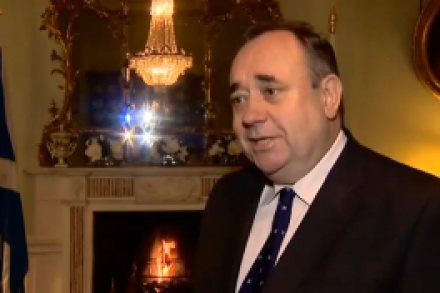
In the wrangling between Westminster and Holyrood over the referendum there are two big issues at stake, the date of the vote and —more importantly — the number of options on the ballot paper. Salmond, as he made clear on the Today Programme this morning, wants to have the referendum in autumn 2014 and have three options — the status quo, independence and ‘devo-max’ — on offer.   The reason Salmond wants ‘devo-max’ to be there is that he’s not confident he can get independence through this time round.

Salmond’s running rings around Cameron

From our UK edition

Edinburgh If anyone had any doubts why Alex Salmond picked up almost every UK political award going last year, then they should study how he has dealt with the referendum issue this week. At every turn he has out-manoeuvred his UK counterparts — and this was perfectly demonstrated tonight. Earlier today, in the Commons, Michael Moore, the Scottish Secretary, had delivered the UK government’s riposte to the SNP’s referendum plans. Mr Moore was considered, clever and smart. In fact, it was a first cogent and effective strike back by the UK government on this issue for more than a year. But what will lead tomorrow’s papers in Scotland? It won’t be Mr Moore’s statement.

The coalition finds its balance over Scotland

From our UK edition

As much as I dislike the phrase ‘the third way’, it sums up what the coalition has done today. Given the choice between hobbling or accommodating Alex Salmond and his referendum on Scottish independence, it has decided to do neither and both. In the words of the Scottish Secretary Michael Moore, speaking in the House just now, the referendum will be ‘made in Scotland, by the people of Scotland’ — just so long as Westminster okays it first. Maybe that'll make more sense if we look at what, specifically, was announced today. Moore's main point was that any referendum held by the Scottish government, without the approval of the UK government, would be ‘unconstitutional’.

The battle for Britain | 10 January 2012

From our UK edition

So, Alex Salmond has named his date for the independence referendum: August 2014, a few weeks after the 700th anniversary of the Battle of Bannockburn. David Cameron wanted it earlier, and may yet refuse to grant Salmond this date — No10 hasn't yet responded. Cameron was forcing the issue on the grounds that he wanted to end uncertainty — Salmond is now offering certainty, at least in terms of timing. But he hasn't said whether he wants a two- or three-question referendum. This is crucial, because Salmond is likely to lose an independence referendum and he knows it. So his game plan will be to have a third option, a consolation prize, so he doesn't walk away from this empty handed.

Can Scotland make it on its own?

From our UK edition

What would an independent Scotland's public finances look like? ‘Good, actually,’ says the SNP as they present their ongoing case for independence. They like to claim that, discounting the rest of the UK, Scotland was in surplus for ‘four out of the last five years’ — it's Westminster, not Holyrood, that can't manage the public's money.  Which would be a powerful argument were it actually true. You see, the SNP are talking about the ‘current budget balance’, which excludes the £6.4 billion a year that Scotland spends on capital. When you include that spending — according to the Scottish government's own figures — there has been a deficit for every one of the last five years.

Miliband’s speech fails to excite

From our UK edition

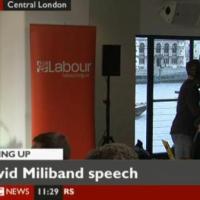
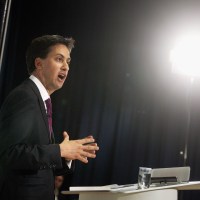
Was Ed's Big Speech worth the extended wait? Not really. It wasn't a stone-cold terrible speech, but neither was it the rambunctious, attention-grabbing number that his leadership could do with. In fact, we could have saved ourselves the effort by simply reading his New Year's message again. That was considerably shorter, and covered almost all of the same ground. Squeezed middle? Check. Tackling vested interests? Check. An admission that Labour will need to cut? Ch… oh, you get the point. The best that could be said about today's speech is that it presented some of these arguments more clearly than in the past. Indeed, the attack on George Osborne's fiscal agenda was, by Miliband's usual standards, particularly punchy.

Miliband tries to get his message heard

From our UK edition

Ed Miliband is trying to do something interesting today. He is attempting to answer the question, ‘what’s the point of Labour when there’s no money left to spend?’ This is the problem that Miliband has been grappling with since winning the leadership and there’s no easy answer to it. It seems that today Miliband will give us more of a sense of the ‘new economy’ which he wants to see in this country. The test of the speech will be whether it gets beyond generalities about a long-term vision for an economy that is ‘fairer’. The challenge for Miliband will be to make his subtle message heard above the chatter about his leadership which so dominated his Today Programme interview.

Cutting immigration won’t help youth unemployment

From our UK edition

Reading the papers today, you could be forgiven for thinking that MigrationWatch’s new report was a smoking gun against immigration. Here we have a study that links immigration to unemployment, in the face of nearly all previous research that has found no such link. However, looking at the MigrationWatch piece itself, it quickly becomes clear how implausible these claims are. The MigrationWatch report centres on a comparison of rising youth unemployment and rising immigration from the ‘A8’ countries – the Eastern European states that joined the EU in 2004. The correlation between the two is remarkably weak. During the initial rise in immigration between 2004 and the end of 2008, there is no significant rise in unemployment at all.

Osborne the Unionist

From our UK edition

There’s much chatter in Westminster today about the fact that George Osborne is chairing the Cabinet committee on Scotland. Osborne is, of course, the Conservatives’ chief electoral strategist as well as the Chancellor of Exchequer. This has led to some suggestions that he wouldn’t be too upset by a referendum defeat that would make it an awful lot easier for the Tories to win a majority at Westminster. This is unfair: Osborne is a Unionist. What those around Osborne have long been interested in is the option that the coalition seems to be ruling out: fiscal autonomy. The circle around Osborne have long believed that it is only when Scottish politics is about how to raise money as well as how to spend it that the Tories will revive north of the border.

Enter, David Miliband?

From our UK edition

‘Every day, in every way, it's getting worse for Ed Miliband.’ That's what I said last Thursday, and it has been more or less borne out since then. Friday, of course, brought that Twitter embarrassment. Saturday, the subsequent headlines, as well as Miliband's unconvincing attempt to push back against them. Sunday featured some of the most vicious attacks on his leadership by Labour MPs so far. And even today we've got the sort of ‘helpful’ advice from a senior Labour figure — in this case, Alan Johnson, suggesting that ‘too often we sound like a debating society rather than a political party’ — that comes across as frustrated criticism.

Cameron’s balancing act over Scotland

From our UK edition

The Cabinet is meeting about 5 miles away from Downing Street today, at the Olympic Park in Stratford. But its collective mind will be on a patch of land another 270 miles further on still. Yep, Scotland and Scottish independence are the matters at hand today. According to the Beeb, David Cameron and his ministers will discuss their ideas for the referendum, its content and its timing. It's thought that they may allow a referendum that's binding on the UK government – but only so long as it takes place in the next eighteen months, and offers a simple ‘Yes’ or ‘No’ vote on independence.

What’s more important to Cameron: actual fairness or presentational fairness?

From our UK edition

James has already blogged the Sunday Telegraph's interview with David Cameron, but some other things stand out from it — and not just the PM's unthinking attack on Ed Balls either, for which he has since apologised. Take these paragraphs on tax, for instance: ‘The Prime Minister effectively rules out any move towards a “mansion tax” — a levy on high-priced properties proposed by the Liberal Democrats — or indeed any new tax on wealth. “I don’t believe, generally speaking, we should be looking at endless additional taxes.

Ed under siege — and under threat

From our UK edition

There was a fun game we used to play during Gordon Brown's premiership: counting the number of ‘buck up, or we kick you out’ ultimatums that Labour MPs delivered to their leader. There were, suffice to say, a lot of them. And tallying them up illustrated two things: the constant, sapping pressure that the Brown leadership was under, and Labour's persistent inability to actually finish him off. I mention it now because of this story in today's Mail on Sunday. It collects the increasingly public criticism of Ed Miliband by his own MPs, including Graham Stringer's warning that ‘Ed has got to get a grip and turn it around before the May elections.’ It's not at the level of the Brown Ultimatums yet, but it's certainly remiscent of them.

Cameron’s fairness agenda

From our UK edition

The politics of the ‘undeserving rich’ is again dominating the news this morning. David Cameron tells the Sunday Telegraph that ‘The market for top people isn’t working, it needs to be sorted out’. While the Mail on Sunday reports that George Osborne is planning to create a new criminal offence of ‘criminal negligence’ that could be used against those bankers who endanger the financial system. Perhaps the most significant aspect of Cameron’s Sunday Telegraph interview, though, is his attempt to redefine ‘fairness’. Cameron has tried to do this before, arguing that it isn’t just about redistribution but about people getting out what they put in.