Uk politics

Immigration to fall in 2012 — but still not on track to hit the Tory target

From our UK edition

Immigration will remain at the heart of political debate in 2012. Economic downturns tend to heighten concerns about migrants competing for jobs and depressing wages, and spending cuts tend to sharpen resentment over migrants claiming benefits or adding to pressure on public services. The latest e-petition to garner a hundred thousand signatures will get its reward of a day in parliament, debating the effects of immigration on Britain’s growing population. And while Labour and the Liberal Democrats might be reluctant to talk about immigration, the Tory leadership clearly see it as useful in handling those on the right who are unhappy with life in coalition — commentators as well as backbench MPs.

What are your predictions for 2012?

From our UK edition

The Christmas double issue of The Spectator has now been retired from newsstands, and today our New Year edition emerges in its place. Among its articles casting forward into 2012 is a list of ten predictions by James Delingpole. Here's just one of them, as a taster: ‘Ukip will become Britain’s third largest party. This will go almost completely unreported in the media. Other headlines you won’t read: “Climategate scientists: ‘Oh all right. We confess. We’ve just been making it up as we go along’”; “Vince Cable: ‘Only the free market can save us now’”; “Archbishop of Canterbury: ‘If water cannons don’t shift ’em then we should try napalm.

Miliband’s New Year message: The same, but different

From our UK edition

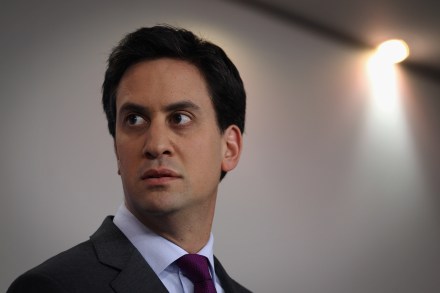
Well, folks, the 2012 model of Ed Miliband looks and sounds rather like the unfancied 2011 model. Just compare the New Year message that he released today with the one that he issued a year ago; the similarities are plenty. His main argument this year is that the Tories are the party of gloom — resigned to years of stagnancy, unemployment, pestilence, etc — whereas Labour are the party of a bright new future, there to show that ‘optimism can defeat despair’. Or, as he put it at the end of last year, ‘Even in these tough times, we must keep the flame of optimism burning.’ There are some differences, though. Compared with last year, Miliband talks much less about the coalition going ‘too far, too fast’ with deficit reduction.

A minimum price for alcohol will have a high political cost

From our UK edition

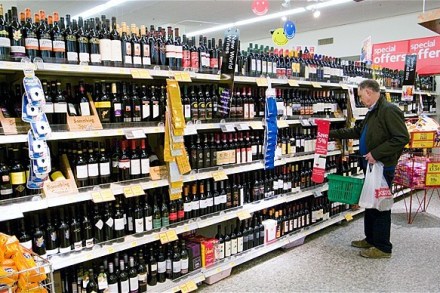
The Telegraph reports today that the Prime Minister has asked for work to be done across Whitehall on how a minimum price for alcohol could be set. As the paper's leader column makes clear, this will not be a politically easy thing to do. When I interviewed the Health Secretary Andrew Lansley for the Christmas issue of The Spectator a few weeks back, he was clear about why he didn’t like the concept of a minimum price: 'I don’t like a minimum price, we are acting against below cost selling. My problem with a minimum price, well I have two problems. One is it’s regressive, so there are perfectly normal families who just don’t happen to have much money who like to buy cheap beer or cheap wine. Should they be prevented?

Clegg tries to reassure his troops

From our UK edition

Only a few weeks ago, a statement from Nick Clegg in firm support of the coalition wouldn't have been noteworthy at all. It's just what he, as Deputy Prime Minister, did. But now, after his very public palpitations over Europe, the New Year's message that Clegg has broadcast today is a little more eyecatching than it would otherwise have been. This is no provcation to rile the Tories, but a more or less sober assessment of what the Lib Dems have achieved in government, along with a few lines about how fixing the economy ‘remains the number one priority for our party and the coalition.’ Most strikingly of all, Clegg doesn't include Lords reform in his list of government policies coming next year.

Fog around the Falklands

From our UK edition

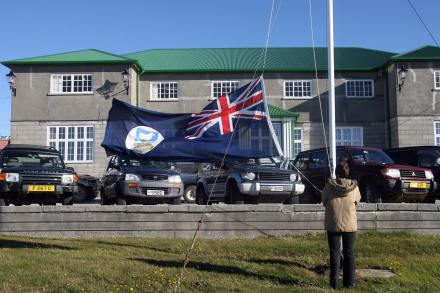
For the populist president of Argentina, Cristina Kirchner, the ban on Falklands-flagged ships agreed by the Mercosur summit in Montevideo is a diplomatic triumph. It comes after a string of similar moves throughout the region aimed at tightening the noose around the Falklands. For example, HMS Gloucester was denied access to Montevideo in 2010 and, in an effort to strengthen Brazilian-Argentinian ties, Brazil did the same when HMS Clyde sought to dock in Rio de Janeiro. In reality, ships from the Falklands can switch flags before they enter any regional ports, but Argentina’s intent is to isolate the islands — and bring fellow South American nations along with them in the process. In which case, the default British response of talking war is beside the point.

Tim Loughton versus the adoption bureaucracy

From our UK edition

Parliament has decamped for midwinter, but the business of government goes on. Today's announcement, by the children's minister Tim Loughton, is contained within a Times article here. ‘An expert panel,’ it reveals, will be tasked with designing a new system for assessing prospective adoptive parents by March next year. That new system, making it easier for suitable folk to adopt, should then be in place by the end of 2012. In many respects, adoption is perfect Cameroonian territory; being, as it is, at the intersection of social responsibility, family, deregulation, etc, etc. But politics isn't what should concern us here. A lot of unmitigated good can be done in fixing a system that has been strangled and subverted by years of bureaucratic interference.

A sliver of Christmas comfort for George Osborne

From our UK edition

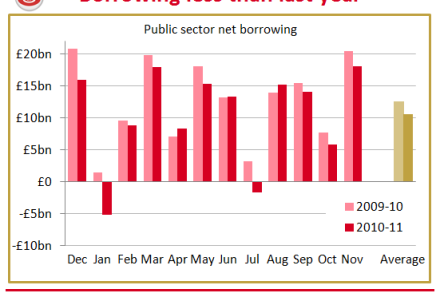
There's some rare good news for the government in today's public finance statistics. Public sector net borrowing in November is estimated at £18.1 billion, down from £20.4 billion last year. This means that total borrowing for the first eight months of this financial year is £88.3 billion, down 11 per cent on last year. That's lower than expected, and puts us on target to undershoot the OBR's forecast of £127 billion in 2011-12. That'd be a relief for the coalition, after Labour hit them hard when the OBR upped their borrowing forecasts last month. But this deficit reduction cannot be put down to spending restraint in Whitehall. In fact, central government is spending around £1 billion a month more than it did last year.

Your five point guide to Balls’s highly political interview

From our UK edition

It's a strange sort of Christmas present; interviews with Ed Miliband and Ed Balls — but that's what the papers have seen fit to deliver us this morning. There's not much political content in the Miliband one, which is more of an At Home With Ed and Justine sort of deal. But Ed Balls's interview with the Independent is a totally different matter. Here are five points distilled from the shadow chancellor's words: 1) We'd cut, I tell ya. Rarely has Balls sounded as much of a deficit hawk as he does here. Sure, he drops in the usual lines about the Tories going ‘too far, too fast’, and Labour providing an ‘alternative’ — but then he blurs his dividing lines far more than usual.

An early Christmas present for the coalition

From our UK edition

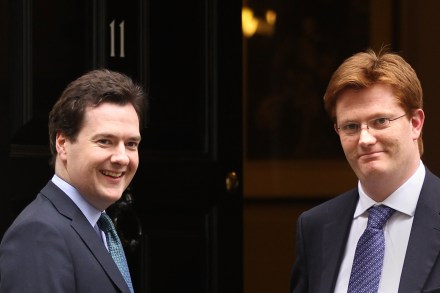
It has only taken several months of bitter negotiation and a national strike to get here, but a deal between the unions and the government over public sector pensions could finally be in sight. Danny Alexander has just announced the details in Parliament, but basically it seems that, across a range of schemes, the coalition has offered kinder accrual rates than it did in November. And this more generous proposal has now been accepted in principle, or at least not turned down, by 26 of the 28 relevant unions. Among those who still oppose it outright are the PCS, led by everyone's favourite union malcontent, Mark Serwotka.

Another fine mess at HMRC

From our UK edition

Today's report by the Public Accounts Committee hasn't so much been released as detonated onto the Westminster scene. The Exchequer is owed around £25 billion, it suggests, from major companies that have been handled too leniently, or just plain wrongly, by HM Revenue & Customs. And much of the blame is attached to Dave Hartnett, the outgoing civil servant in charge of revenue collection. Interviewed on the Today Programme earlier, the chair of the committee, Margaret Hodge, implied that Hartnett had too ‘cosy’ a relationship with big business.

Who is the British foreign secretary?

From our UK edition

Officially, of course, the answer to that question is William Hague - who has put in some decent work since assuming office, particularly during the Arab Spring. But, still, I ask it because, following the European Council, Nick Clegg seems to have usurped the Foreign Secretary's role in a number of key areas. It was the Deputy Prime Minister who engaged the newly-elected Spanish leader, for example. It was also Clegg, not Hague, who was instrumental in bringing German foreign minister Guido Westerwelle to Britain on a 'we still love you' visit yesterday. And when it comes to phoning European leaders to press a UK position, it is the Deputy Prime Minister who is asked to put in the hours, not the veto-wielding Prime Minister or Britain's chief diplomat.

Obsorne’s banking reforms are only the start of a solution

From our UK edition

‘The most far-reaching reforms of British banking in modern history.’ That's how George Osborne called it in Parliament this afternoon, in a statement that contained few surprises. What the government's doing, in large part, is to follow exactly the recommendations contained in September's Vickers Report. But is that really as far-reaching, or as radical, as the Chancellor would have us believe?   Certainly, many of these reforms are encouraging: measures such as ‘bail-ins’ and ‘living wills’ should facilitate the orderly winding-up of insolvent institutions, and reduce the necessity for taxpayer bailouts. But other parts of the government's reform package are less convincing.

Clegg sets out his stall for 2012

From our UK edition

Under cover of discussing the Open Society and its enemies, Nick Clegg today set out his personal agenda for the next year of this government. Indeed, Clegg's speech to Demos earlier was perhaps the purest distillation of his politics since the big set-piece number he delivered at the Lib Dem conference in 2008. It contained many of the same themes as that earlier speech: ‘social mobility’, ‘civil liberties’, and ‘democracy’. And it added a couple more for good measure: ‘political pluralism’ and ‘internationalism’. The Deputy Prime Minister described these five political impulses as ‘the source of my liberalism’.

Rudd’s straw man argument about our EU membership

From our UK edition

As the isolation hysteria over Cameron’s EU veto starts to fade, attention is now shifting to the more existential question of what kind of relationship the UK should have with Europe. In a piece for today's Times (£), the chairman of Business for New Europe, Roland Rudd — who, incidentally, used to argue passionately in favour of the UK joining the euro — takes aim at those who want Britain to replicate a Norway-style model of European cooperation. Arguing that Norway endures so-called ‘fax machine diplomacy’ — no influence over EU laws that it must nonetheless accept — Rudd says that ‘the choice now is to do what Norway does, or remain in the EU.

The coalition tees up its banking reforms

From our UK edition

That was easy. Only a few months after Sir John Vickers released his final recommendations for reforming the banking sector — and after much less intra-coalition struggle than we might have expected — the government is set to announce that it will adopt them ‘in full’. Vince Cable revealed yesterday that he and George Osborne have reached common agreement on the matter. And, for his part, Osborne will appear before MPs today with further details.  As Robert Peston has already explained, ‘in full’, in this case, doesn't quite mean 100 per cent — but it's close. The main proposal to ringfence retail banking off from riskier investment banking will be fully implemented.

The coalition’s marriage troubles

From our UK edition

A few months after the coalition was formed, I went for lunch with a close ally of Nick Clegg. After an hour or so of discussing what the coalition’s agenda would be, this Liberal Democrat said to me: ‘now, David Cameron can’t really be serious about this marriage stuff, can he?’ When I replied that I thought he was, he looked at me with total incomprehension. He then launched into a speech about how no ‘liberal’ could possibly want to see the state promote marriage. This is the thinking that lies behind Clegg’s latest attack on the idea of tax breaks for married couple; it has become an identity issue for the Liberal Democrats.

Cable: Cameron put political gain ahead of national interest

From our UK edition

While we're on the subject of LibCon divide, it's worth noting Vince Cable's remarks to Andrew Marr this morning. The headline above is merely a paraphrase, but it's pretty close to what the Business Secretary actually said: ‘It was largely political. Certainly the Prime Minister’s got a sort-of short-term boost from it, but it doesn’t actually deal with the long-term fundamental problems in Europe.’ Seems to me that there have been harsher words deployed this week, but few harsher sentiments. In the spirit of, erm, ‘getting on with my job as I always do’, Cable is going especially far in attacking his coalition partners. Vince, as always, remains One to Watch in 2012 — and mostly for the wrong reasons.

What phase of the coalition are we in now?

From our UK edition

It was not so long ago — the run-up to last May's AV referendum, to be exact — that we heard the coalition would be entering a new phase. Gone was the happy synthesis of the Tories and Lib Dems that prevailed after the election, and in its place would be a government that spoke more openly, more angrily about its differences. But even if Phase 2.0 had the appearance of being more fractious, it was actually designed to keep the parties together. The idea was that, by highlighting the essential differences between the two sides, their supporters could more easily be kept on board with the overall project. I mention this, this morning, because it looks as though that strategy is either being ramped-up or taken in a new direction. During Phase 2.

Cameron’s missing the point: Christian values require Christianity

From our UK edition

The Prime Minister does God. At least, that's the gist of his first major speech on religion. Actually, the interesting thing is that a Tory Prime Minister feels that he has to make the point that he is a Christian. Other than Michael Howard, who was Jewish, most other Tory leaders could have assumed we’d take it as read that he or she was more or less CofE, including Mrs Thatcher, who was, of course, a Methodist.  Following Richard Dawkins' remark that the Prime Minister may 'not really' be a Christian, Mr Cameron responded: 'I am a committed – but I have to say vaguely practising – Church of England Christian, who will stand up for the values and principles of my faith'.