Uk politics

Inflation at 4.2 per cent is nothing to cheer

From our UK edition

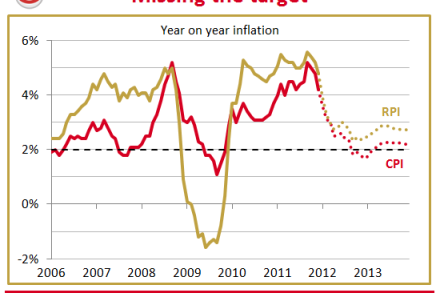
Are today’s inflation figures cause for celebration? The Consumer Price Index rose a mere 4.2 per cent in the year to December, down from 4.8 per cent in November. So, yes, a sharp drop — but only a statistical boffin could describe this as good news. Sure, a similar drop can be expected when the VAT rise drops out of the comparison figures next month. But the prices confronting British shoppers are still rising at twice the supposed inflation target, and will keep rising above this target for months to come. The following graph shows the trajectory we can expect for CPI and RPI over the next few years: The misery that inflation inflicts on the public is, of course, mitigated by pay rises.
What will Miliband do now?

From our UK edition

The Labour leader Ed Miliband has been determined not to define himself by picking fights against his own side. He didn’t want to do a Blair or a Cameron and triangulate his way to power. Rather, his model was, in one respect, Thatcher. His team were struck by how she managed to move the political centre from opposition. But Miliband now finds his own side picking fights against him. As Pete blogged earlier, Unite’s Len McCluskey has launched an intemperate attack on him in The Guardian. McCluskey claims that Miliband’s recognition that Labour’s starting point has to be that the cuts will be reality by 2015 has ‘undermined his leadership’.

Labour disunited

From our UK edition

Labour MPs didn't pick Ed Miliband as Labour leader; they preferred his brother. Labour members didn't pick Ed Miliband as Labour leader; they preferred his brother too. It was the union bloc that delivered the crown unto Ed — spearheaded by the votes, support and influence of the country's largest trade union, Unite. Which is what makes Len McCluskey's article for the Guardian today so dangerous for the Labour leader. McCluskey, you'll remember, is the head of Unite — and he's not happy with how things are going now that Miliband has closed the ground, rhetorically at least, between his party's fiscal stance and the coalition's.

A joke too far?

From our UK edition

Tom Harris lost his job as Labour's ‘Twitter tsar’ today after uploading this Salmond-themed Downfall video onto YouTube.

Clegg versus vested interests (and the Tories)

From our UK edition

‘Another week, another speech about the evils of capitalism.’ So joked Nick Clegg at the start of his speech to Mansion House earlier, and there was some truth in this particular jest. All three parties are jostling to be seen as the harbingers of a new economy at the moment — one that doesn't reward failure; that benefits everyone ‘fairly’; that won't seize up as the old one did; that etc, etc. Ed Miliband sketched out his rather insipid vision for this economy last week; David Cameron will hope to do a better job later this week. Today, though, was the Deputy Prime Minister's turn. So what did Clegg say?

A Cameron-friendly backbench group

From our UK edition

The 301 Group is the nearest that David Cameron has to a loyalist backbench support group; it is named after the number of seats the Tories will need at the next election to win a majority. The Times today reports the group's concerns that the Tories are in danger of forgetting the importance of a broad agenda that goes beyond the party’s staple issues. I suspect that several people in Downing Street will nod along at these concerns. The group has certainly been encouraged by Number 10, which has difficult relations with the 1922 Committee. Its early speakers have included the chief whip Patrick McLoughlin and the vice-chairman of the party Michael Fallon.

Osborne visits China, but can’t escape Europe

From our UK edition

Yet another day here in Westminster that's all about the economy. Nick Clegg has just delivered a speech on the subject to Mansion House, focusing on ‘responsible capitalism’, which we'll blog shortly. And two prominent forecasting groups, the Ernst & Young ITEM Club and the Centre for Economic and Business Research, have suggested that we're effectively back in recession. They both reckon that the economy shrank in the final quarter of last year, and is wilting even further in this current quarter. But, like the OECD, they also predict that this ‘double dip’ will be relatively short-lived and relatively mild. Against that backdrop, enter George Osborne.

Miliband beats Miliband in the polls

From our UK edition

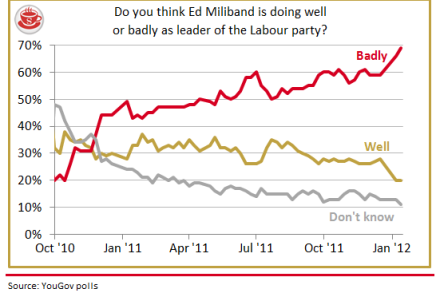
Ed Miliband's poll ratings are going from bad to disastrous at the moment. Last week his YouGov approval rating dropped to its worst ever, with just 20 per cent of respondents saying he's doing a good job, and 66 per cent saying he's doing a bad one. And today they slip even further. Again 20 per cent say he's doing ‘well’, but now 69 per cent say ‘badly’: And, most worryingly for the Labour leader, the number of Labour voters giving him the thumbs down (49 per cent) now outnumbers those giving him the thumps up (46 per cent). That's compared to the 95 per cent of Tories who think Cameron's doing well, and the 72 per cent of Lib Dems for Clegg.

Gove: It’ll take ten years to turn around the education system

From our UK edition

Speaking on the new Sunday Politics Show, Michael Gove said that it would take a decade for his reforms to change education in this country. Pressed by Andrew Neil on whether he would be able to reverse England’s fall in the PISA rankings, Gove remarked that it would take ten years before we can see whether his reforms have worked in reversing England’s educational decline in comparison to other OECD economies. Interestingly, Gove suggested that one of the measures of the success of his reforms was whether private schools started entering the state sector. He also defended his decision to force some schools to become academies.

Miliband, dented but defiant

From our UK edition

In the news bulletin after Ed Miliband’s interview on the Andrew Marr show, the headline was about Miliband saying he does listen to criticism of his leadership. It rather summed up Miliband’s problem at the moment: he can’t get beyond all the chatter about his leadership. In terms of the substance, Miliband’s explanation of Labour’s new economic position showed just how difficult it is going to be to explain it to the public. Miliband argued, as Balls did on Saturday, that the cuts are currently going ‘too far, too fast’ but that he can’t promise to reverse them. As one Tory said to me yesterday, Labour is saying that the cuts are the problem but we might have to adopt them.

Labour’s new strategy in the cuts blame game

From our UK edition

Even as Ed Balls embraces the need for austerity today, he takes a very different position to the coalition on why it’s necessary. The government has always blamed the need for cuts on the ‘awful economic inheritance’ bequeathed it by Labour. Balls, on the other hand, puts the blame squarely at George Osborne’s door. In his Fabian Society speech, he said: ‘George Osborne’s economic mistakes mean more difficult decisions on tax, spending and pay.’ His argument is that, by cutting ‘too far and too fast’, the coalition has caused the economy to stagnate and thereby created the need for more austerity. Labour has, of course, long been trying to shift the blame for the cuts away from themselves and onto the coalition.

Simon Hughes speaks out against the benefit cap

From our UK edition

In the Cameroon effort to redefine the politics of fairness, the benefit cap of £26,000 a year is key. When George Osborne announced it in his 2010 conference speech, he explained it – rightly – as a matter of fairness that ‘no family on out-of-work benefits will get more than the average family gets by going out to work’.   The Tories were also aware of just how potent a wedge issue it would be. If Labour opposed the cap, they would be in favour of some households in which no one is working receiving more from the state than the average salary people achieve by working. This is, to put it mildly, not a position that would go down well on the doorsteps.   But the cap has hit a snag: Simon Hughes.

Balls’ attempt at credibility falls short

From our UK edition

‘I must be responsible and credible in what I say.’ No, it's not Bart Simpson writing on the blackboard at the start of The Simpsons, although it may have been said with just as little enthusiasm. It's Ed Balls on the Today programme this morning, explaining his decision to endorse George Osborne's public sector pay freeze. Balls' interview in today's Guardian is his biggest effort so far to sound 'responsible and credible' on the economy.

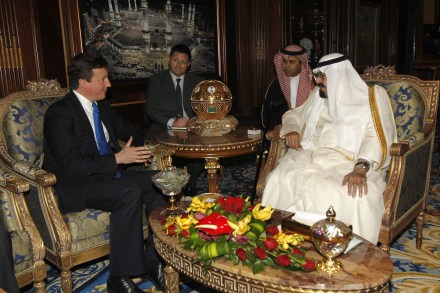
The hypocrisy of Cameron’s Saudi trip

From our UK edition

A year ago, Tunisian strongman Zine El Abidine Ben Ali fled Tunisia for Saudi Arabia, thus ushering in the Salafi Spring. No doubt now bored out of his mind, this once stubbornly secular leader is said to have caught religion of the deranged Wahhabi variety propagated by his oil-rich hosts.   In turn, the Saudis are preparing to welcome Rachid Ghannouchi – the notoriously humble leader of the even more notoriously moderate Ennahda that now controls Tunisia’s parliament – on a state visit. This week Ghannouchi has been heaping praise on the Persian Gulf monarchies, doing us all the favour of revealing where his true sympathies lie when it comes to issues like religious moderation and its love affair with democracy.

IDS must stay the course on welfare reform

From our UK edition

Welfare wars are erupting again, with Iain Duncan Smith’s bill amended in the Lords and more showdowns ahead. Number 10 has been completely robust, threatening to use rarely-invoked powers to overrule the Lords. In my Telegraph column today, I say why it’s so important that David Cameron does not go wobbly – as his predecessors did.   Tony Blair understood the need for radical welfare reform, especially when his idol Bill Clinton introduced it in America. Listening to his speeches in the mid-90s is heartbreaking: he had precisely the right idea, but lacked the determination to implement it.

Gove takes on bad teachers

From our UK edition

Michael Gove’s giving a robust defence of his plans to make it quicker and easier for schools to sack bad teachers. ‘You wouldn’t tolerate an underperforming surgeon in an operating theatre, or an underperforming midwife at your child’s birth,’ he says in the Mail. ‘Why is it that we tolerate underperforming teachers in the classroom?’ And he was similarly forceful in an interview on the Today programme, the full transcript of which we’ve got here. Gove is emphatic about how important this is. ‘The evidence is quite clear,’ he says. ‘If you’re with a bad teacher, you can go back a year; if you’re with a good teacher you can leap ahead a year.

Transcript: Gove on sacking teachers

From our UK edition

This morning, the Education Secretary went on the Today programme to explain his plans to make it easier to sack teachers. Here’s the full transcript: James Naughtie: From the start of the next school year in England, head teachers will find it easier to remove teachers that are considered to be under-performers.  The Education Secretary, Michael Gove, thinks the process is too cumbersome so it is being streamlined. The National Union of Teachers, as we heard earlier, says it could become a bullies’ charter.  Well Mr Gove is with us. Good morning. Michael Gove: Good morning. JN: Bullies? MG: I don’t believe so.

Cameron hints at child benefit taper

From our UK edition

David Cameron’s comments to The House magazine on child benefit are causing quite a stir this morning. The Telegraph splashes on the PM’s line that ‘Some people say that’s the unfairness of it, that you lose the child benefit if you have a higher rate taxpayer in the family,’ he said. ‘Two people below the level keep the benefit. So, there’s a threshold, a cliff-edge issue.’ ‘We always said we would look at the way it’s implemented and that remains the case, but I don’t want to impinge on the Chancellor’s Budget.’ I suspect that what Cameron means by this is that they are looking at a taper.

Osborne sparks the unionists’ fightback

From our UK edition

Edinburgh It became clear last night why George Osborne was put in charge of the Coalition Government’s fightback against Alex Salmond and separatism: he is the only one who has the ability to really score points off the Nats. The Chancellor’s intervention on currency and bank notes – suggesting that an independent Scotland might not be able to keep the pound and that, if it did, it might be banned from producing Scottish bank notes – hit the SNP hard. Osborne’s remarks shook one of those comfortable certainties which the SNP has been peddling for so long – that Scotland would simply keep sterling after independence and everything would progress as normal.