Uk politics

Can Scotland make it on its own?

What would an independent Scotland's public finances look like? ‘Good, actually,’ says the SNP as they present their ongoing case for independence. They like to claim that, discounting the rest of the UK, Scotland was in surplus for ‘four out of the last five years’ — it's Westminster, not Holyrood, that can't manage the public's money.  Which would be a powerful argument were it actually true. You see, the SNP are talking about the ‘current budget balance’, which excludes the £6.4 billion a year that Scotland spends on capital. When you include that spending — according to the Scottish government's own figures — there has been a deficit for every one of the last five years.

Miliband’s speech fails to excite

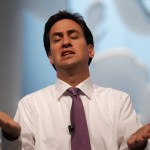
Was Ed's Big Speech worth the extended wait? Not really. It wasn't a stone-cold terrible speech, but neither was it the rambunctious, attention-grabbing number that his leadership could do with. In fact, we could have saved ourselves the effort by simply reading his New Year's message again. That was considerably shorter, and covered almost all of the same ground. Squeezed middle? Check. Tackling vested interests? Check. An admission that Labour will need to cut? Ch… oh, you get the point. The best that could be said about today's speech is that it presented some of these arguments more clearly than in the past. Indeed, the attack on George Osborne's fiscal agenda was, by Miliband's usual standards, particularly punchy.

Miliband tries to get his message heard

Ed Miliband is trying to do something interesting today. He is attempting to answer the question, ‘what’s the point of Labour when there’s no money left to spend?’ This is the problem that Miliband has been grappling with since winning the leadership and there’s no easy answer to it. It seems that today Miliband will give us more of a sense of the ‘new economy’ which he wants to see in this country. The test of the speech will be whether it gets beyond generalities about a long-term vision for an economy that is ‘fairer’. The challenge for Miliband will be to make his subtle message heard above the chatter about his leadership which so dominated his Today Programme interview.

Cutting immigration won’t help youth unemployment

Reading the papers today, you could be forgiven for thinking that MigrationWatch’s new report was a smoking gun against immigration. Here we have a study that links immigration to unemployment, in the face of nearly all previous research that has found no such link. However, looking at the MigrationWatch piece itself, it quickly becomes clear how implausible these claims are. The MigrationWatch report centres on a comparison of rising youth unemployment and rising immigration from the ‘A8’ countries – the Eastern European states that joined the EU in 2004. The correlation between the two is remarkably weak. During the initial rise in immigration between 2004 and the end of 2008, there is no significant rise in unemployment at all.

Osborne the Unionist

There’s much chatter in Westminster today about the fact that George Osborne is chairing the Cabinet committee on Scotland. Osborne is, of course, the Conservatives’ chief electoral strategist as well as the Chancellor of Exchequer. This has led to some suggestions that he wouldn’t be too upset by a referendum defeat that would make it an awful lot easier for the Tories to win a majority at Westminster. This is unfair: Osborne is a Unionist. What those around Osborne have long been interested in is the option that the coalition seems to be ruling out: fiscal autonomy. The circle around Osborne have long believed that it is only when Scottish politics is about how to raise money as well as how to spend it that the Tories will revive north of the border.

Enter, David Miliband?

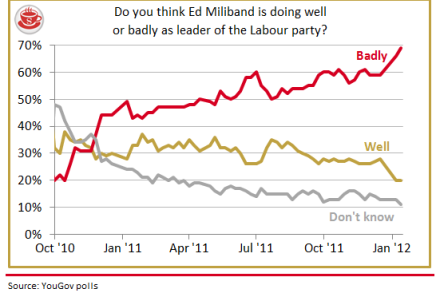
‘Every day, in every way, it's getting worse for Ed Miliband.’ That's what I said last Thursday, and it has been more or less borne out since then. Friday, of course, brought that Twitter embarrassment. Saturday, the subsequent headlines, as well as Miliband's unconvincing attempt to push back against them. Sunday featured some of the most vicious attacks on his leadership by Labour MPs so far. And even today we've got the sort of ‘helpful’ advice from a senior Labour figure — in this case, Alan Johnson, suggesting that ‘too often we sound like a debating society rather than a political party’ — that comes across as frustrated criticism.

Cameron’s balancing act over Scotland

The Cabinet is meeting about 5 miles away from Downing Street today, at the Olympic Park in Stratford. But its collective mind will be on a patch of land another 270 miles further on still. Yep, Scotland and Scottish independence are the matters at hand today. According to the Beeb, David Cameron and his ministers will discuss their ideas for the referendum, its content and its timing. It's thought that they may allow a referendum that's binding on the UK government – but only so long as it takes place in the next eighteen months, and offers a simple ‘Yes’ or ‘No’ vote on independence.

What’s more important to Cameron: actual fairness or presentational fairness?

James has already blogged the Sunday Telegraph's interview with David Cameron, but some other things stand out from it — and not just the PM's unthinking attack on Ed Balls either, for which he has since apologised. Take these paragraphs on tax, for instance: ‘The Prime Minister effectively rules out any move towards a “mansion tax” — a levy on high-priced properties proposed by the Liberal Democrats — or indeed any new tax on wealth. “I don’t believe, generally speaking, we should be looking at endless additional taxes.

Ed under siege — and under threat

There was a fun game we used to play during Gordon Brown's premiership: counting the number of ‘buck up, or we kick you out’ ultimatums that Labour MPs delivered to their leader. There were, suffice to say, a lot of them. And tallying them up illustrated two things: the constant, sapping pressure that the Brown leadership was under, and Labour's persistent inability to actually finish him off. I mention it now because of this story in today's Mail on Sunday. It collects the increasingly public criticism of Ed Miliband by his own MPs, including Graham Stringer's warning that ‘Ed has got to get a grip and turn it around before the May elections.’ It's not at the level of the Brown Ultimatums yet, but it's certainly remiscent of them.

Cameron’s fairness agenda

The politics of the ‘undeserving rich’ is again dominating the news this morning. David Cameron tells the Sunday Telegraph that ‘The market for top people isn’t working, it needs to be sorted out’. While the Mail on Sunday reports that George Osborne is planning to create a new criminal offence of ‘criminal negligence’ that could be used against those bankers who endanger the financial system. Perhaps the most significant aspect of Cameron’s Sunday Telegraph interview, though, is his attempt to redefine ‘fairness’. Cameron has tried to do this before, arguing that it isn’t just about redistribution but about people getting out what they put in.

Will high-speed rail mean a new Welsh Secretary?

The decision on whether or not to proceed with the HS2 rail link is expected on Tuesday. Given all the legal issues involved, the government is not making any public comment on the matter. But all the signs are that it will get the go-ahead. There will be quite considerable opposition to the projects from parts of the Tory party. It is highly likely that Cheryl Gillan, the Welsh Secretary who represents one of the seats that will have the line running through it, will resign over the matter. If she does, expect Maria Miller to replace her. Number 10 are keen not to see the number of women in the Cabinet fall and Miller is regarded as a safe pair of hands and Welsh enough to do the job.

The Miliband puzzle

So why did Ed Miliband stop his brother being leader of the Labour Party? As each month of his uninspiring leadership passes, it becomes more of a puzzle. In today's Guardian interview, we learn that he can solve a Rubik's Cube in 90 seconds. Perhaps David Miliband took two minutes, leaving Ed to regard him as being intellectually inferior. The rest of the interview shows Ed trying to row back towards positions that David Miliband would have adopted from the offset: trying to claim fiscal responsibility, and credibility. The 'In the black Labour' movement is also an attempt to repair the repetitional damage being wreaked by Balls, whose calls for even more debt still strike the public as implausible.

Miliband comes out swinging

After being mostly absent in an embarrassing week, which culminates in today's Sun headline of 'Block Ed' referring to the Labour leader's Twitter gaffe yesterday, Ed Miliband has emerged with a self-assured interview in the Guardian. In parts, he is even boastful. Miliband declares himself 'someone of real steel and grit' and brags 'I am the guy who took on Murdoch... I am the guy that said the rules of capitalism as played in the last 30 years have got to change'. He claims – contrary to Maurice Glasman's criticism this week – to have 'a very clear plan' about what needs to change in Britain. And what is it exactly?

The scale of Clegg’s Lords challenge

Tucked away on page 15 of today's Times, there's an insightful story about Lords reform (£) by Roland Watson. And it's insightful not just for the new information it contains, but also for the familiar truth it confirms: reforming the House of Lords is going to be one helluva difficult task. You see, while both halves of the coalition committed to a fully- or ‘mainly-elected’ upper chamber in their respective manifestos, only one half of the coalition is particularly eager to force it through now.

Dave talks film, finances and Europe

It was the second of the Today Programme's New Year's interviews with the three party leaders today; this one with David Cameron. And there was plenty to digest from it. So much, in fact, that we thought we'd bash out a transcript, so that CoffeeHousers can read it through for themselves. That's below, but before we get there it's worth highlighting a couple of things that Cameron says. First, his point that ‘we've seen a level of reward at the top that just hasn’t been commensurate with success’, which is another volley in the battle against the ‘undeserving rich’ that James mentioned yesterday.

It’s poverty, not race, that ought to concern us more

My Daily Telegraph column today is about how poverty is a greater problem in Britain than racism, which I describe as an ‘almost-vanquished evil’. This has drawn some criticism, not least from those asking (understandably) what a white guy like me can know about racism. Not much, but plenty of academics have done a hell of a lot of work into racism in Britain (including two brilliant, young academics, Matt Goodwin and Robert Ford). And their studies present a far brighter picture than we're used to. The abject failure of the BNP is not just down to Nick Griffin being a plumb — it’s because he tried to hawk a racist message to the most tolerant country on earth. CoffeeHousers may be interested on why I think this is so. Here are five points: 1.

Murphy sets Labour’s new strategy a-rolling

A few weeks ago, a shadow minister urging Labour to avoid ‘shallow and temporary’ populism over spending cuts might have seemed like a sally against the party's Ballsist wing. But given that Ed Balls has since said that ‘Labour will give more details of its tough spending decisions [in 2012]’, then Jim Murphy's intervention in the Guardian today is a little less provacative than that. In truth, the shadow defence secretary's words fit perfectly into Labour's plan to sound more fiscally responsible this year. It is, most likely, party policy dressed up as a clarion call. What's striking is that Murphy goes beyond this simple rhetoric, becoming the first shadow minister to give some of those ‘details’ that Balls mentioned.

Lord Falconer has the wrong ideas about assisted suicide

So Lord Falconer’s commission, funded by Sir Terry Pratchett, has concluded that there is a ‘strong case’ for assisted suicide, has it? Well, there’s a thing. Given their previous form and the composition of the committee, it would have been remarkable if they’d decided that, on balance, the law works perfectly well — which is what one of their witnesses, the Director of Public Prosecutions, Keith Starmer, said. On the whole, partly because some anti-euthanasia bodies refused to participate and partly because people with a blatant opposition to assisted dying weren’t invited to sit on it, the composition and conclusions of the body reflected the opinions of those who set it up.