Uk politics

Project Merlin may not wield a magic wand

From our UK edition

Are Project Merlin's lending targets just a myth? On the basis of today's figures it's still rather hard to tell. The arrangement between the government and the banks did yield £214.9 billion of gross lending to businesses in 2011 — against a target of £190 billion, and a 20 per cent increase on 2010. But net lending also declined in every quarter of the year. And the target for lending to small businesses of £76 billion was missed by £1.1 billion.  The banks have put this shortfall down to fewer small businesses coming forward for credit — and there's actually some truth in that. This survey suggests that small businesses did indeed withdraw their begging bowls as the year progressed.

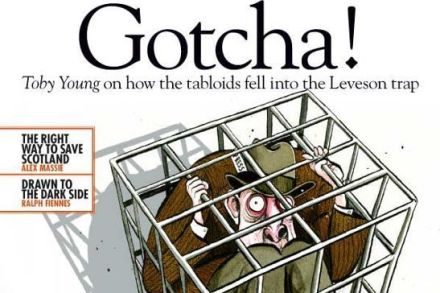
Gotcha! | 13 February 2012

From our UK edition

The Spectator's cover, a few weeks ago, borrowed one of The Sun's most famous headlines: ‘Gotcha’ — but, this time, with tabloid journalists caught in the trap. It was supposed to be a parody. But, this weekend, the Metropolitan Police arrested a further five journalists from The Sun using methods normally meted out to drug dealers: pulling them out of their beds, searching their houses for concealed evidence. No one has been charged, but all five are suspected of paying sources for information: i.e. ‘aiding and abetting misconduct in a public office ... and conspiracy in relation to both these offences.

Nassim Taleb: Ban Tesco bonuses

From our UK edition

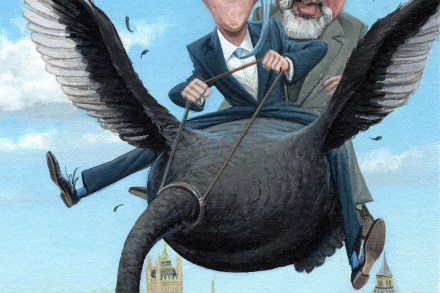
There have been precious few people able to make sense of the crash. The main commentators didn’t see it coming — and so have focused their energies stressing how no man born of woman could have predicted it. But Nassim Taleb did. He has been a voice of sense, originality and common sense throughout, and David Cameron has been listening. The respect is mutual: Taleb even described Cameron as ‘the best hope we have left on this planet’ because he understood the dangers of deficits. If CoffeeHousers haven’t come across Taleb’s books, such as Fooled by Randomness and Black Swan, I can’t recommend them enough. I met him recently, and published the interview in this week’s magazine.

Warming up for the Budget

From our UK edition

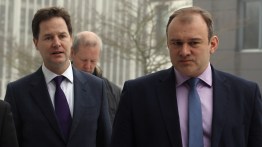
The Budget negotiations within government are now underway. The quad of Cameron, Clegg, Osborne and Alexander held a meeting last week to discuss their priorities for the Budget on March 21st. They’ll continue this conversation over a working dinner tomorrow night. Already, we know that the Liberal Democrats main priority will be to get the personal allowance as close to £10,000 as possible. As The Sunday Times reports, they’re suggesting paying for this by taking away various reliefs for higher-rate taxpayers and closing some of the loopholes in the tax system. I also understand from Liberal Democrats close to Clegg that they’re also interested in some new green taxes.

Lansley’s holding on — for now

From our UK edition

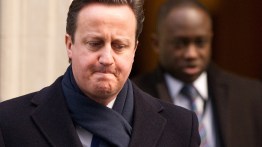
After originally deploying Sayeeda Warsi against ConservativeHome's anti-Health Bill sentiment, David Cameron is now doing his fighting for himself. He has an article in today's Sunday Times (£) that says, with no equivocation, ‘I am at one with Andrew Lansley, the reform programme and the legislation going through parliament’. And, aside from that, it's also an unusually spirited explanation of just what the government plans to achieve by these reforms. Much better than Cameron's wavering performance in PMQs on Wednesday. For all its spirit, though, this article doesn't come across as angry.

Westminster’s attention heads north again

From our UK edition

The debate over the referendum on Scottish independence will take centre stage next week. Michael Moore, the Scottish Secretary, will see Alex Salmond in Edinburgh on Monday and then Cameron will head north a few days later. It appears that the coalition is ready to give way to Salmond on the date of the referendum but not on the fact that it must be a straight yes or no vote. Moore tells The Times (£) that ‘There absolutely must only be one question.’ Quite what the coalition will do if Salmond goes ahead with his own refrendum on devo max remains to be seen. I suspect that Salmond's ideal result would be the surpeme court in London stopping a Scottish referendum.

The battle over Downhills takes another turn

From our UK edition

Remember Downhills Primary School? This was the underperforming school in Haringey that became a political battleground towards the end of last year. On one side was Michael Gove and the coalition, proposing that Downhills — and schools like it — become academies, as that's how to boost academic performance. On the other was the local MP, Labour's David Lammy, as well as the school hierarchy and various union types, all apoplectic at having academy status ‘imposed’ from above. Harsh words were traded, meetings were convened, and little was resolved by it all.

The 50p tax debate won’t be settled this year — but it might be escalated

From our UK edition

More evidence this morning that the government won't be dropping the 50p rate any time soon, in the form of an interview with Danny Alexander. ‘This is not the time to be looking to reduce the tax burden on the wealthy,’ he says to the Daily Telegraph's James Kirkup and Robert Winnett. This is a line that other ministers have deployed recently, and not just Lib Dems. And it suggests that the coalition is confident that HMRC's forthcoming review of the rate will say that it does indeed raise revenue. But the matter won't end there. The IFS recently said of the HMRC review that, ‘tax records for just one year after the introduction of the 50p rate are unlikely to provide a robust estimate of how much revenue the 50p rate will raise’.

Lansley’s battle should’ve never been fought

From our UK edition

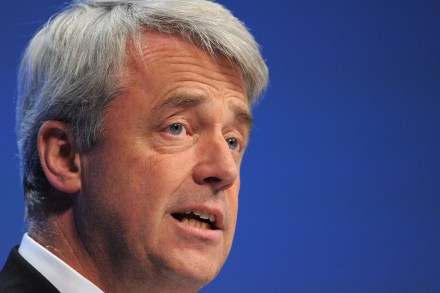
A small war has broken out over Lansley's NHS Bill — ConservativeHome has three Cabinet members attacking it. I find that shocking. At least a dozen want the Bill killed, and why ConHome found just three is beyond me. Politically, it's probably impossible for Cameron to drop it. But if it was torn up, I for one would shed no tears. For what it's worth, here's my take. It’s depressing to think that Alan Milburn’s NHS Plan of 2000 was both more radical and more sensible than what Andrew Lansley is serving up now. The whole debacle has shown politics at its most petty, partisan and pointless — a complete contrast to the coalition’s approach to school reform, which has been to fit rocket boosters to a very good Labour reform.

Cameron should leave this terrible ‘tax breaks for cleaners’ idea in Sweden

From our UK edition

There are times when you think, really, the Prime Minister should get out less. The good ideas he comes back with when he goes abroad are fine and dandy — of which, more later — but the bad ones are very bad indeed. One notion he is considering just now after attending a Nordic-Baltic summit is the Swedish/Finnish one of giving people who employ domestic help tax relief on half of the cost. On the plus side, you get more women in the workplace, by allowing them to subcontract the domestic drudgery, and you shift thousands of workers, mostly female, from the black economy to the respectable economy. For the downside, I hardly know where to start.

Lansley’s health problems are starting to look terminal

From our UK edition

The discontent with Andrew Lansley's health reforms has been rising since the New Year. But, one or two threatening quotations aside, most of this has come from the government's natural opponents: Labour and the unions. That changes today. Over at ConservativeHome, Tim Montgomerie has written a post calling for the Health Bill to be dropped. It is, Tim says, ‘not just a distraction... but potentially fatal to the Conservative Party's electoral prospects.’ And he finishes: ‘It must be stopped before it's too late.’ This would be striking enough by itself, but its impact is doubled by a single sentence: ‘Speaking to ConservativeHome, three Tory Cabinet ministers have now also rung the alarm bell.

Livingstone will get away with it, of course — because he’s on the ‘left’

From our UK edition

When is a homophobic comment not a homophobic comment?  When it is spoken by somebody on the ‘left’ of course. Ken Livingstone has just reminded us of a prevailing rule in British politics. His comment that the Conservative party is ‘riddled’ with homosexuals ‘like everywhere else’ would have earned him a sacking if the parties had been reversed and a Conservative politician had talked of the Labour party in this fashion. In the same way, if a Conservative had made the kind of smearing racial generalisation that Diane Abbott recently twittered, they would have found themselves sent beneath the bottom rung of the political ladder.

Ken’s gaffe and what it tells us about his campaign

From our UK edition

We now have the first major gaffe of the 2012 London Mayor race and to everyone's surprise it wasn't Boris. Ken Livingstone granted an extraordinary interview to the New Statesman, where his comments on the incumbent mayor, Margaret Thatcher and his work ethic have caused a decent stir. However, it is the thoughts on homosexuality in the Conservative Party - 'the Tory party was riddled with it like everywhere else is' - that have prompted outrage. He was claiming hypocrisy, but instead came off bitter and twisted. The pro-Boris politicos are delighted - Ken's true colours have been exposed, they say, and Labour should deselect him at once. But they shouldn't overstate the case. Ken has been supporting gay rights for years now, so probably deserves some benefit of the doubt.

Cameron’s quotas: a policy or a threat?

From our UK edition

We've heard enough about David Cameron's woman troubles to regard anything he says about the fairer sex as a naked pitch for votes. But I reckon his comments today, about getting more women into boardrooms, are just as much motivated by concerns about the economy. ‘The drive for more women in business is not simply about equal opportunity, it's about effectiveness,’ is how he put it earlier, ‘It's about quality, not just equality.’ It's a claim that reflects both the thinking of Masters of Nothing — a book by two highly-regarded members of the 2010 intake, Matthew Hancock and Nadhim Zahawi — and its continuing influence in Cameroonian circles.

A feast of Quantitative Easing

From our UK edition

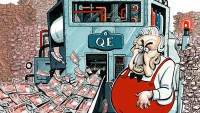
Fire up the printing presses, once again. The Bank of England has just announced another £50 billion of Quantitative Easing, bringing the total monetary expansion up to £325 billion. And it probably won't end there: Citi, among other analysts, forecast that it could go as high as £600 billion next year.  So what are we getting for all this free money? The Bank would tell you that its supporting the economy: keeping interest rates down and encouraging investors to flush money into growth-inducing schemes and mechanisms. And there's obviously truth in that. But we, and the suits of Threadneedle St, shouldn't pretend that QE doesn't create victims too — and it is those victims that we highlight in the latest issue of The Spectator.

The BIS select committee makes its presence felt

From our UK edition

We will soon find out whether the coalition meant what it said about empowering parliament. The BIS select committee has rejected the government’s preferred candidate for the post of the head of the Office of Fair Access. The committee concluded that it was ‘unable to endorse the appointment of Professor Ebdon as the Director of OFFA and we recommend that the Department conduct a new recruitment exercise.’ But Vince Cable, the business secretary, is said to be keen to override the committee’s verdict. Number 10, which has never been keen on Ebdon, is opposed. As I said on Sunday, the circumstances behind Ebdon’s name going forward are straight from The Thick Of It.

Passed over

From our UK edition

The thirty ministers of state in this coalition could be forgiven for feeling a bit unloved. They are notionally the most senior members of the government after the Cabinet. But every time there has been a Cabinet vacancy, they have been passed over. The three Cabinet positions that have become available have gone to a backbencher and two parliamentary under secretaries respectively. Judging from the talk around Westminster, Cameron and Clegg’s respective decisions to bypass the ministers of state has left them feeling a bit sore and rather nervous about the reshuffle, currently expected post-Olympics. Many ministers of state regard this reshuffle as their last chance to make Cabinet.

Brits sceptical of Syria intervention

From our UK edition

Britain’s response to Syria so far has been uncertain and cautious. A YouGov poll today suggests that the public is keen for this hands-off approach to continue. When presented several possible offences, the public responds with almost universal disapproval. A measly 9 per cent would support sending in British and allied troops to overthrow President al-Assad. Only 16 per cent would support providing arms to the rebels and 18 per cent support sending in troops to protect civilians. The only modicum of support is for the proposed no-fly zone. But, although a majority would agree with the zone, less than half believe it is necessary right now, with 26 per cent believing it may be useful in the future.

In PMQs, Cameron plays for a draw on the NHS

From our UK edition

How much does it cost to change a light bulb? Three hundred quid, said David Cameron at PMQs today. Ed Miliband came to the House eager to pile more pressure on the PM and his unloved NHS restructuring plan. Cameron fought back by citing the health bungles Labour presided over while in office. Billions wasted on kaput computers. Hundreds of millions blown on phantom operations. And dead light bulbs that cost more to replace than a week’s holiday in Spain. Cameron’s tactics were better than in previous weeks. Rather than citing some lone wolf medic who supports his reforms he gave us a surprise announcement, albeit unsourced.