Uk politics

The danger for the Lib Dems

From our UK edition

Today’s papers make clear just how damaging the next phase of this whole Chris Huhne business could be to the Liberal Democrats. The danger is that because this story is a very human drama it cuts through to the public in the way that some minor dispute over policy would not. The Mail, for instance, reveals that Nick Clegg’s wife Miriam called Vicky Pryce as soon as the news broke about the charges saying ‘If you need somewhere to stay, if the kids need support, we’re here’. Patrick Wintour is surely right when he writes that the concern for the Liberal Democrats ‘must be the consequences of a drawn-out court case.

The other Miliband under attack

From our UK edition

By now, we’re all used to waking up to newspaper columns describing Ed Miliband’s flaws and proclaiming him unfit to lead the Labour party. But today, it’s David Miliband who’s under fire in two articles – one by Roy Hattersley in the Guardian and the other by Matthew Norman in the Telegraph. They’re both in response to the elder Miliband’s New Statesman article, the significance of which Pete wrote about on Thursday.

Higher weekend mortality is not down to Saturday night drunks

From our UK edition

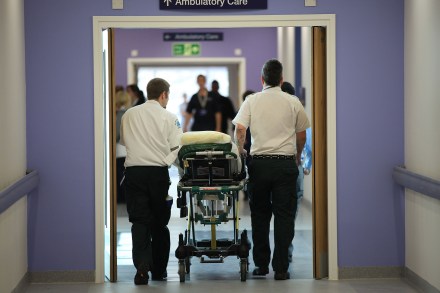
You're more likely to die if admitted to hospital during the weekend. It's a shocking truth, and one that's explored further in the Journal of the Royal Society of Medicine today. Last year, as Pete blogged at the time, the 2011 Dr Foster Hospital Guide discovered that emergency patients are 10 per cent more likely to die if admitted at the weekend. Today's report goes further than that, and finds that patients are 16 per cent more likely to die if admitted on a Sunday as opposed to a weekday — for all admissions, not just emergency. It's a finding that undermines the idea that the increased mortality rate can be put down to more drunks staggering into A&E at the weekend.

Keir Starmer’s statement on Huhne

From our UK edition

And here's the full text: ‘This statement is made by the Crown Prosecution Service in the interests of transparency and accountability to explain the decisions reached in the cases of Mr Christopher Huhne and Ms Vasiliki Pryce and to explain the time taken in arriving at these decisions. A criminal complaint was made to Essex Police in May 2011, alleging that Ms Pryce had accepted responsibility for a speeding offence committed by Mr Huhne in 2003. That complaint was investigated by Essex Police and a file was passed to the CPS in late July 2011. The CPS advised that further investigations should be made, including obtaining certain material from a national newspaper.

Chris Huhne charged by the CPS

From our UK edition

The CPS was building up to a bang, not a whimper, after all: the Director of Public Prosecutions has just announced that Chris Huhne and Vicky Pryce will have criminal charges brought against them for 'perverting the course of justice'. Both will appear in court on 16 February. We have not yet heard from the minister himself, although there are reports that he will resign to ‘clear his name’, etc. And even if he didn't volunteer to leave, all signs are that Cameron and Clegg will act on the advice of the cabinet secretary and shunt him out anyway. And his replacement? As it stands, the Lib Dems' Ed Davey is the favourite to take over at DECC in a limited reshuffle. UPDATE: You can watch and read Keir Starmer's statement here.

The strange survival of Labour England

From our UK edition

Any CoffeeHousers with a taste for schadenfreude should read David Miliband’s article in the New Statesman. We have to move beyond big government, he declares. We need a growth strategy. I’m not sure if any Labour leader has ever argued otherwise: maybe, as Miliband implies, it has found one now. But, as I ask in my Daily Telegraph column today, what’s worse: a party that’s stuck in 1983, or a modernising movement that’s aiming for 1987? But talk to any Tory, and it’s hard to find any who think the 2015 election is in the bag. Four factors should prevent us from writing off Labour’s chances: 1) David Cameron is brilliant, but just not (yet) at winning elections.

Clegg faces a potential dilemma over Chris Huhne

From our UK edition

Neither David Cameron nor Nick Clegg is a fan of Chris Huhne. The Prime Minister would, by all accounts, shed few tears if Huhne had to step down.   But I suspect that the deputy Prime Minister will be hoping that tomorrow does not bring any adverse developments for the Energy and Climate Change Secretary. If there were to be charges, Clegg would be placed in a very difficult position. He would, despite his efforts to hide behind the Cabinet Secretary, have to decide whether the man he narrowly beat to the Lib Dem leadership could stay in post. This would be a lose-lose situation for Clegg for obvious reasons.   Now, it should be stressed that Huhne denies any wrongdoing. Also beware of anyone making any confident predictions about what will happen tomorrow morning.

Don’t expect repatriation in this Parliament

From our UK edition

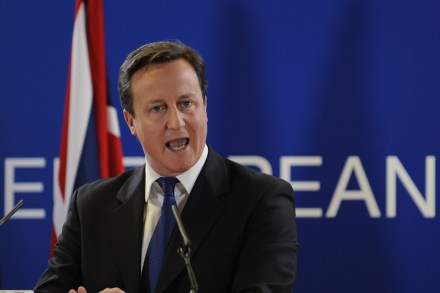
When David Cameron wielded his veto at the European Council in December many Tories thought this was the beginning of a process of repatriation of powers from the EU. Myself, I thought it would be the high water mark of the government’s Euro-scepticism — and so it has proven. But things are about to get even worse for the Bill Cashes of this Parliament. In the short-term, at least.   Why so? Well, the government appears to be concluding that it will not get a receptive ear from its European partners on any repatriation bid. The other European leaders are simply too busy fixing the euro to even read any UK proposals. And what's clear already is that they will remain too busy not just for another few months, but for another year or more.

CPS to announce tomorrow whether it’ll charge Chris Huhne

From our UK edition

Keir Starmer, the Director of Public Prosecutions, will annouce at 10 o'clock tomorrow morning whether or not the Crown Prosecution Service will bring charges against Chris Huhne. If he is charged, it could spark a Cabinet reshuffle — the Energy Secretary is now odds on to be the next Cabinet member to leave, at 4/6 with Ladbrokes.

What difference the Scottish independence question makes

From our UK edition

A very useful contribution from Lord Ashcroft this morning, in the form of a poll he’s commissioned on Scottish independence. What sets Ashcroft’s poll apart from previous surveys is that he asks three different questions to three different sets of around 1,000 Scots.   The first is the question Alex Salmond wants on the ballot paper at the referendum: ‘Do you agree that Scotland should be an independent country?’ 41 per cent say ‘Yes’ and 59 per cent say ‘No’. The second alters the wording only slightly, to ‘Do you agree or disagree...’ and finds 39 per cent agreeing (i.e. supporting independence) and 61 per cent disagreeing.

Why David Miliband’s article matters

From our UK edition

The most curious thing about David Miliband's article for the latest New Statesman — which is causing quite a stir this morning — is that it should appear now. After all, the Roy Hattersley essay that it purports to be responding to was published, so far as I can tell, last September. That's five months ago. Which is fine, if it's really taken MiliMajor that long to get around to it. But it certainly fuels the idea that he has chosen now, this moment, to make a political intervention — and Hattersley is just an excuse. And the intervention itself? Basically, Miliband warns against what he calls 'Reassurance Labour', a strain within the party that has cosy ideas about a big, centralised state and its capacity to do good.

The MoD wastes another opportunity

From our UK edition

Today’s White Paper on defence procurement makes disappointing reading for the UK defence industry — and for anyone who believes that one of the lessons of the last few years is that we need a more active industrial policy. IPPR set out the case in a recent report on globalisation, arguing for sustained support for industries, like defence, which have high potential for growth, for exports, and for high-skill manufacturing jobs. We need robust safeguards on the sale of defence equipment to repressive regimes, as well as greater transparency on government lobbying to avoid a return to the bad old days of the Pergau Dam — or minor embarrassments like David Cameron’s attempt to rebadge an export drive in the Gulf as a tour of the Arab Spring.

Today’s NATO leak highlights the need for more realism over Afghanistan

From our UK edition

Today’s leaked NATO report on ‘the state of the Taliban’ has generated the predictable responses: excessive attempts by the media to hype it up, and excessive attempts by NATO and the Pakistani government to play it down. What is its true significance? It’s a good scoop, but there is little or nothing in it which really counts as ‘news’ to anyone who has been following the debate. The report is the latest in a series going back several years (I remember reading earlier versions during my time in government), which summarises thousands of interviews with captured insurgents and others, in an attempt to build up a picture of the state of the insurgency to inform strategic and operational decision-making.

Your six-point guide to the Green Budget

From our UK edition

As promised earlier, here's my more detailed supplementary take on today's IFS Green Budget. I've distilled it down into six points, but obviously there's much, much more in the actual document itself. I'd recommend that you read the chapters on public sector pensions and pay, the 50p rate, and child benefit, in particular, if you're so minded — as they're very good summaries of some complicated fiscal areas. Anyway, here are my points: 1) The scary graph. As it does every year, the IFS has produced what I call the ‘scary graph’. It shows what our debt/GDP ratio would look like for decades hence under various circumstances.

Miliband finds his niche, and leaves Cameron looking boorish

From our UK edition

Miliband is getting the measure of PMQs. Not with respect to Cameron. With respect to himself. He’s learned that his strongest register — sanctimony — will always ring hollow unless it’s attached to a powerful cause. And his gags don’t work. So he’s ditched his team of funny men and wise-crackers and turned to his political instincts instead. Miliband’s gut worked today. He began with a question which he knew Cameron couldn’t answer. Why hasn’t the government activated the laws requiring banks to name all employees earning over a million year? The PM answered by not answering. He performed a transparent switcheroo from the particular question to the general topic.

Tories push benefit cap in PMQs, Miliband ignores it

From our UK edition

As expected, the Tories did everything they could to make the benefit cap the subject of PMQs. One Tory MP managed to slip in a question on it just before Miliband got up, allowing Cameron to press the Labour leader on the issue even before he had started speaking. Tory MPs kept coming back to the benefit cap — there were five questions on it in all — allowing Cameron to repeatedly mock the Labour front bench for not saying what its position is. ‘Just nod — are you with us or against us?’ was one of the lines Cameron tried to goad them with. But in the main clashes between the two leaders, which were on top pay and the NHS, Miliband actually did pretty well.

The view from the Institute for Fiscal Studies

From our UK edition

It's the halftime coffee break here at the launch of the Institute for Fiscal Studies' Green Budget, so I thought I'd send CoffeeHousers a quick update. But first, just to be clear, that's green meaning green, not green meaning environmental. This is the IFS's annual, different-hued version of the Treasury's Red Book. It's their overall take on the economy and public finances. So far, there has been little that will surprise or disconcert George Osborne as he prepares his own Budget: the picture is expectedly grim. As John Walker, chairman of Oxford Economics, put it in his warm-up routine on the general economy, 2011 was ‘disappointing’ and 2012 will be ‘another difficult year’.