Uk politics

IDS defends his work scheme — but he may have to change it

Articles by politicians are often flat and passionless. Not so Iain Duncan Smith’s effort for the Daily Mail today. The welfare secretary sets about defending the government’s Work Experience scheme for unemployed young people, but it soon turns into a full-blooded attack on its detractors. ‘I doubt I’m the only person who thinks supermarket shelf-stackers add more value to our society than many of those “job snobs” who are busy pontificating about the Government’s employment policies,’ he bristles, ‘They should learn to value work and not sneer at it.’ And there’s much more besides, including a warning against ‘a twisted culture that thinks being a celebrity or appearing on The

Osborne accidentally makes the case for more savings

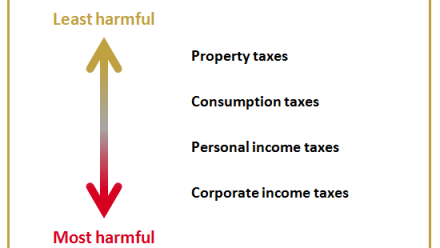
Rhetoric aside, what’s the difference between left and right in British politics? You won’t catch either party quantifying it, because the answer embarrasses both. The ever-cautious George Osborne is cutting just 0.6 percentage points a year more from government departments than Labour planned to (see table, above). The great joke is that the difference between the two parties is actually within the margin of error. Government is a gargantuan machine that just can’t be controlled to that degree of precision: a billion quid is, to Whitehall, a rounding error.   Today’s public finances have demonstrated that. The UK government had actually intended to borrow around £102 billion at this stage

The implications of today’s border security report

Today brought closure of a kind to last year’s border fiasco (which I covered for Coffee House here and here), with the publication of the report by the Chief Inspector of the UK Border Agency, John Vine. On first reading, there is no ‘smoking gun’ which would trigger a ministerial resignation. The report does find that, in early 2011, the immigration minister Damian Green had authorised the relaxation of one of the checks at the centre of the controversy: ‘Secure ID’, which verifies the fingerprints of foreign travellers with visas. But the report also finds that Green’s authorisation should have been superseded by later instructions from the Home Secretary Theresa

Miliband guarantees a return to Brown’s Big Idea for the NHS

It would be so much easier for Ed Miliband to attract headlines if he could shout in Andrew Lansley’s face. As it is, the Labour leader has had to make do with giving a speech today attacking the NHS reforms. Within the parameters of what he might say, it’s an okay effort. The predictable lines about ‘creeping privatisation’ are leavened by the admission that ‘the question is not reform or no reform. It is what type of reform.’ And he adds, by way of a cross-party sweetener, that he would ‘get round the table’ with David Cameron to discuss ‘the future of the NHS’. But the substance of the speech,

The depressing appointment of Les Ebdon

Today brings confirmation that No.10 has not stood in the way of Vince Cable appointing Les Ebdon as the new director of fair access. Ebdon’s appointment is depressing for several reasons. First, Cable has ridden roughshod over the objections of the BIS select committee to his choice. So much for all of the coalition’s talk about respecting parliament — this is executive arrogance at its worst. Second, Ebdon represents the mindset that has done so much damage to British education in the past 50 years. It is worrying that he does not seem to appreciate that the biggest ‘root cause’ of poorer pupils not getting into top universities is the

A question of trust for Andrew Lansley

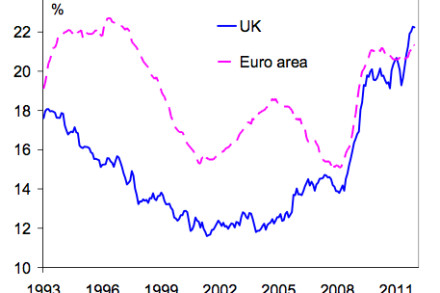
It’s not too surprising that people trust ‘organisations representing doctors nurses and other health professionals,’ well above David Cameron and Andrew Lansley, when it comes to the NHS reforms. People are sceptical of politicians in a way that they aren’t of the health service, its unions and its workers. 64 years of ‘national religion’ status for the NHS, and many more years of gross political let-down, have made sure of that. But today’s YouGov findings still shine a fresh light on Cameron and Lansley’s changing approach to the reforms. A year ago, they clearly looked at charts such as that above and thought, ‘Woah, we’d better get those organisations on

If Cameron doesn’t talk about greater powers for England, Labour will

Action over Scotland is certainly producing a reaction in England. It’s not what you’d call an ‘equal and opposite reaction’ yet, but it’s there — and it’s crystallised by Tim Montgomerie’s article for the Guardian this morning. I’d recommend that you read it in full, but Tim’s basic point is that David Cameron could score a ‘triple crown of political victories’ by moving towards a more federal UK: ‘By offering to extend Scottish devolution he can be the Conservative leader who saves the union. By promising to balance Scottish devolution with a commitment to new arrangements for the government of England, he can radically improve his own party’s electoral prospects.

The tax debate at the heart of the Budget

The run-up to last year’s Budget was all about fuel duty. This year it’ll be all about direct taxes. The Lib Dems are determined to put their manifesto pledge of raising the income tax personal allowance to £10,000 front and centre. They already managed to turn this promise into government policy in the Coalition Agreement, and last year’s Budget announced that the threshold would rise to £8,105 in April this year. But Nick Clegg’s made clear that he wants to go ‘further and faster’ on this. The Conservative response at the Treasury – according to today’s Telegraph – is simple: ‘how are they going to pay for it?’ Initially, Nick

Balls the tax-cutter?

‘Balls urges tax cuts’, we’re told. Has he had a Damascene moment? Has the borrowed penny dropped? Nope, this is his longstanding and cynical campaign to cut VAT. Under the Labour years, when Balls was encouraging Brown to adopt a ‘scorched earth’ policy to the public finances, he urged against raising VAT to 20 per cent as Alistair Darling wanted. Not because he didn’t think it was necessary, but because he knew that if Darling didn’t do it, Osborne would. So VAT could be an election campaign tool, and then a stick with which to beat the wicked Tories (and the Lib Dems, who dropped the ‘VAT bombshell’ that they

Tory Ministers need to back the Health Bill

Tomorrow’s Downing Street meeting on the implementation of the health reforms is meant to send the message that the bill is definitely going ahead. Number 10 is keen to shore up the bill ahead of Liberal Democrat Spring Conference following the uncertainty caused by Rachel Sylvester’s column and Conservative Home’s call for the bill to be dropped. Indeed, I understand that at the Quad dinner on Monday night, Nick Clegg and Danny Alexander made the basic political point that the Liberal Democrats would feel absolved of the need to support the bill if any Tory minister came out publicly against it. But Tory ministers still need to muster more public

The green squeeze

Bjorn Lomborg’s article on why Germany is cutting back on its support for solar power is well worth reading and has clear implication for this country’s debate about energy policy. As Lomborg argues: ‘there is a fundamental problem with subsidizing inefficient green technology: it is affordable only if it is done in tiny, tokenistic amounts. Using the government’s generous subsidies, Germans installed 7.5 gigawatts of photovoltaic (PV) capacity last year, more than double what the government had deemed “acceptable.” It is estimated that this increase alone will lead to a $260 hike in the average consumer’s annual power bill.’ At a time when living standards are being squeezed, these increases

Hague’s ‘Cold War’ warning

William Hague has gazed into his Middle Eastern crystal ball and doesn’t like what he sees. In an interview in today’s Telegraph, he says of Iran: ‘It is a crisis coming down the tracks, because they are clearly continuing their nuclear weapons programme… If they obtain nuclear weapons capability, then I think other nations across the Middle East will want to develop nuclear weapons. And so, the most serious round of nuclear proliferation since nuclear weapons were invented would have begun with all the destabilising effects in the Middle East. And the threat of a new cold war in the Middle East without necessarily all the safety mechanisms… That would

Cameron’s ECHR problems won’t end with a Qatada deal

The news that Theresa May will fly to Jordan to continue talks about Abu Qatada shows how close the government thinks it is to a deal with the Jordanians that might satisfy the European Court of Human Rights and allow his deportation. One government source explained to me earlier that the problem is the Jordanians are offended by being asked to provide these guarantees about a fair trial and no evidence being obtained by torture. For this reason, there needs to be a fair amount of diplomatic stroking. A deal with Jordan on Abu Qatada is becoming increasingly necessary if Cameron is get out of this bind on the ECHR,

L’entente nucléaire

There’s no wound that a press conference won’t heal, or at least that’s the impression that David Cameron and Nicolas Sarkozy created earlier. The pair played down the tensions and grudging handshakes of the past few months to talk up Britain and France’s ‘incredibly strong relationship based on shared interests’. And there was more than just talk too: they announced a £500 million deal between French and British companies for nuclear power plants. And they hailed progress towards the creation of a joint ‘command and control centre’ for military operations. Perhaps this mutual bonhomie explains why Downing Street isn’t taking the opportunity to meet with the man who may soon

Miliband’s NHS pledge

Ah, there he is! With the coalition — and David Cameron — dominating the political news on every day of this half-term week, Ed Miliband has finally caused a ripple in the national consciousness. He’s appearing before nurses in Bolton today to make a pledge: ‘Before he became Prime Minister, David Cameron concealed his plans for creeping privatisation of our National Health Service. So people didn’t get a vote on these plans at the last election. But I give you my word that if he goes ahead, they will be a defining issue at the next.’ Put aside the rhetoric about ‘creeping privatisation’ (which would surely make Tony Blair shudder),

Cameron’s new offer for Scotland could mean a new offer for England

The consensus opinion across most of today’s papers appears to be that Dave done good in Scotland yesterday. And now the Prime Minister’s cause has been helped that little bit more by the Lords Constitution Committee. ‘We are firmly of the view that any referendum that is held must be a straight choice between full independence or the status-quo,’ says the committee’s chairman Baroness Jay. ‘A third “devolution-max” option is clearly something every part of the UK must have a say in as it has the potential to create different and competing tax regimes within the UK.’ The strange thing is, a UK-wide referendum on ‘devo max’ could actually produce

Cameron’s risky move could play into Salmond’s hands

Not many politicians would conjure up the spectre of Alec Douglas-Home to scare the Prime Minister, but that is exactly what Alex Salmond did today — to some effect. The Scottish First Minister was responding to David Cameron’s ‘jam tomorrow’ offer to the Scottish people. ‘Vote “no” in the independence referendum,’ Mr Cameron effectively told Scots today in his latest attempt to make some progress in the independence debate, ‘And I’ll see that you get major new powers for the Scottish Parliament.’ It was one part bribery, one part political strategy and Mr Salmond was on to it quicker than the average Scot can order a haggis supper. ‘We’ve been

The Lib Dems prepare their strategy for future coalitions

Contain your excitement, CoffeeHousers: the Lib Dems are debating whether to change their ‘constitution’ so that their members have a greater say over future coalition negotiations. The amendment has been put forward Tim Farron and Norman Lamb, and proposes that, in the event of coalition talks, the party’s ‘negotiating team’ should have to consult with a ‘reference group consisting of not more than nine people appointed equally by…’ blah, blah, blah. In fact, you can just read the whole thing on page 41 of this document. The Lib Dems will be voting on it at their Spring Conference next month. But while internal Lib Dem governance may not be the