Uk politics

What’s going on over the Lords — and where to read about it

From our UK edition

Finally, Lords reform becomes interesting: it could be the issue that splits the coalition. Lord Oakeshott's admission of this yesterday has made the newspapers today — but it will come as no surprise to Spectator readers. James Forsyth drew out these battle lines for his cover story last week, and it's worth reprising his arguments as the rest of the press has yet to catch up.   Self-preservation is a powerful force in politics. Even if the Lib Dem vote recovers, it's likely to do so in different constituencies, meaning most Lib Dem MPs are likely to lose their seats. As Lembit Opik’s music career demonstrates, it's tough to find work out there. Making it to a revamped Lords is their best option.

Raise the tax threshhold and let youth prevail

From our UK edition

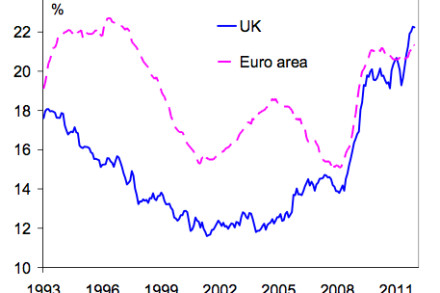
Youth unemployment is approaching crisis levels in Britain. For almost two decades, Britain’s more flexible labour market had favourable effects on youth employment. But the re-regulation of the British economy has narrowed the difference between our jobs market, and that of the continent. Meanwhile the British poverty trap has been strengthened by a dysfunctional welfare state: British workers can in some circumstances keep as little as 5p in every extra pound they earn if they find work. Who would break their back for less than 50p an hour? We’re paying people not to bother, so little wonder that most of the employment rise — in the last government, and under this one — is accounted for by a rise in foreign-born workers.

Europe’s latest tonic could worsen Osborne’s political problems

From our UK edition

Seems that the latest plan to fix the eurozone involves cooking up a pot of alphabet soup. Over in Mexico, G20 finance ministers are currently discussing whether to blend two existing eurozone bailout funds, the EFSF and the ESM, with some extra money from the IMF. They hope that this EFSF-ESM-IMF mix will add up to about £1.25 trillion of ready cash for failing eurozone economies. ‘Look at the size of our fund,’ they will then say, as they try to settle nerves across Europe and beyond. Details are lacking, but some things are already worth noting about this potential mega fund. First is that it seems to be coming about with permission from Germany.

The two types of Tory modernisation — and which one’s on the rise

From our UK edition

There have always been two types of Tory modernisers. Both wanted to talk about issues that the party had neglected — public services, the environment and the like. But the soft modernisers were more prepared to compromise ideologically, to go with the flow of the age. The hard modernisers’ interest, by contrast, was in applying Tory thinking to these areas. Michael Gove’s education reforms are, perhaps, the best example of hard modernisation in action. As Charles Moore puts it in the Telegraph today, ‘Mr Gove offers an attractive combination — complete loyalty to the Cameron modernisation, but a Thatcher-era conviction politics as well’.

The ruckus over Lords reform

From our UK edition

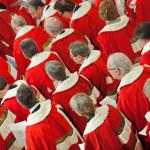
Both the Tory and Lib Dem manifestoes promised to reform the House of Lords, as did the Coalition Agreement, but the gulf in enthusiasm between the two parties is enormous. For many Lib Dems, this is of course — as Nick Clegg put it in December — ‘one boat that urgently needs rocking’. For many Tories, it is something to be ambivalent about, or to oppose. Which is why the politics around the ongoing Lords Reform Bill are likely to be so fraught. James has already written of how there are ‘more than 81 [Conservative] MPs prepared to vote against it.

Willetts tries to dampen the flames around Ebdon

From our UK edition

Siphoning the contents of two brains through one mouth and on to a single page will generally produce eclectic results. And that's certainly the case with David Willetts' interview with the Times (£) this morning. The universities minister manages to range across subjects that include Robert Falcon Scott, climate change, the Falklands and universities access. He even reheats one of his old theories about Feminism and social mobility in a way that (coupled with the interview's headline: ‘Moving on and up is very hard — and feminism is partly to blame’) makes it sound far more provocative than I think it's meant to be, and much weaker for it.

Tim Farron wants competition dropped from the Health Bill

From our UK edition

Will there be further changes to the Health and Social Care Bill? Liberal Democrat President Tim Farron certainly wants some, as he told ITV’s Party People last night: ‘If the new competition introduced through this Bill is removed, then I think it’s better on the books than it is off it… What I want is for the Lords to propose changes that will remove the new competition elements from the Bill and I would like the Government to give way on those things. It's all to play for.’ Farron’s echoing the call made by fellow Lib Dem Shirley Williams last week and by a group of activists who have submitted an emergency motion for their party conference in two weeks.

Transcript: Grayling on work experience

From our UK edition

On the Today Programme this morning, Employment Minister Chris Grayling defended the government's Work Experience programme in light of the recent controversies around it. Here's a full transcript of the interview: Evan Davis: Well how can work experience get such a bad name? A string of high profile companies have pulled out of one government scheme providing work experience for young people. The latest, retailer Poundland, has announced it is suspending its participation in the scheme although it’s not quite clear which scheme it is, because there are several government schemes for getting people, long-term unemployed or young, into work. Let’s see if we can clarify what is going on with the Employment Minister, Chris Grayling. Good morning to you.

Bercow finally gives a fig

From our UK edition

It looks like those £32,500-a-year figtrees won't be staying in Portcullis House for long. While they may add a pleasant ambiance to the building, the huge rent bill has caused much annoyance, including for the Speaker of the Commons. In an interview with House Magazine, John Bercow says he was ‘horrified’ and adds: ‘If we are going to have trees, they absolutely shouldn’t be trees that cause us to fleece the taxpayer in this way, and that must change at the earliest opportunity.If there is a contract and it’s going to cost us more to get out of it immediately than not, then it may well have to wait... but should the present arrangement continue beyond September? Absolutely not.

Gove knows the importance of adoption

From our UK edition

https://www.youtube.com/watch?v=bORDrO3hA5w The coalition’s work on adoption is one of its more impressive bits of public service reform. It starts from the right premise, that adoption is vastly preferable to children being in care. It then uses changes to the regulations, transparency and a plethora of providers to try and increase the number of adoptions. It is, for example, absurd that the current system has left to children being left in care because of worries that their ethnicity does not match that of their potential adopters. Or, that people are being denied the chance to adopt because they smoke. These reforms are being pushed hard by both Number 10 and the Department for Education. Michael Gove, the education secretary, was himself adopted.

The dark side of the Big Society

From our UK edition

The A4e scandal is getting worse. Emma Harrison has quit as David Cameron’s back-to-work tsar, the police are still investigating a case discovered last year and there’s a suggestion their investigation is widening. This is, for David Cameron, the dark side of the Big Society. In my Daily Telegraph column today, I explain why. ‘The Big Society’ is a silly name for a good idea: that lots of companies, charities, etc will help provide government services. They are given freedom to innovate, to create — and the freedom to get things badly wrong. This is the freedom which A4e seems to have availed itself of. It grew like crazy, perhaps too fast. Its internal audit procedure found four staff who had been falsely claiming to get people back in work.

Detoxifying profit in education

From our UK edition

Profit and education are still two words that should only be put together with caution. The coalition has long-accepted this is a toxic area, as typified by Nick Clegg in September when he proclaimed: ‘Yes to greater diversity; yes to more choice for parents. But no to running schools for a profit; not in our state-funded education sector.’ But as Fraser argued last year, we need profit-making schools to spread the benefits of Michael Gove’s reforms to the most deprived children. To straddle this divide, Policy Exchange has proposed a halfway solution today: social enterprise schools.

The tension’s rising inside the coalition

From our UK edition

Talking to a Downing Street adviser earlier this week, I was struck when they observed that a ‘2014 election wouldn’t be too bad really. David would have done his best, Nick would have done his best. But they just couldn’t make it work anymore.’   The Tories have spent some time recently contemplating the possibility that the coalition might not run for the full length of the parliament. At a recent Chequers away day, the prospect of the Liberal Democrats walking out in 2014 was openly discussed.   That this possibility is even being talked about is revealing of the mood inside the coalition, which is the subject of my piece in the magazine this week. Things are becoming increasingly tense.

Why property tax rises aren’t the answer

From our UK edition

When Tim Montgomerie first started calling for new wealth taxes I was horrified. Sweden has only just abolished its wealth tax after seeing hundreds of billions of kroner leave the country in capital flight over a number of years. Other countries have found wealth taxes are associated with narrow bases, high costs of collection and often very unfair treatment for different classes of assets. We should not replicate that here. As his proposals have been refined though, it isn’t that bad. More bands would be a relatively reasonable way of making the Council Tax system more progressive.

Why George should listen to Danny

From our UK edition

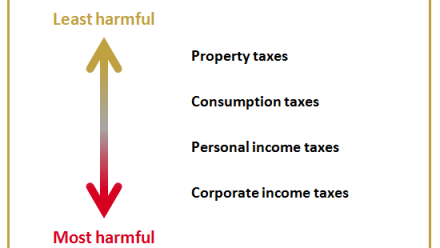
In the new Spectator, we back the Liberal Democrats’ plans to raise the tax threshold to £10,000 — provided that the money is found by cuts in state spending rather than the pensions raid they propose. It’s not top of my list of tax cuts, but we have to accept the realpolitik. It’s the only tax-cutting option that has advocates in the Treasury. There are plenty of proposals around to cut taxes and wake the British economy from its ‘lost decade’ slumber. The need to use tax cuts as a remedy to the deficit will be familiar to anyone who has followed the American presidential debate: every candidate, even Romney, has their own list of radical tax cuts.

How to remain a nation state

From our UK edition

Britain out of Brussels' clutches by 2020? It can happen, says David Owen, in a piece for the magazine this week. It's based on a speech to Peterhouse College, Cambridge. Here's the full version: In all the controversy about the eurozone and Greece it is easy to ignore one simple fact: maintaining a core eurozone is creating an unstoppable momentum towards a United States of Europe. On 7 February 2012 the German Chancellor Angela Merkel indicated very clearly her direction of travel. The eurozone crisis for her is to be the springboard to another Treaty to replace the Lisbon Treaty. She said ‘Step-by-step, European politics is merging with domestic politics.

Rumble in the Commons

From our UK edition

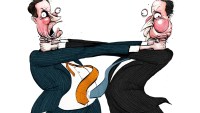
From the Sun: ‘A LABOUR MP was arrested late last night for assault after allegedly headbutting a Tory rival in a House of Commons bar. Witnesses allege Eric Joyce, 51, launched an unprovoked attack on Stuart Andrew, 40. It is claimed Joyce, MP for Falkirk, had to be held back by several Labour colleagues. A source said: “Stuart was given a Glasgow kiss.”’ Read the full report here. UPDATE: Joyce has been suspended by the Labour Party. The Standard's Joe Murphy has a particularly detailed account of it all here.

The forgotten victims of the Troubles

From our UK edition

This post, marking the 40th anniversary of the Aldershot bombing, was published earlier on the Biteback website. But as its author, Douglas Murray, is a regular here on Coffee House, and as its subject matter is so important, we thought we'd re-post it here: The 30th January this year was the 40th anniversary of Bloody Sunday, the day when members of the British Parachute regiment shot dead fourteen civilians on the streets of a British city. The constant commemoration of that day by families of the dead and injured was one of the things that kept its memory alive and eventually led to the British government setting up the Saville Inquiry.