Uk politics

Is Andrew Lansley’s time finally running out?

A few months ago, I was invited to speak at the Health Service Journal conference, and hugely enjoyed meeting various reformers from within the NHS (and, of course, their enemies). One representative from the NHS Confederation pointed out that in most countries which were run by coalitions, the junior party was always given control of health — because nothing good can ever come from it. When things are going well, you hear nothing. When flu epidemics strike, then health is a horrible brief. A good point, which David Cameron may be taking to heart. Patrick Hennessy reveals in tomorrow’s Sunday Telegraph that Cameron is mulling a pre-Olympics reshuffle which would

The man behind the Budget

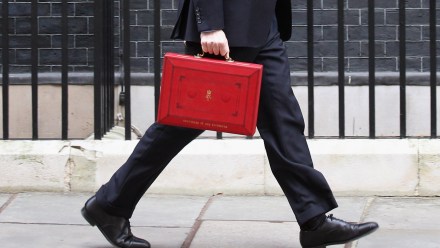
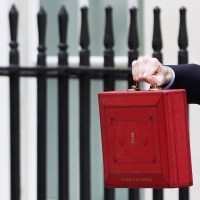
In today’s Telegraph, I profile Rupert Harrison, chief economic adviser to George Osborne and the man who’ll do more than anything else (including his boss) to shape next week’s Budget. In the British political system, special advisers are given very little attention — even though the best of them are more influential than the average Cabinet member. The Treasury’s vast power, assembled by Brown, is still there. That can’t be said for Osborne: he spends half his time in Downing St, and is sufficiently detached from the Budget process that he felt able to take a couple of days’ holiday in America last week to jump in the motorcade and

Labour miss out the details

Labour’s launch of its new youth jobs policy has been rather overshadowed by Harriet Harman’s inability to explain the costing behind the policy on the Daily Politics earlier: not a good look for a party trying to show that it is fiscally credible. But more interesting than the number behind the policy is how it marks an attempt by Labour to toughen up its position on welfare. Those young workers who have been out of work for a year will have to take one of these minimum wage jobs or have their benefits docked.


 On the Labour front, the interview with Ed Miliband in the Times today is also worthy

Cameron and Obama bargain over fuel

No wonder David Cameron and Barack Obama were being so chummy: they both knew that they could help each other. The Times carries an intriguing story (£) on its front page this morning, about how the two men discussed a plan to get fuel prices down in the UK and the US. The idea is that both countries — and perhaps more — would release some of their oil reserves. And so supply would go up, and prices would come down. As would our reliance on the oil-rich countries of the Middle East. Apparently, we’re some distance from a deal yet, but you can see why both the PM and

Go on, George — scrap the 50p rate

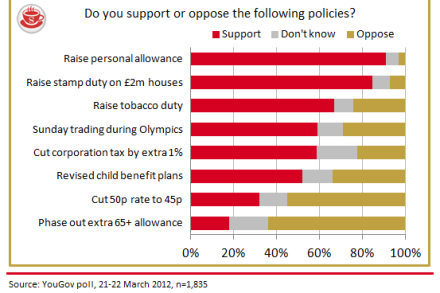
Will George Osborne scrap the 50p tax in next week’s Budget? Whispers to this effect have been getting louder, and now the Guardian is saying that it will come back down to 40p, and it makes a lot of sense. As I argued in my Telegraph column a fortnight ago, this is the perfect time to do it. Axing the tax paid by 1 per cent of the population will be unpopular with the remaining 99 per cent, so if Osborne is going to take a political hit he should do so now. Anecdotal evidence of its harmfullness has been getting stronger: multinational companies saying they can’t persuade people to

Hodge’s new nemesis: Sir Jeremy Heywood

Margaret Hodge subjected senior civil servants to a fierce ear-boxing this morning. She accused them of trying to avoid the scrutiny of her Public Accounts Committee, and declared the current doctrine of ministerial responsibility unfit for the 21st century: ‘The senior civil service needs to acknowledge that we live in a different world from the world in which ancient conventions could prevail. Everybody wants greater transparency and accountability.’ Hodge also said she ‘has been rattling the cage too much for some’ and detailed some of the resistance she’s encountered. In particular, she highlighted a disagreement with Gus O’Donnell, the former Cabinet Secretary, who berated her for the handling of an

Right to reply: Why QE isn’t a disaster for pensioners

The best of all possible worlds for the pension industry is a buoyant economy. Workers have enough money to save, share prices rise and dividend growth is robust. Interest rates are positive in real terms so annuities are good value. The economy ground to a halt in 2008. The overwhelming priority for everyone is to get growth going again. Without growth the services that pensioners depend on — such as the NHS — will struggle. Traditionally, governments cut interest rates and raise spending to get the economy moving. The Bank of England has cut interest rates as much as possible and the government deficit remains very high. We have exhausted

The questions Alex Salmond can’t answer

Should Scotland be independent? I’d have thought that only a few people — most of them Scottish — would care enough about the question to come to a debate hosted by a think tank, but the Policy Exchange fight club was packed last night. The sole nationalist was the SNP’s Pete Wishart, allied with Sir Simon Jenkins making his English Nationalist points. Sir Malcolm Rifkind spoke against the motion, with yours truly his support act. As you might expect from a London audience, those opposed won easily. But two things struck me. The first is Sir Malcolm’s eloquence. He was brilliant, better than Salmond, a reminder of what was cut dead in the

Cameron dines with Obama… and Clooney

The Camerons weren’t the Obamas’ only big-name guests at the State Dinner last night. They were joined by a host of stars including Warren Buffett, Richard Branson and George Clooney, who’s just returned from war-torn Sudan. In their speeches (above), the two leaders had very warm words for each other. Of Cameron, Obama said: ‘In good times and in bad, he’s just the kind of partner that you want at your side. I trust him. He says what he does and he does what he says.’ And the PM returned the compliments: ‘There are three things about Barack that really stand out for me: strength, moral authority and wisdom.’ Obama

The significance of Clegg’s PMQs win

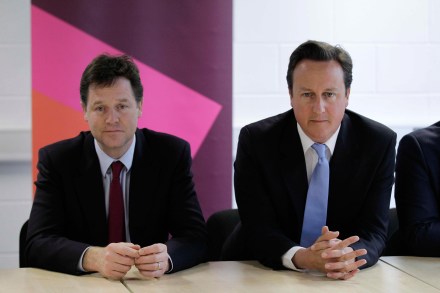
Nick Clegg’s assertive performance at PMQs today was a demonstration of the fact that he now feels more confident than he has since his failure in the AV referendum. The deputy Prime Minister doesn’t crouch defensively at the despatch box anymore, and he brushed off some rather good one-liners from Harriet Harman. She joked that the only thing the deputy Prime Minister stands up for these days is the PM entering the room.   Clegg and his team feel that things are looking up for them, that they are setting the agenda. Even the Lib Dem’s lowly poll rating isn’t dampening their mood.   So, what does this change mean

Nick rises to Harriet’s limp challenge

Basketball in America. Netball at PMQs. Harriet Harman, Labour’s venerable form-prefect, took her leader’s place today and lobbed a few rubbery missiles at the PM’s under-study, Nick Clegg.  It came down to arithmetic. Even if Hattie had stormed it at PMQs she had no hope of reviving her extinct career. But Clegg has it all to play for. He was ready for it too. Assured, combative and well-briefed, he filled his replies with fresh, punchy rhetoric. (Mind you, his match-fit performance should be credited to his party activists. Clegg must have spent the last 22 months fielding nasty questions from chippy wonks at Lib Dem constituency meetings.)  Hattie tried to

Unemployment’s high, but at least it’s stopped rising

So, new jobs figures out today. Which do you want first: the bad news, or the kind-of-alright news? The bad news is that employment’s showing no signs of growth: the total number in work has been stuck at 29.1 million since it fell there in the summer. It’s a touch better than the trough of 28.8 million we hit at the end of 2009, but still half a million below where we were when the recession hit. And we’re showing no signs of getting there any time soon: And the not-so-bad news? Unemployment’s slightly down on last month, which was slightly down on the month before. It’s not a big

The Bond Bubble’s getting bigger

George Osborne is planning to launch a 100-year bond, says the FT — a sure sign that the Bond Bubble is getting even bigger. These devices are usually used by American universities: the California Institute of Technology issued one at 4.7 per cent, MIT did one at 5.6 per cent, and a few American companies have tried at 6 per cent. The Mexcians sold a billion bucks’ worth of century bonds a while ago at 6.1 per cent, so it would only be a matter of time before HM Treasury — a world leader in, ahem, novel debt vehicles — was going to do the same. The US Treasury Borrowing

Cameron and Obama, sans yellow mustard

Above is what they call the ‘raw video’ of David Cameron’s and Barack Obama’s trip to a basketball game last night. It’s the unrefined version of what Downing St hopes will be refined, packaged and sent to your television screen at hyperspeed: images of the PM and the President dressed casually and chatting away as the game goes on. Like I said yesterday, it’s political theatre — designed to benefit both men. They were then both interviewed at halftime, which you can watch here. This was more about sports than about the political intricacies of the special relationship (Cameron: ‘It’s hard to follow,  sometimes, who’s done exactly what wrong’) —

Cameron lands in America

David Cameron’s plane has just landed in Washington. The next few days should provide him with a set of images that will portray him as a significant figure on the global stage. The Obama administration is giving Cameron the full works: a huge event on the White House lawn and the kind of banquet that is normally reserved for heads of state. This is an arrangement that benefits both sides. The Obama re-election campaign wants to foster the sense that the President is friends with a Conservative British Prime Minister given that their Republican opponent in the fall will accuse him of being a left-wing radical. I suspect, though, that

IDS’s important call for ‘social value’

It’s the same for celebrities and policymakers: talking about marriage gets you headlines. Hence why the newspapers have concentrated on Iain DuncanSmith’s remarks today that ‘marriage should be supported and encouraged’ by the state. But there were two other parts of IDS’s speech — and the ‘social justice strategy’ document behind it — that I found more arresting. The first was his incisive attack on the Gordon Brown approach to fighting poverty (define it statistically and then massage the statistics so that they work in your favour), which deserves repeating: ‘First, we have seen a social policy overwhelmingly focussed on moving people above the income poverty line. A laudable ambition

Will Obama and Cameron discuss a faster pullout from Afghanistan?

The political theatre of David Cameron’s trip to America will have Downing Street drooling. The PM is, today, not only going to become the first world leader to fly aboard Air Force One with Barack Obama, but then they’re also going to take in a game of basketball together. It’s a carefully calibrated blend of statesmanship and down-to-earth-ship that will suit both men. Obama, because it might appeal, in some way, to conservative voters ahead of this year’s presidential election. Cameron, because, well… does Ed Miliband do this sort of thing? The theatre carries over into print too, with a joint article by Cameron and Obama in today’s Washington Post.