Uk politics

Ken’s identity crisis

From our UK edition

Jonathan Freedland’s column in The Guardian today, explaining why he can’t vote for Ken Livingstone, is a remarkably direct piece of journalism. Freedland states that he ‘can no longer do what I and others did in 2008, putting to one side the statements, insults and gestures that had offended me, my fellow Jews and — one hopes — every Londoner who abhors prejudice’. Now, as Paul Goodman argues, we shouldn’t overstate the importance of a traditionally Labour supporting Guardian columnist coming out against Ken Livingstone. But Freedland’s reasons for doing so are ones that, I suspect, will resonate with a significant section of opinion. The issue with Livingstone is that his politics are sectional.

Spending will become more significant as 2015 approaches

From our UK edition

Four days after George Osborne signed its death warrant, there is still life in the 50p rate yet. The two main political interviews in today's papers — Ed Miliband in the Telegraph, Danny Alexander in the Times (£) — both focus heavily on the top rate's impending demise. The Labour leader, of course, is continuing to ask whether David Cameron and George Osborne will themselves benefit from the move to 45p, without actually managing to commit his party to a policy. The Chief Secretary to the Treasury is left defending a 45p rate, and does so by borrowing a recent Lib Dem slogan for the coalition as a whole: ‘This is a Budget for the millions, not the millionaires.

Previewing my Week in Westminster

From our UK edition

I’m presenting Week in Westminster at 11am on Radio Four today, and get to choose four topics for discussion. My political nodes were, of course, amputated for the purposes of this production. Here are the topics I chose: 1. Young vs Old. Osborne stepped on a landmine on Thursday: he didn’t expect his pension tax (minor, as Charles Moore argues in the Telegraph) to cause such a reaction. But I suspect he hadn’t realised the depth of feeling in this emerging clash of the generations. Osborne’s idea for freezing pensioners’ tax threshold was lauded on Twitter but lambasted in (most of) the press.

What did the public make of the Budget?

From our UK edition

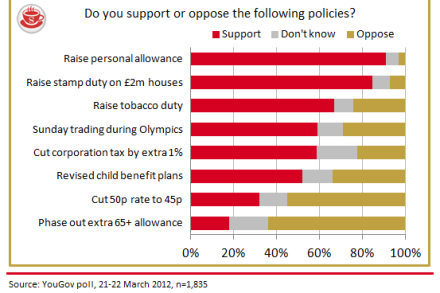
After weeks of hearing what people think about the policies that Osborne might’ve adopted, we now have the first evidence of what they make of the Budget itself. Today’s YouGov poll lists eight of its main policies, and it seems they fit into three broad groups. First, the very popular ones: raising the personal allowance and increasing stamp duty for £2 million houses. Second, those backed by the majority but not so overwhelmingly: the corporation tax cut, the child benefit changes, Sunday trading during the Olympics and the tobacco duty rise. And finally, the unpopular measures: cutting the 50p tax rate and phasing out the extra personal allowance for over-65s.

Cameron’s minimum pricing plan is politically risky

From our UK edition

David Cameron’s plan for a minimum price for alcohol is one that several of his Cabinet colleagues, including the Health Secretary, have grave reservations about. But the Prime Minister’s personal enthusiasm for the policy has overridden these reservations. To my mind, a minimum price for alcohol is not a good idea. I expect that the effect of it will be to shift those who are intent on getting drunk, off beer and wine and onto spirits, whose prices will probably remain unchanged. Tory MPs also tend not to like the idea, viewing it as an unnecessary interference with the market. Indeed, I suspect there’ll be a fair few Tory backbenchers who vote against this policy in the Commons. This isn't the only political complication the idea throws up.

In defence of Special Brew

From our UK edition

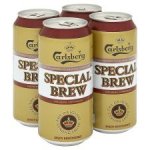
The Prime Minister today introduces plans for minimum pricing on alcohol. In this week's Spectator, Leo McKinstry mounts a defence of Special Brew, the tipple of Kingsley Amis and Churchill. I have a confession to make: I am writing this article under the influence. As I tap away at my laptop, a can of lovely Carlsberg Special Brew sits on the table beside me, acting on my brain as oil acts on a car engine: lubricating the moving parts. Ever since I found that it could help to speed up my word output, strong Danish beer has been essential to my writing career, so it’s a great shock to discover that the government has Special Brew in its sights. Carlsberg Special is perhaps the most notorious of the super-strength lagers on sale in Britain today.

Another voice: Pensioners ought to contribute more

From our UK edition

The pensioner lobby has been predictably and tiresomely strident about George Osborne’s ‘granny tax’. Ros Altmann, Director-General of Saga, called the move to bring pensioners’ tax allowances into line with everyone else’s an ‘outrageous assault on decent middle-class pensioners’. It’s nothing of the sort. In fact, it’s high time that pensioners start to contribute to the unprecedented fiscal squeeze we’re going through — and here are the three main reasons why.   First, they’ve contributed next to nothing to the deficit reduction programme so far. Better-off pensioners are set to lose just over 1 per cent of their income from the changes planned by 2014, according to the IFS.

Transcript: Osborne defends his Budget

From our UK edition

Here's the full transcript of this morning's Today programme interview with George Osborne: Evan Davis: If you believe in using the tax system to cut the incomes of those at the top and in using the welfare system to hand money to the poor, then yesterday’s budget was probably not for you. The Chancellor  hinted at big further cuts to welfare and he clearly thinks the tax system has gone too far in trying to harvest cash from those at the top. Yes, he’s ironing out some loopholes but for him 50p rates don’t work. Believe him, and the game’s over for those who want government to iron out the extremes of inequality in Britain. Oh, and for him too, pensioners can no longer be seen as sacrosanct. A courageous Chancellor or an uncaring one?

Why Osborne saved Wallace and Gromit

From our UK edition

‘It is the determined policy of this government to keep Wallace and Gromit exactly where they are.’ So proclaimed George Osborne in his Budget speech yesterday, as he announced new tax credits for the video games, animation and televesion industries. But what prompted this? Had he been reading The Spectator? In an interview for the magazine a couple of months ago, Miles Bullough — head of broadcast at Aardman Animations, the studio that produces Wallace and Gromit — told Lloyd Evans of the competition that the British animation industry faces from other countries where the governments do offer subsidies, and the need for something similar here. Here's the full interview: Shaun the Sheep is at the meeting too.

Osborne hopes business will see past the bad headlines

From our UK edition

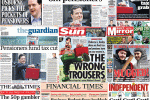
Today’s front pages concentrate on the so-called ‘granny tax’, the surprise of the Budget. But the real test of this Budget is going to be whether it delivers growth. If it does, then it will make a Tory majority in 2015 more likely. If it doesn’t, then the decision to cut the 50p rate will become even more politically problematic.   Given that the Budget is fiscally neutral, this growth is going to have come from either the couple of supply side measures in the Budget or by finding a way to unleash those elusive animal spirits. Indeed, I think this desire to boost confidence is one of the main reasons that the 50p rate has been cut.

The Spectator’s Budget briefing

From our UK edition

What was really in George Osborne's Budget? Last night we held an event, in association with Aberdeen Asset Management, to discuss just that. Click here for a free pdf copy of the briefing paper produced for the event.

Tory MPs welcome the Budget

From our UK edition

George Osborne and David Cameron have just addressed the 1922 Committee of Tory backbenchers. They received the traditional desk banging reception and Tory MPs seemed in good spirits as they left the meeting. Interestingly, they were nearly all relaxed about the increase in the personal allowance, believing that they would get the credit just as much — if not more than — the Liberal Democrats. One told me that ‘the public view this as a Conservative government when things are going well and a coalition one when things are going badly’. Perhaps the biggest piece of news out of the meeting is that Osborne offered Tory MPs considerable encouragement that the 45p rate will not become a permanent feature of the tax system.

Balls goes on the attack against 45p

From our UK edition

Ed Balls committed Labour to voting against the reduction in the 50p rate at his post-Budget briefing. But he wouldn’t say whether or not Labour would pledge to restore it in their manifesto; sticking to the classic opposition line that all decisions on tax will be made in the manifesto and not before. Balls, though, was on typically pugilistic form; few politicians relish a scrap as much as he does. The Labour leadership clearly view the abolition of the 50p rate as a major political opening for them. Balls went out of his way to attack the HMRC report that Osborne used to justify the move. He mockingly declared that he’d ‘never seen a government document with a Laffer curve in it before.’ This 50p fight is a classic Labour / Tory struggle.

All that matters now is growth

From our UK edition

With every Budget, the early Cameron emphasis on greenery and General Well Being not Gross Domestic Product seems a more distant memory. Today’s Budget showed that, to Osborne at least, growth now trumps these more abstract concerns.   So, we saw an announcement that the planning rules would come into force pretty much as planned from next Tuesday. This means that Osborne has simply overridden all the bureaucratic and legal objections from DCLG. Although, I understand that councils who already have a sufficiently pro-development local plan will have a year to adjust to the new rules.   Sunday trading rules, a classic bit of General Well Being paternalism, are also going on the scrap heap.

A quiet PMQs, ahead of today’s main event

From our UK edition

It started like a bit of good old political knockabout. PMQs opened with a planted question from Mark Menzies (Con, Fylde) asking the PM about Britain’s sick-note culture. Cameron, looking suitably grave, declared that the fake-sniffle problem afflicts even senior management. Ed Miliband, he told us, had recently claimed he was too ill to attend a rally called by health workers. Three hours later he was seen heartily cheering at a football match having been driven to the ground in a Rolls Royce. ‘What was it,’ asked Cameron, ‘that first attracted the Labour leader to the multimillionaire owner of Hull football club?’ This prompted howls and jeers from every part of the house. Ed Miliband ignored them.

Behind Osborne’s 50p tax change

From our UK edition

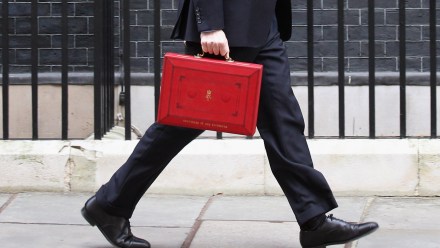
How significant was this Budget? On an economic level, not very. There's no discernible impact on growth: all of the main forecasts have more or less stayed the same since the Autumn Statement. Borrowing is the tiniest bit lower, mainly thanks to a £23 billion accountancy trick with Royal Mail pensions. And even many of the policies announced today will barely rouse the Exchequer's attention. That cut in the top rate of income tax to 45p? It will mean only £100 million a year less in direct revenues. That stamp duty increase for properties worth over £2 million? It will net only £300 million a year. The overall effect is a fiscally neutral document, as expected. The fuss-to-impact ratio for Budget 2012 is pretty high.

The Budget: What you need to know

From our UK edition

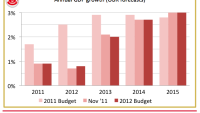
1. Growth. The OBR's forecasts are essentially unchanged from the Autumn Statement, but nevertheless represent a much bleaker outlook than we were given a year ago:  2. Debt. Despite Osborne's talk of 'paying down the debt', he's actually adding to it — by 59 per cent over this parliament. He is, though, on course to meet his second fiscal rule to see the debt to GDP ratio falling by 2015-16: 3. Deficit. Ignoring the effects of transfering the Royal Mail pension deficit, there's hardly any change to the borrowing forecasts since November. Progress on deficit reduction will be much slower than announced in Osborne's first two Budgets: 4. Unemployment. The OBR expects unemployment to peak at 2.

A Budget by and for the coalition

From our UK edition

The coalition has found the second year of co-habitation more difficult than the first and it will find the coming year even more difficult given that House of Lords reform is on the agenda. But today’s Budget is a reminder of the political benefits of coalition. When George Osborne stands up today and announces, for instance, the reduction in the 50p rate he will do so with the support of two parties. Equally, a minority Tory government wouldn’t have been able to get more spending cuts to help finance a tax cut through parliament. It also seems that there should be measures in the Budget to please both Tory and Lib Dem backbenches.