Uk politics

The Tories shouldn’t gloat about Galloway’s victory

From our UK edition

An unedifying week in politics keeps on getting worse. The Tories have this morning sent out a press release headlined ‘Warsi: If Labour can’t win in Bradford, how can they win a general election?’ The full quotation follows further on: ‘If Labour can’t win one of their safe seats in these tough economic times and in a tough week for the Government, how can they win anywhere? Not in half a century has an opposition come back from such an appalling result to win a majority at the next general election.   This tells you everything you need to know about Ed Miliband’s weak leadership.’ It's characteristic of much of the Tory reaction to George Galloway's victory in Bradford West.


The pressure is now back on Ed

From our UK edition

This morning’s front pages are simply awful for the government: every single one is critical of Downing Street. But this morning everyone in Westminster is again talking about Labour and the pressure on Ed Miliband. The Bradford West by-election has, at least for the moment, changed the subject away from pasties and petrol. Bradford West was a sensational result. Galloway, the former Labour MP, increased the Respect vote by more than 17,000 votes. For Labour to lose a by-election now is a major blow. They seemed to have had no answer to Galloway’s demagogic, sectional campaign. It will be little consolation to them that the Tory vote also collapsed, their share of the vote dropping by more than twenty percent.

George Galloway is an MP again

From our UK edition

‘This represents the Bradford Spring!’ said George Galloway after triumphing in the Bradford West by-election last night. So, let's get this straight: comparing his victory in one of the many fair elections held in this country each year to the dangerous and fragile struggle for democracy across the Arab world? Yep, that's right — and it leaves a nasty, bitter tang in the air. But we shouldn't be one bit surprised. Bluster, exaggeration and provocation are, after all, what Galloway does best. And now he will be able to do these things in Parliament for the first time since May 2010, when he was deposed from the Bethnal Green seat.

Cameron needs a proper party chairman

From our UK edition

Normally, when a Tory government is in trouble, the party chairman is sent out to put themselves between the bad story and the Prime Minister. But Baroness Warsi and Lord Feldman have been noticeable by their absence in the past few days. As Paul Goodman points out, it has been Michael Fallon — not either of the chairman — who has been touring the broadcast studios trying to hose down this story. This whole episode has been yet another reminder of why Cameron needs a proper party chairman. The party chairman needs to be solid under fire, a good media performer and, for reasons that Tim Shipman explains, an MP. Various names are being touted in Westminster.

Davis takes the opportunity to strike

From our UK edition

The fuel tanker strike is fast turning into a critical moment. The government, which has surprisingly few friends in the media, desperately needs something to move the story on from pasties and the politics of class. Cameron, also, has problems with his own side. On the World at One today David Davis, deliberately, hit Cameron where it hurts. He accused the Cabinet of looking like “they’re in a completely different world". One thing that the post-Budget opinion polls have shown is just how shallow support for the coalition is: there’s still no sense of who Cameron’s people are. But I suspect that if this strike is beaten, then the Tories will tick back up in the polls and it will be Ed Miliband who is facing questions about party donors.

Choice — easy to talk about, a slog to deliver

From our UK edition

The birth of the White Paper on public service reform was a tortuous business — but, now it's been out for several months, the government is keen to make the most of it. David Cameron is launching an ‘updated’ version today, with a few new proposals contained therein. He also has an article in the Telegraph outlining those ideas, including the one that seems to be getting the most attention: draft legislation to give people a ‘right to choose’ their public services. It feels like both an important and potentially inconsequential moment all at once. Enshrining choice in the laws of this land is a powerful symbol that people shouldn't have the state's idea of ‘good’ foisted upon them.

Fuel for the political bonfire

From our UK edition

Pasties and jerry cans — who'd have thought that yesterday's politics would descend into a roaring debate about two such innocuous items? And still the hullabaloo goes on. Most of today's front pages lead with one or both of the stories, although I'd say it's the jerry cans that win out overall. Thanks to Francis Maude's suggestion that ‘a bit of extra fuel in a jerry can in the garage is a sensible precaution to take,’ we're seeing headlines such as ‘Pumps go dry as ministers provoke panic’. As with the pasty row, which James discussed yesterday evening, the political dangers of this stretch far beyond the actual matter at hand.

The politics of pasties

From our UK edition

The row over the so-called pasty tax is a proxy. It is really a row about whether David Cameron and George Osborne get what it is like to worry about the family budget each week.   In truth, I suspect that they don’t. But I think the same probably goes for Ed Miliband, Nick Clegg and the vast majority of journalists. Most of the politics of class in Westminster, as opposed to the country, is the narcissism of small difference.   The best thing the coalition could do now is hold its nerve. The Budget did reveal that support for it is shallow. But, as one leading pollster said to me yesterday, if they handle the tanker strike right, they’ll be ahead again by May — the next time anyone is voting in an actual election.

Your guide to Osborne’s fiscal rules

From our UK edition

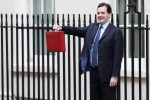
George Osborne's two fiscal rules have been around since his very first Budget, delivered almost two years ago, so they're hardly news. But they do underpin much of what he's done since, including last week's statement, so they're also worth knowing about. Fraser touched on ome of the detail in a post last weekend, but here's a supplementary guide for CoffeeHousers: 1) The deficit rule. This is the one that seems to cause the most confusion, perhaps because it has often been simplified — wrongly — as something like ‘eliminate the deficit by the end of this Parliament’. Fact is, the ‘end of this Parliament’ doesn't come into it.

Pasty wars

From our UK edition

David Cameron earlier: https://www.youtube.com/watch?v=mCovGqMiZyA And Labour's response: https://www.youtube.com/watch?

A plan that could change the face of future Budgets

From our UK edition

‘I’ve never seen a government document with a Laffer curve in it before’, declared Ed Balls last week. Well it looks like he might be seeing a lot more of them, if George Osborne gets his way. Yesterday, as James noted, the Chancellor told the Treasury select committee that: ‘I think the Treasury can now, and I've asked this to happen, start undertaking some real research into dynamic scoring, and what the broader economy effects are of changes to taxation’. Now, it’s hard to get all that excited about something with a name like ‘dynamic scoring’. It was never going to make the front pages, especially when there’s a ‘pasty tax’ to get worked up about.

Riots report undermines the Tory diagnosis, but spreads itself too thin

From our UK edition

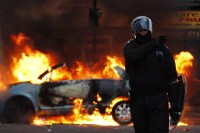
After last August’s riots the debate became quickly polarised. Were socio-economic factors like unemployment to blame, or was it all down to the individual choices of the rioters? David Cameron and other Conservative ministers knew which side of this debate they wanted to be on. They had been taken by surprise by the riots, initially failing to realise how serious things were, but when they got back from their holidays they set out a clear and confident line, brushing off most questions about links to the state of the economy or youth attitudes, and condemning the riots as ‘criminality pure and simple’. The soundbite was deliberately simplistic; Conservative ministers’ actual views were more complex.

Osborne opens the door to dynamic costings

From our UK edition

George Osborne’s announcement that the Treasury is going to start looking at the dynamic effect of tax changes is significant. The aim, I understand, is for them to gather data on this which could then be used to work out the costs of various tax and spending changes. This would mean that most tax cuts would, in the Budget Red Book, cost the government less. The decision, though, about what system to use is no longer in the Treasury’s hands. The independent Office for Budget Responsibility now does all forecasts and policy costings so the decision on what model to use ultimately rests with them. Osborne made this announcement in his appearance before the Treasury select committee today, an absurd amount of which was taken up by questions about Budget leaks.

The government’s keen to avoid the petrol chaos of 2000

From our UK edition

So, once again, we face the prospect of disruption at the pumps, as tanker drivers have voted for strike action over their terms of employment. According to the union Unite, their demands are 'industry minimum standards and industry wide bargaining on pensions, terms and conditions, training and health and safety'. In all, around 2,000 drivers at seven fuel distribution companies voted, with 61 per cent of them in favour. A majority approved strike action at five of the seven firms, while at DHL and Suckling drivers rejected it. The government is, naturally, keen to avoid such a disruptive strike and has been quick to condemn it. Energy Secretary Ed Davey told the Today programme this morning that 'This strike is completely unnecessary. It should not go ahead.

Money for Maths

From our UK edition

If you get the incentives right, the rest should follow. So Liz Truss’ push for a subject premium should be applauded. If sixth form colleges received more money for pupils studying Maths, it is reasonable to assume that they would encourage more of them to do it. At the moment, colleges receive more money for people doing Media Studies than Maths or English on the grounds that the equipment required to teach the subject makes it more expensive. But, frankly, this is perverse. I expect that nearly every employer, including newspapers, would rather that their employees had Maths A-Level than Media Studies. Truss’ other point is that more money for Maths would enable more schools to hire good quality Maths teachers.

The Tories’ perception problem

From our UK edition

Introducing Ed Miliband, Labour's best hope since Tony Blair. Oh, I'm kidding, of course — but it's still striking that, this morning, Labour have their biggest lead in a ComRes poll for seven years. And the size of the lead? Ten points, but it could be even bigger. The Peter Cruddas revelations fell right in the middle of ComRes's polling. Apparently, those interviews conducted after Sunday had Labour with a 17-point lead. Of course, you can slap every caveat across this that you like: we're still ages away from the election; one poll does not make a trend; the 17-point figure is based on a subset of a subset of people; and so on. But this ComRes poll, and a few others out today, will still jangle nerves and fray tempers along Downing Street.

Replacing control orders: an unsatisfactory compromise 

From our UK edition

A small silver lining for David Cameron in the ‘cash for access scandal’: on a quieter day, today’s report on the coalition’s replacement of control orders with ‘Terrorism Prevention and Investigation Measures’ (TPIMs) might have got more attention. The report, published by the Independent Reviewer of counter-terrorism legislation, David Anderson QC, makes for difficult reading for ministers. Before looking at the detail of the report, it is worth remembering that control orders were always a second-best policy.