Uk politics

Give profit-making schools a chance

From our UK edition

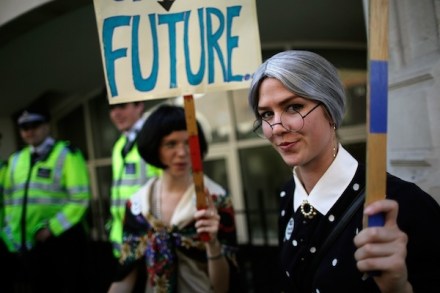
Rick Muir, an associate director of the IPPR, published a paper this week called ‘Not For Profit: the role of the private sector in England’s schools’ in which he argues against allowing commercial companies to play a greater role in the delivery of taxpayer-funded education. As a contributor to a recent book published by the IEA called ‘The Profit Motive in Education: Continuing the Revolution’ — which takes the opposite view — I feel duty bound to respond. The first thing to be said is that Muir is not a rabid opponent of education reform. He’s pro-academy and pro-free school. Indeed, it’s hard to find anything of substance that Michael Gove has done since becoming Secretary of State that he disagrees with.
Libor isn’t working

From our UK edition

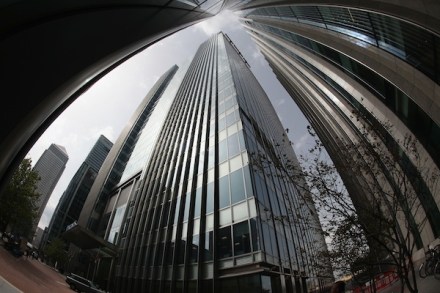
The Financial Services Authority's Martin Wheatley will take one of the first steps to cleaning up the banking industry's reputation after the Libor scandal today when he publishes an initial discussion paper on his review of Libor. Wheatley is likely to confirm what it appears Sir Mervyn King, his deputy Paul Tucker and Angela Knight of the British Bankers' Association already suspected back in 2008: that Libor as it currently stands is 'no longer fit for purpose'. The FT reports that Wheatley will suggest scrapping Libor altogether and replacing it with a rate based on actual trades that would be overseen by a new independent body. This would remove the 'incentive to manipulate' Libor that Timothy Geithner highlighted.

People’s Pledge pulls voters in to support EU referendum

From our UK edition

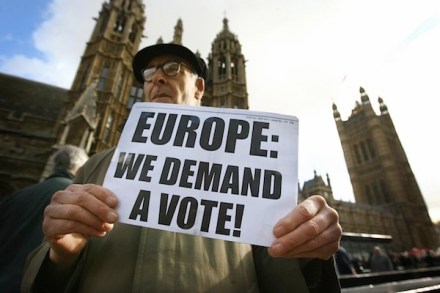
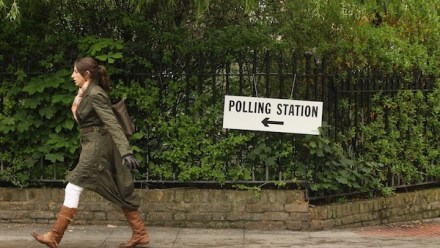
Holding a vote on the European Union in the middle of the summer holidays and while the Olympics are in full swing seemed to rather stack the odds against the People's Pledge campaign. But when the results of the two votes in Hazel Grove and Cheadle came through this evening, the turnout in these two marginal constituencies was just as stunning as the outcome itself. Both constituencies saw a 35 per cent turnout, with 88.5 per cent of Hazel Grove residents voting in favour of a referendum on Britain's membership of the European Union, and 86.6 per cent supporting a plebiscite in Cheadle. That's a bigger turnout than we saw at this year's local elections.

The good news in today’s university applications figures

From our UK edition

A drop of 8.8 per cent in the number of students applying for university is surprisingly small, actually, when you consider the size of the hike in tuition fees. Still, the figures released today by Independent Commission on Fees prompted an angry response from Labour's Shabana Mahmood, who said: 'The Tory-led Government's decision to treble tuition fees at the same time as cutting funding for higher education is already putting thousands of people off university who otherwise would be eagerly preparing to start their courses.' It's easy to brand this drop of 37,000 applications from the 2010/11 academic year as a failure for ministers who have insisted that the fee rise should not put off prospective students.

Slashing and burning the civil service, or just skimming off the top?

From our UK edition

Are Francis Maude's £5.5bn savings in central government spending a significant step forward in his battle to shrink the public sector? In today's Telegraph, the Cabinet Office minister explains the beneficiaries and sources of the latest cutbacks: Today I can announce that in 2011-12 we saved £5.5 billion. This is the equivalent of around £500 for each working household in Britain or enough money to fund 1.6 million primary school places. How did we make these savings? Within the first days of this Government we introduced tough temporary spending controls. These limited expenditure on IT contracts, property, marketing, temporary staff and consultancy. While civil service spending has steadily decreased — £3.

Conservatives have broken coalition agreement, voters say

From our UK edition

Here's an interesting statistic from YouGov: more voters think the Conservatives have broken the coalition agreement than think the Lib Dems have failed to stick to it. When asked whether the Tories have 'mostly kept to their side of the deal they made in the coalition agreement', 51 per cent said no. For the Lib Dems, 45 per cent of voters thought the Lib Dems had stuck to the coalition agreement against 32 per cent who thought they had not. It's worth noting, though, that when you look at the breakdown of voting intention, it is Labour voters rather than Conservatives who think Nick Clegg's party have stuck to their side of the bargain. Fifty per cent of Labour voters say the Lib Dems have mostly kept the agreement, against 34 per cent who do not.

Boris to teach the 1922 some election tricks, and a new Jobs Bill

From our UK edition

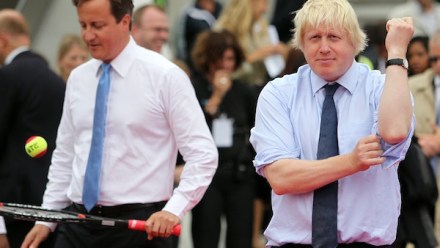
One adviser told me recently that he found James Forsyth's political column more useful for finding out what's coming down the line than the meetings Number 10 holds for aides. As ever, James' column in today's Spectator is packed full of scoops, one of which has already been followed up by the Daily Mail. He reveals that many Tory MPs find it depressing that Cameron has placed such emphasis on boundary reform, with one backbencher saying: 'They don't seem to think they can win an election by persuading people.' Meanwhile, Boris Johnson has been invited to address the 1922 committee on how to win an election: Were the boundary review to be thwarted, Cameron would face a big strategic choice.

Boris on the warpath on Standard Chartered

From our UK edition

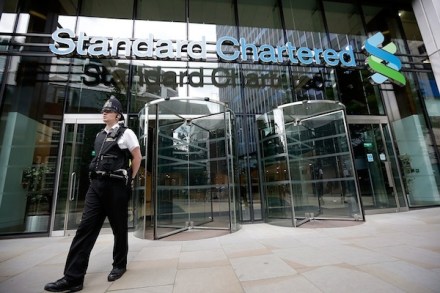
Boris Johnson is the Spectator's diarist this week, and as you'd expect, his piece in tomorrow's magazine is full of wonderful Borisisms including cyclists who 'wave their bottoms at each other like courting pigeons' and 'luscious gold doubloon'. But the Mayor of London also launches an attack on America and the way 'some New York regulator' has set upon Standard Chartered. He writes: I mean, what is all this stuff about Standard Chartered? This British bank has generally enjoyed a high reputation for probity (as these places go) until yesterday, when some New York regulator apparently denounced Standard as a 'rogue institution'. Well, if people have broken the law of this country, then by all means bang them away.

The Bank of England: no Paul the Octopus

From our UK edition

When challenged on the Bank of England's poor record of economic forecasting by Ed Conway of Sky News this morning, Mervyn King said: 'This isn't a spot the ball contest where you're trying to hit one point on the picture. This is a question of assessing the balance of risks…  We don't pretend to have a crystal ball to see the future. All we can do is assess the balance of risks. I think this is a reasonable judgment about the balance of risks. It doesn't say that there will be a recovery. It says that in our central view there will be a recovery, and there are risks on both sides to that — both on the upside and on the downside.

Economy ‘close to zero’

From our UK edition

Sir Mervyn King's sporting jokes are almost as bad as the Bank of England's ability to publish accurate economic forecasts. As he unveiled the August Inflation Report this morning, the Governor said: 'Unlike the Olympians who have thrilled us over the past fortnight, our economy has not yet reached full fitness, but it is slowly healing. Many of the conditions necessary for a recovery are in place, and the MPC will continue to do all it can to bring about that recovery. As I have said many times, the recovery and rebalancing of our economy will be a long, slow process. It is to our Olympic team that we should look for inspiration. They have shown us the importance of total commitment when trying to achieve a goal that may lie some years ahead.

Cameron’s big sporting society

From our UK edition

David Cameron made a spirited defence of school sport this morning when he appeared on LBC radio. Waving a sheet of paper triumphantly, the Prime Minister argued that the 20 school playing field sales that Michael Gove had signed off were actually schools that had closed, surplus fields and 'surplus marginal school land'. He also defended the decision to remove a compulsory target for all children to take part in two hours of sport a week: Well, look, we haven't done that, you know, sport is part of the national curriculum and we want schools to deliver sport and I think that's very important, but frankly, and we're putting a lot of money in, there's a billion pounds going into school sport over the next four years. But frankly if the only problem was money, you'd solve this with money.

Lower inflation eases the squeeze, for now at least

From our UK edition

George Osborne might not be feeling particularly comfortable with today's August Inflation Report from the Bank of England, as Sir Mervyn King is expected to slash the Bank's growth forecast for the British economy in 2012 from the 0.8 per cent it predicted in May to close to zero. This morning's announcement will also include some mildly good news for households, with the Bank due to predict a 2.1 per cent fall in inflation by the end of the year. This will bring inflation down below the two per cent target, which, as the CBI's Richard Lambert pointed out on the Today programme, will mean 'families starting to feel a little less squeezed'. High inflation leaves millions of families on frozen wages poorer as they struggle to afford rising costs.

Miliband wins the boundaries battle

From our UK edition

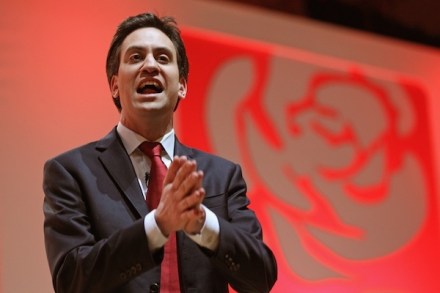
The biggest winner of the coalition spat over Lords reform and boundaries is, undoubtedly, Ed Miliband. The electoral hill he has to climb to be Prime Minister has just been reduced in size significantly by the fact that the next election is likely to be fought on the existing boundaries. A lead over the Tories of just three per cent would deliver him a majority. In quite a turn-around from last year, Miliband will go to his party conference as the most secure of the three leaders. But Miliband will soon face a problem, albeit a high quality one. At some point in the not too distant future, the media will start to treat him as a likely Prime Minister. This means that his policy positions will be examined with a far greater level of scrutiny than they currently are.

Cameron confirms boundary vote

From our UK edition

David Cameron has confirmed this lunchtime that the boundary reforms will be pressed to a vote. Describing the plans that the Lib Dems are now set to reject as 'sensible', he said that they would be 'put forward' to MPs. As James reported yesterday, Conservative sources are not yet conceding defeat on this, hoping that something might turn up to ensure their passage through parliament. But the vote will lead to the extraordinary spectacle of Lib Dem ministers walking through the 'no' lobbies with Labour and then, according to party sources, resuming their positions on the front bench without any censure because these are exceptional circumstances. The Prime Minister gave a nod to this today when he told BBC Wales that 'every party will have to make up its own mind how it votes'.

Cesspits and the City

From our UK edition

It's becoming difficult to predict just when the period of remorse and apology for bankers really will be over. Bob Diamond claimed that it had finished in January 2011, and found to his cost this summer that this was not true. The Libor scandal that cost the Barclays boss his job wasn't the only unpleasant thing to crawl out of what Vince Cable described as the 'cesspit' in the City of London, though. Today Standard Chartered's shares fell by 16 per cent following allegations from US regulators that the bank had covered up £160bn worth of transactions with the Iranian government. And at Southwark Crown Court this morning, Jessica Harper, head of fraud and security for digital banking at Lloyds bank admitted a £2.4 million fraud.

Multicultural Britain, Olympic Games, Danny Boyle – Spectator Blogs

From our UK edition

Back from holiday and it seems just about the only "controversy" at these splendid* Olympic Games lies in Danny Boyle's exhuberant opening ceremony. According to its critics it was multi-cultural crap or pap or something. And, of course, in one sense it was a hymn to multi-cultural Britain. Why else would Boyle have begun with choirs in Northern Ireland, Scotland, Wales and England (spliced with rugby footage) if not to remind the audience (in London and further afield) that the United Kingdom is not quite the same thing as England. Of course, that's not what the critics of multi-culturalism really mean when they sneer at "multi-culti" tripe and political correctness "gone mad". One of the problems with discussing these matters is the difficulty of defining and agreeing on terms.

How the Lib Dems could be truly mature in government

From our UK edition

Nick Clegg's decision to scupper boundary reviews in retaliation for the failure of his Lords reform programme is the very opposite of 'mature' government. It is the politics of the sand pit: you have annoyed me, so I'm going to kick your sandcastle down. It's his way of putting a horse's head in Cameron's bed, and the public will be appalled. The coalition has entered a new, destructive phase where Lib Dems will now pride themselves on what Tory measures they can frustrate or destroy (O Levels, profitmaking schools etc).