Uk politics

Britain: the country of Mohammed

From our UK edition

With apologies to his Royal Highness, the most popular boy’s name isn’t Harry -  in spite of what you will have read in the papers this week. It’s Mohammed, under various spellings. The Guardian hasn’t even worked this out, in spite of its pretty data table. Table 6 on the ONS results shows: some 8,018 baby Mohammeds came kicking and screaming into the world last year, well clear of Harry (7,523) and Oliver (7,007) Harry had his turn, and John was the most popular name for decades. We are now living in the age of Mohammed, a name that has been growing (on average) for 5 per cent a year. Here’s the trajectory. Does this matter? Not to me.

The green belt isn’t as green and pleasant as you’d think

From our UK edition

The two best fights to watch in Westminster this autumn will be about land: the shape of constituencies, and where developers will be allowed to build the new homes that ministers are increasingly seeing as the best solution to Britain's growth problem. Tim Shipman reports in the Daily Mail today that the Quad is 'thinking the unthinkable' and considering relaxing rules around building on the green belt as part of those planning reforms that Eric Pickles and colleagues are dreading. Cue outrage and news reports featuring photographs of beautiful rolling green meadows. Sources in the Communities and Local Government say they do not recognise the Mail's report. But why is the green belt so sacred?

Ministers fail to sell themselves on playing field sell-offs

From our UK edition

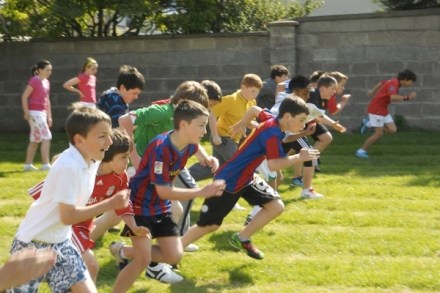
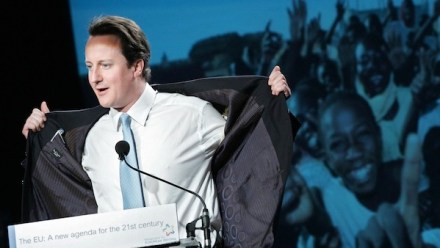
If you're a minister, or even the Prime Minister, and you take to the airwaves holding a page of figures aloft, it's always a good idea to make sure the figures are actually correct before you enter the studio. When David Cameron read out a break down of playing field sales on LBC radio during the Olympics, he was trying to crush reports that under this government, schools are continuing to reduce their sports facilities in return for money. You can watch the film of Cameron with his sheet of paper here. The problem is that this sheet of paper wasn't actually correct when it said there were only 21 sell-offs, and as Christopher Hope reveals in today's Telegraph, there were actually 35 applications to sell school playing fields, of which 30 were approved.

How students are mis-sold the benefits of university

From our UK edition

What do you say to an Arts graduate? ‘Big Mac and fries, please!’ I used to laugh at that joke until I was served a Junior Whopper by one of my fellow arts graduates in Edinburgh and ever since then I’ve been suspicious of the story I was sold at school: that going to university takes you into a new league of earning potential. The A-Level results came out yesterday, and anyone who has opened an exams envelope will be familiar with the feeling. That you may as well have the results tattooed on your forehead because they will define the trajectory of your life. But in the 22 years since I left school, the government has added to the pressure. It has made a switch from providing university education to actually selling it.

Hague stands firm on Assange

From our UK edition

William Hague took a robust line on Julian Assange at his press conference this evening. He made clear that the British government would not allow the Wikileaks founder safe passage out of the UK, and warned against using diplomatic immunity as a means of 'escaping regular process of the courts'. Assange is wanted in Sweden on allegations that he raped one woman and sexually assaulted another in August 2010. He denies both charges and has spent the past 56 days hiding in Ecuador's embassy, where it was today confirmed that he is being granted political asylum. The police still intend to arrest Assange as soon as he leaves the embassy, but Hague's press conference locks the foreign secretary into stand-off with his Ecuadorian counterpart, Ricardo Patino.

Housebuilding slumps

From our UK edition

If ministers needed any more encouragement to improve the supply of new homes in this country, today's figures on house building starts and completions from the Communities and Local Government department might just do it. Housing starts in England in the three months to the end of June fell by 10 per cent on the previous quarter. If you compare the figure for starts in this quarter to those in the same quarter last year, there has been a 24 per cent drop. The number of completions has also fallen by five per cent between the first and second quarters of this year, but has risen seven per cent on last year. If you burrow into the figures, which you can find here, you'll also see a sharp drop in the number of housing association homes being built since last year.

Conservative Corby slips away

From our UK edition

The first polling on the Corby and East Northamptonshire by-election is out today and not surprisingly, it suggests that Labour will take the seat by a landslide. The poll commissioned by Lord Ashcroft predicts Corby will fall in line with national polling trends — a collapsed Lib Dem vote, reduced Tory presence and a resurgent Labour: If the by-election result follows this pattern, it will represent a 9 per cent swing to Labour since the 2010 general election. If this were replicated at a national level, it would be enough to sweep Ed Miliband back into Downing Street. The poll also gives some reaction to Louise Mensch's resignation.

A-level results crib sheet

From our UK edition

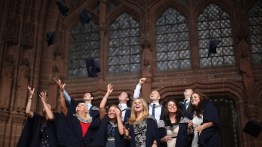
This year's coverage of A-levels has been a little different to that in previous years. Sure, there are still plenty of blonde twins coming out of the woodwork to take impressively high jumps in the air but there are no headlines about results breaking new records for the proportion of top marks awarded, and that's because tough new rules on the exams came into effect this year. Last year results remained static for the first time in a decade, and this year, they saw a drop. The number of marks at A or above fell 0.4 per cent to 27 per cent of total grades awarded. Just under 7.9 per cent of entries were marked at the top A* grade, a fall from 8.2 per cent in 2011. The overall pass rate has only increased marginally to just under 98 per cent.

Twigg takes aim at Gove on school playing fields

From our UK edition

The Olympics may be over, but the political row over school sports fields is set to rumble on into the autumn. Stephen Twigg today announced that Labour will force a vote on the matter when the Commons returns in September. His motion will demand that the government restore a minimum space requirement for outdoor space in schools. It does take some chutzpah for Twigg to launch this attack, given Labour managed to approve the sale of 42 playing fields in just one year, which is twice the number sold off since the coalition came to power. The Education department insists that of the 21 that have been signed off for sale, 14 belonged to schools that closed, and four were surplus to requirements after existing schools merged.

The ideological row over profit-making schools

From our UK edition

Earlier this week IPPR published a paper which made the case against for-profit schools. Two of the leading proponents of such schools, Toby Young and Gabriel Sahlgren, have since responded. Young accuses me of being ‘an evangelical believer in an ‘evidence-based’ approach to public policy’. He implies at the start of his piece that empirical evidence should play little part in policy development. Confusingly he goes on to set out which types of empirical analysis he values and which he doesn't. It is unclear from this what role he thinks evidence should play in policymaking. Young is particularly scathing about the use of cross-national evidence.

Boris accuses Cameron of ‘pussyfooting’ on growth

From our UK edition

Last week Boris Johnson was in jellyfish mode, drifting along and delivering the occasional sly sting to the coalition. Now that the Olympics are over, the Mayor has launched something of a shark attack on his Westminster colleagues. In an interview with the Evening Standard, Boris accuses ministers of 'pussyfooting' and calls for the government to 'make a very powerful statement of ambition for London' involving new infrastructure and even a new airport: 'The government needs to stop pussyfooting around. I don't think you can rely on Heathrow. Even if the government was so mad and wrong to try to do the third runway or mixed-mode, those solutions would rapidly run out of usefulness and time.

First’s risky win highlights fundamental problems with the rail network

From our UK edition

Euston, we have a problem. Richard Branson found out today that Virgin Trains has lost the rail franchise for the West Coast Mainline to First Group. From 9 December, First plans to ‘offer substantial improvements in the quality and frequency of services’ on one of the country’s key arteries. This overhaul will bring in 11 new trains and 12,000 extra train seats by 2016. Branson is sore about his company's loss, and has attacked the government's 'insanity' for handing over the network to First: Under our stewardship, the West Coast Mainline has been transformed from a public liability into a valuable asset for the UK, worth many billions of pounds.  The service is a British success story and one to put up against rail companies around the world.

Good jobs news goes against grain

From our UK edition

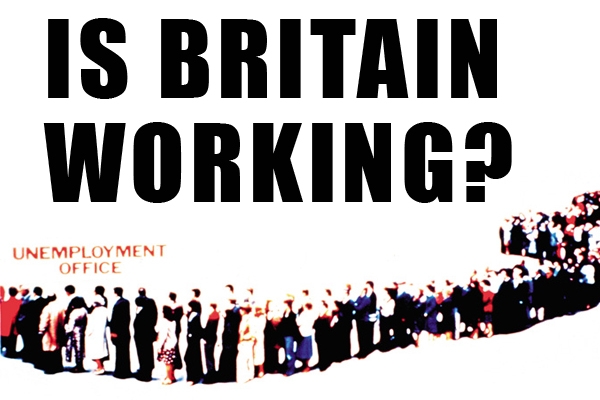
Ministers are generally cautious in welcoming falls in unemployment in case they represent a blip for just one quarter. But Iain Duncan Smith was pretty chipper this morning when the Office for National Statistics announced a fall in the jobless stats for the fifth quarter running and the strongest employment rise since the middle of 2010. In the three months to June 2012, 29 million people were in work, up by 201,000 on the previous quarter. The employment rate rose by 0.4 per cent to 71 per cent, and there are 4,000 fewer unemployed young people.  The number of unemployed people fell by 46,000 to 2.56 million.

A nice new row for the coalition

From our UK edition

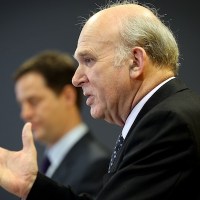
When Nick Clegg announced he was giving up the struggle on House of Lords reform, he named a number of policy areas that could fill the huge legislative void left by the collapse of the plans to overhaul the upper chamber. One of them was banking, and the Deputy Prime Minister told journalists it might be worth examining whether it was possible to go further than the Vickers proposals on this area. Today's Financial Times fleshes out what going further might entail. Vickers had originally proposed banning the retail operation of a bank from selling interest rate and currency swaps, but this was dropped in the white paper on banking reform. Now Clegg and the Business Secretary Vince Cable want to re-open talks on this issue.

Usain Bolt, tax campaigner

From our UK edition

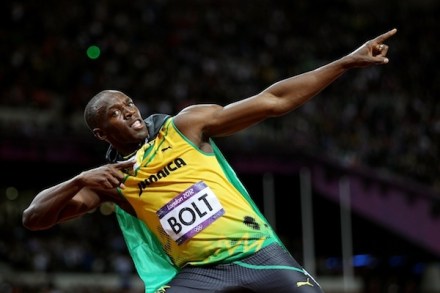
Living legend Usain Bolt is an unlikely mascot for those who campaign for reform of our tax system, but by confirming that he will continue to avoid competitions in the UK because of the amount of tax he would have to pay, he's now the poster boy for the movement. If he attended races here, he would be taxed 50 per cent on his global sponsorship and endorsement earnings, and on any appearance fees he receives. The Treasury granted an exemption for the Olympics to ensure athletes would not stay away because of the hit on their earnings. 'As soon as the law changes, I'll be here all the time,' Bolt said. This has inevitably attracted the sort of moralising about paying tax that ministers normally make a superb mess of.

Bercow calls ‘no-hopers’ to order

From our UK edition

John Bercow's interview with the World at One was guaranteed to raise a few hackles across Westminster, and he certainly delivered on that by attacking 'totally low-grade, substandard' 'no-hopers' in the media. But well as revealing that he told his mother to stop reading the Daily Mail after reading something unpleasant about him in the newspaper, the Speaker also made some other interesting comments about his own role.

Fares rise brings fresh cost of living woe to Tories

From our UK edition

This morning's announcement that the retail prices index rose to 3.2 per cent in July, up from 2.4 per cent in June, means commuters will see a 6.2 per cent rise in their train fares in January. Fares rises are currently calculated using RPI + 3 per cent. Analysts had predicted RPI would be 2.8 per cent, which means tickets will be even more expensive than originally expected. Don't forget rail fares already saw an average 8 per cent rise at the start of this year. Some tickets will rise by a further five percentage points if other fares on a network are kept lower as a balance. Before he was reshuffled from the transport brief, Philip Hammond described trains as a 'rich man's toy'.

Herbert’s ‘boring waffle’ betrays unease on police commissioners

From our UK edition

'That's just boring waffle!' shouted Evan Davis on Radio 4 this morning when policing minister Nick Herbert refused to give direct answers to his questions on the turnout expected in the police and crime commissioner elections. Herbert repeatedly argued that 'any turnout will confer greater legitimacy' than the current system of unelected police authorities. But his repeated refusal to pin down any figure for the percentage of voters who will trudge out of their homes on a cold and possibly rainy November evening to vote for the commissioners betrayed an unease about how well these elections are going to work out in practice. Herbert and his colleagues will know that a low turnout will be awkward, not least once the new commissioners are in place and start taking unpopular decisions.