Uk politics

Lib Dems push Treasury on mansion tax

From our UK edition

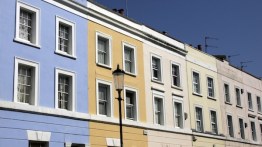
The Treasury's consultation on taxing residential property transactions closes this Thursday, and the Liberal Democrats are using it to push their preferred policy of a full mansion tax. The party has asked its members to send this email to the Treasury: I am writing in response to HM Treasury's public consultation on the taxation of residential property transactions. Ultimately, I want the government to go further and introduce a full mansion tax charge of 1 per cent annually on all properties worth £2 million or more, with an option of delaying payment for those who are asset-rich but cash-poor. If the government wants those with the broadest shoulders to bear the burden of austerity then it should look seriously at a full mansion tax.

Sorry, Rachel, but more debt is not the answer to the debt crisis

From our UK edition

Has anyone seen George Osborne’s £3 billion? The Chancellor seems to have lost it. His government had expected to net £2.5 billion more than it spent last month, as July is normally a good month for tax receipts. Instead the figure has come in at a £600 million deficit. This is a major shock to the City, and analysts are spending today reworking their forecasts. Sure, we know the economy has flatlined. But we didn’t know that the impact on the tax haul would be so bad. As you’d expect, Labour has gone on the attack. But the Ed Balls line (being voiced by Rachel Reeves today) sounds less convincing than ever. They say that Osborne is cutting too far, too fast, and that he should more slowly and, ergo, borrow more.

Promoting tax transparency at the petrol pumps

From our UK edition

Too many taxes are buried in prices. From Value Added Tax to the cost of extravagant subsidies for renewable energy, all people see is the shop charging them a higher price. That is convenient for politicians trying to hike our taxes, but it distorts democratic decisions over the level of taxes and spending, and which taxes to increase and decrease. That is why we have seen steady increases in Employers’ National Insurance. It is why climate regulations are structured so a huge part of the cost is buried in the electricity market. And it is telling that the taxes people resent most are the lump sums they have to write a cheque for each year.

Ministers take brand NHS to the world

From our UK edition

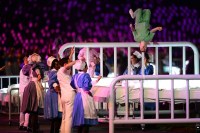
Danny Boyle had us all fooled. There we were, thinking the dancing nurses and luminous NHS logo in his opening ceremony for the Olympic Games were part of a piece of 'Marxist propaganda', when actually he was sneakily paving the way for what Labour this morning derided as the 'rampant commercialisation' of the health service. Yes: it turns out that the Olympic opening ceremony was just one big fat right wing advertising ploy to entice the world to buy into Brand NHS. Whoops. The government is opening an agency called Healthcare UK, which is designed to set up contacts between world-respected NHS operations and private clients overseas.

Proalition risks becoming a noalition

From our UK edition

The Conservatives and Liberal Democrats are preparing for their last-ditch attempt to kiss and make up before having to accept their union is over. The coalition partners are heading into the conference season with a positive attitude they hope will carry them through 2015 (and potentially beyond). A new word to describe the second coalition love-in has entered the Westminster lexicon this week — ‘proalition’. Both sides are desperate for proalition to work. Not out of a desire to work together, but out of sheer necessity. If the coalition falls apart in the near future, both parties would face annihilation at the polls.

There’s no right to live in Chelsea

From our UK edition

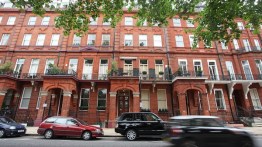
Your local council owns prime real estate and could sell it to build new social houses. Housing Minister Grant Shapps says the appeal of this idea promoted by Policy Exchange is 'obvious'. With a potential pot of £5.5bn to build up to 170,000 affordable homes, what’s not to like? Plenty, apparently: Labour MP Karen Buck warned of a risk to communities, and the importance of mixing groups within our population. Lord Prescott called the idea ‘gerrymandering'. The empty slogans come from both sides. When someone says ‘nobody has a right to live in’ Chelsea they ought to remember that some people do have a right to live there, and that they pay for that right.

Voters say goodbye to nanny

From our UK edition

Has nanny finally blown it?  That was what we sought to find out.  After having the state tell us what to eat and drink, how to exercise, and even how to cook turkey, anecdotal evidence suggests people are growing tired of it all and would like nanny to stop being so bossy.  A small group of self-styled 'experts' who think they know better than we do how to live our lives seems to have persuaded government to bully us into compliance. In 1998 the Adam Smith Institute surveyed, with a polling organisation, the attitudes of the younger generation.  We found then that they didn't expect government to gain them a job, they scored politicians and civil servants low in the admiration stakes, and nearly half (48 per cent) wanted to run their own business.

Is selling off expensive council homes such a bright idea?

From our UK edition

Here's a policy that looks like it could be a vote winner while helping to solve Britain's housing crisis: selling off expensive council homes. Think tank Policy Exchange has published a paper this morning proposing that local authorities be allowed to sell luxurious properties in their boroughs as they become vacant in order to raise money for new, cheaper social properties. The report's author, Alex Morton, believes this could lead to 28,500 expensive properties being sold off each year, raising £5.5 billion for new housing construction. The idea is also, unsurprisingly, quite a popular one with voters.

A U-turn on rail fares would buoy up backbenchers

From our UK edition

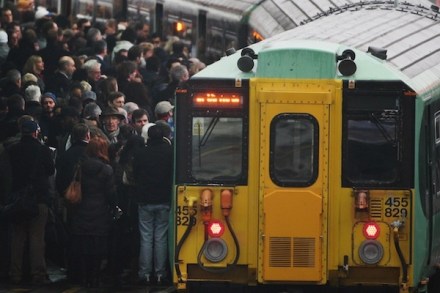
It's not unusual in politics for what would in abstract seem a sensible policy to become hugely unpopular when it hits Westminster. Most Conservative MPs would agree, in principle, that placing the burden of the cost of rail travel on the shoulders of those who actually travel by train is far more sensible than the money coming from all taxpayers, regardless of whether they use the rail network, and regardless of whether they live in commuter-land or not. But it was also inevitable that this week's huge price rise would be very difficult for MPs to sell to their constituents when the cost of living is rising across the board. Today's story in The Observer quoting MPs who want the government to change course on this matter does feature a fair number of commuter belt constituencies.

Assange’s balcony scene

From our UK edition

Julian Assange appeared in public for the first time in two months this afternoon to make a statement about his continuing resistance to attempts to extradite him. The Wikileaks founder made a number of claims and arguments which it's useful to have a look at in further detail: 1. 'If the UK did not throw away the Vienna conventions the other night, it was because the world was watching'. Foreign Secretary William Hague has insisted that there are no plans to 'storm' the Ecuadorian embassy to arrest Assange. Either officers will attempt to arrest him when he leaves the building for Ecuador (although there is an interesting theory he may try to do this disguised in some sort of package, as diplomatic parcels cannot be examined by the police. Let's see how well that one works out...

Darling: Osborne has given up on growth

From our UK edition

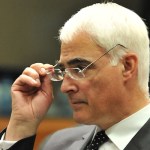
'Unless you do something now it will be years before we recover.' This morning those words come from former chancellor Alistair Darling in an open letter to George Osborne, but they could just as easily be from a member of his own backbench, or from Boris. Darling's letter, published in the Sunday People, accuses both Mr Osborne and the Bank of England of having 'given up on any plan for growth'. 'Your policies since 2010 simply haven't worked, you need another plan - call it plan B, call it whatever you like,' he writes. He's essentially saying the same thing as Boris Johnson did this week, but using slightly more polite words than 'pussyfooting': expansion of London's aviation capacity, more houses, replacing power stations and investment in rail.

Ed Miliband, Olympic winner

From our UK edition

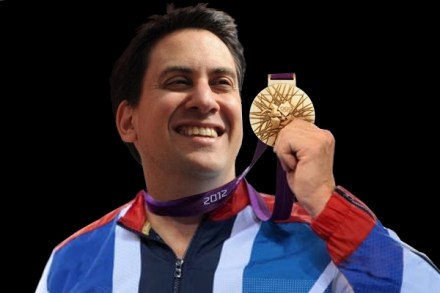
Before the last election, I had dinner with a Labour minister who told me her number one fear about the Tories getting in would be seeing David Cameron lap up the Olympic limelight. The Olympics, she feared, would hugely benefit whoever happened to be in power - and that was, she feared, going to be Cameron. She needn't have worried. The Prime Minister was barely visible during the Games (to his credit, he's not the type to hog limelight). Boris was Boris. But now the games are over, which party leaders have benefited the most? Oddly, all of them - and Ipsos-Mori polling suggests the number one winner was Ed Miliband. The percent having confidence in his ability to do his job properly has jumped eight points,  to 41 per cent.

Police commissioners: how a flagship policy could embarrass ministers

From our UK edition

The staggeringly low turnout that the Electoral Reform Society is predicting for November's Police and Crime Commissioner elections comes as little surprise to those involved in organising the vote. In fact, I was quite surprised that the ERS expects a turnout as high as 18.5 per cent, and I suspect the Home Office might be, too. Nick Herbert betrayed his nerves about the turnout earlier this week when he was harangued by Evan Davis on the Today programme. Today the ERS' chief executive Katie Ghose predicted that this could be a 'perfect storm, which could result in the lowest turnout for a national election in British history' and could 'degenerate into a complete shambles'.

The losers of the Libor scandal

From our UK edition

The Treasury Select Committee published its stinging report into Libor today, and it makes uncomfortable reading for all involved. 'That doesn't look good,' committee chair Andrew Tyrie said when describing the failure of both the FSA and the Bank of England to spot the manipulation at the time. His committee's report also pointed out that things did not look good for Bob Diamond's 'highly selective' evidence, either, saying: 'The committee found Mr Diamond's attempt to subdivide the later period of wrongdoing [following his telephone conversation with Paul Tucker] neither relevant nor convincing.

The weak contract worth £100 million

From our UK edition

Moving people off sickness benefits and back into the workplace was never going to be an easy job. It's a sensitive process dealing with all the grey areas that complex illnesses and disabilities throw up, and has always needed careful handling. But today ministers came under fire for the way they hold the company that carries out the assessments for fitness-to-work decisions to account. The National Audit Office has identified weaknesses in the Work and Pensions department's contract with Atos Healthcare, which carries out the work capability assessments.

The green belt isn’t as green and pleasant as you’d think

From our UK edition

The two best fights to watch in Westminster this autumn will be about land: the shape of constituencies, and where developers will be allowed to build the new homes that ministers are increasingly seeing as the best solution to Britain's growth problem. Tim Shipman reports in the Daily Mail today that the Quad is 'thinking the unthinkable' and considering relaxing rules around building on the green belt as part of those planning reforms that Eric Pickles and colleagues are dreading. Cue outrage and news reports featuring photographs of beautiful rolling green meadows. Sources in the Communities and Local Government say they do not recognise the Mail's report. But why is the green belt so sacred?

Ministers fail to sell themselves on playing field sell-offs

From our UK edition

If you're a minister, or even the Prime Minister, and you take to the airwaves holding a page of figures aloft, it's always a good idea to make sure the figures are actually correct before you enter the studio. When David Cameron read out a break down of playing field sales on LBC radio during the Olympics, he was trying to crush reports that under this government, schools are continuing to reduce their sports facilities in return for money. You can watch the film of Cameron with his sheet of paper here. The problem is that this sheet of paper wasn't actually correct when it said there were only 21 sell-offs, and as Christopher Hope reveals in today's Telegraph, there were actually 35 applications to sell school playing fields, of which 30 were approved.

How students are mis-sold the benefits of university

From our UK edition

What do you say to an Arts graduate? ‘Big Mac and fries, please!’ I used to laugh at that joke until I was served a Junior Whopper by one of my fellow arts graduates in Edinburgh and ever since then I’ve been suspicious of the story I was sold at school: that going to university takes you into a new league of earning potential. The A-Level results came out yesterday, and anyone who has opened an exams envelope will be familiar with the feeling. That you may as well have the results tattooed on your forehead because they will define the trajectory of your life. But in the 22 years since I left school, the government has added to the pressure. It has made a switch from providing university education to actually selling it.

Hague stands firm on Assange

From our UK edition

William Hague took a robust line on Julian Assange at his press conference this evening. He made clear that the British government would not allow the Wikileaks founder safe passage out of the UK, and warned against using diplomatic immunity as a means of 'escaping regular process of the courts'. Assange is wanted in Sweden on allegations that he raped one woman and sexually assaulted another in August 2010. He denies both charges and has spent the past 56 days hiding in Ecuador's embassy, where it was today confirmed that he is being granted political asylum. The police still intend to arrest Assange as soon as he leaves the embassy, but Hague's press conference locks the foreign secretary into stand-off with his Ecuadorian counterpart, Ricardo Patino.