Uk politics

Why George Osborne’s ‘Plan A’ has failed – and what to do next

From our UK edition

Does George Osborne need to adopt a Plan B? This will be the topic for a Spectator debate a week on Monday. But the argument is pretty clear to everyone with even a passing interest in the trials of George Osborne. Let’s look at the story so far. His Plan A - accelerated fiscal consolidation - was based on two key premises:  there was no alternative to cutting the deficit much more sharply than previously planned, because otherwise the markets would panic and long-term interest rates would rise sharply.  As one Treasury Minister put it: 'Britain’s AAA credit rating was under threat...George Osborne had no choice but to come up with a comprehensive deficit reduction plan—not to merely halve the deficit over four years, but eliminate it.

Clegg rejects ‘cash-for-seats’ deal for boundaries

From our UK edition

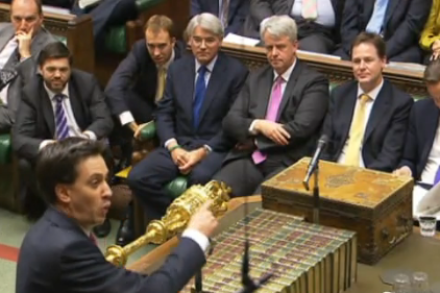
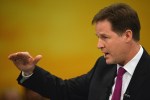
Deputy Prime Minister's questions is quite often a slightly grumpy affair, with Nick Clegg huffing and puffing at irritating questions from Peter Bone about what position he would take in the government if David Cameron were run over by a bus. This morning's session wasn't much different: it was even more bad-tempered as backbenchers were keen to pick at scabs on the failure of Lords reform. The Deputy Prime Minister continually defended the Liberal Democrats' decision to block the boundary reforms, criticising Labour for failing to support the programme motion for the House of Lords Reform Bill. It was like watching a couple who had broken up continue to bicker about whose fault it was.

Inflation falls to 2.2%

From our UK edition

Inflation in the year (on the Consumer Prices Index) to September was 2.2 per cent, down from 2.5 per cent in August. On the Retail Prices Index, it was 2.6 per cent in September, down from 2.9 per cent. This puts inflation at its lowest level since the end of 2009, and close to the Bank of England's target of 2 per cent for CPI inflation. It continues the downwards trend since CPI inflation peaked at 5.2 per cent last September, although that included January 2011's VAT rise from 17.5 per cent to 20 per cent. Stripping that (and the effects of other indirect taxes) out still reveals a marked decline in the rate of inflation, though, from 3.7 per cent last year to 2.1 per cent now. The main reason for this month's 0.

Angela Merkel’s nerves about Britain’s future in the EU

From our UK edition

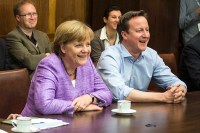
The Prime Minister and Angela Merkel spoke last night on the phone to discuss the European Council meeting later this week. Downing Street said the pair 'agreed that further work is needed before agreement can be reached' on banking union, which is a coded acknowledgement that David Cameron is concerned the current proposals are not in Britain's interest and do not currently protect the single market and that he will push for greater compromise when leaders meet. This is all part of the Prime Minister's big Europe week. He has a Cabinet meeting this morning, and as its members are increasingly piling pressure on Cameron for a referendum on Britain's membership of the European Union, the topic may well come up.

Vince Cable continues public campaign for a mansion tax

From our UK edition

Perhaps Vince Cable wasn't listening to the bit in George Osborne's speech at the Tory conference last week where the Chancellor ruled out a mansion tax. The Business Secretary has just sent an email out promoting the idea and calling for signatures on a petition for 'fairer tax'. The email, which is signed 'Thank you, Vince Cable MP', says: Our system of taxation is both unfair and inefficient. People on modest incomes are paying their fair share of tax while the super rich can too easily avoid paying their share. It is a particular scandal that some of the world’s wealthiest people who own property in the UK worth millions pay virtually the same council tax as owners of a modest family home.

Cheryl Gillan steps up anti-HS2 campaign

From our UK edition

The West Coast Mainline debacle has given opponents of HS2 another stick with which to beat the government. Cheryl Gillan took the opportunity of Patrick McLoughlin’s statement on the matter to ask how anyone could trust the Department of Transport’s twenty year projections for HS2 when it got the ten year ones for the West Coast so wrong. Gillan, the former Welsh Secretary who has a Chilterns constituency, is now freed of the constraints of collective responsibility and is stepping up her campaign against HS2. She’s tabled 22 parliamentary questions on the matter and it’s quite clear that the tenacious Gillan isn’t going to let this go. The Prime Minister, though, needs no reminder of the strength of feeling that HS2 generates.

Andrew Mitchell’s predecessor is ‘sorely missed’, jokes former whip

From our UK edition

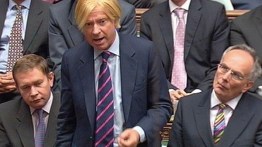
While some of his colleagues were dabbing tears from their eyes or pacing their Portcullis House offices in fury after being dumped by David Cameron in the reshuffle, Michael Fabricant seemed rather excited about his new-found freedom. The former whip tweeted on the day he resigned as a government whip that he was 'ecstatic. Been kissed by 3 women (&1 man) MP'. He has since considered dressing up as Andrew Mitchell at a 'highlights of 2012' party, and gone in search of a pair of 'toffs and plebs' cufflinks in honour of the chief whip.

The Home Office hokey-cokey on EU law and order opt-outs

From our UK edition

Yvette Cooper was in a stern mood this afternoon when she responded to the Home Secretary's announcement about plans to opt-out of 130 European law and order measures and then re-adopt those which it fancies. Her main gripe was that she hadn't been sent Theresa May's statement about the plans until 45 minutes before it was delivered in the Commons, but she was also peeved about the content. The Shadow Home Secretary argued that ministers 'haven't actually told us anything today at all', arguing that the different limbs of the coalition were doing entirely different things on this matter. While David Cameron had spoken about an opt-out, Nick Clegg had said the government was 'minded' to opt out, and May had only given the 'current thinking, Cooper complained.

Boris Johnson and Alex Salmond: Unlikely political twins? – Spectator Blogs

From our UK edition

Here's David Torrance with the kind of acute observation I wish I'd thought of first. There is, he writes, a comparison to be drawn between Alex Salmond and Boris Johnson: [Salmond's] approval ratings also remain remarkably high, but then Salmond enjoys a very specific sort of popularity. Asked who best “stands up for Scotland” he wins hands down, but if voters are asked if they agree with his vision for an independent Scotland then it’s two-to-one against. So Scots like Alex Salmond, but they only like him in a particular setting. That context is the halfway house between full government and opposition otherwise known as devolution.

Scottish independence referendum: the Better Together campaign needs a decisive win

From our UK edition

There’s a quiet confidence in Unionist circles that Alex Salmond will be defeated in the Scottish independence referendum. But Unionists know that Salmond needs to be defeated decisively. If the ‘Better Together’ campaign wins 55-45, the Nationalists will be back for another go in ten years time. But, as Alex says, the anti-independence side needs to be careful about what it says. Non-specific talk of more devolution for Scotland if it chooses to stay part of the United Kingdom is dangerous as it enables a future SNP leader to claim that the Scottish people were hoodwinked into rejecting independence.

Devolution has failed Scotland’s children. Can independence change that? – Spectator Blogs

From our UK edition

Yesterday Fraser asked: Scotland has a tragically long list of problems (especially with inner-city poverty) and [the No campaign] can ask: which of these problem would independence solve? This is a fair question, albeit one that offers the retort: and which of them are being solved by the Union the noo? Of course, this question was asked before devolution too. In broad terms, Alex Salmond has the same range of powers as those enjoyed by Secretaries of State for Scotland in the pre-devolution age. Not all of those have been used. Devolution was essentially the democratisation of existing administrative devolution that, quite properly, already took account of Scotland's distinct place within the United Kingdom.

Keep Gordon Brown out of the battle for Scotland

From our UK edition

I used to be a barman in a pub in Rosyth, where David Cameron is visiting today, and it’s hardly a hotbed of separatism. Its dockyard is not just a reminder of the many defence jobs the Union brings, but of what happens when the work shrinks and the jobs go. Many of the locals in Cleos were unemployed ex-dockyard workers, and I spent a good chunk of my life hearing them tell me about life and politics. All of them derided the idea of an independent Scotland: they saw it as a quixotic bet that a family man could not afford to place. Mind you, they had a burning hatred for obfuscating politicians who spoke down to them. This was a solidly Labour seat, and had been since Gordon Brown settled down (and even married) a couple of miles away in North Queensferry.

David Cameron’s big European week

From our UK edition

David Cameron's plan for this autumn was to largely avoid the topic of Europe at his party's conference, then to focus on the issue later in the year. It's only a few days since the Tories gathered in Birmingham, and the Prime Minister is already facing a big week on Europe. Home Secretary Theresa May will kick things off by announcing today that she wants Britain to opt out of more than 130 European Union measures on law and order, including the European Arrest Warrant. The opt-out itself, which the Home Secretary is expected to say Britain is 'minded' to do, is not the tricky bit: it's which measures to then opt back into.

Tories still hope for something to turn up on boundary changes

From our UK edition

This is a story that's going to run and run until MPs walk through the lobbies next year in the vote approving the boundary reforms: senior Tories are plotting to buy the Lib Dems off from blocking changes to constituencies by offering them state funding of political parties. The latest plot has surfaced in today's Financial Times, with one Conservative minister telling the paper that the Lib Dems are 'basically out of money'. As expected, the Lib Dems are rejecting the story, arguing there is no way that the party would do a deal on party funding when their plan to vote down the boundary reforms is revenge for the Tory failure to support Lords reform.

Scottish independence referendum: at long last the phoney war comes to an end – Spectator Blogs

From our UK edition

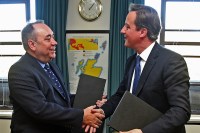
So now's the day and now's the hour at which, if you will forgive the mixed allusions, we may discern the beginning of the end of the beginning. Eight months of often tedious wrangling ends this afternoon as David Cameron and Alex Salmond agree some kind of "deal" to fix the terms and conditions of Scotland's independence referendum. At long last the phoney war is coming to an end. And not before time. There is talk of this being a historic day and, well, I suppose you can think it that if you want to. Most Scots, I hazard, simply want the warring parties to get on with things. (I fancy this sentiment is likely to be held even more strongly by Englishmen already tired of all this Caledonian wrangling.) Still, it's a good start to the SNP's conference week.

Grant Shapps: No talks with the Lib Dems on a party funding for boundary changes deal

From our UK edition

Grant Shapps, the perky new Tory chairman, has just been grilled on The Sunday Politics by Andrew Neil about the Tories’ majority strategy. In a sign of how tight the next election will be, Shapps stressed that you don’t actually need 326 seats to have a majority in the Commons because Sinn Fein don’t take their seats. He said he was able to "reveal" the Tories' 40/40 election strategy:  “We’re going to defend our [40] most marginal seats, and we’re going to go and attack the 40 seats that we will need to win. We’re going to focus and target on those seats in a way that we’ve never done before. Targetting is very, very important and it comes down to pavement politics,  winning it seat by seat.

Why the government should clamp down on health tourism

From our UK edition

One of the problems with the welfare state is that the contributory principle too often gets lost. People’s faith in the whole system is undermined when they see those who haven’t put it, or even tried to, taking out. A classic example of this is ‘health tourists’, those who come here from abroad with the deliberate aim of taking advantage of the medical care offered by the NHS. Too little is being done to address this problem. The Daily Mail reports today that ‘New guidelines tell doctors across England they must register any foreign patient who asks for care otherwise it would be ‘discriminatory’.

Nick clegg debt

From our UK edition

Britain’s national debt is rising faster than any of the basket-case Eurozone countries that George Osborne is so fond of disparaging but here’s the thing: only 16pc of voters realise that debt is going up. Why? Are they all thick? Or could it be that our political class is systematically misleading them? I’m inclined towards the latter. The odd debt vs deficit slip is forgivable. But ministers do seem to trying to exaggerate – even lie about – what they are doing to the national debt. And I’m afraid that Nick Clegg is my Exhibit A.